

P0265 on 2009-2013 Chevrolet Malibu: Cylinder 2 Injector Circuit High Causes and Fixes
On a 2009-2013 Malibu, code P0265 is most often caused by a chafed or damaged fuel injector wiring harness, a known issue cited in GM Technical Service Bulletin #PIP4924C. Before replacing any parts, thoroughly inspect the wiring harness for rub spots, particularly where it passes near the intake plenum, valve cover, and cylinder head.
- For a P0265 code on a 2009-2013 Malibu, always inspect the wiring harness for damage first, as this is a known issue documented by GM in TSB PIP4924C.
- The fault is specific to the fuel injector circuit for cylinder #2, which will cause a noticeable engine misfire and rough running conditions.
- Do not replace the fuel injector or PCM until the wiring harness has been thoroughly inspected and ruled out as the cause.
- When repairing a chafed wire, use abrasion-resistant tape or loom and secure the harness away from the original contact point to prevent a repeat failure.
What's Unique About the 2009-2013 Chevrolet MALIBU
For this generation of Chevrolet Malibu, the most significant factor for a P0265 code is a known wiring harness issue. General Motors issued Technical Service Bulletin #PIP4924C, which specifically includes the 2009-2013 Malibu and points to the fuel injector wiring harness rubbing against engine components. The TSB explicitly mentions looking for chafing against the intake plenum, valve cover bolts, fuel lines, and the side of the cylinder head. This makes a wiring fault a much higher probability on this vehicle compared to a random failure of the injector itself.
Diagnostic Flowchart
Tap your situation to follow the diagnostic path that matches what you're seeing on this vehicle.
Generation note: This range covers two generations of the Chevrolet Malibu: the 7th generation (2009-2012) and the first year of the 8th generation (2013). The primary engines were the 2.4L I4 (RPO codes LE5, LE9, LAT, LUK) and 3.6L V6 (RPO codes LY7, LFX). The TSB regarding wiring issues applies to the entire 2009-2013 range and a wide array of GM vehicles sharing these engines, but part numbers for injectors will differ.
Symptoms You May Notice
- Check Engine Light is illuminated
- Rough or shaking idle
- Engine misfire (may be felt as a shudder)
- Hesitation or stumbling during acceleration
- Reduced engine power or 'limp mode'
- Increased fuel consumption
- Engine may stall when coming to a stop
- Replacing the fuel injector without first thoroughly inspecting the wiring harness. Given the known TSB, the wiring is a more likely culprit and checking it first can save money on an unnecessary part.
- Replacing the PCM before exhaustively testing the wiring harness for a short-to-voltage, which can mimic a failed injector driver.
Most Likely Causes
- Fuel Injector Wiring Harness Chafing or Damage 🔴 High Probability → Shop Engine Wiring Harness GM Technical Service Bulletin #PIP4924C specifically identifies this issue on 2009-2013 Malibus. The harness can rub against the intake plenum, valve cover bolts, fuel lines, or the cylinder head, causing wires to short to voltage or break. Engine vibration over time causes the harness loom to wear through at these contact points.
How to confirm: Visually inspect the entire length of the fuel injector wiring harness, especially for cylinder #2. Look for areas where the plastic loom is worn through and check for bare or damaged wires. Pay close attention to contact points mentioned in the TSB: against the intake plenum, at valve cover bolts, against the fuel line, and on the side of the head under the plenum. You may need to remove the engine cover and carefully move the harness to see all potential rub spots.
Typical fix: Repair the damaged section of wire using a weatherproof butt connector and heat shrink tubing. Protect the harness from future damage by wrapping it with anti-abrasion tape (such as Tesa tape) or encasing it in a new piece of convoluted plastic tubing and securing it away from the contact point with zip ties. In severe cases, the injector pigtail connector or the entire engine harness section may need to be replaced.
Est. part cost: $10-$50 for repair materials, $50-$200 for a new harness section. - Faulty Cylinder 2 Fuel Injector 🟡 Medium Probability → Shop Fuel Injector
How to confirm: If the wiring is intact, test the injector. Use a multimeter to check the resistance across the injector's two pins; compare the reading to the manufacturer's specification (typically 11-14 ohms for these models, but always verify for your specific part). You can also swap the cylinder 2 injector with one from another cylinder (e.g., cylinder 1 or 3). Clear the codes and run the engine. If the code changes to P0262 (Cylinder 1) or P0268 (Cylinder 3), the injector is faulty.
Typical fix: Replace the fuel injector for cylinder 2. It is often recommended to replace all O-rings for the injectors that were removed during testing.
Est. part cost: $50-$150 - Faulty Powertrain Control Module (PCM) ⚪ Low Probability → Shop Engine Control Module (ECM)
How to confirm: This should be the last resort after confirming the wiring and injector are good. A professional diagnosis is needed to test the injector driver circuit within the PCM, often using an oscilloscope to check the signal. A tell-tale sign can be if a noid light stays constantly illuminated on the injector connector, indicating the driver is stuck 'on' and providing constant voltage.
Typical fix: Replace and reprogram the Powertrain Control Module. This requires specialized tools for programming the new module to the vehicle's VIN.
Est. part cost: $300-$800
Rare But Worth Checking
- Contaminated Fuel: The official GM TSB mentions inspecting the fuel. [⭐] While less common for a 'circuit high' code, poor quality or contaminated fuel can cause injector internals to stick or fail, potentially leading to electrical faults. One owner in a forum tried using injector cleaner as a first step.
- Bent or Damaged Connector Pins: Always inspect the pins on both the injector and the harness connector. A pin can get bent or corroded, causing a poor connection that can lead to high resistance or intermittent voltage issues.
Diagnosis Steps
- Read the codes from the PCM with an OBD-II scanner to confirm P0265 and any other related codes (e.g., P0302).
- Perform a thorough visual inspection of the fuel injector wiring harness for cylinder #2, as detailed in TSB #PIP4924C. Check for any signs of rubbing, melting, or corrosion from the injector connector back to the main harness. Key areas are where the harness contacts the intake plenum, valve cover bolts, and cylinder head.
- If no wiring damage is found, disconnect the cylinder 2 injector and inspect the connector pins for damage, corrosion, or being backed out.
- Use a multimeter set to Ohms to measure the internal resistance of the fuel injector. A reading outside the specified range (usually 11-14 ohms) indicates a bad injector.
- As a definitive test, swap the cylinder 2 injector with an adjacent one (e.g., cylinder 1 or 3). Clear the codes and run the engine. If the fault code moves to the new cylinder (e.g., P0262 or P0268), the injector is the problem.
- If the code remains P0265 after swapping the injector, the issue is in the wiring or the PCM.
- Use a noid light to test for a signal at the injector connector. With the engine running, the noid light should flash. For a 'circuit high' code, you may see the light stay on constantly, indicating a short to voltage in the harness or a faulty PCM driver.
- If a short to voltage is suspected in the harness, disconnect the harness from the PCM and the injector. Use a multimeter to check for continuity between the injector control wire and the power wire in the same harness. There should be no continuity.
- If all other tests pass, the final step is to diagnose the PCM, which is best left to a professional with an oscilloscope.
Parts You'll Likely Need
- Fuel Injector
(OEM #12633784 (For 2.4L LUK GDI engine, typically 2013+). Verify with VIN.)— This is the second most likely cause after a wiring issue. The internal coil can short out, causing the circuit high fault.
Trusted brands: ACDelco, Bosch, Standard Motor Products
OEM price range: $90-$160
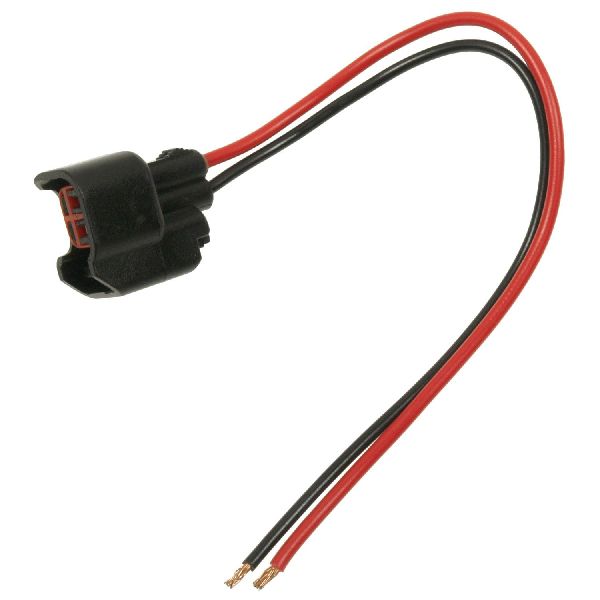
Aftermarket price range: $50-$100 - Fuel Injector Connector Pigtail
(OEM #13576411 (ACDelco))— If the wiring harness is damaged right at the connector, or the connector lock is broken, replacing the pigtail is the standard repair. Dorman also offers equivalents like part number 85139.
Trusted brands: ACDelco, Dorman
OEM price range: $25-$40
Aftermarket price range: $10-$25 - Anti-Abrasian Wiring Tape — Essential for protecting the repaired wire and preventing the issue from recurring. Standard electrical tape is not sufficient for under-hood abrasion resistance.
Trusted brands: Tesa, 3M
OEM price range: $5-$15
Aftermarket price range: $5-$15
Related Codes That Often Appear With This One
- P0302 — P0302 is a 'Cylinder 2 Misfire' code. Since P0265 causes the cylinder 2 injector to malfunction, it directly leads to a misfire in that same cylinder.
- P0202 — P0202 is a general 'Injector Circuit/Open - Cylinder 2' code. It can appear alongside P0265 as the PCM tries to diagnose the specific nature of the electrical fault in the same circuit.
- P0264 — This is the 'Cylinder 2 Injector Circuit Low' code. While less common to see with P0265, it can appear intermittently if the damaged wire is alternately shorting to ground and then to voltage, or if there are multiple wiring issues.
Technical Service Bulletins (TSBs) & Recalls
- PIP4924C: Addresses a Service Engine Soon (SES) light and misfire with various injector codes, including P0265. Recommends inspecting the fuel injector wiring harness for chafing or opens. [⭐, 10, 15]
- PIP4924D: A later revision of the same bulletin, updated to include model years up to 2014 for some vehicles, confirming the persistence of this issue across multiple platforms.
Platform-Specific Known Issues
- GM Technical Service Bulletin #PIP4924C (and its successor PIP4924D) explicitly notes that on 2009-2013 Malibus, the fuel injector wiring harness is prone to rubbing through against various engine components, leading to codes like P0265. Specific chafe points to inspect are: against the intake plenum, at valve cover bolts, against the fuel line, and on the side of the cylinder head.
Mechanic-Grade Diagnostic Values
- Fuel Injector Coil Resistance (Port Injected Engines, e.g., 2.4L LE5/LE9, 3.6L V6) — expected: 11 to 16 Ohms. Failure: A reading of 0.0 Ohms (shorted), OL/infinite (open), or a value significantly different from the other injectors.
- Fuel Injector Control Circuit Voltage (Back-probed at connector, engine cranking/running) — expected: Pulsing voltage, approximately 5V, synchronized with engine RPM.. Failure: A steady, constant high voltage (greater than 5V) indicates a short to power in the harness or a faulty PCM driver.
Scan Tool Commands That Help
- GDS2 (GM Global Diagnostic System 2): Injector Balance Test — This is an active test that commands the PCM to fire a single injector for a set duration while monitoring the drop in fuel rail pressure. It can confirm if an injector is clogged or flowing differently than others, even if its electrical resistance is normal.
- GDS2 (or other advanced bidirectional scanner): Cylinder Power Balance — This function deactivates one cylinder at a time and measures the corresponding drop in engine RPM. If deactivating cylinder #2 causes little or no change in RPM, it confirms that cylinder was not contributing power, which is the expected result with a P0265 fault.
Wiring & Ground Locations
- G105 (2.4L Engine) — At cylinder #4, above the intake camshaft position (CMP) sensor.. A poor engine ground can cause floating voltages and erratic behavior in sensor and actuator circuits, including the fuel injectors. While not a direct cause of a 'circuit high' code, verifying main engine grounds is a crucial step in diagnosing any electrical fault.
- G106 (2.4L Engine) — At the #4 exhaust port, above the exhaust camshaft position (CMP) sensor.. This is another primary engine-to-chassis ground. A loose or corroded connection here can affect the stability of the entire engine management electrical system.
- G107 (2.4L Engine) — On the lower left side of the engine.. Provides a ground path for multiple components. Ensuring it is clean and tight helps eliminate intermittent electrical issues that can be difficult to diagnose.
- J130 (2.4L VIN U Engine) — A splice point in the fuel injector harness, located 4 cm from the breakout to the fuel injector #2 connector.. This factory splice is a potential point of failure. Corrosion or a poor connection at this specific splice could introduce high resistance or an intermittent connection directly into the cylinder 2 injector circuit.
- Injector Power Wire — On the 2.4L engine, each injector receives power from a Pink wire, which splices together and runs back to the 'Injectors fuse 44' in the underhood fuse block.. The 'circuit high' fault is on the control wire (ground side, pulsed by the ECM), but understanding the power side is critical. A short between this Pink power wire and the control wire for cylinder #2 within the harness would cause a P0265 code.
Real Owner Repair Stories
- Reddit user u/samerooo (2011 Chevrolet Malibu 2.4L) — Repeatedly blowing fuse #44 for the fuel injectors.
❌ Tried (didn't work) Replacing the 10A fuse, which would blow instantly.
✅ What actually fixed it The user found and repaired a short in the wiring harness. Another user provided a wiring diagram showing the common Pink power wire and the individual control wires going to the ECM, which helped locate the short.
Model Year Variations Within This Range
- 2009-2012: These model years primarily used the 2.4L LE5 and LE9 engines, which feature traditional Port Fuel Injection.
- 2013: The 2013 model year introduced the 2.4L LUK engine with eAssist, which uses Gasoline Direct Injection (GDI). GDI injectors (like OEM part 12633784) operate at much higher pressures and have different electrical characteristics than port injectors. They are not interchangeable. The diagnostic approach remains similar (check wiring first), but the specific part and resistance values will be different.
Helpful Videos
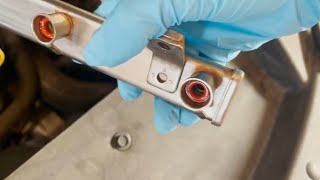
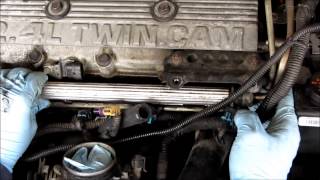
We Have This Part in Stock


The information in this article is provided for general reference and educational purposes only. Vehicle specifications, procedures, and part compatibility can vary by production date, trim level, and region. Always consult your vehicle's factory service manual and verify part numbers before purchasing or performing repairs. Safety-critical components such as airbags, seat belts, and braking systems should be installed by a qualified professional.
- Chevrolet MALIBU:
- 🧭 Diagnostic Flowchart
- 🎬 Helpful Videos
- 🛍️ Shop This Part
- What's Unique About the 2009-2013 Chevrolet MALIBU
- Symptoms You May Notice
- Most Likely Causes
- Rare But Worth Checking
- Diagnosis Steps
- Parts You'll Likely Need
- Related Codes That Often Appear With This One
- Technical Service Bulletins (TSBs) & Recalls
- Platform-Specific Known Issues
- Mechanic-Grade Diagnostic Values
- Scan Tool Commands That Help
- Wiring & Ground Locations
- Real Owner Repair Stories
- Model Year Variations Within This Range
- 🎟️ Get 5% Off