

P0266 on 2017-2018 Chevy Silverado 2500 6.6L Duramax: Cylinder 2 Fault Causes & Fixes
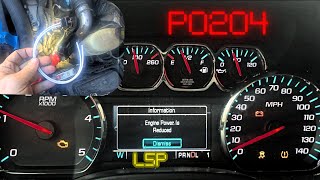
P0266 on a 2017-2018 Silverado with the L5P Duramax engine almost always points to a problem with the #2 fuel injector. The most likely fix is replacing the fuel injector and its single-use fuel line, which is a complex job costing between $1,100 and $1,800 at a shop.
- P0266 means cylinder #2 isn't pulling its weight, most likely due to a faulty fuel injector.
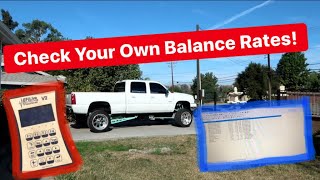
- Diagnosis requires a scan tool to check 'injector balance rates'. A value for cylinder 2 outside of +/- 4.0 mm/sec is a strong sign of a problem.
- Before replacing the expensive injector, check the cheaper electrical connector for damage and consider a compression test to rule out a mechanical engine problem.
- This is not a beginner-friendly DIY repair. It involves a dangerous high-pressure fuel system and requires special tools and programming.
- Always replace the high-pressure fuel line when replacing the injector, as it is a one-time use part.
What's Unique About the 2017-2018 Chevrolet SILVERADO 2500
The 6.6L L5P Duramax engine, introduced in 2017, uses a high-pressure common-rail fuel system with precise Denso solenoid injectors. This system is sensitive to fuel quality and electrical interruptions. While the injector itself is the most common culprit for P0266, these trucks are also known for issues with the injector's electrical connector, which can mimic a failed injector. Proper diagnosis is key, as GM has issued bulletins advising against replacing injectors without first ruling out mechanical issues like low compression.
Diagnostic Flowchart
Tap your situation to follow the diagnostic path that matches what you're seeing on this vehicle.
Symptoms You May Notice
- Rough or shaking idle.
- Noticeable loss of power and acceleration.
- Engine misfire or hesitation.
- Black or white smoke from the exhaust.
- Check Engine Light is on.
- Strong smell of raw diesel fuel.
- Replacing only the fuel injector without checking the electrical connector. A bad pigtail can cause the new injector to show the same fault.
- Replacing a fuel injector for a contribution code when the actual cause is a mechanical issue like low compression. Always perform a compression test if diagnosis is uncertain.
Most Likely Causes
- Faulty Cylinder 2 Fuel Injector 🔴 High Probability → Shop Fuel Injector The high-pressure, high-precision nature of the L5P injectors makes them susceptible to failure from contamination or simple wear over time.
How to confirm: Use a professional scan tool to monitor injector balance rates at hot idle. A reading for cylinder 2 that is consistently above +4.0 mm/sec or below -4.0 mm/sec strongly suggests a problem. A positive reading indicates the ECM is adding fuel to compensate for a weak injector, while a negative reading indicates it's removing fuel due to a leaking injector.
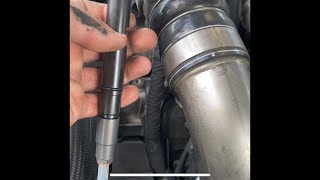
Typical fix: Replace the cylinder 2 fuel injector, the high-pressure fuel line (which is one-time use), and any associated seals. The new injector's flow rate code must be programmed into the ECM.
Est. part cost: $320-$400 - Cylinder 2 Injector Circuit/Connector Failure 🟡 Medium Probability The electrical connectors for the fuel injectors are a known weak point. Engine vibration and heat can cause the terminals to lose tension or corrode, creating a poor connection that the ECM flags as a fault.
How to confirm: With the engine running, carefully wiggle the injector connector for cylinder 2. If this causes the misfire to change or stop, the connector is faulty. A technician can also perform a resistance test on the circuit from the ECM connector. A healthy injector circuit should read around 0.8 ohms; a faulty, high-resistance connection can read 3.8 ohms or higher.
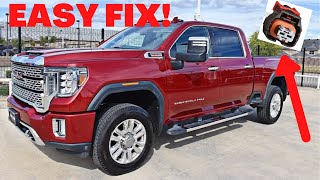
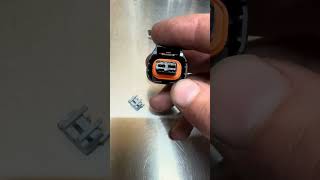
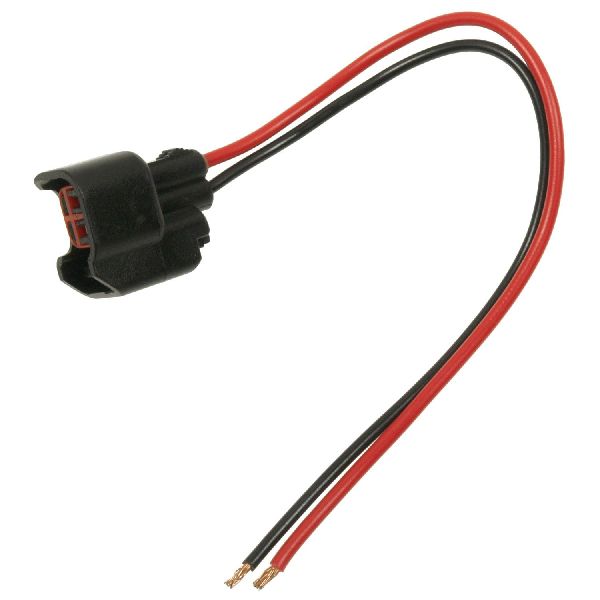
Typical fix: Replace the injector connector pigtail. This is often done as a preventative measure 🎬 Watch: How to replace the pigtail before swapping the injector. when replacing the injector itself.
Est. part cost: $20-$50 - Mechanical Engine Failure ⚪ Low Probability While the L5P is generally robust, issues like broken pushrods or excessive valve lash have been noted in GM service bulletins. These prevent the cylinder from breathing correctly, leading to a contribution fault.
How to confirm: Perform a cylinder compression test. If cylinder 2 shows significantly lower compression (below 350 psi) than the others, there is a mechanical problem. A cylinder leakage test can further pinpoint the issue to rings, intake valves, or exhaust valves.
Typical fix: Requires significant engine repair, such as replacing pushrods, adjusting valve lash, or, in severe cases, rebuilding the cylinder head or engine.
Est. part cost: $100-$2000+ - Contaminated Fuel ⚪ Low Probability Water or debris in the diesel fuel can damage the sensitive internals of the high-pressure injectors, causing one or more to fail.
How to confirm: Drain the fuel filter/water separator and inspect for water, sludge, or debris. If contamination is found, the entire fuel system may be compromised.
Typical fix: Drain and clean the fuel tank, flush all fuel lines, and replace all fuel filters. The damaged injector(s) will also need to be replaced.
Est. part cost: $100-$500+
Rare But Worth Checking
- Engine Control Module (ECM) Failure: While very rare, it's possible for the injector driver circuit within the ECM to fail for a single cylinder. This should only be considered after all other possibilities (injector, wiring, mechanical) have been exhaustively ruled out.
Diagnosis Steps
- Connect a professional-grade scan tool and verify that P0266 is the primary code.
- Warm the engine to full operating temperature (coolant temp > 170°F).
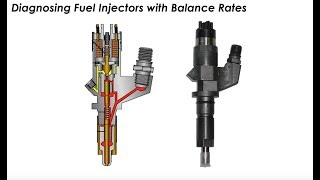
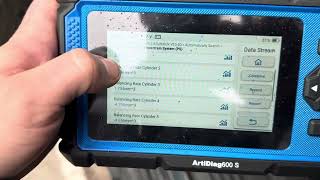
- Using the scan tool, monitor the injector balance rates 🎬 See how to check injector balance rates with a scan tool. for all cylinders at idle and in Park. Note the value for cylinder 2. A value outside +/- 4.0 mm/sec is a red flag.
- If the balance rate is out of spec, the next step is to isolate the injector. A common professional technique is to swap the suspect injector (cylinder 2) with a known good one (e.g., cylinder 4). Clear the codes and re-run the balance rate test. If the fault code changes to P0272 (Cylinder 4 Contribution/Balance), the injector is confirmed to be faulty.
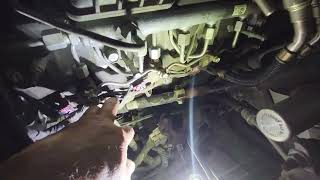
- While accessing the injector, carefully inspect the electrical connector and wiring for any signs of corrosion, damage, or loose pins. Look for black powder residue, a sign of fretting corrosion.
- If swapping the injector does not move the problem, or if balance rates are inconclusive, perform a cylinder compression test on cylinder 2 to rule out mechanical engine problems.
- If compression is good and the injector/wiring seem okay, inspect the fuel system for signs of contamination by draining the fuel filter.
Parts You'll Likely Need
- Fuel Injector (Cylinder 2)
(OEM #12698552)— This is the most common failure part that causes a P0266 code on the L5P Duramax engine.
Trusted brands: ACDelco (OEM), Denso (Original Manufacturer)
OEM price range: $280-$350
Aftermarket price range: $250-$320 - High-Pressure Fuel Injector Line — GM service information mandates that these lines are single-use only and must be replaced anytime they are removed to prevent high-pressure leaks.
Trusted brands: ACDelco (OEM)
OEM price range: $40-$60
Aftermarket price range: $30-$50 - Fuel Injector Connector Pigtail — A common failure point that can cause an intermittent electrical connection, mimicking a bad injector. Often replaced as a precaution.
Trusted brands: ACDelco
OEM price range: $30-$50
Aftermarket price range: $15-$30
Related Codes That Often Appear With This One
- P0302 — This is the code for 'Cylinder 2 Misfire'. It often appears with P0266 because a cylinder that isn't contributing power is, by definition, misfiring.
- P0202 — This code means 'Injector Circuit/Open - Cylinder 2'. It points specifically to an electrical problem (bad wiring, connector, or injector solenoid) rather than a flow/balance issue, but they can be related.
- P0263, P0269, P0272, etc. — These are the contribution/balance codes for the other cylinders. If multiple cylinder balance codes are present, it strongly suggests a systemic problem like contaminated fuel or a failing injection pump, rather than a single bad injector. [Bulletin #17-NA-171]
Technical Service Bulletins (TSBs) & Recalls
- PIP5468F: Mentions P0266 in a long list of potential DTCs and advises following standard diagnostics.
- 17-NA-171: Lists P0266 as a possible code caused by an anomaly in the Engine Control Module.
- PIP5468D: Similar to PIP5468F, lists P0266 among many other codes and points to standard diagnostic procedures.
Platform-Specific Known Issues
- GM Technical Service Bulletin #PIP5468F notes that P0266 can appear with a wide range of other engine and DPF-related codes, indicating a complex diagnostic path may be required.
- GM Preliminary Information Bulletin #PIP5537 specifically warns against immediately replacing fuel injectors for misfire conditions on the L5P, urging technicians to perform a compression test first to check for mechanical issues like broken pushrods.
Mechanic-Grade Diagnostic Values
- Fuel Injector Solenoid Resistance — expected: ~0.8 Ohms. Failure: A reading of 3.0 Ohms or higher, often caused by a poor connector, indicates excessive resistance.
- Low-Pressure Fuel Pump (Lift Pump) Pressure — expected: ~62 PSI (Key On, Engine Off). Failure: Significantly lower pressure indicates a weak lift pump or blockage.
- High-Pressure Fuel Rail Pressure (Cranking) — expected: >3,000 - 4,000 PSI. Failure: Failure to build adequate pressure during crank can indicate a failed high-pressure pump or a large leak (e.g., stuck open injector).
- Fuel Return Volume (15-second crank) — expected: < 100 mL. Failure: Excessive return fuel (e.g., 500+ mL) points to one or more injectors being stuck open or a failed high-pressure pump.
Hidden / Shadow Codes Worth Checking
- P02CC - P02DB: Injector Exceeding Learning Limits. These codes indicate the ECM has reached the maximum adjustment trying to correct for an injector's timing. GM documentation suggests this can be caused by engine vibrations (e.g., from aggressive tires) and advises against immediate injector replacement. (see via Professional scan tool like GM GDS2.)
- P01CB - P01DA: Injector Timing Retarded/Advanced. Similar to the learning limit codes, these point to a timing deviation. These can also be triggered by vibrations or may indicate a need for a chemical fuel system cleaning before part replacement. (see via Professional scan tool like GM GDS2.)
Scan Tool Commands That Help
- GM GDS2: Injector Flow Rate Programming — This is a mandatory step after replacing any fuel injector. The unique trim code from the new injector must be written to the ECM. The path is: ECM -> Module Diagnostics -> Control Functions -> Configuration Reset -> Injector Flow Rate Programming.
- Aftermarket (e.g., Snap-on, Autel): Injector Rate Programming / Module Setup — When programming a new injector with a non-OEM tool, you must prefix the injector's trim code with 'F7' for the ECM to accept it. Failure to do so will result in a failed programming attempt.
- GM GDS2: Cylinder Power Balance Test — This active test helps confirm which cylinder is not contributing power, verifying the fault is on cylinder #2 for a P0266 code.
Wiring & Ground Locations
- ECM (Engine Control Module) — On 2017-2019 models, it's located in the engine bay behind the driver-side headlight, between the battery and the power steering reservoir.. The ECM directly controls the fuel injectors. All injector wiring runs directly to it.
- ECM Connector X2 — This is the rearmost and largest connector on the ECM. It contains the circuits for all eight fuel injectors.. This is the ideal location to perform electrical tests (resistance, voltage) for the entire injector circuit without having to access the injector itself. Fretting and corrosion can occur at the pins on this connector, not just at the injector pigtail.
- Cylinder #2 Injector Pins (at ECM X2) — Cylinder #2 is the front-most on the driver's side. Its two corresponding pins are located in the X2 connector block. A wiring diagram is required for exact pin numbers, but they are among the first set of injector pins in the block.. Knowing these specific pins allows a technician to test the entire circuit for cylinder #2 for opens, shorts, or high resistance from a single, accessible point.
Real Owner Repair Stories
- Reddit user in r/Duramax (2017 L5P) — Injector-related code (P124B) that would appear in cool weather.
❌ Tried (didn't work) Replacing the injector pigtail connector initially fixed the problem, but the code returned.
✅ What actually fixed it Further diagnosis found the issue was intermittent contact at the pin for that circuit within the main ECM X2 connector. Wiggling the wire at the back of the ECM connector would make the fault appear and disappear. The owner determined the entire engine harness needed replacement due to multiple brittle connectors.
OEM Part Supersession History
12674615, 12678992, 12686812, 12696966→12698552— Standard part evolution and revision by the manufacturer.
Model Year Variations Within This Range
- 2017-2018: There are no significant mechanical differences in the L5P engine or its fuel system between the 2017 and 2018 model years. Both use the 6-speed Allison transmission. The diagnostic procedures and common failures for P0266 are identical.
Helpful Videos

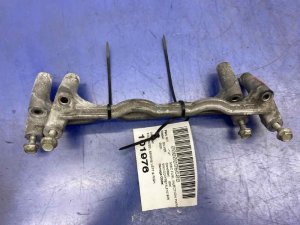
Used OEM Parts in Stock
New Aftermarket Parts Available


The information in this article is provided for general reference and educational purposes only. Vehicle specifications, procedures, and part compatibility can vary by production date, trim level, and region. Always consult your vehicle's factory service manual and verify part numbers before purchasing or performing repairs. Safety-critical components such as airbags, seat belts, and braking systems should be installed by a qualified professional.
- Chevrolet SILVERADO 2500:
- 🧭 Diagnostic Flowchart
- 🎬 Helpful Videos
- 🛍️ Shop This Part
- What's Unique About the 2017-2018 Chevrolet SILVERADO 2500
- Symptoms You May Notice
- Most Likely Causes
- Rare But Worth Checking
- Diagnosis Steps
- Parts You'll Likely Need
- Related Codes That Often Appear With This One
- Technical Service Bulletins (TSBs) & Recalls
- Platform-Specific Known Issues
- Mechanic-Grade Diagnostic Values
- Hidden / Shadow Codes Worth Checking
- Scan Tool Commands That Help
- Wiring & Ground Locations
- Real Owner Repair Stories
- OEM Part Supersession History
- Model Year Variations Within This Range
- 🎟️ Get 5% Off