

P0266 on 2016-2019 GMC Sierra 1500: Cylinder 2 Balance Fault Causes and Fixes
P0266 on a GMC Sierra most often points to a failing fuel injector in cylinder 2. However, on these specific trucks, it can also be caused by an ECM software glitch requiring an update or a mechanical valvetrain problem. Start by checking for software updates before replacing parts.
- P0266 on a 2016-2019 Sierra means cylinder 2 isn't working as hard as the others.
- Before replacing any parts, especially on a 2017 model, check if an ECM software update is available, as per TSB 17-NA-171.
- The most common parts to fail are the fuel injector, ignition coil, or spark plug for cylinder 2.
- Be aware of platform-specific mechanical issues like valvetrain lubrication problems (TSB PIP-5400) and AFM lifter failures, which are more serious potential causes.
- If replacing a fuel injector, ensure you have the exact correct part number for your VIN, as GM uses multiple flow rates.
What's Unique About the 2016-2019 Gmc SIERRA 1500
While P0266 is often a fuel injector issue on many vehicles, the 2016-2019 GM trucks have specific known issues that can trigger it. For 2016 models, a Technical Service Bulletin (TSB PIP-5400) points directly to a lack of lubrication in the valvetrain, a mechanical issue, as a potential cause. For 2017 models, another TSB (17-NA-171) identifies an ECM/TCM software anomaly as the culprit, fixed with a simple reprogram. Furthermore, the V8 engines in these trucks use Active Fuel Management (AFM), and failure of the AFM lifters is a well-documented problem that can lead to contribution/balance faults and catastrophic engine damage if ignored. The all-new 2019 models (T1XX platform) introduced Dynamic Fuel Management (DFM), a more advanced system, which has its own unique failure modes.
Diagnostic Flowchart
Tap your situation to follow the diagnostic path that matches what you're seeing on this vehicle.
Generation note: The 2016-2018 models are part of the third generation (K2XX), while the 2019 model year marks the beginning of the fourth generation (T1XX). While the engines are similar (EcoTec3 family), specific TSBs like PIP-5400 are more focused on earlier models in this range, and the 2019 model introduced a new chassis and electrical architecture.
Symptoms You May Notice
- Rough or vibrating idle
- Engine misfire or hesitation during acceleration
- Noticeable loss of power
- Check Engine Light is on
- Popping or backfire sound from the air intake (as noted in TSB PIP-5400)
- Engine ticking noise that changes with RPM (can indicate a valvetrain or lifter issue)
- Replacing the fuel injector with an incorrect part. TSB #20-NA-098 warns that GM uses injectors with different flow rates on the same fuel rail. Installing the wrong one will not fix the balance issue and may create new fuel trim codes.
Most Likely Causes
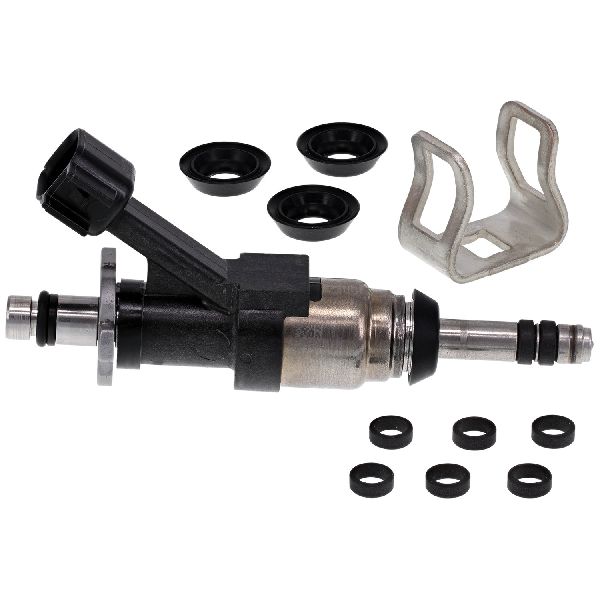
- Faulty or Clogged Fuel Injector (Cylinder 2) 🔴 High Probability → Shop Fuel Injector Direct injection systems operate under high pressure and can be sensitive to fuel quality. GM has a special coverage program (N192231060) for these injectors on 2016-17 models due to a higher-than-normal failure rate.
How to confirm: A technician can perform a fuel injector balance test with a scan tool like the AFIT CH-47976. A DIY method is to swap the cylinder 2 injector with another cylinder's injector (e.g., cylinder 4) and see if the fault code changes to P0272 (Cylinder 4 Contribution/Balance).
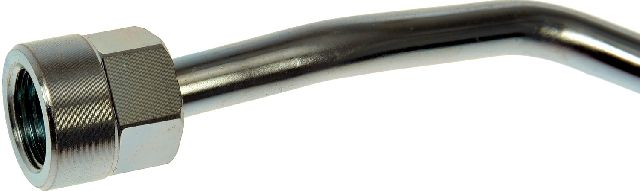
Typical fix: Replace the faulty fuel injector. It is crucial to use the correct OEM part number, as GM uses different flow-rated injectors on the same engine. The fuel rail crossover tube is a one-time use part and must also be replaced. 🎬 Watch: Step-by-step guide to replacing your L83 fuel injectors.
Est. part cost: $50-$150 - Engine Control Module (ECM) Software Anomaly 🔴 High Probability TSB #17-NA-171 specifically calls out an ECM anomaly for 2017 models that can cause P0266 and other codes. The fix is a software update for both the ECM and TCM.
How to confirm: A GM dealer or a qualified shop with a subscription to GM's TIS2Web service can check if your vehicle's ECM and TCM have the latest calibrations by checking your VIN.
Typical fix: Reprogram the ECM and TCM to the latest software version. This is a non-parts repair and is often the first step a dealer will take.
Est. part cost: $0 (if under warranty) or ~$150 (dealer labor) - Failed Active Fuel Management (AFM) Lifter 🟡 Medium Probability → Shop Engine Valve Lifter The L83 and L86 V8 engines use AFM, where lifters for certain cylinders are designed to collapse to save fuel. These lifters are a known, widespread failure point. A collapsed or stuck lifter on cylinder 2 will cause it to stop contributing power, often leading to P0266 and P0302 codes. Note that cylinder 2 is not an AFM cylinder on V8s (AFM cylinders are 1, 4, 6, 7), but related oil pressure issues or a mistimed switching event can still cause failures.
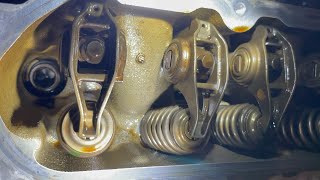
How to confirm: Often accompanied by a distinct, rhythmic ticking or chirping noise from the top of the engine. Diagnosis requires removing the valve cover and potentially the cylinder head to inspect the lifters and camshaft for damage. 🎬 See how to diagnose that rhythmic ticking noise yourself. A failed lifter often damages the camshaft lobe, requiring replacement of both.
Typical fix: Replace all AFM lifters (and often the camshaft). Many owners opt to install an AFM-delete kit, which requires a non-AFM camshaft and ECM tuning to permanently disable the system. 🎬 Watch: The permanent fix for recurring AFM lifter failures.
Est. part cost: $400-$1500 - Mechanical Valvetrain Issue 🟡 Medium Probability TSB #PIP-5400 for 2016 models explicitly links P0266 to a 'lack of lubrication to the rocker arms and valve train'. Other bulletins also point to worn cam lobes, broken valve springs, or sticking valves on these V8 engines.
How to confirm: Requires physical inspection of the valvetrain by removing the valve cover. A cylinder compression test and leak-down test can also point to mechanical sealing issues.
Typical fix: Repair depends on the finding. It could involve replacing a rocker arm, valve spring, camshaft, and/or lifters.
Est. part cost: $50-$1000+ - Failed Ignition Coil or Spark Plug (Cylinder 2) ⚪ Low Probability → Shop Ignition Coil Standard wear and tear item. While it can cause a contribution fault, it more commonly sets a specific misfire code like P0302. It's a less likely cause for P0266 alone, which points to a more consistent power loss.
How to confirm: Swap the cylinder 2 ignition coil and/or spark plug with another cylinder (e.g., cylinder 4). If the code changes to P0272, the swapped part is faulty.
Typical fix: Replace the failed ignition coil or spark plug.
Est. part cost: $20-$70
Rare But Worth Checking
- Injector Circuit Fault: A damaged wire or corroded connector for the cylinder 2 injector can cause an intermittent signal, leading to this code. This should be checked before replacing the injector itself.
- Low Fuel Pressure: A weak high-pressure fuel pump or clogged filter can cause a system-wide lean condition, but sometimes it can manifest as a fault on a single cylinder that is more sensitive to the pressure drop.
- Internal Engine Damage: In severe cases, this code can be a symptom of a more serious mechanical failure, such as a cracked piston, worn piston rings, or a bent connecting rod, which prevents the cylinder from making proper compression.
Diagnosis Steps
- Scan for all DTCs to see if other codes are present, which can provide more context.
- Check for applicable TSBs, especially #17-NA-171. If your vehicle is a 2017 model, verifying the ECM/TCM has the latest software is a crucial and cost-effective first step.
- To rule out the ignition system, swap the ignition coil and spark plug from cylinder 2 with those from cylinder 4. Clear codes and drive. If the code changes to P0272, the coil or plug is bad.
- To rule out the fuel injector, swap the fuel injector from cylinder 2 with cylinder 4. Clear codes and drive. If the code changes to P0272, the injector is the problem. Note: This is labor-intensive on a direct-injected engine.
- If the code remains P0266 after swapping parts, the issue is likely mechanical or electrical.
- Perform a cylinder compression test and a cylinder leak-down test on cylinder 2. Compare the results to other cylinders. Poor results indicate an internal mechanical problem (piston rings, valves, head gasket, piston).
- Visually inspect the injector wiring harness and connector for any signs of damage, corrosion, or loose pins.
- If compression is good, remove the driver's side valve cover to inspect the valvetrain for cylinder 2, looking for broken springs, bent pushrods, or lack of oil on the rocker arms as described in TSB PIP-5400. Listen for a distinct ticking sound which may indicate a failed AFM lifter.
Parts You'll Likely Need
- Fuel Injector (5.3L L83)
(OEM #12668390)— This is the most common cause. Injectors can clog or fail electrically. Part number must match the original.
Trusted brands: ACDelco, General Motors
OEM price range: $80-$150
Aftermarket price range: $40-$90 - Fuel Injector (6.2L L86)
(OEM #12668393)— The 6.2L engine uses a different injector than the 5.3L. It is critical to use the correct part to maintain engine balance.
Trusted brands: ACDelco, General Motors
OEM price range: $75-$160
Aftermarket price range: $50-$100 - AFM/DOD Lifter
(OEM #12698946)— A common failure point on these engines. A collapsed lifter will cause a persistent contribution fault. Usually replaced as a set.
Trusted brands: ACDelco, Michigan Motorsports
OEM price range: $60-$85
Related Codes That Often Appear With This One
- P0302 — This is the specific code for 'Cylinder 2 Misfire Detected'. P0266 indicates a consistent lack of contribution, while P0302 can be intermittent. They often appear together.
- P050D — This code for 'Cold Start Rough Idle' is often seen alongside contribution codes, as the imbalance is most noticeable before the engine warms up.
- P0263, P0269, P0272, etc. — These are the contribution/balance fault codes for other cylinders. Seeing multiple codes like this could point to a systemic issue like a software anomaly (per TSB 17-NA-171), a valvetrain lubrication problem (per TSB PIP-5400), or a major fuel delivery problem.
Technical Service Bulletins (TSBs) & Recalls
- 17-NA-171 — MIL Illuminated - Multiple DTCs including P0266 — Addresses an ECM/TCM software anomaly on 2017 models that can cause numerous codes, including all cylinder balance faults. The fix is to reprogram both the ECM and TCM to the latest calibration.
- PIP-5400 — Engine Misfire Or Backfire With Valvetrain Noise — For 2016 models, this TSB points to a lack of lubrication to the rocker arms and valvetrain as a potential cause for misfires and contribution codes like P0266, often accompanied by a popping or backfire sound.
- N192231060 — Special Coverage - Fuel Injector Function — While not a TSB, this is a special coverage program for 2016-2017 models in certain states, extending the warranty on fuel injectors to 10 years/150,000 miles due to known issues with injectors delivering improper fuel amounts.
- 20-NA-098 — Information on New Fuel Injector Flow Rates — Warns technicians that GM uses multiple flow-rated injectors on the same fuel rail. Replacing an injector with one of a different flow rate (even if it fits) will cause persistent balance faults. The correct part number must be used.
Platform-Specific Known Issues
- TSB #PIP-5400 notes that for 2016 models, P0266 can be caused by a lack of lubrication to the valvetrain, leading to noise and misfires. This points to a potential oiling or mechanical issue rather than a simple component failure.
- TSB #17-NA-171 indicates that for 2017 models, a wide range of drivability issues, including code P0266, can be resolved by simply updating the ECM and TCM software.
- The Active Fuel Management (AFM) system on the 5.3L and 6.2L V8s is a known weak point. Collapsed lifters are a common cause of misfires and contribution faults on these engines.
Mechanic-Grade Diagnostic Values
- Low-Pressure Fuel System Pressure — expected: 45 GPH at 72 PSI (500 kPa). Failure: Pressure below this specification can starve the high-pressure pump, causing contribution faults.
- High-Pressure Fuel System Pressure (at idle) — expected: 2.0-5.0 MPa (290-725 PSI). Failure: Pressure that is unstable or significantly lower than the desired pressure shown on a scan tool indicates a failing high-pressure fuel pump or a leak.
- Injector Balance Test (GDS2 Scan Tool) — expected: Pressure drop for each cylinder should be within 20% of the average of the other cylinders.. Failure: A cylinder with a pressure drop significantly different from the others indicates a faulty (clogged or leaking) injector.
- Long-Term Fuel Trims — expected: Close to 0%, typically within +/- 10%.. Failure: A highly negative long-term fuel trim (e.g., -20% to -35%) can indicate a leaking high-pressure fuel pump, which dilutes the crankcase oil with fuel.
Scan Tool Commands That Help
- GDS2 (GM Dealer Tool): Automated Injector Balance Test — This is a primary diagnostic step to confirm if a fuel injector is flowing differently than the others. The tool disables each injector sequentially and measures the corresponding drop in fuel rail pressure, highlighting any imbalance.
- GDS2 (GM Dealer Tool): Cylinder Power Balance — This function graphically displays the relative power contribution of each cylinder by monitoring crankshaft speed variations. It provides a quick visual confirmation that cylinder 2 is underperforming compared to the others.
- GDS2 (GM Dealer Tool): Fuel Pressure Control — Allows a technician to command different fuel pressures to test the response of the high-pressure fuel pump and pressure regulator, helping to diagnose fuel delivery issues separate from the injectors.
Wiring & Ground Locations
- Fuel Rail Pressure Sensor — Located on the front of the passenger side fuel rail.. An inaccurate reading from this sensor can cause the ECM to command incorrect fuel pressure, potentially leading to balance faults. It's a key input for the injector balance test.
- Cylinder 2 Fuel Injector Connector — On the driver's side of the engine, second injector from the front.. The injector receives a pulsed ground signal from the ECM. Checking for voltage with key-on and using a noid light during cranking can verify the electrical circuit is intact before condemning the injector.
- G103 / G104 — Main engine block and cylinder head ground points, typically located on the front or side of the cylinder heads.. A poor engine ground can cause erratic behavior in sensors and actuators, including fuel injectors. Verifying these grounds are clean and tight is a fundamental step in diagnosing electrical issues.
Real Owner Repair Stories
- Reddit user in r/Silverado (2008 Suburban (similar AFM engine design)) — Engine running rough, check engine light.
❌ Tried (didn't work) Initial diagnosis pointed to a misfire.
✅ What actually fixed it The #6 cylinder lifter (an AFM cylinder) froze, which also damaged the camshaft. The owner performed an AFM/DOD delete, installed a stage 2 cam, and tuned the ECU, which resolved the issue.
OEM Part Supersession History
12668390→12681212— Standard part revision and improvement by the manufacturer.
Heads up: While the part numbers have been superseded, sources indicate there is no functional difference between 'low,' 'nominal,' and 'high' flow-rate versions sometimes mentioned, as long as all eight injectors match.Multiple (12571595, 12639516, 12680871)→12698946, now 12740071— Multiple revisions to the AFM lifter design to improve durability.
Heads up: It is critical to use the latest available part number when replacing AFM lifters. Technicians strongly recommend replacing all AFM lifters as a set, not just the single failed unit.
Model Year Variations Within This Range
- 2019 (All-New T1XX Platform): The all-new 2019 Sierra 1500 introduced the L84 (5.3L) and L87 (6.2L) engines, which replaced Active Fuel Management (AFM) with Dynamic Fuel Management (DFM). Unlike AFM which deactivates the same four cylinders, DFM can deactivate any number of cylinders in 17 different patterns. This means all 16 lifters are the deactivating type, and the oil control system is more complex, with eight individual solenoids in the valley. This introduces different potential failure points compared to the earlier AFM system.
- 2016-2018 (K2XX Platform): These models use the L83 (5.3L) and L86 (6.2L) engines with Active Fuel Management (AFM). This system deactivates cylinders 1, 4, 6, and 7. Failures are typically concentrated in the specialized lifters on these four cylinders, though related oil pressure problems can affect the entire engine.
Helpful Videos
We Have This Part in Stock



The information in this article is provided for general reference and educational purposes only. Vehicle specifications, procedures, and part compatibility can vary by production date, trim level, and region. Always consult your vehicle's factory service manual and verify part numbers before purchasing or performing repairs. Safety-critical components such as airbags, seat belts, and braking systems should be installed by a qualified professional.
- Gmc SIERRA 1500:
- 🧭 Diagnostic Flowchart
- 🎬 Helpful Videos
- 🛍️ Shop This Part
- What's Unique About the 2016-2019 Gmc SIERRA 1500
- Symptoms You May Notice
- Most Likely Causes
- Rare But Worth Checking
- Diagnosis Steps
- Parts You'll Likely Need
- Related Codes That Often Appear With This One
- Technical Service Bulletins (TSBs) & Recalls
- Platform-Specific Known Issues
- Mechanic-Grade Diagnostic Values
- Scan Tool Commands That Help
- Wiring & Ground Locations
- Real Owner Repair Stories
- OEM Part Supersession History
- Model Year Variations Within This Range
- 🎟️ Get 5% Off