

OBD-II Code P0267: Cylinder 3 Injector Circuit Low
What P0267 means, why it triggers, and how to fix it
- P0267 indicates a low voltage condition or short to ground in the cylinder 3 fuel injector circuit, causing an immediate engine misfire.
- A faulty fuel injector or a damaged wiring harness accounts for 90% of P0267 cases, making them the first components to test.
- Driving with an active P0267 code dumps unburned fuel into the exhaust, destroying an $800 to $2,500 catalytic converter within weeks.
- Test the injector's resistance with a multimeter (expecting 10-18 ohms) before spending $150+ on a replacement part.
What Does P0267 Mean?
P0267 means the Powertrain Control Module (PCM) detects a low voltage condition in the electrical circuit for the cylinder 3 fuel injector. The PCM uses a driver transistor to pulse a ground signal, turning the injector on and off. When the PCM sees voltage below a specific threshold (typically under 3 volts when not commanded on), it sets this code. This fault prevents the injector from delivering fuel, causing an immediate engine misfire and poor performance.
Technical definition: The official SAE/OBD-II definition is "Cylinder 3 Injector Circuit Low." This indicates the Powertrain Control Module (PCM) detects the voltage in the control circuit for the cylinder 3 fuel injector is below the normal expected range. This is caused by a short to ground in the control wire or an internal short within the injector itself. The code sets when the PCM detects circuit voltage under 3 volts for more than 2 seconds while the injector is inactive.
Can I Drive With P0267?
Yes, But With Caution. Driving is not recommended. You can drive for short, essential trips (under 50 miles) to a repair shop, but you must fix it immediately. Continuing to drive with a constant misfire sends unburned fuel into the exhaust, rapidly destroying the catalytic converter—a repair costing $800 to $2,500. Ignoring the code causes severe engine damage, failed emissions tests, and leaves you stranded.
Common Causes
- Faulty Cylinder 3 Fuel Injector (Very Common) — The fuel injector has an internal electrical fault, such as a short circuit in its coil windings or a broken return spring. This accounts for roughly 60% of P0267 cases.
- Damaged Wiring Harness or Connector (Common) — The wiring leading to the injector is frayed, shorted to ground, or melted. The electrical connector can also be loose, corroded, or have bent pins. This causes about 30% of cases.
- Power Supply or Ground Failure (Less Common) — A blown fuse, faulty fuel pump relay, weak battery, or a poor ground connection at the engine block drops overall system voltage, triggering a low circuit fault.
- Fuel Injection Control Module (FICM) Failure (Rare) — On specific diesel trucks like the Ford 6.0L Power Stroke, a separate FICM controls the injectors. A failed FICM power board drops voltage below 45V, triggering this code.
- Faulty Powertrain Control Module (PCM) (Rare) — The internal driver circuit within the PCM that controls the cylinder 3 injector has failed. This accounts for less than 10% of cases and requires exhaustive testing of all wiring before replacement.
Symptoms
- Engine Misfire and Rough Idle — The engine shakes, stumbles, and runs unevenly at idle because cylinder 3 is not receiving fuel to fire correctly.
- Reduced Engine Power and Hesitation — The vehicle feels sluggish, lacks acceleration, and stumbles when pressing the gas pedal.
- Decreased Fuel Economy — Fuel consumption increases by 5-15% because the engine runs inefficiently and the PCM overcompensates for the dead cylinder.
- Raw Fuel Smell from Exhaust — If the electrical fault causes the injector to stick open, unburned fuel passes directly into the exhaust system, creating a strong gasoline odor.
- Check Engine Light is On or Flashing (also visible on scanner) — The light stays illuminated while the fault is active. A flashing Check Engine Light indicates a severe, catalyst-damaging misfire requiring immediate shutdown.
Diagnostic Flowchart
Tap your situation to follow the diagnostic path that matches what you're seeing on this code.
Common Fixes & Costs
- Replace Cylinder 3 Fuel Injector — Parts: $50-$200, Labor: $100-$400, ~2.5 hr book time (Intermediate)
- Repair Wiring Harness or Replace Pigtail — Parts: $15-$50, Labor: $100-$400, ~1.5 hr book time (Intermediate)
- Clean Injector Connector Pins — Parts: $5-$15, Labor: $50-$75, ~0.3 hr book time (DIY)
- Replace Blown Fuse or Relay — Parts: $1-$15, Labor: $0-$50, ~0.2 hr book time (DIY)
- Replace Powertrain Control Module (PCM) — Parts: $600-$1200, Labor: $200-$300, ~1.5 hr book time (Professional)
Used vs. New Parts: Buying Guide
When a used part is worth it: Used or remanufactured injectors are a budget-friendly option for older vehicles (>100k miles) where a new OEM part represents a significant portion of the vehicle's value.
Donor-vehicle mileage cap: roughly under 80000 miles for the part to have meaningful remaining life.
Donor quality checklist:
- Favor 'remanufactured' over 'used'; remanufacturing implies testing and replacement of internal wear items.
- Purchase from a reputable seller with a clear 30+ day warranty policy.
- Match the part number exactly to avoid lean/rich conditions.
Decision logic:
- If Vehicle is < 80K miles AND part is < $150 new → buy new — the risk and short warranty of a used part aren't worth the small savings.
- If Vehicle is > 150K miles AND budget is tight → buy a quality remanufactured part; expect it to last 50-70% as long as a new OEM part.
- If The labor cost is high (e.g., intake manifold removal required) → buy a new OEM part to avoid paying $400+ in labor twice if the used part fails.
Warranty tradeoff: Used parts offer a 30-90 day warranty. New aftermarket parts offer 1-year to limited lifetime. New OEM parts carry a 1-2 year warranty.
Worst-case if a used part fails: 400-900
What Happens If You Wait — Timeline
- 0-1 week: Check Engine Light illuminates. A slight rough idle is noticeable on cold starts, but drivability remains mostly normal. (MPG impact: 0-5%% · Added cost: $0)
- 1 week - 2 months: Rough idle becomes consistent. Hesitation during acceleration is apparent. The PCM dumps raw fuel into the exhaust, stressing the catalytic converter. (MPG impact: 5-15%% · Added cost: $50-150 in wasted fuel)
- 2-6 months: Constant misfire under load. Unburned fuel superheats the catalytic converter, melting its internal substrate. A 'rotten egg' smell appears. (MPG impact: 15-25%% · Added cost: $800-$2500 (catalytic converter replacement required))
- 6+ months: Catastrophic failure. If the injector fails open, it washes oil from cylinder walls, scoring pistons. Clogged converters cause severe exhaust backpressure. (MPG impact: 25%+% · Added cost: $3000-$8000 (engine rebuild required))
Cost of Not Fixing It
- 0-1 month: Noticeable drop in fuel economy (5-15%), rough idle, and poor acceleration. (Added cost: 25-75)
- 1-6 months: Constant misfire overheats and destroys the catalytic converter by dumping raw fuel into it. (Added cost: 800-2500)
- 6+ months: Unburned fuel washes oil from cylinder walls or dilutes engine oil, causing catastrophic bearing or piston failure. (Added cost: 3000-8000)
Diagnosis Steps
- Scan Codes and Review Freeze Frame Data
Use an OBD-II scanner to confirm P0267 and check for related codes like P0303 (Cylinder 3 Misfire). Review freeze frame data to identify the exact engine RPM, temperature, and load when the code triggered.
Tools: OBD-II Scanner (Beginner) - Visual Inspection of Harness and Connector
Inspect the cylinder 3 injector connector and wiring harness. Look for frayed wires, melted insulation from exhaust heat, rodent damage, or green corrosion on the connector pins. Ensure the plug clicks securely into place.
Tools: Flashlight (Beginner) - Test Injector Resistance
Unplug the injector. Use a multimeter set to Ohms (Ω) to measure resistance across the two injector pins. Most high-impedance injectors read 10-18 ohms. A reading under 5 ohms confirms an internal short; an 'O.L.' reading confirms an open circuit. Both require injector replacement.
Tools: Multimeter (Intermediate) - Check Control Circuit with a Noid Light
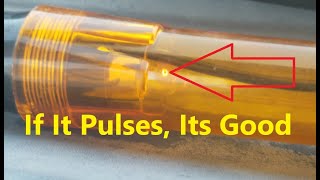
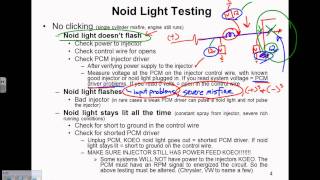
Unplug the injector harness and insert a noid light. Crank the engine. A rhythmic flashing confirms the PCM is sending the pulse signal. A constant light indicates a short to ground in the wiring. No light indicates an open power or ground circuit.
Tools: Noid Light Set (Intermediate) - Swap the Injector (Mechanical Verification)
If the injector is easily accessible, swap the cylinder 3 injector with cylinder 1. Clear codes and drive. If the code follows the injector (becomes P0261), the injector is faulty. If P0267 returns, the issue is strictly in the wiring or PCM.
Tools: Basic hand tools (socket set, wrenches) (Intermediate) - Test the Wiring Harness for Shorts/Opens
Disconnect the harness from the injector and the PCM. Use a multimeter to test continuity on the control wire between both ends (checking for breaks). Then, test continuity between the control wire and a known good ground; any reading other than 'O.L.' confirms a short to ground in the harness.
Tools: Multimeter, Vehicle-specific wiring diagram (Advanced) - Scope the Injector Waveform
Use an oscilloscope to view the injector's voltage and amperage waveform. A clean square wave is expected. A low amplitude or missing voltage spike when the injector closes instantly differentiates between a wiring short, a weak PCM driver, or a faulty coil.
Tools: Automotive Oscilloscope, Low-amp probe (Professional)
When This Code Triggers (Freeze-Frame Conditions)
- Engine Coolant Temp: 180-200°F (fully warmed up)
- RPM: 1500-2500 (cruise / steady throttle)
- Engine Load: 30-60% (steady state driving)
- Vehicle Speed: 35-55 mph (highway driving)
Related Codes
- P0303 — Means "Cylinder 3 Misfire Detected." P0267 is the electrical cause, and P0303 is the resulting effect. Resolving the P0267 electrical fault automatically clears the misfire code.
- P0268 — Means "Cylinder 3 Injector Circuit High." Indicates too much voltage, usually from an open circuit. Alternating between P0267 (Low) and P0268 (High) signals a severely frayed wire intermittently shorting and breaking contact.
- P0203 — A general code for "Injector Circuit/Open - Cylinder 3." P0267 is a specific 'low voltage' version of P0203. The diagnostic approach is identical: find the short or failed component in the cylinder 3 circuit.
- P0269 — Means "Cylinder 3 Contribution/Balance Fault." The PCM determines cylinder 3 is not producing power. P0267 is the direct electrical cause of this lack of power contribution.
Climate & Environmental Factors
- Humidity and Moisture: High humidity or water intrusion accelerates corrosion on injector connectors and wiring harness grounds. This corrosion creates high resistance or shorts to ground, triggering P0267.
- Extreme Heat Cycles: Repeated extreme temperature changes cause wiring insulation near the exhaust manifold to become brittle and crack. The exposed copper wire shorts against the engine block, causing the fault.
How to Talk to a Mechanic About This Code
Say this: "I have a P0267 code for the Cylinder 3 Injector Circuit. I need a diagnostic to confirm if the issue is the injector itself or a short in the wiring harness. Please test the circuit resistance and voltage before replacing any parts."
This proves you understand the problem is electrical. It forces the shop to perform a specific circuit test rather than blindly replacing the injector, saving you money if the fault is just a frayed wire.
Avoid saying:
- 'My check engine light is on.' (Too vague, invites a broad, expensive diagnostic fee).
- 'Just replace the bad injector.' (The problem might be the wiring, leaving you paying for a part you don't need).
- 'Do whatever you think is best.' (Gives the shop a blank check).
Questions to ask before authorizing the repair:
- Did you test the injector's resistance, and what was the exact ohm reading?
- Did you use a noid light or scope to confirm the PCM is sending a signal?
- If you recommend a wiring repair, can you physically show me where the damage is?
- What is the warranty on the parts and labor?
Where to Take It: Dealer vs Independent vs Chain
- Dealer:
Recommended only if the vehicle is under warranty or has a known, complex module failure. Otherwise, an independent shop is far more cost-effective.
Best for: Vehicles under powertrain or emissions warranty., Complex manufacturer-specific issues like a failed PCM or Ford FICM., Newer vehicles with high-pressure direct injection systems.
Downsides: Highest labor rates ($150-$250/hr)., More likely to replace an entire $800 wiring harness rather than repair a single wire. (Typical cost: +50% vs. baseline) - Independent Shop:
Best overall fit. An experienced independent technician easily diagnoses and repairs common P0267 causes at a reasonable rate ($100-$150/hr).
Best for: Out-of-warranty vehicles where cost is a major factor., Common repairs like a faulty injector or tracing a straightforward wiring short.
Downsides: Diagnostic capabilities vary. Look for shops with ASE-certified electrical technicians., May lack access to the latest manufacturer-specific programming tools. (Typical cost: +0% vs. baseline) - Chain Shop:
AVOID for initial diagnosis. They are less likely to properly trace a wiring or PCM issue. Acceptable only if you have already diagnosed a bad injector and just need it swapped.
Best for: Simple part replacements where the diagnosis is already 100% confirmed.
Downsides: Technician skill varies widely., Often lack the in-depth electrical diagnostic experience needed to trace wiring faults., High pressure for unnecessary upsells. (Typical cost: -10% vs. baseline)
When to Walk Away From the Repair
If the estimated repair cost for the P0267 fault and related damage (like a destroyed catalytic converter) exceeds 40-50% of the car's private-party value, sell or trade it in.
- Car worth $5000, fix is $2200: Borderline. The repair cost is approaching 50% of the car's value. Get a second opinion before proceeding.
- Car worth $15000, fix is $1200: Fix it. The repair cost is well below the threshold and restores the vehicle's function and value.
- Car worth $3000, fix is $1800: Walk away. The repair is over 50% of the car's value. It is not a sound investment.
What Scan Tool You Need for This Code
Minimum: A basic code reader that reads and clears engine codes.
A $20 code reader only confirms P0267 is present. It cannot determine if the cause is the injector, wiring, or PCM, which requires live data and bidirectional testing.
Budget: BlueDriver Pro (~$100) — Connects to a smartphone via Bluetooth. Reads/clears codes, views live data (like system voltage), and provides repair reports for DIY diagnosis.
Mid-range: Foxwell NT510 Elite / Innova 5610 (~$150) — Offers advanced functions and limited bidirectional controls, allowing you to perform an injector 'buzz test' to verify the PCM is commanding the injector.
Professional: Autel MaxiCOM MK808S / XTOOL D8S (~$450-800) — Professional tools with full bidirectional control. Commands injector buzz tests, performs cylinder balance tests, and accesses manufacturer-specific data for rapid, accurate diagnosis.
Rent vs buy: Auto parts stores read codes for free. However, properly diagnosing P0267 requires multiple tests and clearing codes, making owning at least a budget scanner highly recommended.
How to Clear the Code After You Fix It
- Use OBD-II scan tool to clear code
- Perform a complete drive cycle to reset readiness monitors
- Reconnect battery (alternative, but clears all memory)
Drive cycle (~30 minutes): From a cold start (sit for 8+ hours), idle for 5 minutes. Drive for 15-20 minutes with mixed stop-and-go and steady speeds between 30-60 mph. Avoid aggressive acceleration. Allow the vehicle to cool completely before re-testing if monitors are not set.
Readiness monitors affected: Catalyst monitor, O2 sensor monitor, EVAP monitor
Before emissions retest: drive at least 100 miles to fully set monitors.
Watch out for:
- Disconnecting the battery clears codes but resets all readiness monitors, causing an immediate emissions test failure.
- The code returns immediately if the underlying electrical short is not repaired.
- The EVAP monitor requires specific fuel levels (15-85%) and ambient temperatures to run.
Will This Fail Emissions / State Inspection?
Yes — this code typically fails an OBD-II emissions inspection.
- California: An active Check Engine Light for P0267 is an automatic failure. After repair, all readiness monitors must be 'Ready' for the test to proceed.
- New York: The NYVIP3 inspection includes an OBD-II scan. An active P0267 code results in an immediate emissions test failure.
- Texas: In counties requiring emissions testing, an illuminated Check Engine Light from P0267 causes the vehicle to fail state inspection.
Most Commonly Affected Vehicles
- Ford F-Series Super Duty (6.0L Power Stroke) (2003-2007) — Notorious for Fuel Injection Control Module (FICM) failures. The FICM fails to supply 48 volts to the injectors, triggering P0267. Always test FICM voltage first.
- Ford F-150 (2004-2024) — The wiring harness routed near the intake manifold chafes through, causing a short to ground. A thorough visual inspection of the harness is critical.
- Chevrolet Silverado, Traverse, Impala (2007-2024) — Prone to internal electrical shorts in the fuel injectors and rodent damage to soy-based wiring. On V6 models, cylinder 3 is on the rear bank, requiring expensive intake manifold removal.
- Honda Accord, CR-V (2003-2024) — P0267 is frequently caused by the electrical connector becoming loose or corroded over time, rather than a total injector failure.
- Hyundai Sonata, Azera, Tiburon (2006-2012) — The ECM sets P0267 when it detects the injector's control circuit is shorted to ground. Specified injector resistance is typically 13.8 to 15.2 ohms.
- Nissan Altima, Maxima, X-Trail (2002-2018) — Logs P0267 due to age-related internal injector failure or engine bay wiring harnesses becoming brittle from heat.
- BMW 3 Series, 5 Series, X3, X5 (2001-2014) — Wiring harnesses become brittle from high engine heat, causing insulation to crack and short. High-pressure direct injectors are significantly more expensive to replace.
- Volkswagen Golf, Jetta, Passat (2000-2016) — Linked to corrosion in the wiring harness connectors, particularly the main harness plug in the engine bay suffering from water intrusion.
Manufacturer-Specific Notes
- Ford: On 6.0L Power Stroke diesels, P0267 is caused by a failing Fuel Injection Control Module (FICM), not the injector. A Key On, Engine Off (KOEO) FICM voltage test below 45V confirms the module is dead.
- General Motors (GM): Per TSB #PIP4924D, the engine wiring harness rubs against engine brackets or the A/C compressor. This chafing causes a short to ground that triggers P0267. Inspect harness routing before replacing parts.
- Chrysler/Dodge/Jeep: The Totally Integrated Power Module (TIPM) develops internal faults. A failing driver circuit within the TIPM drops voltage to the injector circuit, perfectly mimicking a bad injector or wiring short.
- Subaru: Older models use an external resistor pack in the fuel injector circuit. High resistance in the cylinder 3 resistor drops voltage and triggers P0267, even if the injector and wiring are flawless.
Real Owner Stories
2011 Ford F-150 5.0L at 135K miles
Check Engine Light came on with P0267 and P0303. The truck had a noticeable rough idle and hesitation when accelerating.
What they tried:
- Initially suspected a bad ignition coil and swapped it with another cylinder, but the misfire code did not move.
- Tested the fuel injector resistance and found cylinder 3 was out of spec compared to the others.
Outcome: Replaced the single fuel injector for cylinder 3. The total cost was $150 for the part and self-installation. The codes cleared and did not return, resolving the rough idle.
Lesson: Don't assume a misfire is a spark or coil issue. A 5-minute resistance test on the injectors saves time and money by pinpointing an electrical injector fault.
2013 Chevy Traverse at 110K miles
Intermittent P0267 code, accompanied by a flashing CEL during hard acceleration. The dealer could not replicate the issue.
What they tried:
- The owner replaced the cylinder 3 injector, but the code returned a week later.
- An independent shop performed a detailed inspection of the wiring harness.
Outcome: A technician found the injector wiring harness rubbing against a metal A/C line, causing an intermittent short to ground (covered by GM TSB #PIP4924D). The shop repaired the wire and rerouted the harness for $350. The code has not returned.
Lesson: If a part replacement doesn't fix an electrical code, the problem is in the wiring. Always check Technical Service Bulletins (TSBs) for your vehicle to find known, non-obvious failures.
2006 Ford F-250 6.0L Power Stroke at 180K miles
Truck suddenly started running very rough, throwing multiple injector circuit codes including P0267.
What they tried:
- Owner immediately suspected the Fuel Injection Control Module (FICM) due to the multiple codes and the engine's reputation.
Outcome: A voltage test on the FICM showed it outputting 35 volts instead of the required 48 volts. The owner replaced the FICM power board for $400. This restored correct voltage, cleared all codes, and fixed the rough running.
Lesson: On vehicles with known systemic issues (like the 6.0L Power Stroke's FICM), test the known weak point first when multiple related codes appear simultaneously.
1997 Jeep Cherokee XJ at 160K miles
After applying dielectric grease to all under-hood connectors to prevent water damage, an intermittent P0267 code appeared.
What they tried:
- The owner found that unplugging and replugging the injector connector temporarily fixed the problem.
- Suspecting the grease was the issue, they cleaned the connectors.
Outcome: The owner used electrical contact cleaner to thoroughly wash the dielectric grease out of the injector connector pins. This restored a solid electrical connection, resolving the code.
Lesson: Dielectric grease is an insulator. It seals the connector housing from moisture but interferes with low-voltage signals if packed directly onto the metal contacts.
How to Prevent This Code From Triggering
- Inspect and secure wiring harnesses (During any under-hood maintenance) — Wiring vibrating against hot or sharp engine components causes shorts. Ensure harnesses are secured in clips and not resting on exhaust manifolds.
- Install protective heat shielding on vulnerable wires (Once, as a proactive measure) — Adding a high-temperature sleeve (e.g., fiberglass) to wires routed near exhaust manifolds prevents insulation from becoming brittle and cracking.
- Apply dielectric grease correctly to connector seals (When connectors are unplugged for service) — Applying grease to the rubber weather-pack seal (not the metal pins) prevents moisture intrusion, stopping the corrosion that causes low voltage faults.
Frequently Asked Questions
What does the 'Circuit Low' part of the code mean?
It means the PCM receives a voltage signal from the cylinder 3 injector circuit that is lower than the minimum expected level. This points directly to a short to ground in the wiring or an injector with an internal short.
What are the most common mistakes when diagnosing P0267?
The biggest mistake is replacing the fuel injector without testing it first. Technicians must test the injector's resistance and check the wiring for shorts to ground. Swapping parts without confirming the fault moves with the component wastes money.
Can a bad battery or alternator cause a P0267 code?
Yes. The PCM relies on stable system voltage to monitor circuits. If the battery is weak or the alternator fails, overall voltage drops, causing the PCM to misinterpret the injector circuit voltage as low.
Can I fix P0267 myself?
You can fix it yourself if the issue is a loose connector, blown fuse, or visibly damaged wire. Replacing a fuel injector is an intermediate job requiring fuel system depressurization. Tracing complex electrical shorts to the PCM requires professional tools and experience.
Will P0267 cause my car to fail an emissions test?
Yes. An active P0267 code causes an automatic failure of any OBD-II emissions or smog test. The fault directly impacts the vehicle's combustion and emissions output.
I replaced the injector, but the code came back. What now?
The problem is in the wiring harness or the PCM. You must perform a thorough continuity and short-to-ground test on the wiring between the injector connector and the PCM to locate the break.
Will a fuel injector cleaner fix a P0267 code?
No. P0267 is an electrical fault code indicating a voltage problem. Fuel injector cleaner removes carbon deposits to improve flow, but it cannot fix a short circuit, broken wire, or failed internal coil.
Key Takeaways
- P0267 indicates a low voltage condition or short to ground in the cylinder 3 fuel injector circuit, causing an immediate engine misfire.
- A faulty fuel injector or a damaged wiring harness accounts for 90% of P0267 cases, making them the first components to test.
- Driving with an active P0267 code dumps unburned fuel into the exhaust, destroying an $800 to $2,500 catalytic converter within weeks.
- Test the injector's resistance with a multimeter (expecting 10-18 ohms) before spending $150+ on a replacement part.
Helpful Videos
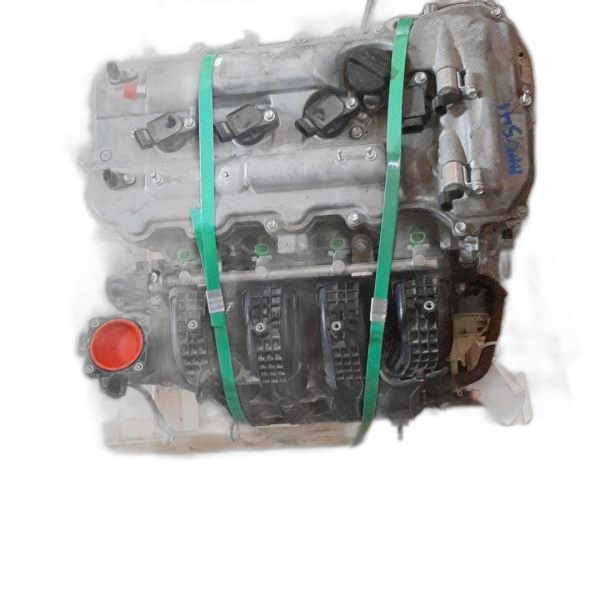
Shop the Parts Behind P0267
Below are the parts most often responsible for code P0267, ranked by how frequently each one is the actual culprit (per the diagnosis above). Tap any to see what we have for your vehicle.






The information in this article is provided for general reference and educational purposes only. Vehicle specifications, procedures, and part compatibility can vary by production date, trim level, and region. Always consult your vehicle's factory service manual and verify part numbers before purchasing or performing repairs. Safety-critical components such as airbags, seat belts, and braking systems should be installed by a qualified professional.
- 🧭 Diagnostic Flowchart
- 🎬 Helpful Videos
- 🛍️ Shop This Part
- What Does P0267 Mean?
- Can I Drive With P0267?
- Common Causes
- Symptoms
- Common Fixes & Costs
- Used vs. New Parts: Buying Guide
- What Happens If You Wait — Timeline
- Cost of Not Fixing It
- Diagnosis Steps
- When This Code Triggers (Freeze-Frame Conditions)
- Related Codes
- Climate & Environmental Factors
- How to Talk to a Mechanic About This Code
- Where to Take It: Dealer vs Independent vs Chain
- When to Walk Away From the Repair
- What Scan Tool You Need for This Code
- How to Clear the Code After You Fix It
- Will This Fail Emissions / State Inspection?
- Most Commonly Affected Vehicles
- Manufacturer-Specific Notes
- Real Owner Stories
- 2011 Ford F-150 5.0L at 135K miles
- 2013 Chevy Traverse at 110K miles
- 2006 Ford F-250 6.0L Power Stroke at 180K miles
- 1997 Jeep Cherokee XJ at 160K miles
- How to Prevent This Code From Triggering
- Frequently Asked Questions
- What does the 'Circuit Low' part of the code mean?
- What are the most common mistakes when diagnosing P0267?
- Can a bad battery or alternator cause a P0267 code?
- Can I fix P0267 myself?
- Will P0267 cause my car to fail an emissions test?
- I replaced the injector, but the code came back. What now?
- Will a fuel injector cleaner fix a P0267 code?
- Key Takeaways
- 🎟️ Get 5% Off