

P0267 on 2010-2014 Cadillac CTS: Cylinder 3 Injector Circuit Low Causes and Fixes
This code indicates a low voltage problem in the cylinder #3 fuel injector circuit. Most often, this is caused by a faulty fuel injector or a chafed/damaged wiring harness, a known issue on this platform. Expect to pay $80-$200 for a new injector, which can be a DIY replacement for those with moderate experience, though accessing it requires removing the intake manifold.
- P0267 on a 2010-2014 Cadillac CTS points to an electrical problem with the cylinder 3 fuel injector circuit.
- The most likely causes are a failed fuel injector or a damaged wiring harness, which is a known issue documented in GM service bulletins.
- Do not immediately assume a spark plug or coil is the problem; this code is specific to the fuel injector circuit.
- A key diagnostic step is to inspect the wiring harness for chafing, especially near the intake and valve covers, before replacing parts.
- Driving with this code can lead to damaging the catalytic converter, so it's best to get it repaired promptly.
- A DIY-savvy owner can test and replace the injector, but be aware that the correct resistance is very low (~1.5 ohms) and accessing the injectors requires removing the intake manifold.
What's Unique About the 2010-2014 Cadillac CTS
For the second-generation Cadillac CTS, particularly those with the 3.0L (LF1) and 3.6L (LLT/LFX) direct-injection engines, fuel system components are a known point of attention. GM issued Technical Service Bulletin #PIP4924D, which includes P0267, for a wide range of injector circuit codes that could lead to a misfire. The bulletin specifically instructs technicians to inspect the fuel injector wiring harness for rubbing (chafing) against engine components like the intake plenum, valve cover bolts, and fuel lines. This makes a wiring issue a higher-than-average probability on these vehicles compared to others where the injector itself is the primary suspect. Another TSB, #PIT5424, also notes harness routing issues near the back of the engine on the 3.6L LFX can cause this and other injector codes.
Diagnostic Flowchart
Tap your situation to follow the diagnostic path that matches what you're seeing on this vehicle.
Symptoms You May Notice
- Check Engine Light is on.
- Engine misfire, which may feel like a stumble or shudder, particularly under load.
- Rough or uneven idle.
- Hesitation or loss of power during acceleration.
- Reduced fuel economy.
- Engine may stall at stops.
- Replacing the spark plug or ignition coil for cylinder 3 without testing the injector circuit first. While a misfire can be caused by these parts, the P0267 code specifically points to an electrical fault in the injector circuit.
- Assuming the injector is bad without thoroughly inspecting the wiring harness first. Given the known TSBs for this platform, a wiring issue is a very strong possibility.
Most Likely Causes
- Wiring Harness or Connector Issue 🔴 High Probability GM TSB #PIP4924D explicitly calls out that the fuel injector wiring harness can rub through against the intake plenum, valve cover bolts, fuel lines, or the side of the cylinder head. This chafing can cause a short to ground, creating the 'circuit low' condition. A user on a Camaro5 forum with the same engine family ultimately traced their injector codes to a short in the wiring harness, which required a full harness replacement to fix.
How to confirm: Carefully perform a visual inspection of the injector wiring harness, focusing on the areas mentioned in TSB #PIP4924D. Look for any signs of rubbing, melted plastic loom, or exposed wires. Disconnect the harness and check for continuity to ground on the control wire using a multimeter. The control wire for the cylinder 3 injector is typically Pink/Black (PK/BK). Wiggle the harness while testing to expose intermittent shorts.
Typical fix: Repair the damaged section of wire using solder and heat shrink. If the damage is extensive or near the connector, replace the connector pigtail. Protect the repaired area with new plastic loom and re-route it to prevent future contact.
Est. part cost: $10-$50 - Faulty Cylinder 3 Fuel Injector 🔴 High Probability → Shop Fuel Injector Direct injection (GDI) injectors operate under high pressure and can fail internally. The internal coil windings can short out or develop high resistance, causing the low voltage reading. While wiring is a major concern on this platform, a failed injector remains a very common cause.
How to confirm: Measure the electrical resistance of the fuel injector using a multimeter. For the 3.6L LFX GDI engine, the expected resistance is very low, typically 1.2 to 1.8 ohms. A service manual specifies 1.25-1.75 ohms when the engine is between 50-90°F (10-32°C). A reading that is significantly higher or lower (e.g., open circuit or a dead short) indicates a bad injector. The most definitive test is to swap the cylinder 3 injector with another cylinder (e.g., cylinder 1) and see if the trouble code follows the injector (e.g., changes to P0261).
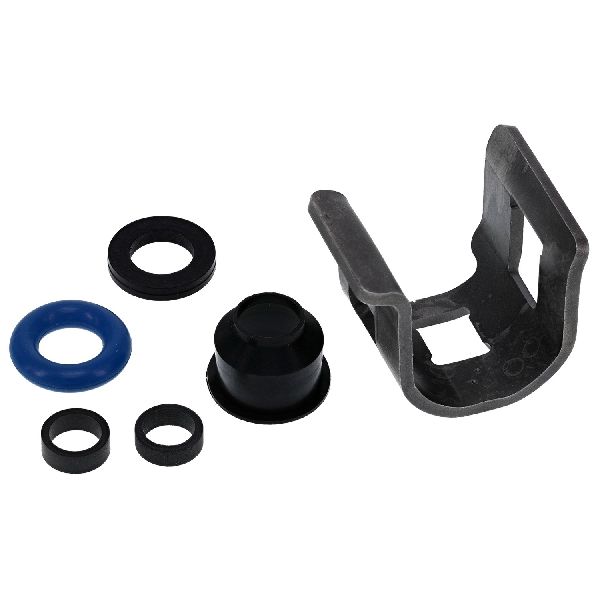
Typical fix: Replace the cylinder 3 fuel injector and its Teflon seal. It is critical to use a special tool to resize the new Teflon seal during installation.
Est. part cost: $80-$200 - Faulty Powertrain Control Module (PCM) ⚪ Low Probability → Shop Engine Control Module (ECM) This is not a vehicle-specific issue but a possibility on any modern car. The internal driver circuit in the PCM that controls the injector can fail, though this is rare. On some GM engines (like the LLT), injectors are paired; a short in the cylinder 6 circuit could potentially set a code for cylinder 3.
How to confirm: This is a diagnosis of exclusion. If the injector and wiring have been tested and confirmed to be good, the PCM is the likely culprit. This requires advanced diagnostic tools, like an oscilloscope, to observe the voltage pattern from the PCM to the injector. If the pattern is incorrect at the PCM, the module is faulty.
Typical fix: Replace and reprogram the Powertrain Control Module.
Est. part cost: $400-$800
Diagnosis Steps
- Confirm the presence of P0267 with an OBD-II scanner. Note any other codes present, especially misfire (P0303) or other injector circuit codes.
- Thoroughly inspect the wiring harness leading to the cylinder 3 injector. Per TSB #PIP4924D, pay close attention to contact points against the intake plenum, valve cover bolts, fuel lines, and the side of the cylinder head. Look for chafing, melting, or corrosion.
- Disconnect the injector and use a multimeter to measure its internal resistance. A good GM GDI injector from this era should read approximately 1.2-1.8 Ohms. If it's open (infinite resistance) or shorted (near zero ohms), the injector is bad.
- If injector resistance is good, test the wiring. Check for continuity on both wires from the injector connector back to the PCM. Check the control wire (PK/BK) for a short to ground by wiggling the harness during the test.
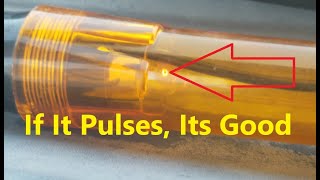
- A 'noid light' can be used on the injector connector to see if the PCM is sending a pulse signal while the engine is cranked. 🎬 Watch: How to test the injector circuit with a meter. A more advanced method is using an oscilloscope to view the full voltage and current waveform.
- As a final confirmation, swap the cylinder 3 injector with an adjacent one (like cylinder 1). Clear the codes and run the engine. If the code changes to P0261 (Cylinder 1 Injector Circuit Low), the injector is confirmed to be the faulty component. If the P0267 code returns, the problem is in the wiring or PCM.
- If the injector and wiring are confirmed good, the PCM driver is the last remaining possibility, which requires professional diagnosis to confirm.
Parts You'll Likely Need
- Fuel Injector
(OEM #12629927 (For 3.0L LF1), 12638530 (For 3.6L LLT/LFX))— This is a common failure point for a P0267 code. The internal electronics of the injector fail, causing the low voltage condition. Part number varies by engine.
Trusted brands: ACDelco (OE), Bosch, Standard Motor Products
OEM price range: $100-$200
Aftermarket price range: $70-$150 - Fuel Injector Connector Pigtail
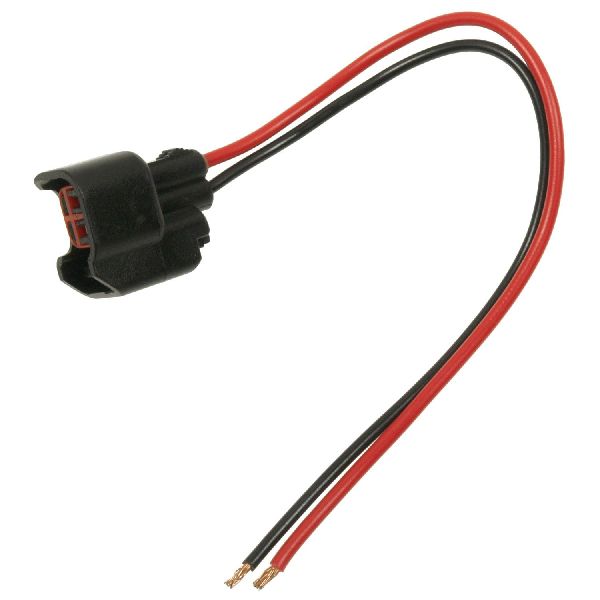
(OEM #Dorman 645-215 (example))— If the wiring harness connector is the source of the fault due to corrosion or damage, it will need to be cut out and replaced with a new pigtail.
Trusted brands: ACDelco, Dorman
OEM price range: $20-$40
Aftermarket price range: $10-$25
Related Codes That Often Appear With This One
- P0303 — P0303 means 'Cylinder 3 Misfire Detected'. Since P0267 causes the cylinder 3 injector to malfunction, it will almost always lead to a misfire in that cylinder.
- P0203 — P0203 means 'Injector Circuit/Open - Cylinder 3'. This is another injector circuit code for the same cylinder and can appear if the nature of the electrical fault fluctuates between a low circuit and an open circuit.
- P2149 — This code for 'Fuel Injector Group 'B' Supply Voltage Circuit/Open' can appear if a wiring short affects multiple injectors. A user on a Camaro forum experienced this code along with individual injector codes due to a harness short.
- P0641 — This code for 'Sensor Reference Voltage 'A' Circuit/Open' can appear alongside P0267, as noted in TSB #PIT5424. This points towards a more significant short in the engine harness affecting a 5-volt reference circuit shared by multiple components.
Technical Service Bulletins (TSBs) & Recalls
- PIP4924D: Addresses engine misfires and a wide range of fuel injector DTCs, including P0267. Instructs technicians to carefully inspect the fuel injector wiring harness for rubbing or open wires at common chafe points like the intake plenum, valve cover bolts, and fuel lines.
- PIT5424: Notes that on 3.6L LFX engines, the engine wire harness routing can be too close to the rear of the Bank 2 valve cover, causing shorts that can trigger P0267 and other codes.
Platform-Specific Known Issues
- GM Technical Service Bulletin #PIP4924D is highly relevant, addressing engine misfires with P0267 and other injector codes. It specifically directs technicians to inspect the fuel injector wiring harness for chafing against engine parts, confirming this is a known failure pattern requiring close inspection of the harness.
- GM Technical Service Bulletin #PIT5424 also points to the engine wire harness routing being too close to the rear of the Bank 2 (left side) valve cover, causing shorts that can trigger P0267 and other codes on the 3.6L LFX engine.
- Carbon buildup on the direct injectors can sometimes contribute to performance issues, though P0267 is specifically an electrical code.
Mechanic-Grade Diagnostic Values
- Fuel Injector Coil Resistance (3.6L LFX/LLT GDI Engines) — expected: 1.2 - 1.8 Ohms. Failure: A reading near 0 Ohms (short), OL/infinite (open), or significantly outside the expected range.
- Fuel Injector Coil Resistance (Temperature Dependent) — expected: 1.25 - 1.75 Ohms, when engine coolant temperature is between 10-32°C (50-90°F).. Failure: A reading outside this range under the specified temperature conditions. The difference between the highest and lowest reading across all injectors should not exceed 0.45 ohms.
- High-Pressure Fuel Rail Pressure (at Idle) — expected: 1.9 - 5.0 MPa (276 - 725 PSI). Failure: Pressure significantly below, above, or fluctuating erratically.
- Injector Pulse Width (Scan Tool, at warm idle) — expected: 2 - 4 milliseconds (ms). Failure: A value of 0 ms on cylinder 3 while other cylinders show a normal pulse width indicates the ECM is not commanding the injector or there is an open circuit.
Hidden / Shadow Codes Worth Checking
- P0267 DTC Set Condition: This is not a hidden code, but the specific logic the ECM uses to set the fault. The ECM detects that the injector high voltage control circuit is shorted to ground for greater than 4 seconds, or for a cumulative total of 30 seconds. (see via This is internal ECM logic described in the GM service manual.)
Scan Tool Commands That Help
- GM GDS2 / Tech2: Fuel Injector Balance Test — This function is used to compare the performance of each injector by measuring pressure drops. It should be used after confirming the electrical circuit integrity (wiring, resistance) to isolate a mechanically failing or clogged injector from an electrical one.
- Professional Scan Tool: Observe 'Injector Control Circuit Test Status' Parameter — While the engine is operating, this data PID should display 'OK' or 'Not Run'. If it displays a fault status, it confirms the ECM is actively detecting an electrical problem in that circuit.
Wiring & Ground Locations
- Cylinder 3 Injector Control Wire — Runs from the ECM to the fuel injector connector for cylinder 3. The wire color is Pink with a Black stripe (PK/BK).. This is the specific wire that the ECM has detected a 'low' or short-to-ground condition on. Identifying it by color is critical for testing continuity and checking for shorts.
- ECM (Engine Control Module) — Typically located below the left (driver's side) headlamp assembly, in the front of the engine compartment.. This is the source of the control signal and where all diagnostic wiring tests will ultimately lead back to. Physical inspection of its connectors for corrosion or damage is a key step.
- G105 / G106 — Primary engine and ECM-related grounds. Generally found on the engine block, cylinder head, or on the frame rail near the front of the engine.. A poor ground at these locations can cause a floating voltage reference for the ECM, leading to numerous and intermittent electrical faults, including injector circuit codes.
- G200 / G201 — Main cabin grounds located in the left (G200) and right (G201) kick panels.. While less likely to cause a specific injector code, these grounds are tied into the Body Control Module and other systems, and a fault here can cause bizarre, hard-to-diagnose electrical issues throughout the vehicle.
OEM Part Supersession History
12638530 (For 3.6L LLT/LFX)→12669384— Standard part revision by the manufacturer.
Heads up: This is the correct injector for the 3.6L engines.12629927 (For 3.0L LF1)→12642021— Standard part revision by the manufacturer.
Heads up: This is the correct injector for the 3.0L engine.N/A→N/A— N/A
Heads up: Aftermarket sellers advise against mixing original and aftermarket injectors due to potential differences in flow and atomization, recommending replacement in full sets if not using OEM parts.
Model Year Variations Within This Range
- 2012-2014: The 3.6L V6 was updated from the LLT to the LFX engine in 2012. The LFX uses low-impedance fuel injectors (~1.2-1.8 Ohm) and has a composite intake manifold. The earlier LLT engine used a different injector type. The injectors are not interchangeable and using the wrong type can cause running problems or damage the ECM.
Helpful Videos
We Have This Part in Stock


The information in this article is provided for general reference and educational purposes only. Vehicle specifications, procedures, and part compatibility can vary by production date, trim level, and region. Always consult your vehicle's factory service manual and verify part numbers before purchasing or performing repairs. Safety-critical components such as airbags, seat belts, and braking systems should be installed by a qualified professional.
- Cadillac CTS:
- 🧭 Diagnostic Flowchart
- 🎬 Helpful Videos
- 🛍️ Shop This Part
- What's Unique About the 2010-2014 Cadillac CTS
- Symptoms You May Notice
- Most Likely Causes
- Diagnosis Steps
- Parts You'll Likely Need
- Related Codes That Often Appear With This One
- Technical Service Bulletins (TSBs) & Recalls
- Platform-Specific Known Issues
- Mechanic-Grade Diagnostic Values
- Hidden / Shadow Codes Worth Checking
- Scan Tool Commands That Help
- Wiring & Ground Locations
- OEM Part Supersession History
- Model Year Variations Within This Range
- 🎟️ Get 5% Off