

P0267 on 2011-2014 Chevrolet Camaro: Cylinder 3 Injector Circuit Low Causes and Fixes
This code indicates a low voltage problem in the cylinder 3 fuel injector circuit. The most common causes are a faulty fuel injector or a damaged wiring harness. Expect to pay $70-$150 for a new injector and potentially more if the wiring harness needs repair.
- P0267 means the injector circuit for cylinder 3 has low voltage, usually causing a misfire (P0303).
- The two most likely causes are a bad fuel injector or a damaged wiring harness.
- A GM Technical Service Bulletin (TSB) specifically highlights that the wiring harness can rub through on engine parts, making a visual inspection a critical first step.
- Diagnose by swapping the injector with another cylinder. If the code moves, the injector is bad. If it stays, the wiring is the likely culprit.
What's Unique About the 2011-2014 Chevrolet CAMARO
For the fifth-generation Camaro and other GM vehicles from this era, injector circuit codes like P0267 are often linked to wiring harness issues. A General Motors Technical Service Bulletin (TSB #PIP4924D) specifically advises technicians to inspect the fuel injector wiring harness for damage where it might rub against engine components. Common chafe points include contact with the intake plenum, valve cover bolts, fuel lines, and the side of the cylinder head under the plenum. This suggests that before replacing the injector itself, a thorough visual inspection of the harness at these specific locations is a critical first step.
Diagnostic Flowchart
Tap your situation to follow the diagnostic path that matches what you're seeing on this vehicle.
Symptoms You May Notice
- Check Engine Light is on
- Engine running rough or vibrating (misfire)
- Rough or unstable idle
- Reduced engine power and poor acceleration
- Hesitation or stumbling during acceleration.
- Decrease in fuel economy.
- Replacing the spark plug or ignition coil for cylinder 3 without first diagnosing the fuel injector circuit. While these parts can cause a misfire (P0303), they do not cause an injector circuit code like P0267.
Most Likely Causes
- Faulty Cylinder 3 Fuel Injector 🔴 High Probability → Shop Fuel Injector Injectors can fail internally over time due to electrical shorts or open circuits within their windings. High mileage and fuel quality can contribute to failure.
How to confirm: Test the injector's resistance with a multimeter; it should be within the manufacturer's specified range, typically around 11.2 to 12.5 ohms for a cold engine. A more definitive test is to swap the cylinder 3 injector with one from another cylinder (e.g., cylinder 1). If the code changes to P0261 (Cylinder 1 Injector Circuit Low), the injector is faulty. This exact scenario was documented by a user on Camaro5 forums.
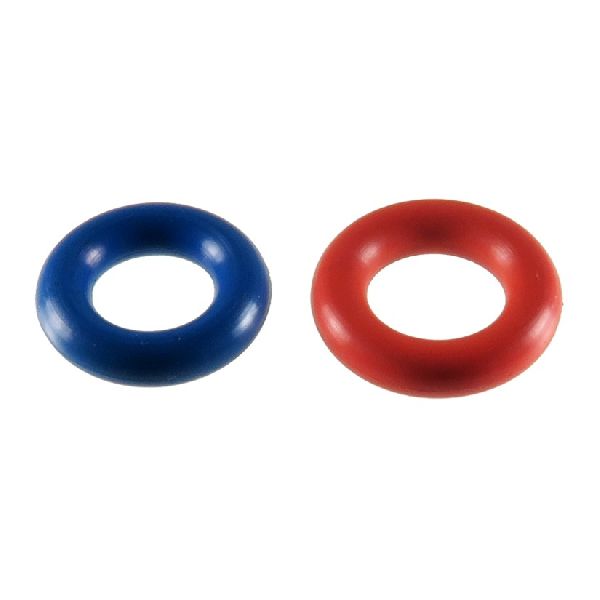
Typical fix: Replace the cylinder 3 fuel injector and its seals.
Est. part cost: $70 - $150 - Damaged Fuel Injector Wiring Harness or Connector 🟡 Medium Probability → Shop Engine Wiring Harness As noted in GM TSB #PIP4924D, the injector wiring harness is prone to rubbing against engine parts, causing wires to chafe or break. Specific chafe points to inspect are against the intake plenum, at valve cover bolts, against the fuel line, and on the side of the head under the plenum. The connector itself can also become loose, corroded, or have bent pins.
How to confirm: Visually inspect the entire length of the wiring harness for cylinder 3's injector, paying close attention to the contact points mentioned in the TSB. Check the connector for corrosion, damage, or a loose fit. Use a multimeter to perform a continuity test on the wires between the injector connector and the ECM.
Typical fix: Repair the damaged section of wire or replace the pigtail connector. If the harness is severely damaged, it may need to be replaced. One owner on a forum ultimately had to replace the entire engine wiring harness to resolve recurring injector codes after a confirmed short was found.
Est. part cost: $15 - $100 - Faulty Powertrain Control Module (PCM/ECM) ⚪ Low Probability → Shop Engine Control Module (ECM)
How to confirm: This should be the last step after confirming the injector and wiring are both in good condition. A specialized scan tool is needed to monitor the injector driver output from the ECM. The PCM uses a special transistor called a 'driver' to control the injector, and this internal component can fail.
Typical fix: The ECM needs to be repaired or replaced and reprogrammed for the vehicle.
Est. part cost: $300 - $800
Diagnosis Steps
- Read the trouble codes with an OBD-II scanner and note any other codes present.
- Visually inspect the wiring harness and connector for the cylinder 3 fuel injector. Look for any signs of chafing, melting, corrosion, or loose connections, paying special attention to areas where the harness touches other engine components like the intake plenum and valve cover bolts.
- Use a multimeter to check the resistance of the fuel injector. A typical reading for these engines is between 11.2 and 12.5 ohms when the engine is cold. If it's out of spec, the injector is likely bad.
- Use a noid light to test the injector signal. Plug the noid light into the injector's electrical connector. When the engine is cranked, the light should flash, indicating the ECM is sending a pulse. If it doesn't flash, the problem is in the wiring or the ECM.
- If the signal is present, consider swapping the cylinder 3 injector with another one (e.g., from cylinder 1). Clear the codes and run the engine. If the code moves to the new cylinder (e.g., P0261), the fuel injector is the faulty part. This is a proven diagnostic step confirmed by owners.
- If the code P0267 returns after the swap, the issue is in the wiring or the ECM. Perform a continuity test on the power and ground wires from the injector connector back to the ECM to find any breaks in the circuit.
- If both the injector and wiring test good, the final possibility is a fault in the ECM's injector driver circuit, which requires professional diagnosis.
Parts You'll Likely Need
- Fuel Injector (Cylinder 3)
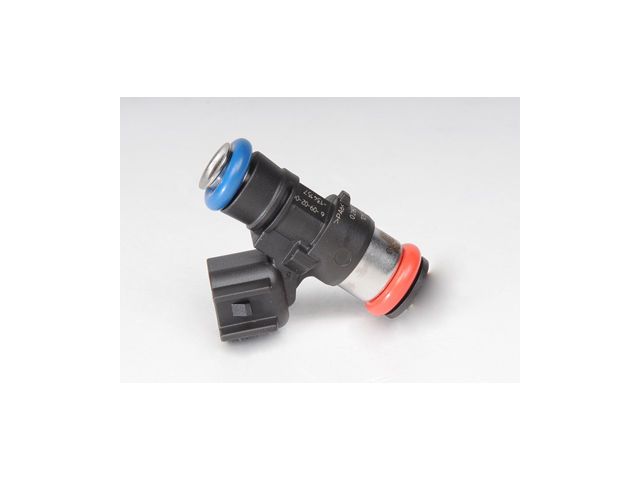
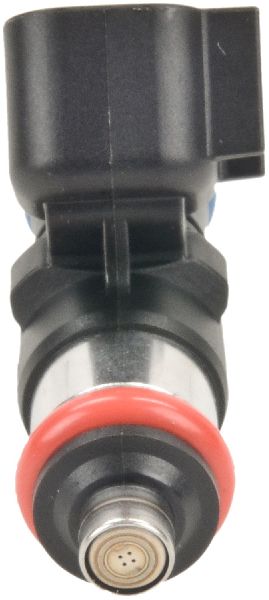
(OEM #ACDelco 12634126 (for 3.6L V6 LFX) or ACDelco 12598646 / 217-3350 (for 6.2L V8 LS3/L99))— This is the most common part to fail internally, causing a low voltage condition in the circuit.
Trusted brands: ACDelco, Bosch, Delphi
OEM price range: $120-$180
Aftermarket price range: $70-$120 - Fuel Injector Connector Pigtail — If the connector at the injector is corroded, melted, or has broken locking tabs, replacing the pigtail is the correct repair. 🎬 Watch: A quick overview of diagnosing the P0267 circuit low code.
Trusted brands: ACDelco, Dorman
OEM price range: $25-$40
Aftermarket price range: $15-$25
Related Codes That Often Appear With This One
- P0303 — P0303 means 'Cylinder 3 Misfire Detected.' Since P0267 indicates a fuel delivery problem for cylinder 3, a misfire is the direct result.
- P0203 — This code indicates a general 'Injector Circuit Malfunction' for cylinder 3. P0267 is a more specific version of this, indicating the circuit voltage is low.
- P0268 — This is the opposite code, 'Cylinder 3 Injector Circuit High.' Seeing them together or intermittently could point to a very unstable wiring short.
- P2149 — This code for 'Injector Group B Supply Voltage Circuit Open' can appear alongside individual injector codes if a wiring issue affects the entire bank of injectors, as seen in a real-world forum case.
Technical Service Bulletins (TSBs) & Recalls
- PIP4924D: Advises technicians to inspect the fuel injector wiring harness for rubbing or chafing when encountering a misfire with various injector codes, including P0267. Lists specific chafe points.
Platform-Specific Known Issues
- A known issue documented in TSB #PIP4924D involves the fuel injector wiring harness rubbing through against various engine components, leading to shorts or open circuits. A careful inspection of the harness is required before replacing parts. Specific locations to check are against the intake plenum, valve cover bolts, fuel lines, and the side of the cylinder head.
Mechanic-Grade Diagnostic Values
- Fuel Injector Resistance (V6 & V8) — expected: 11.2 to 12.5 Ohms (when engine is cold). Failure: A reading outside of this range indicates a faulty internal injector coil.
- Injector Circuit Voltage (Key On) — expected: Approximately 12V (Battery Voltage) on the power supply wire at the injector connector.. Failure: Low or no voltage suggests a problem with the power supply from the MFI relay or a wiring issue.
- Injector Pulse Width (at idle, V8) — expected: Typically 1.9 to 2.5 milliseconds (ms).. Failure: A significantly higher pulse width on one cylinder (e.g., 3.6 ms) can indicate the ECM is trying to compensate for a poorly flowing injector. A value near zero indicates the injector is not being commanded to open.
Scan Tool Commands That Help
- GM GDS2 / High-End Aftermarket (e.g., Autel): Fuel Injector Balance Test — This active test is used to identify a mechanically failing or clogged injector, rather than an electrical fault. The tool commands each injector to fire for a set duration while monitoring the drop in fuel rail pressure. A cylinder with a significantly smaller pressure drop than the others indicates a poorly flowing injector. This is a good next step if electrical tests are inconclusive.
- GM GDS2 / High-End Aftermarket: Cylinder Power Balance — This test deactivates one cylinder at a time and measures the corresponding drop in engine RPM. If deactivating cylinder 3 causes little or no change in RPM, it confirms that cylinder was not contributing properly to begin with, which is the expected result of a P0267 fault.
Wiring & Ground Locations
- G107, G108, G109 — For the 3.6L V6 engine, grounds G107, G108, and G109 are located on the left side of the engine, at the rear and front. For V8 models, a key ground is located on the passenger side block, underneath the exhaust manifold near the starter.. The ECM and its related sensors and actuators, including the fuel injectors, rely on clean ground connections. A corroded or loose engine ground can introduce electrical noise and voltage drops, potentially triggering a 'Circuit Low' code. Some owners have found that factory grounds were not sufficiently tightened, and adding a supplementary ground strap from the engine block to the chassis can resolve mysterious electrical issues.
- Injector Connector Pins — The two-pin connector directly on the fuel injector.. One pin is the power supply (typically a pink wire on GM harnesses) which should have battery voltage with the key on. The other pin is the control wire that the ECM pulses to ground to fire the injector. A continuity test should be performed on the control wire from this connector back to the corresponding pin at the ECM connector to rule out a break in the wire.
OEM Part Supersession History
12642128→12634126— Standard part revision and update by the manufacturer.
Heads up: Part number 12634126 is specified for the 2012-2015 3.6L LFX engine. The earlier 2010-2011 3.6L LLT engine uses a different injector. While they are both 3.6L V6 engines, the LFX featured updated fuel injectors, intake, and cylinder heads.
Model Year Variations Within This Range
- 2011 vs 2012-2014 (V6 Models): The 2011 Camaro used the 3.6L LLT V6 engine. Starting in 2012, GM switched to the updated LFX V6. The LFX is lighter and more powerful, featuring a redesigned cylinder head with an integrated exhaust manifold, a composite intake manifold (vs. aluminum on the LLT), and updated fuel injectors. This means parts like injectors, intake gaskets, and ECMs are not interchangeable between 2011 and 2012+ V6 models.
Helpful Videos
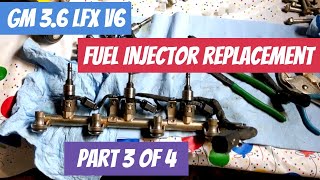
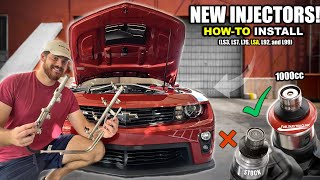
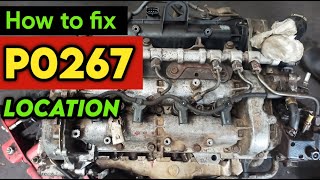
We Have This Part in Stock



The information in this article is provided for general reference and educational purposes only. Vehicle specifications, procedures, and part compatibility can vary by production date, trim level, and region. Always consult your vehicle's factory service manual and verify part numbers before purchasing or performing repairs. Safety-critical components such as airbags, seat belts, and braking systems should be installed by a qualified professional.
- Chevrolet CAMARO:
- 🧭 Diagnostic Flowchart
- 🎬 Helpful Videos
- 🛍️ Shop This Part
- What's Unique About the 2011-2014 Chevrolet CAMARO
- Symptoms You May Notice
- Most Likely Causes
- Diagnosis Steps
- Parts You'll Likely Need
- Related Codes That Often Appear With This One
- Technical Service Bulletins (TSBs) & Recalls
- Platform-Specific Known Issues
- Mechanic-Grade Diagnostic Values
- Scan Tool Commands That Help
- Wiring & Ground Locations
- OEM Part Supersession History
- Model Year Variations Within This Range
- 🎟️ Get 5% Off