

P0267 on 2012-2014 Chevrolet Impala: Cylinder 3 Injector Circuit Low Causes and Fixes
On a 2012-2014 Impala with the 3.6L V6, code P0267 is an electrical fault in the cylinder 3 fuel injector circuit. The most likely causes are a failed fuel injector or a damaged wiring harness, a known issue detailed in a GM service bulletin. The repair is complex as the intake manifold must be removed to access the injector.
- P0267 is an electrical fault code for the cylinder 3 injector circuit, not a mechanical or fuel flow problem.
- The two most likely causes are a failed fuel injector or a damaged wiring harness, which is a known issue on this engine per GM TSB #PIP4924D.
- A thorough visual inspection of the wiring harness for chafing or damage is a critical first step before buying parts.
- Repair is considered difficult for a DIYer because the injectors are located under the intake manifold, requiring significant disassembly.
- Driving with this code can lead to catalytic converter damage, so it should be addressed promptly.
What's Unique About the 2012-2014 Chevrolet IMPALA
The 2012-2014 Impala uses the 3.6L LFX direct-injection V6 engine. For this engine family, General Motors issued Technical Service Bulletin #PIP4924D, which specifically addresses a range of injector circuit codes, including P0267. [⭐ MANUFACTURER TSB — highest authority] The bulletin directs technicians to inspect the fuel injector wiring harness for damage, indicating that chafed or shorted wires are a known issue. Specific chafe points to check are against the intake plenum, at valve cover bolts, against the fuel line, and on the side of the cylinder head under the plenum.
Diagnostic Flowchart
Tap your situation to follow the diagnostic path that matches what you're seeing on this vehicle.
Generation note: The 2012-2014 period covers two Impala generations. The 9th generation (2012-2013) continued as the 'Impala Limited' for fleet sales from 2014-2016. The 10th generation launched in 2014. Both used the 3.6L LFX V6 engine, so the engine-related diagnosis for this code is identical.
Symptoms You May Notice
- Check Engine Light is on, may be flashing if the misfire is severe.
- Engine misfire, felt as a stumble, shake, or hesitation.
- Rough or unstable engine idle.
- Noticeable loss of power, especially during acceleration.
- Reduced fuel economy.
- A smell of raw fuel from the exhaust may be present.
- Replacing the spark plug or ignition coil for cylinder 3. While these can cause a misfire (P0303), the P0267 code specifically points to an electrical fault in the fuel injector circuit, not the ignition system.
Most Likely Causes
- Faulty Cylinder 3 Fuel Injector 🔴 High Probability → Shop Fuel Injector The internal coil windings of the direct injector can short out or fail over time, causing a low resistance/voltage condition that the ECM detects. This is a common failure point for many modern direct-injection engines.
How to confirm: Swap the cylinder 3 injector with an injector from another cylinder (e.g., cylinder 1). If the code changes to P0261 (Cylinder 1 Injector Circuit Low), the injector is bad. Alternatively, test the injector's resistance with a multimeter; for the LFX engine, it should be between 1.25 and 1.75 ohms. A reading outside this range confirms a bad injector.
Typical fix: Replace the faulty fuel injector. It is often recommended to replace the Teflon seal and any associated clips. 🎬 Watch: How to properly install the GM 3.6 fuel rail Due to the high labor cost, many shops recommend replacing all three injectors on the same bank (or all six) at the same time.
Est. part cost: $70-$180 - Damaged Wiring Harness or Connector 🔴 High Probability GM TSB #PIP4924D specifically notes that the fuel injector harness can rub against engine components, causing wires to chafe and short to ground. [⭐ MANUFACTURER TSB — highest authority, 1, 45] Common chafe points include against the intake plenum, valve cover bolts, fuel lines, and the side of the cylinder head.
How to confirm: Perform a close visual inspection of the wiring harness leading to the cylinder 3 injector, focusing on the known chafe points. Look for any signs of rubbing, melting, or exposed copper wire. Disconnect the harness and check for continuity between the ECM and injector connector with a multimeter. A user on a Ford truck forum fixed a P0267 code simply by repeatedly cleaning and re-seating the injector connectors, highlighting the importance of a clean, secure connection.
Typical fix: Repair the damaged section of wire with a new connector pigtail or by soldering, and protect it with heat-shrink tubing. Reroute the harness slightly to prevent future rubbing.
Est. part cost: $15-$50 - Faulty Engine Control Module (ECM) ⚪ Low Probability → Shop Engine Control Module (ECM)
How to confirm: This is diagnosed by exclusion. If the injector and wiring have both been tested and are confirmed to be good, the ECM's internal driver circuit for that injector is the likely culprit. A noid light test can confirm if the ECM is sending a pulse; no flash points to a wiring or ECM issue.
Typical fix: The ECM must be replaced and programmed to the vehicle's VIN.
Est. part cost: $300-$600
Rare But Worth Checking
- Bent or Corroded Connector Pins: The pins inside the electrical connector at the injector or the ECM can become bent, loose, or corroded, causing a poor connection and a low voltage reading. Always inspect the connectors closely when they are disconnected, as even minor corrosion can cause issues.
Diagnosis Steps
- Scan for all diagnostic trouble codes. Confirm P0267 is present and note any other codes, especially P0303.
- Perform a thorough visual inspection of the wiring harness for the cylinder 3 fuel injector. On the transverse LFX engine, cylinder 3 is the middle cylinder on the rear bank, against the firewall, 🎬 See this guide for intake removal and injector access making visual access difficult. Per TSB #PIP4924D, check for areas where it might be rubbing against the intake plenum, valve cover bolts, or fuel lines.
- Inspect the electrical connector at the injector for damage, corrosion, or loose pins.
- If the wiring appears intact, swap the cylinder 3 fuel injector with one from another cylinder (e.g., cylinder 1). Clear the codes and run the engine. If the code returns as P0261 ('Cylinder 1 Injector Circuit Low'), the injector is confirmed to be faulty.
- If the code P0267 returns after the swap, the problem is in the wiring or ECM. Use a multimeter to test the resistance of the original cylinder 3 injector. It should be between 1.25 and 1.75 ohms.
- If the injector tests good, use a 'noid light' to test for a pulse signal from the ECM at the cylinder 3 connector while cranking the engine. A flashing light indicates the wiring and ECM are likely okay up to that point.
- If no pulse is detected with the noid light, use a multimeter to check for continuity and shorts to ground in the wiring between the ECM connector and the injector connector.
- If the injector, wiring, and connectors are all confirmed to be good, the fault likely lies within the Engine Control Module (ECM).
Parts You'll Likely Need
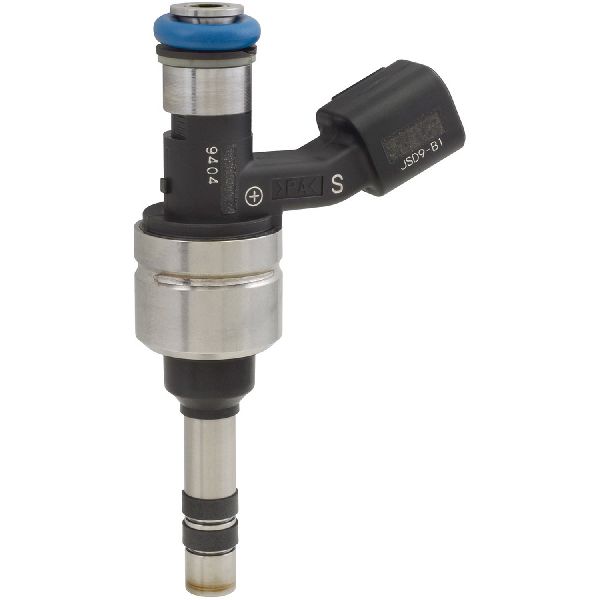
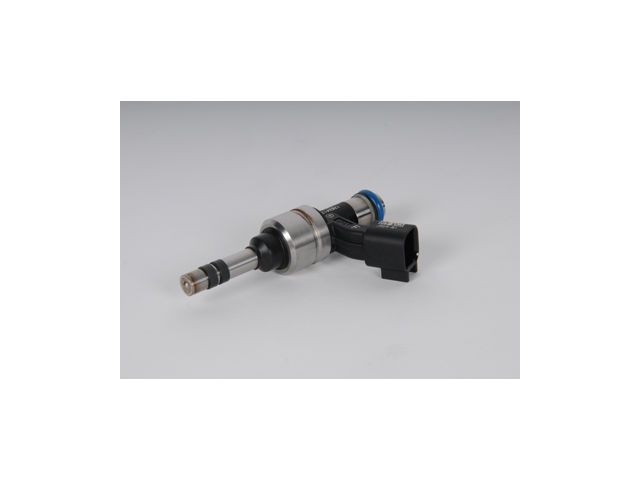
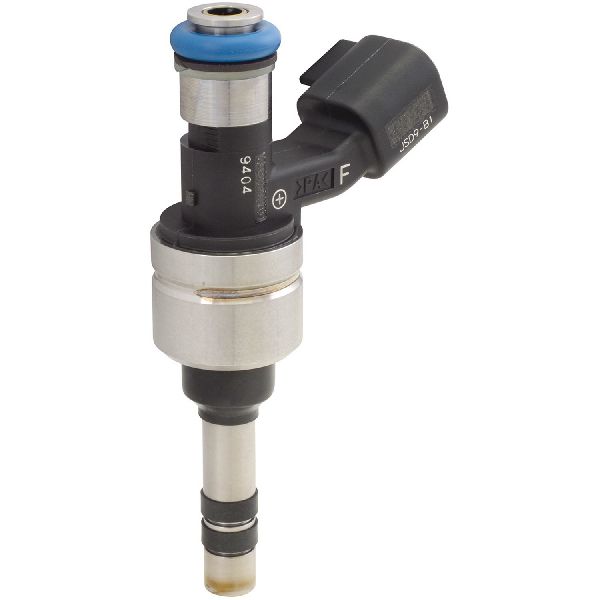
- Fuel Injector
(OEM #ACDelco 12634126)— This is one of the two most common failure points for this code. The injector's internal electronics fail, causing the low circuit condition. Part number 12634126 is the specified GM Genuine part for the 3.6L LFX engine in this vehicle. Part number 12662564 may also be applicable.
Trusted brands: ACDelco, Bosch, Hitachi, Standard Motor Products
OEM price range: $120-$200
Aftermarket price range: $70-$150 - Fuel Injector Connector Pigtail — If the wiring is found to be damaged right at the connector, which is common due to heat and vibration, replacing the connector pigtail is the standard repair.
Trusted brands: ACDelco, Dorman
OEM price range: $25-$50
Aftermarket price range: $15-$30
Related Codes That Often Appear With This One
- P0303 — P0303 means 'Cylinder 3 Misfire Detected'. Since P0267 prevents the injector from delivering the proper amount of fuel, a misfire in that cylinder is a direct and expected consequence.
- P0203 — P0203 is a more general 'Injector Circuit/Open - Cylinder 3' code. It can appear alongside P0267 if the electrical fault is intermittent or complex.
- P0261, P0264, P0270, etc. — If you see 'Circuit Low' codes for multiple cylinders at once, it strongly suggests a wiring harness problem affecting several injector circuits, as described in TSB #PIP4924D.
Technical Service Bulletins (TSBs) & Recalls
- PIP4924D: Addresses a Check Engine Light with potential misfires and various fuel injector circuit codes (including P0267), advising inspection of the fuel injector wiring harness for damage at specific contact points with the engine. [⭐ MANUFACTURER TSB — highest authority, 1]
Platform-Specific Known Issues
- GM Technical Service Bulletin #PIP4924D applies to this vehicle and engine, warning technicians about potential fuel injector wiring harness damage. It specifically calls out chafe points against the intake plenum, valve cover bolts, fuel lines, and the side of the cylinder head under the plenum. [⭐ MANUFACTURER TSB — highest authority, 5]
Mechanic-Grade Diagnostic Values
- Fuel Injector Coil Resistance — expected: 1.25 - 1.75 ohms. Failure: A reading near 0 ohms indicates a shorted injector; an open or infinite reading indicates a broken internal winding.
- High-Pressure Fuel Rail Pressure (at idle) — expected: 1.9-5.0 MPa (276-725 PSI). Failure: Pressure significantly below this range could indicate a failing high-pressure fuel pump (HPFP), though this would typically set other codes like P0087.
- Low-Pressure Fuel Pump Prime Pressure (Key-On, Engine-Off) — expected: 55-60 PSI (379-414 kPa). Failure: Low pressure here indicates a problem with the in-tank fuel pump, not the direct injection system.
- Injector Pulse Width (at idle) — expected: Typically 1.5 - 4.5 ms, varies with engine temp and load.. Failure: A pulse width that is maxed out or stuck at zero for cylinder 3 on a scan tool can indicate an electrical fault being commanded or detected by the ECM.
Scan Tool Commands That Help
- GDS2 / Tech2 / High-End Aftermarket: Fuel Injector Balance Test — This automated test commands each injector to fire for a set duration and measures the corresponding drop in fuel rail pressure. It can identify a weak or non-functioning injector without disassembly. A cylinder that shows a significantly different pressure drop (typically >20% variance from the average) is faulty.
- GDS2 / High-End Aftermarket: Cylinder Power Balance — This function disables one cylinder at a time and measures the drop in RPM. If disabling cylinder 3 results in little or no change in RPM, it confirms that cylinder was not contributing power, pointing to the injector or ignition issue in that cylinder.
Wiring & Ground Locations
- Cylinder 3 Injector Control Wires at ECM — At the Engine Control Module (ECM) X2 connector. The ECM is located inside the air cleaner assembly on the 2014 Impala.. To test for continuity or shorts from the ECM, you need the specific pins. For a similar GM engine, the injector for cylinder 3 was on pin J2-32 (LT GRN/BLK wire). Verifying the exact pinout for the Impala LFX is critical for accurate diagnosis at the ECM.
- Engine Block Grounds — The LFX engine family has several small ground wires bolted directly to the engine block and cylinder heads, often near the valve covers or on the back of the heads.. A loose or corroded main engine ground can cause a variety of strange electrical issues, including erratic sensor readings and low voltage faults for components like injectors. While not the most likely cause for a single cylinder code, it's a crucial check for any electrical diagnosis.
Real Owner Repair Stories
- YouTube channel 'Certified Shadetree' (2012 Chevrolet Impala 3.6L LFX) — Horrible misfire and a code P0276 (Cylinder 7 Injector Circuit) that would only appear when it snowed.
❌ Tried (didn't work) Initial diagnosis was difficult due to the intermittent, weather-related nature of the problem.
✅ What actually fixed it The owner performed a major service including intake valve cleaning and replacement of all fuel injectors. During the process, he also repaired the injector wiring harness as a preventative measure. The combination of these actions resolved the issue. This story highlights that even a different injector circuit code (P0276) on the same engine leads to the same repair path: accessing the injectors under the intake manifold. - Reddit r/MechanicAdvice (2014 Impala Limited 3.6L LFX, 40k miles) — Persistent misfire on cylinder 3, heavy at idle but less noticeable above 1500 RPM.
❌ Tried (didn't work) Replaced spark plugs, Replaced coil packs, Replaced fuel injector, Replaced Fuel Pump Control Module (FPCM), Replaced fuel rail pressure sensor, Tested wiring harness for continuity and resistance, which reportedly passed.
✅ What actually fixed it The user's post ends while they are still diagnosing, planning to do a compression test next. This story is included as a cautionary tale showing that even after replacing all the common parts associated with a cylinder 3 misfire, the problem can persist, suggesting a deeper mechanical or complex wiring issue.
OEM Part Supersession History
12632255, 12611545→12638530 (for LLT engine, predecessor to LFX)— Part evolution and manufacturer consolidation.
Heads up: This history is for the earlier LLT engine but shows a common pattern. The part number for the LFX, 12634126, is distinct.12627093, 12633913, 12662570→12662564— Part consolidation and updates.
Heads up: Part number 12662564 is listed for some Impalas but with the 2.5L engine, not the 3.6L V6. Using this part on an LFX V6 is not advised without direct confirmation from the dealer, as flow rates and spray patterns may differ.
Helpful Videos
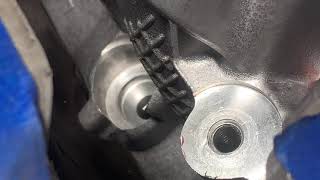
We Have This Part in Stock



The information in this article is provided for general reference and educational purposes only. Vehicle specifications, procedures, and part compatibility can vary by production date, trim level, and region. Always consult your vehicle's factory service manual and verify part numbers before purchasing or performing repairs. Safety-critical components such as airbags, seat belts, and braking systems should be installed by a qualified professional.
- Chevrolet IMPALA:
- 🧭 Diagnostic Flowchart
- 🎬 Helpful Videos
- 🛍️ Shop This Part
- What's Unique About the 2012-2014 Chevrolet IMPALA
- Symptoms You May Notice
- Most Likely Causes
- Rare But Worth Checking
- Diagnosis Steps
- Parts You'll Likely Need
- Related Codes That Often Appear With This One
- Technical Service Bulletins (TSBs) & Recalls
- Platform-Specific Known Issues
- Mechanic-Grade Diagnostic Values
- Scan Tool Commands That Help
- Wiring & Ground Locations
- Real Owner Repair Stories
- OEM Part Supersession History
- 🎟️ Get 5% Off