

P0267 on 2009-2010 Saturn Outlook: Cylinder 3 Injector Circuit Low Causes and Fixes
On a 2009-2010 Saturn Outlook, code P0267 almost always means the fuel injector for cylinder #3 has failed or its wiring is damaged. This is a known issue on the GM 3.6L LLT engine platform. The repair is labor-intensive as cylinder 3 is on the rear bank against the firewall, requiring intake manifold removal. A DIY repair is possible for experienced individuals, with the injector part costing around $35-$70 for an ACDelco replacement.
- P0267 on a 2009-2010 Outlook specifically points to an electrical problem with the cylinder 3 fuel injector circuit, not a spark plug or coil.
- The most likely cause is a failed fuel injector, but a chafed wiring harness is a very close second and a known issue on this GM 3.6L engine, per TSB PIP4924D.
- Repair is labor-intensive because cylinder 3 is on the rear bank, requiring the intake manifold to be removed for access.
- Driving with this code can lead to catalytic converter damage, a much more expensive repair.
- Always replace the fuel injector's Teflon seal and the intake manifold gaskets when performing this repair to prevent fuel and vacuum leaks.
What's Unique About the 2009-2010 Saturn OUTLOOK
The 2009-2010 Saturn Outlook uses a 3.6L V6 LLT engine with direct injection, which it shares with the Chevrolet Traverse, GMC Acadia, and Buick Enclave on the GM Lambda platform. This engine platform has a documented history of fuel injector circuit problems, as acknowledged by General Motors in Technical Service Bulletin #PIP4924D. The bulletin lists P0267 and numerous other injector codes, pointing towards a pattern of either injector failure or, critically, the wiring harness chafing against engine components like the intake plenum or valve cover bolts. Cylinder 3 is located on the rear bank (firewall side), making access difficult and labor-intensive.
Diagnostic Flowchart
Tap your situation to follow the diagnostic path that matches what you're seeing on this vehicle.
Symptoms You May Notice
- Check Engine Light is on
- Engine running rough or vibrating (misfire)
- Hesitation or lack of power during acceleration
- Rough idle
- Reduced fuel economy
- Engine may stall
- Smell of unburnt fuel from the exhaust
- Replacing the spark plug or ignition coil for cylinder 3. While these parts can cause a misfire (P0303), they will not cause an injector circuit code like P0267. The 'Circuit Low' designation specifically points to an electrical issue with the fuel injector's control circuit.
Most Likely Causes
- Faulty Cylinder 3 Fuel Injector 🔴 High Probability → Shop Fuel Injector This is a known issue on the GM 3.6L LLT engine, as referenced in TSB #PIP4924D. The direct injectors operate under high pressure and can fail electrically (internal short circuit) over time.
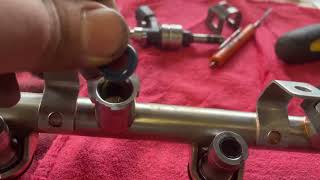
How to confirm: Swap the cylinder 3 injector with one from another cylinder (e.g., cylinder 1). If the code changes to P0261 (Cylinder 1 Injector Circuit Low), the injector is confirmed bad. Alternatively, test the injector's internal resistance with a multimeter. A good injector for the LLT engine should read between 1.2 and 1.8 ohms; a reading near zero or significantly outside this range indicates failure. 🎬 Watch: How to test injector resistance and circuit signals.
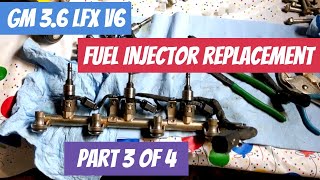
Typical fix: Replace the cylinder 3 fuel injector and its Teflon seal. It is often recommended to replace all three injectors on the same bank (Bank 1) if they are original and high-mileage.
Est. part cost: $35-$120 - Wiring Harness or Connector Issue 🟡 Medium Probability TSB #PIP4924D specifically calls out the injector wiring harness chafing against engine components as a common cause. Engine heat and vibration can cause wires to rub through on the intake plenum, valve cover bolts, or fuel lines, leading to a short to ground.
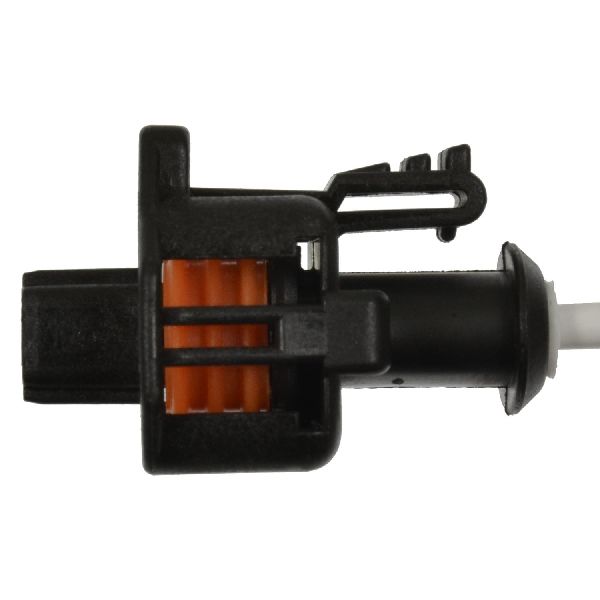
How to confirm: Visually inspect the wiring going to the cylinder 3 injector for any signs of damage, melting, or chafing, especially where it routes near other engine parts. Check the connector for a secure fit, corrosion, or melted plastic. Use a noid light to verify a pulse signal is reaching the connector from the ECM. Perform a continuity test on the power and ground wires from the injector connector back to the ECM.
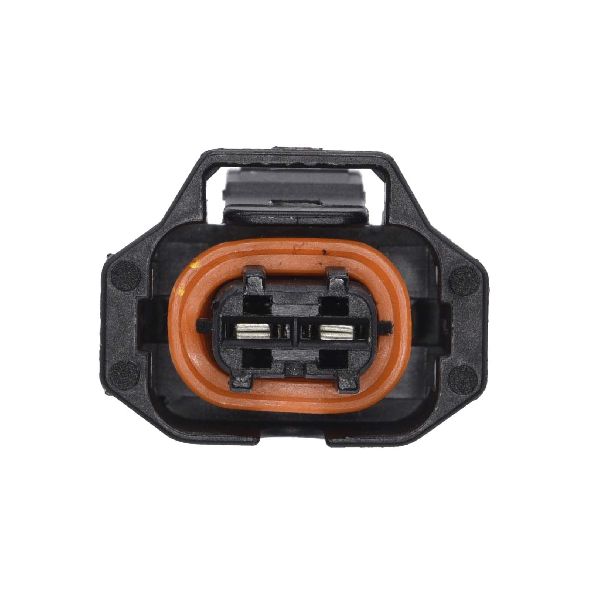
Typical fix: Repair the damaged section of wire or replace the injector pigtail connector. In some cases, cleaning a corroded connector has resolved the issue.
Est. part cost: $10-$30 - Faulty Engine Control Module (ECM) ⚪ Low Probability → Shop Engine Control Module (ECM)
How to confirm: This is diagnosed by exclusion. If the injector and wiring are confirmed to be good (injector swap doesn't move the code, and wiring has continuity with no shorts), but a noid light shows no pulse at the connector, the ECM's injector driver may have failed. This is a rare cause.
Typical fix: Replace and program the Engine Control Module.
Est. part cost: $200-$600
Diagnosis Steps
- Scan the vehicle for DTCs to confirm P0267 is the primary code. Note any other codes, such as P0303 (Cylinder 3 Misfire).
- Perform a thorough visual inspection of the wiring harness and connector for the cylinder 3 fuel injector. Look for obvious damage, corrosion, or chafing against the intake plenum, valve cover, or fuel lines, as noted in TSB #PIP4924D.
- Disconnect the injector and use a multimeter to measure its internal resistance. For the 3.6L LLT, the expected value is between 1.2 and 1.8 Ohms. Compare the reading to a known-good injector on another cylinder. A reading near zero or far outside this range indicates a failed injector.
- Use a 'noid light' to test for an electrical pulse at the injector connector while cranking the engine. A flashing light indicates the ECM and wiring are likely sending a signal. No flash points to a wiring or ECM issue.
- If access permits and you are comfortable with the procedure, swap the cylinder 3 injector with another cylinder's injector (e.g., cylinder 1 on the front bank). Clear the codes and run the engine. If the fault follows the injector (e.g., P0267 changes to P0261), the injector is definitively bad. This is the most conclusive test. 🎬 Watch: Advanced fuel injection testing and injector removal steps.
- If the fault stays on cylinder 3 (P0267 returns) after the injector swap, the problem is in the wiring harness or the ECM. Perform a continuity and short-to-ground test on the two wires between the ECM connector and the injector connector.
- If there is no pulse on the noid light and the wiring has been proven to have continuity and no shorts, a faulty ECM injector driver is the likely, though rare, cause.
Parts You'll Likely Need
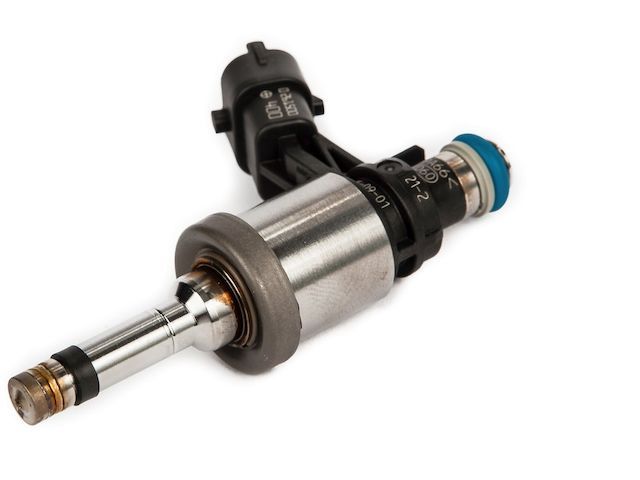
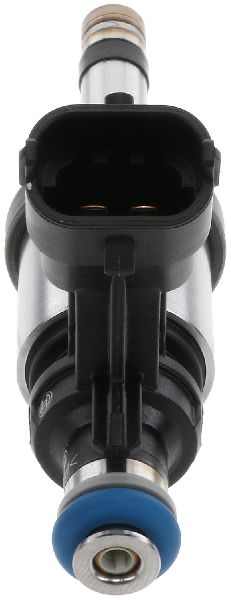
- Fuel Injector
(OEM #12669384)— This is the most common failure point for code P0267 on this engine. The original part number 12638530 has been superseded by 12669384.
Trusted brands: ACDelco, Bosch, Standard Motor Products
OEM price range: $50-$90
Aftermarket price range: $35-$70 - Fuel Injector Seal Kit
(OEM #12618798)— The Teflon seal and O-rings on a direct injector are one-time-use parts and must be replaced whenever an injector is removed or installed to prevent high-pressure fuel leaks. New injectors typically come with seals, but they must be purchased if reinstalling an existing injector.
Trusted brands: ACDelco, Fel-Pro
OEM price range: $15-$25
Aftermarket price range: $10-$20 - Intake Manifold Gasket Set
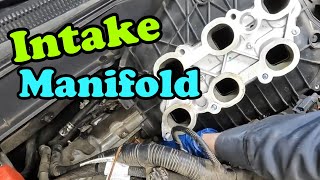
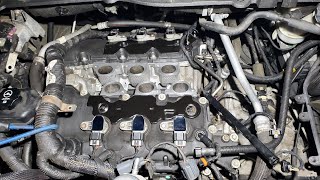
(OEM #12735534)— The intake manifold must be removed to access the fuel injectors. The gaskets are considered one-time use and should be replaced to prevent vacuum leaks upon reassembly. 🎬 See this walkthrough for removing the intake manifold.
Trusted brands: Fel-Pro (MS 97240-3), Mahle (MS19966), ACDelco
OEM price range: $30-$50
Aftermarket price range: $20-$40
Related Codes That Often Appear With This One
- P0303 — P0303 means 'Cylinder 3 Misfire Detected'. Since P0267 indicates the fuel injector for cylinder 3 is not firing correctly due to an electrical fault, it directly causes a misfire in that cylinder.
- P0203 — P0203 is a more general 'Injector Circuit/Open - Cylinder 3' code. It can appear alongside P0267 if the electrical fault is intermittent or complex, such as a damaged wire that is sometimes open and sometimes shorted to ground.
Technical Service Bulletins (TSBs) & Recalls
- PIP4924D: Addresses a condition with the Service Engine Soon/Check Engine Indicator Lamp on and a misfire, with potential for numerous fuel injector DTCs including P0267. The recommended action is to inspect the fuel injector and its wiring harness for chafing on engine components.
Platform-Specific Known Issues
- GM issued Technical Service Bulletin #PIP4924D for multiple vehicles with the 3.6L engine, including the 2009 Saturn Outlook. It addresses a list of fuel injector circuit codes (including P0267) and directs technicians to inspect both the fuel injectors and the wiring harness for chafing, indicating a known pattern of failure for both components.
- Cylinder 3 is on the rear bank (Bank 1), closest to the firewall. This location makes the repair significantly more labor-intensive than for injectors on the front bank, as the entire upper intake manifold must be removed for access.
Mechanic-Grade Diagnostic Values
- Direct Fuel Injector Resistance — expected: 1.5 - 1.6 ohms. Failure: A reading near 0 ohms (shorted), OL (open), or significantly outside this range.
- High-Pressure Fuel System (at HPFP outlet) — expected: Up to 1,740 psi (120 bar), varies with engine demand.. Failure: Significantly lower pressure than commanded by the ECM, especially under load.
- Low-Pressure Fuel System (feed to HPFP) — expected: ~58 psi. Failure: Low or inconsistent pressure from the in-tank pump, which can starve the high-pressure pump.
- Scan Tool 'Fuel Injector Balance Test' Pressure Drop — expected: The pressure drop for each injector should be within 1.5 PSI (10 kPa) of the average of all other injectors.. Failure: An injector with a pressure drop significantly different from the others indicates a flow issue (clogged or leaking).
Scan Tool Commands That Help
- GDS2 / Tech2: Fuel Injector Balance Test — This is a key diagnostic function to use after verifying the electrical circuit is intact. It commands each injector to fire and measures the corresponding drop in fuel rail pressure, allowing a direct comparison of injector flow rates to identify a mechanically faulty (clogged or weak) injector.
- GDS2 / Tech2: Injector Circuit Status (Live Data) — Monitor this PID while performing a 'wiggle test' on the injector wiring harness. The status should remain 'OK'. If it changes or shows a fault when the harness is moved, it confirms an intermittent wiring issue.
- Kent Moore AFIT (Active Fuel Injector Tester): Injector Electrical Measurement / Flow Test — This is a specialized GM tool (CH-47976) that performs a comprehensive electrical and flow test on the injectors by disconnecting the ECM and controlling them directly. It can definitively identify electrical faults and flow variances.
Wiring & Ground Locations
- G103 / G104 — On the rear of the cylinder heads. G103 is typically on the passenger side (Bank 1) head, and G104 is on the driver's side (Bank 2) head, near the firewall.. These are primary engine ground points. A loose or corroded connection at G103 could potentially affect the electrical stability of components on Bank 1, which includes the cylinder 3 injector, leading to intermittent circuit faults.
- Injector Harness Chafe Points — Common chafe points noted in TSB PIP4924C/D are: against the intake plenum, at valve cover bolts, against fuel lines, and on the side of the cylinder head under the plenum.. These are the most likely locations to find a short-to-ground or open in the injector wiring, which is a direct cause of code P0267.
- Injector Wiring Design — The wiring from the ECM to each fuel injector is a twisted pair.. The solid-colored wire is the low-side driver (control), and the wire with a white tracer is the high-side driver (feed). Knowing this helps in correctly testing the specific circuits at the ECM connector.
Real Owner Repair Stories
- acadiaforum.net user (2010 GMC Acadia (sister vehicle with 3.6L LLT)) — Check Engine Light with code P0267.
❌ Tried (didn't work) Initial diagnosis suggested a bad fuel injector.
✅ What actually fixed it The problem was found to be the wiring harness. A wire for the #3 injector had rubbed through on a sharp edge of the cylinder head casting near the firewall. The fix was to repair the broken wire and protect the harness to prevent it from happening again.
Helpful Videos
We Have This Part in Stock


The information in this article is provided for general reference and educational purposes only. Vehicle specifications, procedures, and part compatibility can vary by production date, trim level, and region. Always consult your vehicle's factory service manual and verify part numbers before purchasing or performing repairs. Safety-critical components such as airbags, seat belts, and braking systems should be installed by a qualified professional.
- Saturn OUTLOOK:
- 🧭 Diagnostic Flowchart
- 🎬 Helpful Videos
- 🛍️ Shop This Part
- What's Unique About the 2009-2010 Saturn OUTLOOK
- Symptoms You May Notice
- Most Likely Causes
- Diagnosis Steps
- Parts You'll Likely Need
- Related Codes That Often Appear With This One
- Technical Service Bulletins (TSBs) & Recalls
- Platform-Specific Known Issues
- Mechanic-Grade Diagnostic Values
- Scan Tool Commands That Help
- Wiring & Ground Locations
- Real Owner Repair Stories
- 🎟️ Get 5% Off