

P0267 on 2009-2010 Saturn VUE: Cylinder 3 Injector Circuit Low Causes and Fixes
This code indicates a low voltage problem in the cylinder 3 fuel injector circuit. The most common cause is a faulty fuel injector or a chafed wiring harness. On V6 models, cylinder 3 is on the rear bank against the firewall, making access more difficult and increasing repair costs. A GM Technical Service Bulletin (PIP4924D) acknowledges injector circuit issues on these powertrains.
- P0267 points specifically to an electrical fault in the cylinder 3 fuel injector circuit, not a spark or compression issue.
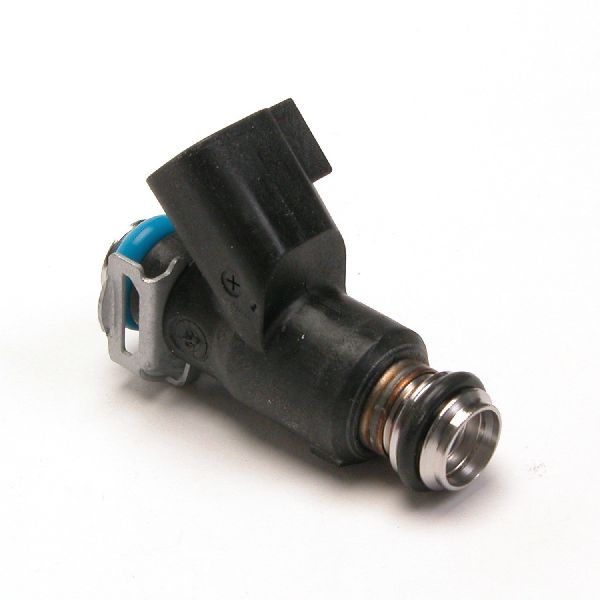
- The most likely fix is replacing the cylinder 3 fuel injector.
- On V6 models, be prepared for a more involved repair, as cylinder 3 is on the difficult-to-access rear bank and requires removing the intake manifold.
- A simple way to confirm a bad injector is to swap it with another cylinder and see if the trouble code follows it.
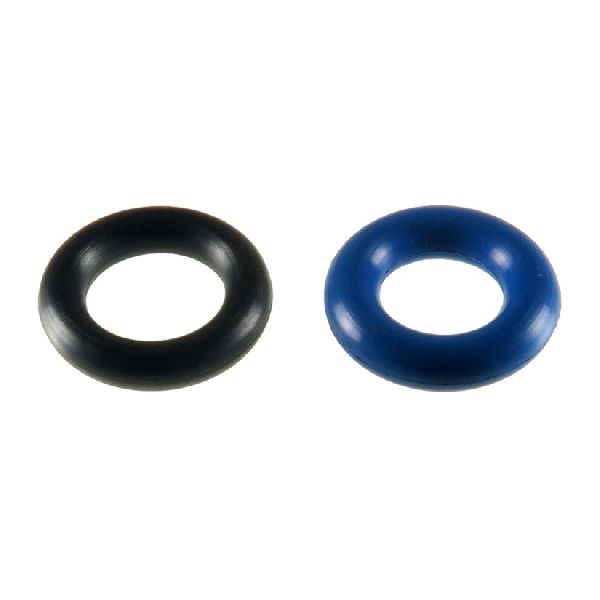
- Always replace fuel injector O-rings and any removed gaskets (like the intake manifold gasket) to prevent fuel and vacuum leaks.
What's Unique About the 2009-2010 Saturn VUE
The 2009-2010 Saturn VUE is a second-generation model sharing its platform and powertrains with other GM vehicles like the Chevrolet Equinox and GMC Terrain. For V6 models (3.5L and 3.6L), the cylinder layout is a key factor for this repair. Unlike some engines, cylinder #3 is located on the rear bank, close to the firewall. This makes accessing the injector and its wiring much more difficult than those on the front bank, often requiring the removal of the upper intake manifold. 🎬 Watch: Step-by-step fuel injector removal on the 3.5L engine. Furthermore, GM issued TSB PIP4924D which covers the VUE and its platform mates, warning technicians to inspect the injector wiring harness for chafing against engine components, indicating a known vulnerability.
Diagnostic Flowchart
Tap your situation to follow the diagnostic path that matches what you're seeing on this vehicle.
Symptoms You May Notice
- Check Engine Light is on
- Engine runs rough or has a noticeable shake at idle
- Hesitation or stumbling during acceleration
- Engine misfire, which may feel like a buck or jerk
- Reduced engine power
- Potential for a fuel smell from the exhaust
- Engine may enter 'reduced engine power' or 'limp mode'
- Replacing the spark plug or ignition coil for cylinder 3. While these parts can cause a misfire (P0303), they will not cause a P0267 injector circuit code. The 'circuit low' designation specifically points to an electrical issue with the injector or its wiring, a fact corroborated by owner experiences on forums.
Most Likely Causes
- Faulty Cylinder 3 Fuel Injector 🔴 High Probability → Shop Fuel Injector General wear and tear or an internal electrical short within the injector are common failure points. The existence of a TSB (PIP4924D) covering injector circuit codes suggests a known pattern of issues with these GM powertrains. Direct injection injectors on the 3.6L engine, in particular, operate under high pressure and can fail internally.
How to confirm: After verifying the wiring is okay, the most definitive DIY test is to swap the cylinder 3 injector with one from another cylinder (e.g., cylinder 1 or 5). Clear the codes and run the engine. If the trouble code changes to follow the injector (e.g., P0261 for cylinder 1), the injector is faulty. Before swapping, you can also measure the resistance across the injector's pins with a multimeter. A reading significantly lower than the specification (e.g., near zero ohms) indicates an internal short.
Typical fix: Replace the fuel injector for cylinder 3. It is highly recommended to replace the O-rings and seals at the same time. For direct injection models (3.6L), the Teflon seal must be replaced.
Est. part cost: $40-$90 - Wiring Harness or Connector Issue 🟡 Medium Probability Engine vibrations and heat can cause wires to chafe, break, or corrode over time. TSB PIP4924D specifically calls out inspecting the wiring harness for rubbing against the intake plenum, valve cover bolts, fuel lines, and the side of the cylinder head, indicating this is a known weak point on this platform.
How to confirm: Visually inspect the wiring harness leading to the cylinder 3 injector for any signs of damage, melting, or corrosion. Check that the connector is securely clipped onto the injector. Use a multimeter to test for continuity and check for a short to ground on the control wire between the ECM and the injector connector. 🎬 See how to diagnose and fix injector circuit low codes.
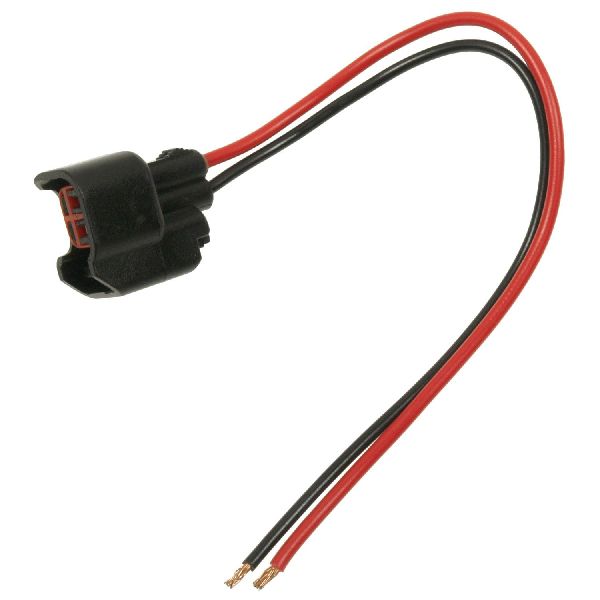
Typical fix: Repair the damaged section of wire or replace the injector pigtail connector. If the connector is damaged, an ACDelco PT2183 pigtail is a potential service part.
Est. part cost: $10-$30 - Faulty Powertrain Control Module (PCM) ⚪ Low Probability → Shop Engine Control Module (ECM) While rare, the internal driver circuit in the PCM that controls the injector can fail.
How to confirm: This is typically diagnosed by exclusion. If the injector and wiring have both been tested and confirmed to be good (including an injector swap test), the PCM is the likely culprit. A professional may need to confirm this with advanced diagnostic tools.
Typical fix: Replace and reprogram the Powertrain Control Module.
Est. part cost: $200-$500
Diagnosis Steps
- Read the trouble codes with an OBD-II scanner and note any other codes present, especially P0303.
- Clear the codes and test drive the vehicle to see if the P0267 code returns immediately.
- Locate cylinder 3. On the 2.4L I4 engine, it is the third cylinder from the left (from the perspective of the front of the car). On the 3.5L and 3.6L V6 engines, the front cylinders (near the radiator) are 2-4-6, and the rear cylinders (near the firewall) are 1-3-5. Cylinder 3 is the middle cylinder on the rear bank.
- Visually inspect the fuel injector connector and its wiring for any obvious damage, corrosion, or loose connections. Pay close attention to areas where the harness might rub against the engine, as noted in TSB PIP4924D.
- Disconnect the injector and use a 'noid light' to test for a signal from the ECM. The light should flash while the engine is cranking or running. If it does not flash, the problem is likely in the wiring or the ECM.
- If a noid light is unavailable, use a multimeter to check for battery voltage on one pin of the connector with the key on. The other wire is the control wire, which the ECM pulses to ground.
- If the signal appears correct, test the injector itself. Measure the resistance across the two pins of the injector with a multimeter. Compare this reading to the manufacturer's specification or to a known-good injector on another cylinder. A reading that is significantly lower than specified (e.g., under 1.5 ohms for a 3.6L) indicates a short.
- For the most reliable diagnosis, swap the cylinder 3 injector with an injector from another cylinder (e.g., cylinder 1). Clear the codes and run the engine. If the code moves to the new cylinder (e.g., P0261), you have confirmed the injector is faulty. If P0267 returns, the problem is in the wiring or ECM.
- If the fault remains with cylinder 3 after the swap, perform a continuity test on the wiring between the injector connector and the ECM connector to rule out an open or shorted wire.
Parts You'll Likely Need
- Fuel Injector
(OEM #ACDelco 217-3158 (for 2.4L) or ACDelco 12638530 (for 3.6L LLT, 2009-2010))— This is the most common cause of a P0267 code due to internal electrical failure.
Trusted brands: ACDelco, Bosch, Delphi, Standard Motor Products
OEM price range: $80-$120
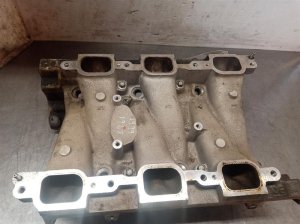
Aftermarket price range: $40-$75 - Upper Intake Manifold Gaskets — For V6 engines, the intake manifold must be removed to access the cylinder 3 injector. The gaskets are single-use and must be replaced to prevent vacuum leaks. 🎬 Watch: 3.6L intake manifold removal and injector replacement guide.
Trusted brands: Fel-Pro, ACDelco
OEM price range: $30-$50
Aftermarket price range: $15-$30
Related Codes That Often Appear With This One
- P0303 — P0303 means 'Cylinder 3 Misfire Detected'. A P0267 fault will almost always cause a P0303 because the injector isn't supplying fuel, leading to a misfire.
- P0203 — This code means 'Injector Circuit/Open - Cylinder 3'. It can appear alongside P0267 if the nature of the electrical fault varies or is intermittent between a short and an open circuit.
- P0261, P0264, P0270 — These are 'Circuit Low' codes for other cylinders. If multiple injector codes appear together, it strongly suggests a wiring harness problem affecting several circuits, as described in related TSBs.
Technical Service Bulletins (TSBs) & Recalls
- PIP4924D: Mentions a series of fuel injector DTCs, including P0267, and directs technicians to inspect the fuel injector wiring harness for chafing or open circuits, pointing to it as a primary diagnostic step before replacing parts.
Platform-Specific Known Issues
- TSB for Injector Inspection: General Motors issued Technical Service Bulletin #PIP4924D, which applies to the 2009-2010 Saturn VUE. It lists P0267 among many other fuel injector codes and advises technicians to carefully inspect the fuel injector wiring harness for chafing against the intake, valve covers, or fuel lines, indicating a known pattern of wiring issues on these GM powertrains.
- Cylinder 3 Location on V6: On the 3.5L and 3.6L V6 engines, cylinder 3 is on the rear bank against the firewall. This makes the repair significantly more labor-intensive than for a front-bank cylinder, as the upper intake manifold must be removed for access. This increases both the cost of professional repair and the difficulty for a DIYer.
Mechanic-Grade Diagnostic Values
- Fuel Injector Resistance (2.4L I4 & 3.5L V6 Port Injection) — expected: 11-17 Ohms. Failure: A reading near zero Ohms indicates a short. A reading significantly outside the expected range or that differs by more than 1 Ohm from other injectors suggests a fault.
- Fuel Injector Resistance (3.6L V6 Direct Injection) — expected: 1.2 - 1.8 Ohms. Failure: A reading outside this very low range indicates an internal fault. Direct injectors have much lower resistance than port injectors.
- Low-Side Fuel Pressure (3.6L V6 Direct Injection) — expected: 50-60 psi (345-414 kPa) with key on, engine off.. Failure: Pressure outside this range indicates a problem with the in-tank fuel pump or its control module, which could cause drivability issues but is not a direct cause of a P0267 circuit code.
- Injector Control Wire Voltage (All Engines) — expected: Should show a pulsing ground signal on a noid light or lab scope when the engine is cranking/running. The power wire should have constant battery voltage with the key on.. Failure: No pulse indicates a wiring or ECM driver issue. A constant ground indicates a short in the harness or a failed ECM driver.
Scan Tool Commands That Help
- GM Tech 2 / GDS2: Fuel Injector Balance Test — This special function commands each injector to fire for a precise duration while monitoring the fuel rail pressure drop. It can definitively identify a clogged or electrically weak injector that isn't flowing correctly, even if its resistance is within spec. A cylinder with a smaller pressure drop than the others has a faulty injector.
- GM Tech 2 / GDS2: Active Fuel Injector Test (AFIT) — This is a more advanced, automated version of the balance test. The tool takes control of the fuel system to perform a series of pressure and flow tests to analyze injector performance and detect leaks.
Wiring & Ground Locations
- Cylinder 3 Injector Control Wire — On the 3.6L V6, the control wire is a Light Green/Black wire at the injector connector. This wire runs to a specific pin on the ECM. For the 2.4L, the wire is at pin 51 of the ECM connector.. This is the specific wire that must be tested for continuity and shorts to ground between the ECM and the injector. A fault on this wire is a direct cause of P0267.
- G101 / G106 — G101 is located on the lower left front of the engine block. G106 is on the left front top corner of the engine.. These are primary grounds for the Engine Control Module (ECM). A loose or corroded connection here can cause erratic behavior, unstable sensor readings, and incorrect voltage references, potentially leading to false circuit codes like P0267.
- G103 / G105 — G103 is on the cowl at the left side of the engine compartment. G105 is at the left rear of the engine.. These are additional engine and body grounds. While not the primary ECM grounds, poor connections can create ground loops and electrical noise that may interfere with injector driver operation.
- ECM Connector X1/X2/X3 — The ECM is located in the left front of the engine compartment on V6 models and the left rear on 2.4L models. It has multiple large connectors (X1, X2, X3).. This is the termination point for the injector harness. Probing the correct pin here is necessary to test the entire length of the injector control wire for faults.
Real Owner Repair Stories
- YouTube video from a professional technician on a similar GM 3.6L engine. (2004 Cadillac CTS 3.6L) — Check Engine Light with codes P0203 (Injector 3 Circuit), P0300 (Random Misfire), and P0303 (Cylinder 3 Misfire).
❌ Tried (didn't work) The diagnosis immediately pointed away from the injector and wiring after initial checks.
✅ What actually fixed it Advanced diagnostics with a Snap-on Verus scanner determined the injector driver inside the ECM was faulty. The problem was resolved by replacing and reprogramming the ECM.
OEM Part Supersession History
12638530→12669384— Standard part revision for improved reliability or manufacturing process.
Heads up: The new part number is a direct replacement and is fully compatible. Always use new Teflon seals and O-rings when replacing direct injectors.
Model Year Variations Within This Range
- 2009-2010: The 3.6L V6 (LLT) engine uses a high-pressure direct injection system, while the 2.4L I4 and 3.5L V6 use a standard multi-port fuel injection system. Diagnostic values (like injector resistance) and fuel pressure testing procedures are completely different between these engine types.
- 2009-2010: The physical location of the Engine Control Module (ECM) changes with the engine. On V6 models, it is at the left front of the engine bay, whereas on 2.4L models, it is at the left rear. This affects how one accesses the main wiring harness for testing.
Helpful Videos
Used OEM Parts in Stock
New Aftermarket Parts Available


The information in this article is provided for general reference and educational purposes only. Vehicle specifications, procedures, and part compatibility can vary by production date, trim level, and region. Always consult your vehicle's factory service manual and verify part numbers before purchasing or performing repairs. Safety-critical components such as airbags, seat belts, and braking systems should be installed by a qualified professional.
- Saturn VUE:
- 🧭 Diagnostic Flowchart
- 🎬 Helpful Videos
- 🛍️ Shop This Part
- What's Unique About the 2009-2010 Saturn VUE
- Symptoms You May Notice
- Most Likely Causes
- Diagnosis Steps
- Parts You'll Likely Need
- Related Codes That Often Appear With This One
- Technical Service Bulletins (TSBs) & Recalls
- Platform-Specific Known Issues
- Mechanic-Grade Diagnostic Values
- Scan Tool Commands That Help
- Wiring & Ground Locations
- Real Owner Repair Stories
- OEM Part Supersession History
- Model Year Variations Within This Range
- 🎟️ Get 5% Off