

P0268 on 2009-2014 Buick Enclave: Cylinder 3 Injector Circuit High Causes and Fixes
This code indicates a high voltage problem in the cylinder #3 fuel injector circuit. The most common cause on this vehicle is a damaged or chafed fuel injector wiring harness, as noted in GM Technical Service Bulletin #PIP4924D. A faulty fuel injector is the second most likely culprit. A thorough inspection of the wiring harness for damage is the critical first step.
- P0268 on a 2009-2014 Enclave means there's a high voltage fault in the cylinder 3 injector circuit.
- Before buying any parts, thoroughly inspect the fuel injector wiring harness for damage, as this is a known issue documented in a GM service bulletin (PIP4924D).
- Common symptoms are a rough idle, engine misfire, and the Check Engine Light.
- If the wiring is good, the next most likely cause is a failed fuel injector.
- This issue will be accompanied by a misfire code, P0303.
What's Unique About the 2009-2014 Buick ENCLAVE
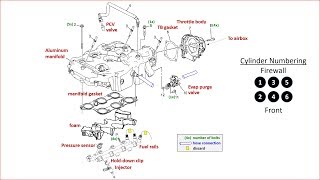
For the 2009-2014 Buick Enclave and its platform mates with the 3.6L V6 engine, this code is frequently linked to a known issue with the fuel injector wiring harness. General Motors issued Technical Service Bulletin #PIP4924D that specifically advises technicians to inspect the harness for damage. Common chafe points are against the intake plenum, at valve cover bolts, against fuel lines, and on the side of the cylinder head under the plenum. This makes a thorough wiring inspection a critical first step before replacing any parts.
Diagnostic Flowchart
Tap your situation to follow the diagnostic path that matches what you're seeing on this vehicle.
Symptoms You May Notice
- Check Engine Light is on (may be flashing)
- Engine runs rough, shakes, or vibrates (misfire)
- Poor acceleration and significant loss of power
- Reduced fuel economy
- Engine may hesitate or stumble
- Engine may stall at idle
- Replacing the spark plug or ignition coil for cylinder 3 without checking the injector circuit first. 🎬 Watch: How to access injectors and spark plugs on this engine. A misfire can be caused by spark, fuel, or compression issues, but the P0268 code specifically points to the fuel injector's electrical circuit, making it the primary suspect.
Most Likely Causes
- Damaged Fuel Injector Wiring Harness 🔴 High Probability → Shop Engine Wiring Harness GM TSB #PIP4924D specifically calls out that the injector wiring harness is prone to rubbing through (chafing) against engine components. Specific chafe points mentioned are the intake plenum, valve cover bolts, fuel lines, and the side of the cylinder head.
How to confirm: Visually inspect the entire wiring harness leading to the cylinder 3 fuel injector. The intake manifold may need to be removed for a full inspection. Look for bare wires, chafing, melting, or damage, especially at the specific contact points noted in the TSB. Check the connector for corrosion, moisture, or bent pins. A 'wiggle test' on the harness while the engine is running can sometimes trigger the fault.
Typical fix: Repair the damaged section of wire using solder and heat-shrink tubing. If damage is near the connector, replace the injector wiring pigtail. In severe cases, the entire engine wiring harness (GM Part #12689347 or similar) may need replacement.
Est. part cost: $15-$50 for a pigtail connector, $70-$160 for a full injector harness. - Faulty Fuel Injector 🟡 Medium Probability → Shop Fuel Injector Direct injection (SIDI) injectors operate under high pressure and can fail internally, causing an electrical short. Carbon buildup can also cause injectors to stick or fail over time.
How to confirm: If the wiring is confirmed to be good, swap the cylinder 3 injector with one from another cylinder (e.g., cylinder 1). Clear the codes and drive the vehicle. If the code changes to P0262 (Cylinder 1 Injector Circuit High), the injector is faulty. If P0268 returns, the problem is in the wiring or PCM. An injector's internal resistance can also be tested with a multimeter and compared to specifications (typically 1.5-1.6 Ohms for these direct injectors).
Typical fix: Replace the failed fuel injector. On the 3.6L LLT, this requires removing the upper intake manifold. 🎬 Watch this step-by-step guide to replacing the fuel injectors. It is often recommended to replace all six injectors at the same time on higher mileage vehicles, as they tend to fail around the same time.
Est. part cost: $50-$150 for a single aftermarket injector, $100-$180 for OEM. - Faulty Powertrain Control Module (PCM) ⚪ Low Probability → Shop Engine Control Module (ECM)
How to confirm: This should be the last resort after definitively ruling out the wiring and the fuel injector. A professional shop can perform advanced tests to confirm a failed injector driver transistor inside the PCM.
Typical fix: Replace and reprogram the Powertrain Control Module.
Est. part cost: $300-$800
Diagnosis Steps
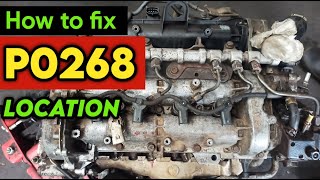
- Read the codes with an OBD-II scanner to confirm P0268 and note any other codes 🎬 See a quick breakdown of what the P0268 code means. present, like P0303.
- Inspect the Wiring Harness: Following GM TSB #PIP4924D, carefully inspect the fuel injector wiring harness for any signs of rubbing, chafing, or melting. Pay close attention to where the harness touches the intake manifold, valve covers, fuel lines, and the side of the cylinder head. This may require partial disassembly to see clearly.
- Check the Connector: Disconnect the harness from the cylinder 3 fuel injector. Inspect the connector and the injector pins for corrosion, moisture, or damage.
- Test the Circuit: Use a multimeter to check for a short to voltage on the control wire for the injector. With the key on and engine off, the power wire should show battery voltage, but the control wire should not. If it does, there is a short to power in the harness.
- Use a Noid Light: A noid light can be plugged into the injector connector to see if the PCM is sending a pulse signal. If the light flashes, the PCM driver is likely working. If it stays on continuously, it confirms a short to voltage. If it does not light at all, it could indicate an open circuit.
- Swap the Injector: If the wiring appears intact, swap the cylinder 3 fuel injector with an injector from another cylinder. This requires removing the intake manifold. Clear the codes. If the fault code moves to the new cylinder (e.g., P0262 for cylinder 1), the injector is bad. If P0268 returns, the issue is in the wiring or PCM.
- Test the PCM: If all other tests pass, the PCM's internal injector driver may be at fault. This step is best left to a professional.
Parts You'll Likely Need
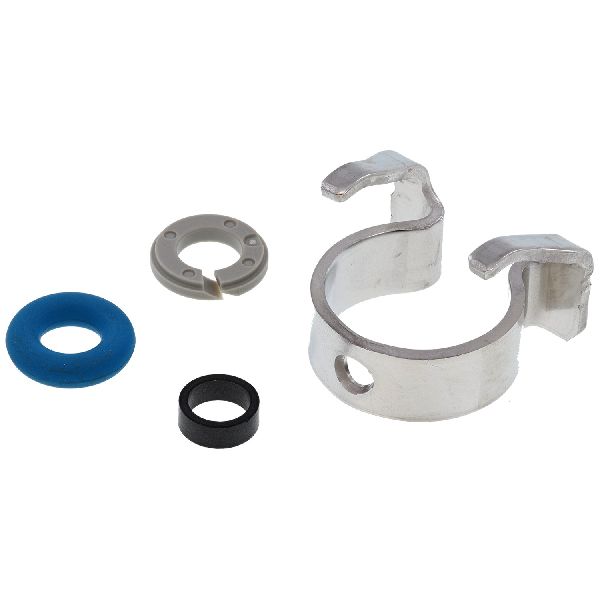
- Fuel Injector
(OEM #12638530)— If the injector itself has failed internally causing a short, it must be replaced. This is a common failure point after wiring issues are ruled out. The ACDelco part number is 217-3445.
Trusted brands: ACDelco, Bosch, Standard Motor Products
OEM price range: $100-$180
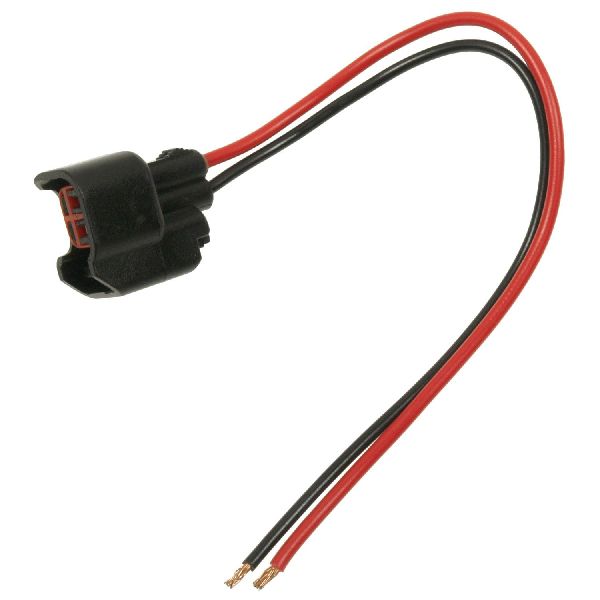
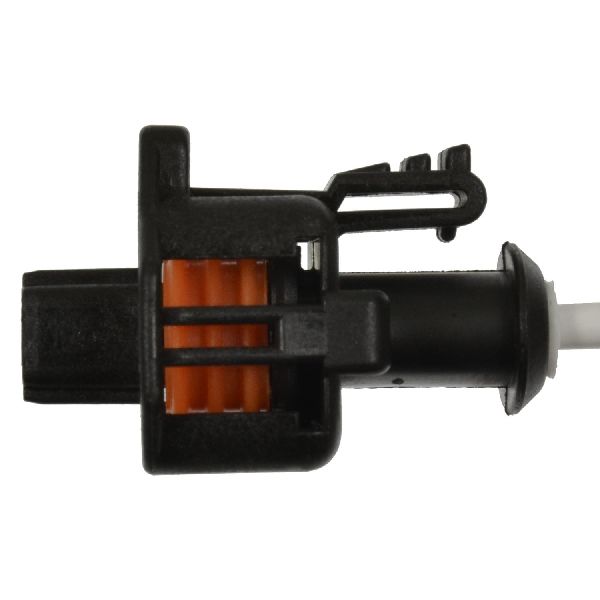
Aftermarket price range: $50-$120 - Fuel Injector Connector Pigtail — If the wiring is damaged right at the connector, splicing in a new pigtail is the standard repair.
Trusted brands: ACDelco, Dorman, Duralast
OEM price range: $25-$50
Aftermarket price range: $15-$30 - Engine Fuel Injector Harness
(OEM #12689347)— In cases of widespread or inaccessible damage to the injector harness, replacing the entire sub-harness is the most reliable fix. This part supersedes older versions like 12662115.
Trusted brands: GM Genuine Parts
OEM price range: $70-$110
Related Codes That Often Appear With This One
- P0303 — This code means 'Cylinder 3 Misfire Detected'. It is a direct and immediate symptom of the P0268 code, as the disabled injector prevents fuel from entering the cylinder, causing a misfire.
- P0203 — This is a more generic 'Cylinder 3 Injector Circuit Malfunction' code. It can appear alongside P0268 as the PCM tries to diagnose the injector fault.
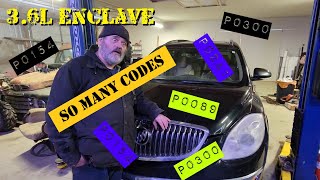
- P0087, P0089, P02A1 — In cases of a physically leaking injector (which can also cause electrical faults), codes for low fuel rail pressure (P0087), fuel pressure regulator performance (P0089), or injector leaks (P02A1) may appear as the system tries to compensate.
Technical Service Bulletins (TSBs) & Recalls
- PIP4924D: SES Light And Misfire With Injector Codes...Carefully inspect the fuel injector wiring harness for rub through or internal wire opens. Some common spots are against the intake plenum, at valve cover bolts, against the fuel line and on the side of the head under the plenum.
Platform-Specific Known Issues
- TSB #PIP4924D: Known Wiring Harness Chafing: General Motors released this bulletin due to repeated instances of injector circuit codes (including P0268) on vehicles with the 3.6L V6 engine. The bulletin explicitly directs technicians to 'Carefully inspect the fuel injector wiring harness for rub through or internal wire opens.' It highlights common chafe points against the intake plenum, valve cover bolts, fuel lines, and the side of the cylinder head.
- Owner Experience: Cascading Failures from Injector Issue: A documented repair on a 2011 Enclave showed how a single faulty injector can cause a cascade of trouble codes. A leaky injector led to codes for O2 sensors, fuel trim, low fuel pressure, and multiple cylinder misfires all at once. This highlights how a focused fuel injector fault can manifest as a wider, more confusing system problem.
Mechanic-Grade Diagnostic Values
- Fuel Injector Coil Resistance — expected: 1.5 - 1.6 Ohms when tested with a multimeter.. Failure: A reading of 0 Ohms indicates a short, while an infinite (OL) reading indicates an open circuit. Any significant deviation from the 1.5-1.6 Ohm range suggests a faulty injector.
- Low-Pressure Fuel System — expected: 50-60 PSI with Key On, Engine Off (KOEO).. Failure: Pressure significantly below 50 PSI indicates a problem with the in-tank fuel pump or its supply circuit.
- High-Pressure Fuel System (Direct Injection) — expected: 300-500 PSI at idle, increasing to over 2000 PSI under load.. Failure: Pressure that fails to build or is significantly different from the PCM's desired pressure reading on a scan tool points to an issue with the high-pressure fuel pump or its sensor.
Scan Tool Commands That Help
- GDS2 (GM Global Diagnostic System 2): Active Fuel Injector Test (AFIT) / Injector Balance Test — This is the primary professional diagnostic step after a visual wiring inspection. It commands the PCM to individually test each injector and measure the corresponding fuel pressure drop. This can definitively identify a mechanically sticking or electrically faulty injector that is flowing incorrectly, even if its resistance tests okay.
- GDS2 (GM Global Diagnostic System 2): Fuel Trim Reset — After replacing a fuel injector or repairing a related wiring issue, this function must be used. It clears the PCM's long-term learned fuel adjustments, forcing it to relearn from a zero baseline with the new, correct components, which confirms the fix and ensures proper engine operation.
Wiring & Ground Locations
- G110 — Located on the right rear of the engine, mounted to the back of the cylinder head, often on a bracket directly above the power steering pump pressure hose.. This is a critical ground point shared by the Engine Control Module (ECM) and Transmission Control Module (TCM). A poor connection at G110 can cause erratic behavior and false codes from multiple modules, including injector circuit faults.
- Engine Block Grounds — The 3.6L V6 has several key grounds, including a large ground cable on the passenger side cylinder head and smaller grounds on the driver's side head, near the water pump, and at the rear of each head.. The PCM and its injector drivers rely on a solid engine ground to function correctly. A corroded or loose main engine ground can introduce resistance and voltage fluctuations, potentially triggering circuit high/low codes.
OEM Part Supersession History
12638530→12669384— Standard part revision and improvement by the manufacturer.
Heads up: No known incompatibilities; 12669384 is the direct replacement for the original part.
Model Year Variations Within This Range
- 2009-2012 vs 2013-2014: Within the 2009-2014 range, GM transitioned from the 3.6L LLT V6 to the updated 3.6L LFX V6 around the 2013 model year. The LFX features redesigned cylinder heads with integrated exhaust manifolds and uses a different ECM (Delphi instead of Bosch). While the P0268 fault's root causes (wiring, injector) remain the same, repair procedures that require removing the intake manifold or accessing the ECM may differ slightly between the LLT and LFX versions.
Helpful Videos
We Have This Part in Stock


The information in this article is provided for general reference and educational purposes only. Vehicle specifications, procedures, and part compatibility can vary by production date, trim level, and region. Always consult your vehicle's factory service manual and verify part numbers before purchasing or performing repairs. Safety-critical components such as airbags, seat belts, and braking systems should be installed by a qualified professional.
- Buick ENCLAVE:
- 🧭 Diagnostic Flowchart
- 🎬 Helpful Videos
- 🛍️ Shop This Part
- What's Unique About the 2009-2014 Buick ENCLAVE
- Symptoms You May Notice
- Most Likely Causes
- Diagnosis Steps
- Parts You'll Likely Need
- Related Codes That Often Appear With This One
- Technical Service Bulletins (TSBs) & Recalls
- Platform-Specific Known Issues
- Mechanic-Grade Diagnostic Values
- Scan Tool Commands That Help
- Wiring & Ground Locations
- OEM Part Supersession History
- Model Year Variations Within This Range
- 🎟️ Get 5% Off