

P0268 on 2010-2014 Cadillac CTS-V: Cylinder 8 Injector Circuit High Causes and Fixes
On a 2010-2014 Cadillac CTS-V, code P0268 indicates a high voltage condition in the cylinder #8 fuel injector circuit. The most common causes are a damaged fuel injector wiring harness chafing against an engine component, as noted in GM Technical Service Bulletin #PIP4924D, or a failed fuel injector with an internal short. Expect to pay $70-$150 for a new OEM injector (part #12598646).
- P0268 on a 2010-2014 CTS is specific to the CTS-V model with the 6.2L V8 and refers to cylinder #8.
- Always inspect the fuel injector wiring harness for cylinder #8 first, as this is a known issue referenced in a GM TSB. Check for chafing against the cylinder head and brackets.
- A failed fuel injector with an internal short is the second most likely cause. A healthy injector should measure ~12 Ohms.
- Do not drive extensively with this code, as it can cause damage to the catalytic converter.
- The OEM part number for the correct fuel injector is 12598646.
What's Unique About the 2010-2014 Cadillac CTS
This code is exclusive to the high-performance CTS-V model, as it's the only variant in the 2010-2014 CTS lineup with an 8-cylinder engine. General Motors issued a Technical Service Bulletin (TSB #PIP4924D) that specifically mentions this code in relation to potential fuel injector wiring issues. Broader GM bulletins also point to engine harness chafing against cylinder heads, brackets, and the generator as a common failure point on V8 engines, making a harness inspection a top priority for this vehicle.
Diagnostic Flowchart
Tap your situation to follow the diagnostic path that matches what you're seeing on this vehicle.
Symptoms You May Notice
- Check Engine Light is on
- Engine running rough or shaking, especially at idle
- Noticeable engine misfire
- Reduced engine power and sluggish acceleration
- Poor fuel economy
- Strong smell of unburnt fuel from the exhaust
- Replacing the spark plug or ignition coil for cylinder #8. While these can cause a misfire (P0308), they will not set a P0268 'Circuit High' code, which is specific to the fuel injector's electrical circuit.
Most Likely Causes
- Damaged Fuel Injector Wiring Harness 🔴 High Probability → Shop Engine Wiring Harness A GM Technical Service Bulletin (PIP4924D) specifically calls for the inspection of fuel injector wiring for this and related codes. Other GM service documents show a pattern of harness damage on V8 engines where the loom rubs against sharp edges of the cylinder heads, accessory brackets, or the generator. Engine movement can cause chafing that isn't obvious when the engine is off.
How to confirm: Visually inspect the wiring harness leading to the cylinder #8 fuel injector. Look for any signs of melting, chafing against other engine components, or corrosion at the connector. A 'wiggle test' of the harness with the engine running may induce the misfire. The definitive test is to disconnect the injector, turn the ignition ON (engine OFF), and use a multimeter to check for voltage on the control wire at the connector. There should be no voltage; if battery voltage is present, the wire is shorted to a power source.
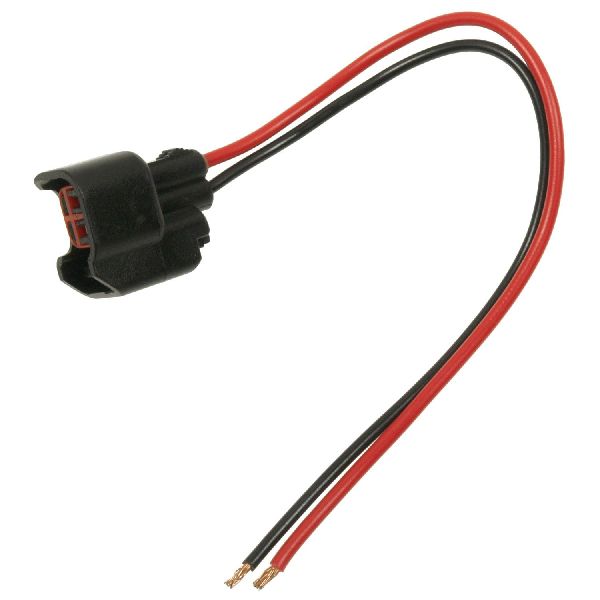
Typical fix: Repair the damaged section of the wire or replace the injector connector pigtail.
Est. part cost: $15-$45 - Failed Fuel Injector 🟡 Medium Probability → Shop Fuel Injector Injectors can fail electrically over time due to heat cycles and vibration, leading to internal shorts that cause a 'Circuit High' condition.
How to confirm: Using a multimeter, disconnect the injector and measure its internal resistance. A healthy LSA injector (part #12598646) should have a resistance of approximately 12 Ohms. A reading that is significantly lower or an open circuit indicates a failed injector. You can also swap the cylinder #8 injector with another cylinder (e.g., cylinder #6) and see if the trouble code follows the injector (e.g., changes to P0262).
Typical fix: Replace the faulty fuel injector. 🎬 Watch: Step-by-step guide to installing new injectors in a CTS-V. It is often recommended to replace all injectors on a high-mileage bank or engine to ensure balanced flow.
Est. part cost: $70-$150 - Faulty Powertrain Control Module (PCM) ⚪ Low Probability → Shop Engine Control Module (ECM) While rare, it is possible for the injector driver circuit inside the PCM to fail or short internally. This is more likely if a wiring short was left unrepaired for a long time.
How to confirm: This is diagnosed by exclusion. If the fuel injector and its entire wiring circuit (including the connector) have been tested and confirmed to be good, the injector driver circuit within the PCM is the likely culprit. This requires professional-level diagnostics, often with an oscilloscope to view the driver signal.
Typical fix: The PCM must be repaired or replaced and will require programming to the vehicle's VIN.
Est. part cost: $400-$1000
Diagnosis Steps
- Connect an OBD-II scanner to confirm the presence of P0268 and note any other codes, like P0308.
- Turn the ignition off and locate the fuel injector for cylinder #8 on the 6.2L LSA engine. It is the rearmost cylinder on the passenger side (Bank 2).
- Carefully inspect the wiring harness and connector for cylinder #8's injector. Look for visible signs of damage, such as chafing, melting, or corrosion, paying close attention to where the harness might rub against the cylinder head, supercharger, or accessory brackets.
- If wiring appears intact, disconnect the injector connector. Use a multimeter to measure the resistance across the two pins on the injector itself. A healthy OEM injector should read approximately 12 Ohms. 🎬 See how to accurately check injector resistance with a multimeter. If it's near zero or infinite (OL), the injector has failed.
- To test the circuit for a short to voltage, keep the injector disconnected. Turn the ignition to 'ON' (engine off). Use a multimeter to measure the DC voltage between the ground/control wire pin in the connector and a known good chassis ground. If you read battery voltage (12V), the control wire is shorted to a power source.
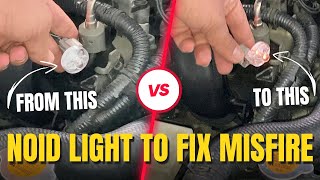
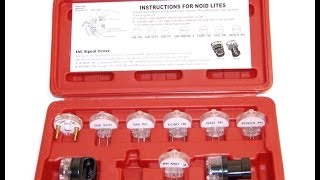
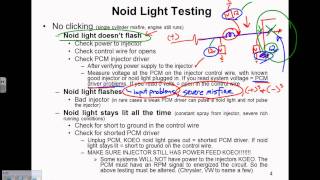
- To test the PCM signal, plug a 'noid light' into the injector connector. Start the engine; the light should flash steadily, indicating the PCM is attempting to command the injector. 🎬 Watch this tutorial on using a noid light for circuit testing. If the light is on solid, it confirms a short. If it's off, it could be a break in the wire or a PCM issue.
- If the injector and wiring are confirmed to be good, the final step is to suspect a faulty driver circuit in the PCM.
Parts You'll Likely Need
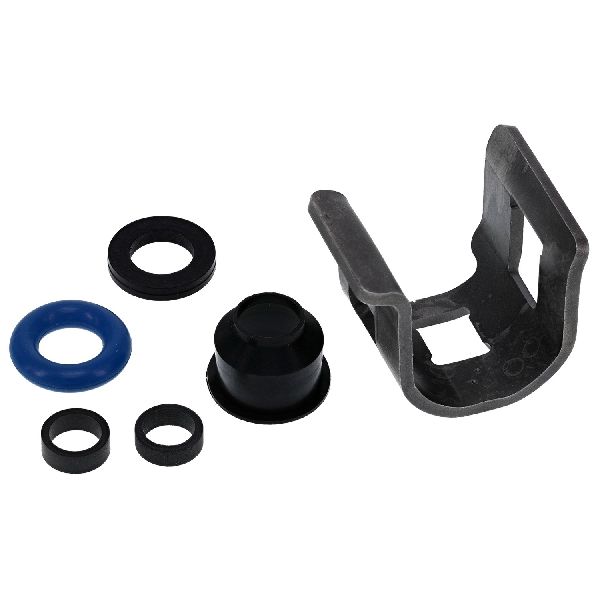
- Fuel Injector
(OEM #12598646)— An internal short within the injector is a common cause for a 'Circuit High' fault code. This injector has a ~12 Ohm impedance.
Trusted brands: ACDelco, Bosch
OEM price range: $90-$150
Aftermarket price range: $50-$100 - Fuel Injector Connector Pigtail
(OEM #ACDelco PT2160)— The connector itself or the wiring directly attached to it can become damaged from heat and vibration, causing a short circuit. The connector type is USCAR/EV6.
Trusted brands: ACDelco, Dorman, Standard Motor Products (HP3945)
OEM price range: $25-$40
Aftermarket price range: $15-$30
Related Codes That Often Appear With This One
- P0308 — P0308 means 'Cylinder 8 Misfire Detected'. Since P0268 causes a fueling problem for cylinder 8, it will almost always be accompanied by a misfire code for the same cylinder.
- P0267 — P0267 is 'Cylinder 8 Injector Circuit Low'. Seeing both codes intermittently could point to a severe wiring issue where the circuit is shorting to ground and voltage at different times.
Technical Service Bulletins (TSBs) & Recalls
- PIP4924D: Mentions that codes including P0268 can be set due to issues with the fuel injector wiring, prompting an inspection of the harness.
- 21-NA-149: A related GM bulletin that details common engine wiring harness chafing locations on various trucks and SUVs, providing insight into likely failure points (e.g., cylinder heads, brackets) that are relevant to the CTS-V's engine bay layout.
Platform-Specific Known Issues
- A known issue documented in GM TSB #PIP4924D involves the fuel injector wiring harness. It can become damaged, leading to various injector circuit codes, including P0268. A thorough inspection of the harness, especially where it routes near the back of the passenger-side cylinder head, is a critical first step.
Mechanic-Grade Diagnostic Values
- Fuel Injector Pulse Width at Idle — expected: Typically 1.7ms - 4.5ms for a stock LSA engine at normal operating temperature.. Failure: A pulse width of 0ms for cylinder 8 indicates the PCM has shut down the injector due to the fault. Unusually high or erratic pulse widths on other cylinders can indicate the PCM is attempting to compensate for the misfire.
- Injector Control Circuit Voltage (Oscilloscope) — expected: A square wave pattern. The voltage should be at battery voltage (approx. 12-14V) when the injector is off, then pull down sharply to near 0V (ground) when the PCM commands the injector to open. An inductive kick (voltage spike) is normal when the injector closes.. Failure: With a 'Circuit High' fault, the control circuit voltage will be stuck at battery voltage and will not pull down to ground, indicating the PCM driver is not grounding the circuit or the wire is shorted to power.
Hidden / Shadow Codes Worth Checking
- Incorrect Cylinder ID by Generic Scanners: Many generic OBD-II scanners incorrectly report P0268 as 'Cylinder 3 Injector Circuit High'. On the GM LSA V8 engine, P0268 correctly corresponds to Cylinder 8. This is a critical distinction for diagnosis. (see via This is not a hidden code, but a common misinterpretation by non-GM specific scan tools. A professional tool like a GM Tech 2 or GDS2 will correctly identify the cylinder.)
Scan Tool Commands That Help
- GM Tech 2 / GDS2: Fuel Injector Balance Test — This bidirectional test allows a technician to individually pulse each fuel injector while monitoring fuel pressure drop with a mechanical gauge. It can definitively determine if an injector is clogged or flowing differently than the others. For a P0268, it's used after confirming the electrical circuit is sound to test the injector's mechanical function.
- GM Tech 2 / GDS2: Injector Test (Active Test) — This function allows the user to command a specific injector on and off to listen for the audible 'click' of the injector solenoid activating. If the injector for cylinder 8 does not click when commanded, but the wiring and signal are verified as good, the injector itself has failed mechanically or electrically.
Wiring & Ground Locations
- ECM Connector C1, Pin 77 — On the main Engine Control Module (ECM), located in the engine bay.. This is the specific pin for the 'Fuel Injector 8 Control' circuit. The wire is typically Dark Blue with a White stripe. All continuity and voltage tests for the control side of the injector circuit should reference this pin to isolate a wiring fault from a PCM fault.
- G102 — Located at the left rear of the engine block/cylinder head.. This is a primary ground for the ignition coils and other critical engine sensors. While the injector is grounded through the PCM driver, the PCM itself relies on clean engine and chassis grounds for a stable reference. A poor G102 connection can introduce electrical noise that may affect multiple systems, including the PCM's monitoring of injector circuits.
- G104 — On the rear corner of the driver's side cylinder head.. This is another critical engine-to-chassis ground point physically close to cylinder #8 (passenger side rear). A loose or corroded connection here can cause voltage discrepancies between the engine block and the rest of the vehicle's electrical system, potentially contributing to circuit-related fault codes.
Real Owner Repair Stories
- Vertex AI Search Synthesis (2010-2014 Cadillac CTS-V) — Check Engine Light with code P0268, rough idle, engine misfire.
❌ Tried (didn't work) Replacing the fuel injector for cylinder 8., Replacing the spark plug and ignition coil for cylinder 8.
✅ What actually fixed it A detailed inspection revealed the fuel injector wiring harness had chafed against a sharp edge on the back of the engine or an accessory bracket. The damaged wire (specifically the control wire for injector #8) was shorting to a power source. Repairing the wire and protecting the harness with a new loom resolved the issue permanently.
OEM Part Supersession History
12598646→12598646 (current)— No supersession found. The original part number is still the current part number for this application.
Helpful Videos
We Have This Part in Stock


The information in this article is provided for general reference and educational purposes only. Vehicle specifications, procedures, and part compatibility can vary by production date, trim level, and region. Always consult your vehicle's factory service manual and verify part numbers before purchasing or performing repairs. Safety-critical components such as airbags, seat belts, and braking systems should be installed by a qualified professional.
- Cadillac CTS:
- 🧭 Diagnostic Flowchart
- 🎬 Helpful Videos
- 🛍️ Shop This Part
- What's Unique About the 2010-2014 Cadillac CTS
- Symptoms You May Notice
- Most Likely Causes
- Diagnosis Steps
- Parts You'll Likely Need
- Related Codes That Often Appear With This One
- Technical Service Bulletins (TSBs) & Recalls
- Platform-Specific Known Issues
- Mechanic-Grade Diagnostic Values
- Hidden / Shadow Codes Worth Checking
- Scan Tool Commands That Help
- Wiring & Ground Locations
- Real Owner Repair Stories
- OEM Part Supersession History
- 🎟️ Get 5% Off