

P0268 on 2010-2014 Cadillac SRX: Cylinder 6 Injector Circuit High Causes and Fixes
This code indicates a high voltage condition in the cylinder 6 fuel injector circuit. The most common cause on this specific vehicle is a chafed or damaged fuel injector wiring harness, as documented in GM Technical Service Bulletin #PIP4924D. Before replacing any parts, carefully inspect the wiring harness where it can rub against the intake plenum, valve cover bolts, or fuel lines.
- P0268 on a 2010-2014 SRX means there's an electrical fault in the cylinder 6 fuel injector circuit.
- Before buying any parts, **thoroughly inspect the fuel injector wiring harness** for chafing against the engine, as this is a widely documented problem in GM TSB PIP4924D.
- If the wiring is intact, the next most likely cause is a failed fuel injector.
- This issue is common to a wide range of GM vehicles that use the 3.0L LF1 and 3.6L LFX V6 engines.
What's Unique About the 2010-2014 Cadillac SRX
For the second-generation Cadillac SRX, which used 3.0L V6 (LF1) and 3.6L V6 (LFX) engines, General Motors has specifically identified a tendency for the fuel injector wiring harness to chafe or break. This isn't just a generic possibility; it's a known issue documented in service bulletin PIP4924D. The harness can rub against engine components like the intake plenum, valve cover bolts, the side of the cylinder head, or fuel lines, leading to an electrical short or open that triggers codes like P0268. This issue is shared across many GM vehicles using these V6 engines.
Diagnostic Flowchart
Tap your situation to follow the diagnostic path that matches what you're seeing on this vehicle.
Generation note: The 2010-2016 SRX is a single generation, but it featured a key engine change. The 2010-2011 models primarily used a 3.0L V6 (LF1), while the 2012-2016 models used a more powerful 3.6L V6 (LFX). The Technical Service Bulletin regarding wiring issues, PIP4924D, applies to both engine types within this year range and many other GM models.
Symptoms You May Notice
- Check Engine Light is on
- Engine misfire, which may feel like a shake or shudder.
- Rough or unstable idle
- Reduced engine power and sluggish acceleration.
- Increased fuel consumption.
- Engine may hesitate or stall.
- Replacing the fuel injector without first thoroughly inspecting the wiring harness. Given the known TSB, the wiring is a more likely culprit and checking it first can save money and time.
- Replacing the PCM before exhaustively testing the wiring harness for shorts or opens. A damaged wire is far more common than a failed injector driver in the PCM.
Most Likely Causes
- Chafed or Damaged Fuel Injector Wiring Harness 🔴 High Probability → Shop Engine Wiring Harness GM issued TSB #PIP4924D specifically for this issue on the SRX and many related vehicles. The harness routing makes it susceptible to rubbing against sharp edges on the intake plenum, valve cover bolts, fuel lines, and the side of the cylinder head under the plenum. Vibration and engine movement over time wear through the protective loom and wire insulation.
How to confirm: Carefully perform a visual and physical inspection of the entire fuel injector wiring harness, especially where it makes contact with other engine parts. Look for rubbed-through insulation, exposed copper wires, or breaks. It may be necessary to remove the engine cover and intake plenum for a clear view. Gently tugging on individual wires at the connector can sometimes reveal a break that isn't visually apparent.
Typical fix: Repair the damaged section of wire using solder and heat-shrink tubing or replace the injector connector pigtail. If the damage is right at the connector, a pigtail is the best solution. In severe cases, the entire engine wiring harness may need replacement. After repair, secure the harness away from the chafe point using zip ties or re-routing.
Est. part cost: $15-$50 for a connector pigtail - Faulty Fuel Injector 🟡 Medium Probability → Shop Fuel Injector The direct injection (GDI) fuel injectors on the LF1 and LFX engines operate under very high pressure and can fail electrically over time. An internal short or open in the injector's solenoid coil will trigger this code.
How to confirm: Swap the cylinder 6 fuel injector with one from another cylinder (e.g., cylinder 4). Clear the codes and drive the vehicle. If the code changes to P0262 (Cylinder 4 Injector Circuit High), the injector is faulty. You can also test the injector's internal resistance with a multimeter (disconnect it first); an out-of-spec or infinite reading indicates failure. A professional can perform a balance test or an injector activation test.
Typical fix: Replace the faulty fuel injector. It is often recommended to replace all injectors on the same bank, or all six on higher mileage vehicles, to ensure balanced fuel delivery. When replacing injectors on these engines, proper orientation is critical as the spray pattern is not circular.
Est. part cost: $50-$137 per injector. - Powertrain Control Module (PCM) Failure ⚪ Low Probability → Shop Engine Control Module (ECM)
How to confirm: This should be the last resort after confirming the wiring and injector are good. A professional will need to test the injector driver circuit within the PCM using specialized equipment. This is an advanced diagnostic step and is rarely the cause.
Typical fix: The PCM will need to be repaired or replaced and programmed to the vehicle's VIN.
Est. part cost: $300-$800 for a remanufactured or new PCM
Rare But Worth Checking
- Improperly Seated/Oriented Fuel Injector: → Shop Fuel Injector
Diagnosis Steps
- Read the trouble codes with an OBD-II scanner to confirm P0268 and note any other codes present, especially P0306.
- Crucial Step for this vehicle: Visually and physically inspect the fuel injector wiring harness as described in TSB #PIP4924D. Pay close attention to where the harness touches the intake plenum, valve cover bolts, fuel lines, and the side of the cylinder head for any signs of chafing, melting, or breaks.
- If no wiring damage is visible, disconnect the connector at the cylinder 6 injector. Check for corrosion, bent, or backed-out pins on both the injector and the connector.
- Use a noid light to test for a signal at the injector connector. The light should flash consistently when the engine is cranked or running, indicating the PCM is sending a signal.
- If the noid light flashes correctly, the issue is likely the injector itself. To confirm, swap the cylinder 6 injector with another one (e.g., cylinder 4).
- Clear the codes and start the engine. If the code returns as P0268, the problem is in the wiring between the PCM and the connector. If the code moves to the swapped cylinder (e.g., P0262 for cylinder 4), the fuel injector is confirmed to be faulty.
- If the noid light does not flash in step 4, use a multimeter to check for continuity on the control and voltage feed wires from the injector connector back to the PCM connector. This will confirm if there is a break in the wire.
- If wiring and the injector are confirmed to be good, the issue may lie with the PCM's injector driver circuit, which requires professional diagnosis.
Parts You'll Likely Need
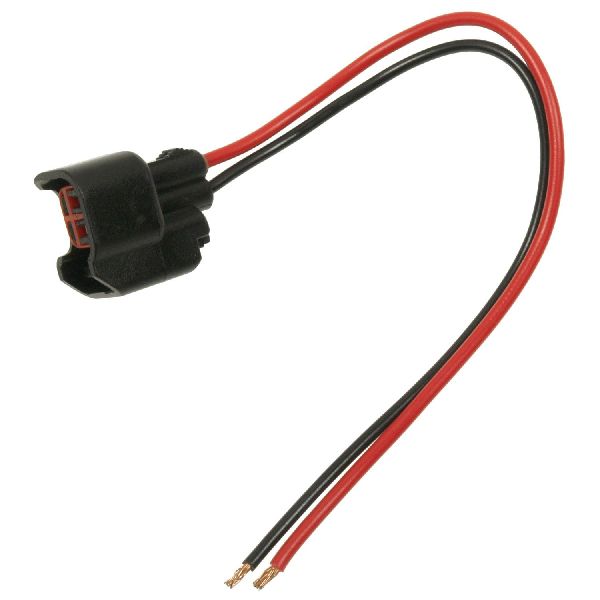
- Fuel Injector Wiring Harness Connector Pigtail
(OEM #13576411)— This is the most common fix if the wiring is damaged right at the connector, which is a frequent failure point. Splicing in a new pigtail is often easier than repairing the old wires.
Trusted brands: ACDelco, Dorman
OEM price range: $30-$60
Aftermarket price range: $15-$40 - Fuel Injector
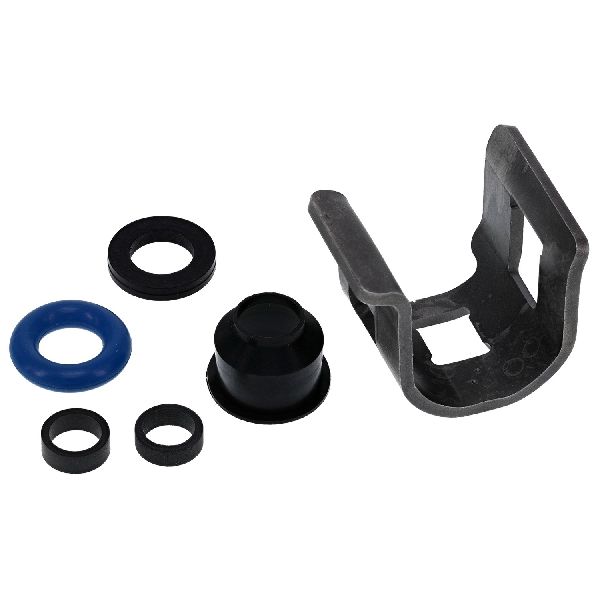
(OEM #12634126)— If the injector itself has failed internally (shorted or open), it will need to be replaced. This part number is applicable for the 3.6L V6 LFX engine.
Trusted brands: ACDelco, Bosch, Standard Motor Products
OEM price range: $90-$150
Aftermarket price range: $50-$100
Related Codes That Often Appear With This One
- P0306 — P0306 means 'Cylinder 6 Misfire Detected'. Since P0268 causes the cylinder 6 injector to malfunction, it will directly lead to a misfire on that same cylinder.
- P0206 — P0206 is 'Injector Circuit/Open - Cylinder 6'. This is a related code that can be set by the same wiring or injector faults that trigger P0268.
- P216A or P216D — These are bank-specific injector grouping codes. TSB PIP4924D lists these as potential accompanying codes when a wiring issue is present.
Technical Service Bulletins (TSBs) & Recalls
- PIP4924D: Addresses a Service Engine Soon light and misfire with various injector codes (P0261-P0277, etc.) caused by the fuel injector wiring harness rubbing through. It advises technicians to carefully inspect the harness in several common trouble spots like the intake plenum and valve cover bolts.
- PI0733A: Warns that cold start misfires can occur if fuel injectors are not oriented correctly after a repair, as the spray pattern is directional.
Platform-Specific Known Issues
- A known issue, documented in GM Technical Service Bulletin #PIP4924D, involves the fuel injector wiring harness rubbing through its insulation. Common chafe points include contact with the intake plenum, at valve cover bolts, against the fuel line, and on the side of the head under the plenum. This can cause a variety of injector circuit codes, including P0268.
- Another TSB, #PI0733A, notes that after a repair, misfires can occur if the injectors are not oriented correctly. The connectors for Bank 1 (firewall side) must aim toward the rear, and Bank 2 (radiator side) must aim toward the front.
Mechanic-Grade Diagnostic Values
- GDI Fuel Injector Coil Resistance — expected: 1.2 - 1.8 Ohms (for LFX engine). Failure: A reading significantly outside this range, or infinite (open circuit), suggests a faulty injector. Note: This is a basic check; GDI injectors can have complex failure modes.
- GDI Fuel Injector Circuit Voltage (Lab Scope) — expected: The circuit is capacitively charged to ~65V by the PCM. When commanded on, one side is pulled to ground for a specific pulse width (e.g., ~2.5ms at idle). An inductive voltage spike (~50V+) occurs when the injector closes.. Failure: Absence of the 65V charge, failure to pull to ground, or a missing inductive spike indicates a circuit or PCM driver problem. A standard multimeter or noid light is not suitable for this test.
- High-Pressure Fuel System Pressure (Scan Tool) — expected: Over 2,000 PSI under load.. Failure: Significantly lower pressure, especially with codes like P0087, indicates a problem with the high-pressure fuel pump (HPFP), not typically the injector circuit itself.
- Injector Balance Test (Scan Tool) — expected: A pressure drop value (in kPa or PSI) is displayed for each injector after being pulsed. All cylinders should have a similar pressure drop.. Failure: If one cylinder's pressure drop is significantly different from the others, it points to a flow issue with that injector.
Scan Tool Commands That Help
- GDS2 (GM Tech Tool) or equivalent professional scanner: Fuel Injector Balance Test — Use this automated test after checking wiring to definitively confirm if an injector is flowing differently than the others. The tool commands each injector to fire and measures the resulting drop in fuel rail pressure, providing a comparative value for each cylinder.
- GDS2 or equivalent: Injector Flow Test / Active Fuel Injector Test (AFIT) — This is a more advanced version of the balance test, used to analyze injector performance under various conditions. It can help identify leaking or clogged injectors.
- Most bidirectional scan tools: Injector Activation / Cylinder Power Balance — A simple test to quickly check if the PCM is attempting to control the injector. When activating the injector, a distinct 'click' should be heard from the injector solenoid. This helps isolate a dead cylinder.
Wiring & Ground Locations
- X1 Connector — This is one of the main connectors at the Powertrain Control Module (PCM).. The fuel injector circuits for all cylinders run through this connector. Technicians can perform continuity and voltage tests here to check the entire harness back to the injectors without accessing each one individually. The wires are typically twisted pairs.
- Injector Circuit Pinout (Example) — At the PCM's X1 connector.. Knowing the specific pins is crucial for testing. For example, on the 3.6L, the high-side driver for injector #1 is on pin 75. The high-side wires typically have a white tracer, while the low-side (control) wires are a solid color. This allows for precise testing of the correct wire for cylinder 6.
"I Checked Everything" — The Actual Cause
- A common scenario for this code is when basic continuity tests on the wiring pass, but the code persists. The actual cause is often poor pin tension or micro-corrosion inside the injector connector or the PCM's X1 connector. A simple multimeter test doesn't draw enough current to reveal the high-resistance fault, which only manifests under the high voltage/current load of the GDI injector driver. A 'wiggle test' of the harness and connectors while monitoring the circuit with a lab scope is often required to find these elusive faults.
OEM Part Supersession History
12642128→12634126— Standard part evolution, likely for improved reliability or manufacturing process.
Model Year Variations Within This Range
- 2012-2016: The 3.6L LFX V6 engine became standard. It featured a lighter-weight design with a composite intake manifold and cylinder heads with integrated exhaust manifolds compared to the earlier 3.0L LF1 (2010-2011). However, the fundamental GDI fuel system architecture and the wiring harness chafe issue (TSB PIP4924D) remain relevant to both engines.
Helpful Videos
We Have This Part in Stock

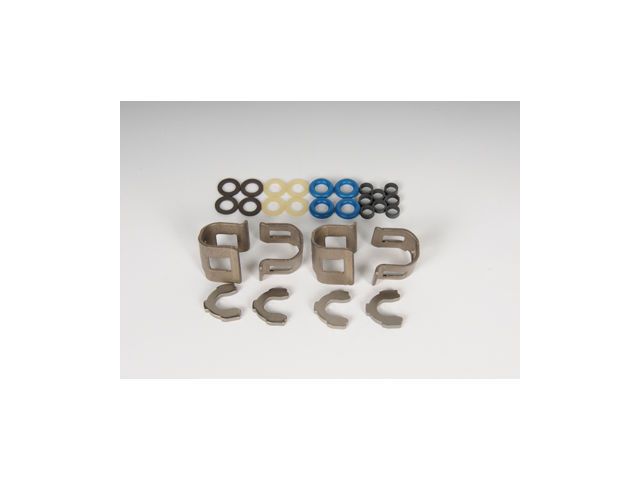
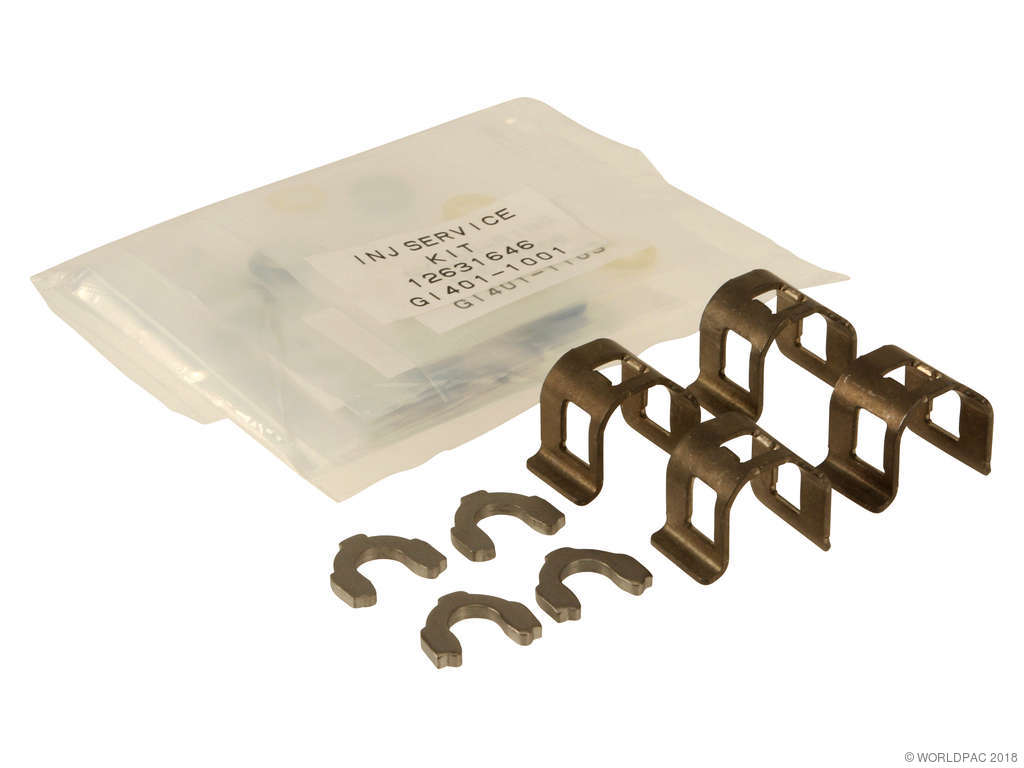

The information in this article is provided for general reference and educational purposes only. Vehicle specifications, procedures, and part compatibility can vary by production date, trim level, and region. Always consult your vehicle's factory service manual and verify part numbers before purchasing or performing repairs. Safety-critical components such as airbags, seat belts, and braking systems should be installed by a qualified professional.
- Cadillac SRX:
- 🧭 Diagnostic Flowchart
- 🎬 Helpful Videos
- 🛍️ Shop This Part
- What's Unique About the 2010-2014 Cadillac SRX
- Symptoms You May Notice
- Most Likely Causes
- Rare But Worth Checking
- Diagnosis Steps
- Parts You'll Likely Need
- Related Codes That Often Appear With This One
- Technical Service Bulletins (TSBs) & Recalls
- Platform-Specific Known Issues
- Mechanic-Grade Diagnostic Values
- Scan Tool Commands That Help
- Wiring & Ground Locations
- "I Checked Everything" — The Actual Cause
- OEM Part Supersession History
- Model Year Variations Within This Range
- 🎟️ Get 5% Off