

P0268 on 2011-2014 Chevrolet Camaro: Cylinder 3 Injector Circuit High Causes & Fixes
On a 2011-2014 Camaro, P0268 usually points to a faulty fuel injector on cylinder #3 or a wiring issue. A GM Technical Service Bulletin suggests inspecting the injector wiring harness first for specific chafe points against the intake, valve cover, or fuel lines. A new OEM injector costs around $100-$140.
- P0268 on a 2011-2014 Camaro means there's an electrical problem with the cylinder #3 fuel injector circuit, most often a high voltage reading.
- Before buying any parts, thoroughly inspect the wiring harness leading to the cylinder #3 injector, as recommended by GM service bulletin #PIP4924D. Check for chafing against the intake, valve covers, and fuel lines.
- Cylinder #3 is the middle cylinder on the passenger side (V6) or the second from the front on the driver's side (V8).
- If the wiring is good, the fuel injector is the next likely cause. A new OEM part costs between $100 and $150.
- Driving with this code can damage your catalytic converter, so it's best to address the issue promptly.
What's Unique About the 2011-2014 Chevrolet CAMARO
For the 5th generation Camaro, this code has a known history documented by General Motors. The manufacturer issued Technical Service Bulletin #PIP4924D, which specifically advises technicians to inspect the fuel injector wiring harness for damage when encountering P0268, among other codes. The bulletin highlights common chafe points against the intake plenum, valve cover bolts, and fuel lines, making a thorough visual inspection of the wiring a more critical first step than on other vehicles where the injector itself might be the immediate primary suspect.
Diagnostic Flowchart
Tap your situation to follow the diagnostic path that matches what you're seeing on this vehicle.
Symptoms You May Notice
- Check Engine Light is on (may be flashing)
- Engine running rough or vibrating
- Noticeable engine misfire, sometimes felt as a buck or jerk
- Loss of power and poor acceleration
- Rough idle
- Potential for engine stalling
- Increased fuel consumption
- Strong fuel smell from the engine bay or exhaust
- Replacing the fuel injector without first thoroughly inspecting the wiring harness. The TSB for this platform makes the wiring a primary suspect.
- Assuming a new injector is good without testing. A user on 2CarPros.com reported getting a P0268 code immediately after installing a new injector, suggesting the new part could have been faulty or the wrong specification.
Most Likely Causes
- Damaged Fuel Injector Wiring Harness 🔴 High Probability → Shop Engine Wiring Harness GM issued TSB #PIP4924D specifically pointing to potential wiring issues for this code on 2010-2014 models. The bulletin explicitly mentions that the harness can chafe against the intake plenum, valve cover bolts, the fuel line, or the side of the cylinder head under the plenum, causing a short to power or an open circuit. Another TSB, #21-NA-149, also notes general engine harness chafing issues on GM vehicles against the ECM bracket, upper control arm, and shock tower.
How to confirm: Visually inspect the wiring harness leading to the cylinder #3 fuel injector. Trace it back as far as possible, looking for signs of chafing, melting, breaks, or corrosion on the wires and at the connector. Pay special attention to the specific contact points mentioned in TSB #PIP4924D.
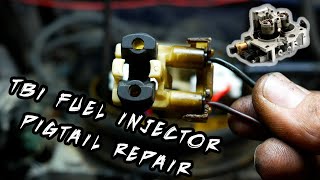
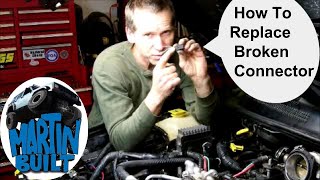
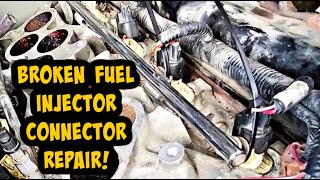
Typical fix: Repair the damaged section of the wiring harness. This may involve soldering and heat-shrinking the wires or replacing the connector pigtail if the damage is at the connector. 🎬 See how to properly repair a broken fuel injector connector yourself.
Est. part cost: $15-$45 for a connector pigtail. - Failed Cylinder #3 Fuel Injector 🟡 Medium Probability → Shop Fuel Injector Fuel injectors can fail electrically over time, leading to an internal short or open circuit that causes a 'Circuit High' condition. While not necessarily a platform-specific weakness, it's a common failure point for this code once wiring is ruled out.
How to confirm: After confirming the wiring is intact, test the injector. Use a multimeter to check its resistance; it should be between 12 and 17 Ohms for a typical high-impedance injector. A more definitive test is to swap the cylinder #3 injector with another cylinder (e.g., cylinder #1) and see if the trouble code follows the injector (e.g., changes to P0262 for cylinder 1).
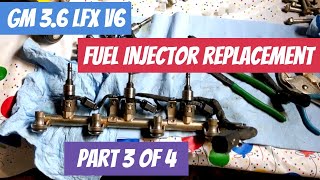
Typical fix: Replace the faulty fuel injector. It is often recommended to replace all injectors on a high-mileage engine, especially on GDI engines where access is labor-intensive, but it is not strictly necessary. 🎬 Watch this step-by-step walkthrough for replacing the 3.6L V6 fuel injectors.
Est. part cost: $70-$180 - Faulty Engine Control Module (ECM) ⚪ Low Probability → Shop Engine Control Module (ECM)
How to confirm: This is diagnosed by exclusion. If the wiring and the fuel injector have both been tested and are known to be good, the fault may lie with the injector driver circuit within the ECM. This can happen if an external short in the harness or injector damages the internal driver. This requires advanced diagnostic scan tools to confirm.
Typical fix: Replace and reprogram the Engine Control Module.
Est. part cost: $400-$800
Rare But Worth Checking
- Bent or Broken Connector Pins:
Diagnosis Steps
- Confirm the Code: Use an OBD-II scanner to confirm P0268 is the active code. 🎬 Watch this quick breakdown of the P0268 code and its causes. Note any other codes present, especially P0303 (Cylinder 3 Misfire).
- Locate Cylinder #3: On the 3.6L V6 (LFX/LLT) engine, cylinder #3 is the middle cylinder on the passenger side (Bank 1). On the 6.2L V8 (LS3/L99) engine, cylinder #3 is the second cylinder from the front on the driver's side (Bank 1).
- Inspect the Wiring Harness (Per TSB #PIP4924D): This is the most critical step. Carefully inspect the entire length of the wiring going to the cylinder #3 injector. Look for chafing against the intake plenum, valve cover bolts, fuel lines, or the cylinder head.
- Check Connector Pins: Disconnect the injector and inspect the connector and injector pins for damage, corrosion, or looseness.
- Perform a Noid Light Test: Plug a 'noid' light into the injector connector. Start the engine. The light should flash rapidly, indicating the ECM is sending a signal. If it doesn't flash or stays on solid, the problem is in the wiring or the ECM. If it flashes, the circuit is likely good, and the injector is the primary suspect.
- Test the Fuel Injector Resistance: Disconnect the injector and use a multimeter set to Ohms. Measure the resistance across the two pins. It should be within the manufacturer's specification (approx. 12-17 Ω). An infinite reading means an open circuit, while a very low reading indicates a short. Compare it to an adjacent injector to be sure.
- Swap the Injector: As a final confirmation, swap the cylinder #3 injector with an adjacent one (e.g., cylinder #1). Clear the codes and run the engine. If the code moves to the new cylinder (e.g., P0262 for cylinder 1), you have confirmed the injector is faulty.
- Diagnose the ECM: If all the above steps pass, the issue may be with the ECM's internal driver circuit. This is rare and requires professional diagnosis with advanced tools.
Parts You'll Likely Need
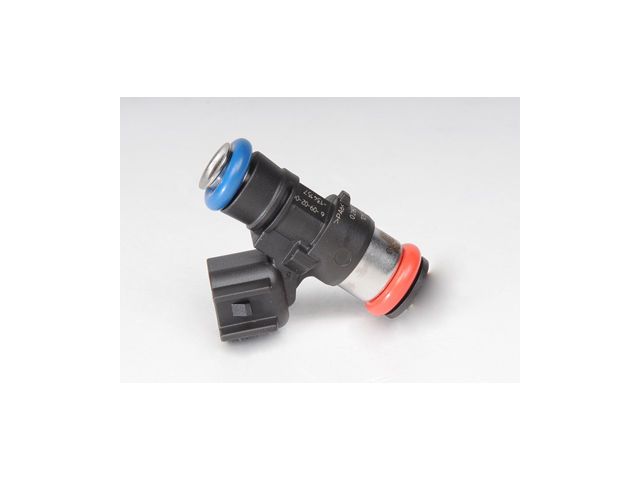
- Fuel Injector (3.6L V6 LFX/LLT)
(OEM #12634126)— If the wiring is intact, the injector itself is the next most likely component to have failed, causing the circuit high condition.
Trusted brands: ACDelco, Bosch, Hitachi
OEM price range: $100-$140
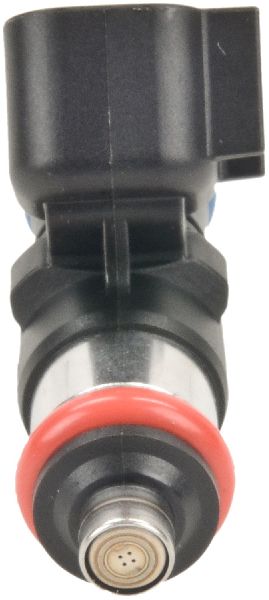
Aftermarket price range: $70-$100 - Fuel Injector (6.2L V8 LS3/L99)
(OEM #12576341)— If the wiring is intact, the injector itself is the next most likely component to have failed, causing the circuit high condition.
Trusted brands: ACDelco, Bosch
OEM price range: $110-$150
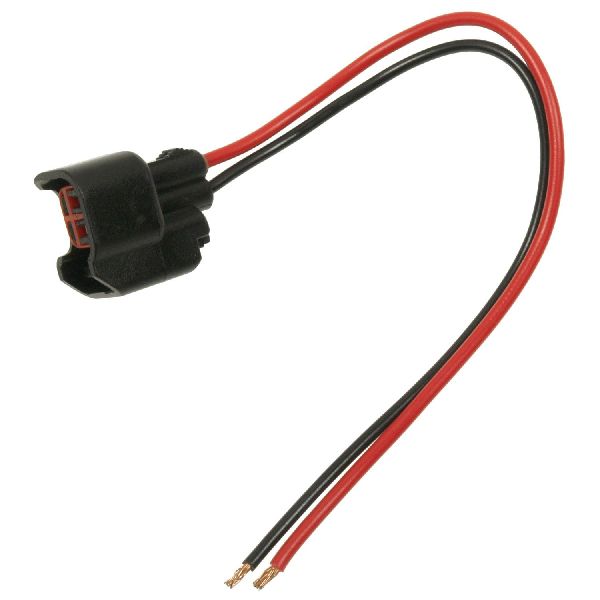
Aftermarket price range: $80-$110 - Fuel Injector Connector Pigtail
(OEM #ACDelco PT2384 (example, verify fitment))— If inspection reveals damage to the wiring connector itself, replacing the pigtail is the standard repair.
Trusted brands: ACDelco, Dorman, Standard Motor Products
OEM price range: $25-$45
Aftermarket price range: $15-$30
Related Codes That Often Appear With This One
- P0303 — P0303 indicates a misfire on cylinder #3. Since P0268 causes the ECM to shut off the cylinder #3 injector, a misfire is the direct result.
- P0203 — P0203 is a more generic 'Injector Circuit/Open - Cylinder 3' code. It often appears with P0268 as they both relate to electrical faults in the same circuit.
- P0267 — This code is for 'Cylinder 3 Injector Circuit Low'. While the opposite of P0268, seeing both could indicate an intermittent wiring problem that is shorting to ground at times and open or shorted to power at other times.
Technical Service Bulletins (TSBs) & Recalls
- Bulletin #PIP4924D: Advises technicians to inspect the fuel injector wiring harness for rubbing or open wires when encountering a range of injector codes, including P0268. It specifically calls out contact points against the intake plenum, valve cover bolts, fuel line, and the side of the head.
- Bulletin #21-NA-149:
Platform-Specific Known Issues
- A known issue, documented in GM Technical Service Bulletin #PIP4924D, involves the fuel injector wiring harness chafing or becoming damaged, leading to various injector circuit codes, including P0268. This makes wiring inspection a top priority. Specific chafe points to check are against the intake plenum, valve cover bolts, and fuel lines.
- A user on the Camaro5 forums reported a similar electrical issue caused by the engine wire harness rubbing against the corner of the fuse block mount, leading to frayed wires and a short.
Mechanic-Grade Diagnostic Values
- Fuel Injector Coil Resistance — expected: 12 - 17 Ohms (for high impedance injectors). Failure: A reading outside this range, or infinite (open circuit), indicates a faulty injector.
- GDS2 Fuel Injector Balance Test (Pressure Drop) — expected: All injectors should show a similar pressure drop when activated.. Failure: An injector that shows a significantly different pressure drop (higher or lower) compared to the others is likely faulty.
Scan Tool Commands That Help
- GDS2 (GM Global Diagnostic System 2): Fuel Injector Balance Test — This automated test is used to functionally check each injector without removing them. The tool commands each injector to open and measures the drop in fuel rail pressure, comparing the results across all cylinders to identify an injector that is flowing more or less than the others.
- GDS2 (or other advanced scan tool): Injector Kill / Cylinder Power Balance — This bidirectional command allows the user to disable one cylinder at a time while the engine is running. When a healthy cylinder is disabled, the engine RPM should drop noticeably. If disabling cylinder #3 causes little or no change in engine RPM, it confirms that the cylinder was not contributing power, which is the expected result of a P0268 code.
Wiring & Ground Locations
- G102 / G112 — Located on the rear of the cylinder heads. A video for the 5th Gen Camaro shows small ground wires coming from the main harness and attaching to bolts on the back of both the driver and passenger side cylinder heads.. The ECM relies on a solid ground connection to accurately control the injector circuits. A poor ground on the engine block or cylinder head can introduce electrical noise or voltage offsets, potentially causing the ECM to misinterpret the injector circuit voltage and set a 'Circuit High' code.
- Injector Power Wire — In the engine harness, a Pink (PNK) wire typically provides ignition voltage to the fuel injectors.. A 'Circuit High' code means the control side of the injector circuit is seeing unexpected voltage. This can happen if the control wire (which is pulsed to ground by the ECM) becomes shorted to the pink power wire, either through chafing within the harness or damage at the connector.
- G106 — On the right side of the engine according to a 2012 wiring diagram. Another source describes it on the front center of the frame cross rail, under the crank pulley. Locations can vary slightly by year and engine.. This is a primary engine ground. A loose or corroded connection at this point can affect the entire engine management system, including the ECM and its control over the fuel injectors.
OEM Part Supersession History
12642128→12634126— Standard part update/revision by the manufacturer.
Heads up: The new part number (12634126) is the correct replacement for the original.
Model Year Variations Within This Range
- 2011 vs 2012-2014 (V6 Models): The 2011 model year used the 3.6L LLT V6 engine, which has a traditional Port Fuel Injection (PFI) system. For the 2012 model year, GM switched to the updated LFX V6 engine. The LFX uses a Gasoline Direct Injection (GDI) system, which operates at much higher fuel pressures. The fuel injectors, high-pressure fuel pump, and ECM are fundamentally different between the LLT and LFX and are not interchangeable.
Helpful Videos
We Have This Part in Stock


The information in this article is provided for general reference and educational purposes only. Vehicle specifications, procedures, and part compatibility can vary by production date, trim level, and region. Always consult your vehicle's factory service manual and verify part numbers before purchasing or performing repairs. Safety-critical components such as airbags, seat belts, and braking systems should be installed by a qualified professional.
- Chevrolet CAMARO:
- 🧭 Diagnostic Flowchart
- 🎬 Helpful Videos
- 🛍️ Shop This Part
- What's Unique About the 2011-2014 Chevrolet CAMARO
- Symptoms You May Notice
- Most Likely Causes
- Rare But Worth Checking
- Diagnosis Steps
- Parts You'll Likely Need
- Related Codes That Often Appear With This One
- Technical Service Bulletins (TSBs) & Recalls
- Platform-Specific Known Issues
- Mechanic-Grade Diagnostic Values
- Scan Tool Commands That Help
- Wiring & Ground Locations
- OEM Part Supersession History
- Model Year Variations Within This Range
- 🎟️ Get 5% Off