

P0268 on 2009-2014 Chevrolet Traverse: Cylinder 3 Injector Circuit High Causes & Fixes
This code indicates a high voltage condition in the cylinder 3 fuel injector circuit. The most common cause on this Traverse is a faulty fuel injector or a damaged wiring harness, as noted in GM Technical Service Bulletins. Expect to pay $80-$160 for a new injector.
- P0268 on a 2009-2014 Traverse means there's an electrical problem in the cylinder 3 fuel injector circuit, not necessarily a mechanical one.
- Before buying parts, carefully inspect the wiring harness leading to the cylinder 3 injector for any signs of damage, as this is a known issue (TSB PIP4924D). Cylinder 3 is the middle cylinder on the rear bank, against the firewall.
- If the wiring is intact, the most likely culprit is the fuel injector itself. Swapping it with another cylinder is a reliable way to confirm this.
- Driving with this code can lead to costly catalytic converter damage, so it's best to address the issue promptly.
What's Unique About the 2009-2014 Chevrolet TRAVERSE
On the first-generation Traverse with the 3.6L V6 engine, this code is often linked to specific known issues. A General Motors Technical Service Bulletin (TSB PIP4924D) points directly to inspecting the fuel injector wiring harness for damage. This suggests that chafed or shorted wires are a more common cause on this platform than on many other vehicles, making a thorough visual inspection of the harness a critical first step. Cylinder 3 is on Bank 1 (the firewall side of the engine), which can make visual inspection and access more challenging than for the front-facing cylinders.
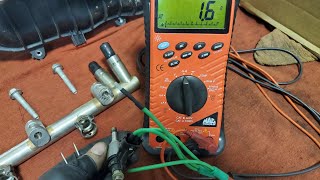
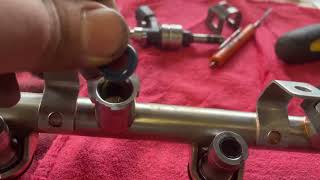
🎬 Watch: Professional testing and removal of GM direct injectors.Diagnostic Flowchart
Tap your situation to follow the diagnostic path that matches what you're seeing on this vehicle.
Symptoms You May Notice
- Check Engine Light is on (may be flashing if misfire is severe)
- Rough idle or engine vibration
- Engine misfire, which may feel like a bucking or jerking
- Reduced engine power and sluggish acceleration
- Engine may stall
- Increased fuel consumption
- Noticeable fuel smell from the exhaust
- Replacing the spark plug or ignition coil for cylinder 3 without diagnosing the fuel system. While these can cause a misfire (P0303), they do not cause a P0268 injector circuit code.
Most Likely Causes
- Damaged Fuel Injector Wiring or Connector 🔴 High Probability → Shop Fuel Injector A manufacturer TSB (#PIP4924D) specifically calls out inspecting the fuel injector wiring harness for this and related codes. The harness can be prone to chafing, melting, or corrosion, causing a short to voltage. The location of Cylinder 3 on the firewall side makes the harness susceptible to rubbing against other components or heat damage.
How to confirm: Visually inspect the wiring harness leading to the cylinder 3 fuel injector. Look for any signs of damage, melting, or corrosion on the wires and the connector. A multimeter can be used to check for a short to voltage on the control wire. With the injector disconnected and key on, the control wire should not show battery voltage; if it does, a short exists.
Typical fix: Repair the damaged section of the wire or replace the injector connector pigtail.
Est. part cost: $15-$40 - Faulty Cylinder 3 Fuel Injector 🟡 Medium Probability → Shop Fuel Injector Direct injection fuel injectors on the 3.6L LLT/LFX engines operate under high pressure and can fail internally, causing an electrical short. This is a common failure point across the GM High Feature V6 family.
How to confirm: Swap the cylinder 3 fuel injector with one from another cylinder (e.g., cylinder 1 or 5 on the same bank). Clear the codes and drive the vehicle. If the code changes to P0262 (Cylinder 1) or P0274 (Cylinder 5), the injector is faulty. You can also test the injector's internal resistance with a multimeter; it should be within the manufacturer's specified range. A general specification for this type of injector is 2-18 Ohms.
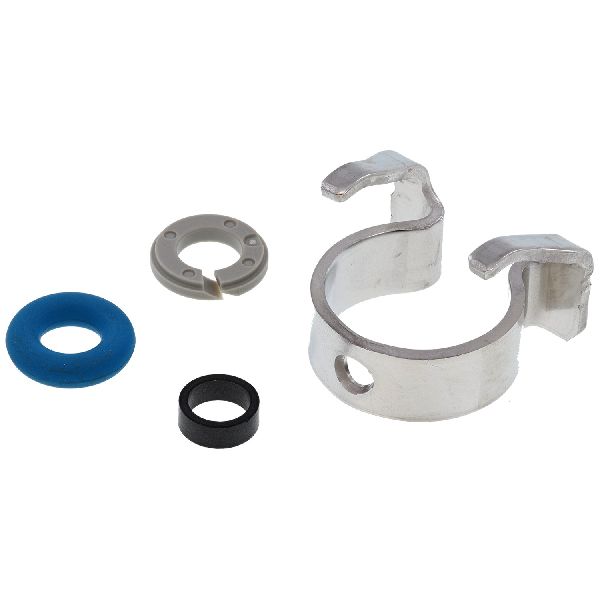
Typical fix: Replace the failed fuel injector. It is often recommended to replace the seals for the adjacent injectors at the same time. Some owners choose to replace all injectors on one bank for preventative maintenance.
Est. part cost: $80-$180 - Powertrain Control Module (ECM) Failure ⚪ Low Probability → Shop Engine Control Module (ECM) While less common, an internal short in the injector driver circuit within the ECM can cause this code. This can sometimes happen as a result of a shorted injector or wiring harness damaging the ECM driver.
How to confirm: This should be the last resort after definitively ruling out the wiring and the injector itself. A professional shop can use a dealer-level scan tool to command the injector driver and observe its behavior to confirm if the circuit inside the ECM has failed.
Typical fix: Replace and reprogram the ECM.
Est. part cost: $200-$500
Diagnosis Steps
- Scan the vehicle's computer for trouble codes. Confirm P0268 is present and note any other codes, especially P0303.
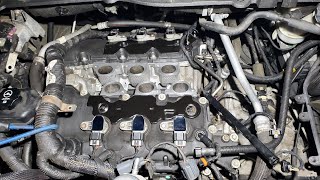
- Identify Cylinder 3: On the 3.6L V6, the cylinders are numbered with the front bank (radiator side) being 2-4-6 and the rear bank (firewall side) being 1-3-5, from left to right (passenger to driver side). Cylinder 3 is the middle cylinder on the rear bank.
- Perform a thorough visual inspection of the cylinder 3 fuel injector wiring harness and connector. Look for chafing against the engine block, melted plastic, or corroded pins, as suggested by TSB PIP4924D. Pay close attention to where the harness bends or makes contact with other components.
- Test for Short to Voltage: Disconnect the injector connector. Turn the ignition to 'ON' (engine off). Use a multimeter to check for voltage on the control wire (the one that isn't the main power feed). There should not be constant voltage; if you read battery voltage, a short to power exists in the harness.
- Test Injector Resistance: With the injector disconnected, use a multimeter to measure the internal resistance across the two pins of the fuel injector itself. Compare the reading to the service manual specification. A general range for GDI injectors is 2-18 Ohms. A reading far outside this range indicates a failed injector.
- Confirm a Bad Injector (Swap Test): If wiring and resistance seem okay, swap the cylinder 3 injector with another one (e.g., cylinder 1 or 5). Clear the codes and run the engine. If the fault code moves to the new cylinder (e.g., P0262 for cylinder 1), the injector is definitively the problem.
- If the code remains P0268 after the swap, the issue is confirmed to be in the wiring harness or the ECM.
- If all else fails and the wiring harness has been meticulously checked for continuity and shorts, the ECM's injector driver may be at fault. This typically requires professional diagnosis and replacement.
Parts You'll Likely Need
- Fuel Injector
(OEM #12669384)— An internal short in the injector is a common cause for a circuit high fault. The original part number 12638530 has been superseded by 12669384.
Trusted brands: ACDelco, Bosch
OEM price range: $150-$180
Aftermarket price range: $80-$130 - Fuel Injector Connector Pigtail
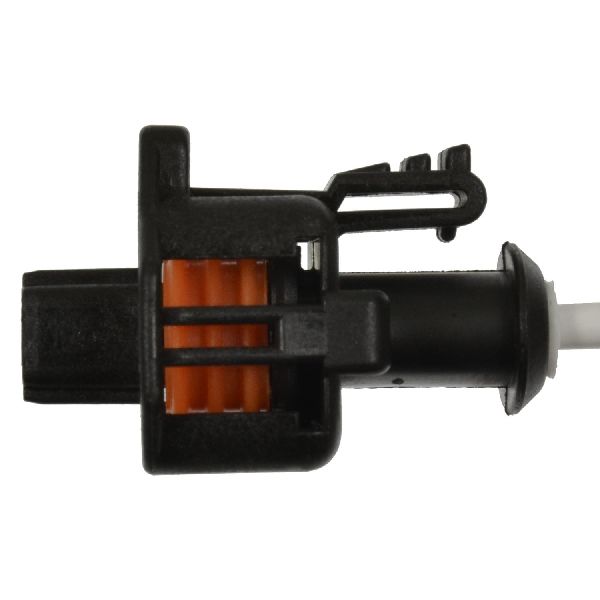
(OEM #PT2183 (ACDelco))— If the wiring is damaged or the connector is corroded right at the injector, replacing the pigtail is the standard repair. This avoids replacing the entire engine harness.
Trusted brands: ACDelco, Dorman
OEM price range: $25-$40
Aftermarket price range: $15-$30 - Upper and Lower Intake Manifold Gaskets — To access the fuel injectors on the 3.6L V6, the upper intake manifold must be removed. It is critical to replace these gaskets during reassembly to prevent vacuum leaks.
Trusted brands: Fel-Pro, ACDelco
OEM price range: $40-$70
Aftermarket price range: $20-$50
Related Codes That Often Appear With This One
- P0303 — P0303 means "Cylinder 3 Misfire Detected." Since P0268 causes the ECM to disable the cylinder 3 injector, a misfire is the direct and immediate result.
- P0267 — This code is for "Cylinder 3 Injector Circuit Low." Seeing both high and low circuit codes intermittently can point to a wiring problem with a loose connection or an injector that is failing electrically.
- P0300 — This code for "Random/Multiple Cylinder Misfire" might appear alongside P0268 if the underlying electrical issue, like a harness short, is intermittently affecting other injector circuits as well.
Technical Service Bulletins (TSBs) & Recalls
- PIP4924D: Recommends inspecting the fuel injector wiring harness in response to a check engine light with various fuel injector circuit codes, including P0268, P0267, and others. This points to a known pattern of harness chafing or damage.
Platform-Specific Known Issues
- TSB PIP4924D highlights a known issue with the fuel injector wiring harness on these vehicles, making it a primary suspect for codes like P0268.
- Accessing the rear bank of cylinders (1, 3, 5) where cylinder 3 is located requires removal of the upper intake manifold, adding complexity and time to the repair compared to the front bank.
Mechanic-Grade Diagnostic Values
- High-Pressure Fuel Rail Pressure (at idle) — expected: 300-350 kPa (approx. 44-51 PSI). Failure: Significant deviation from the desired pressure value shown on a scan tool can indicate a sensor or pump issue, though not a direct cause of P0268.
- Low-Pressure Fuel System Pressure — expected: 87-130 PSI (600-896 kPa). Failure: Pressure outside this range indicates a problem with the in-tank fuel pump, which could cause drivability issues but not typically a P0268 code.
- Fuel Injector Pulse Width (at idle) — expected: Typically around 3.4 milliseconds, but should be consistent across all injectors.. Failure: A significant deviation on one cylinder compared to others can indicate a problem, though P0268 is a circuit fault, not a flow-rate fault.
Scan Tool Commands That Help
- GDS2 (GM Dealer Software): Injector Balance Test — This automated test disables each injector sequentially and measures the corresponding drop in fuel rail pressure. While not a direct test for an electrical circuit high code, a significant deviation in pressure drop for cylinder 3 compared to others could point to a failing injector that is also causing the electrical fault.
- GDS2 (GM Dealer Software): Fuel Injector Test (Activation) — This bidirectional command allows a technician to manually click the injector solenoid on and off while listening for an audible click with a stethoscope. If the injector clicks, it confirms the ECM driver and wiring are capable of activating it, but doesn't rule out an intermittent short to voltage that causes the P0268 code.
Wiring & Ground Locations
- ECM Connector X1/X2 — The Engine Control Module (ECM) is located in the engine bay. The injector circuits run through one of its main connectors (often designated X1 or X2 in service literature).. To perform advanced diagnostics like checking for voltage or continuity from the ECM, a technician needs to identify the correct pin for the cylinder 3 injector control wire at the ECM connector.
- G105 / G110 — These are common engine bay ground points for various components on the GM Lambda platform.. While P0268 is a 'circuit high' code (often a short to power), a poor ground connection for the ECM or related sensors can cause erratic electrical behavior and is a crucial check in any electrical diagnosis.
Real Owner Repair Stories
- Traverse Forum User (2013 Chevrolet Traverse) — Check engine light with codes P0268, P0274, P0277 (Injector circuit high for cylinders 3, 5, and 6).
❌ Tried (didn't work) Initial diagnosis suspected a bad ECM or injectors.
✅ What actually fixed it The problem was a damaged engine wiring harness. A wire had rubbed through on the A/C line bracket near the firewall, causing a short. The technician repaired the damaged wires, resolving the codes for all affected cylinders.
OEM Part Supersession History
12638530 (also 12632255, 12611545)→12669384— Updated part design for the LFX engine, but is also the replacement for the earlier LLT engine.
Heads up: The LLT (2009-2011) and LFX (2012-2014) engines use different ECMs (Bosch vs. Delphi) and have different fuel system components. While the 12669384 injector is the service replacement for the older 12638530, it's critical to ensure you are using the correct parts for your specific engine year.
Model Year Variations Within This Range
- 2009-2011: These models use the 3.6L LLT V6 engine with a Bosch ECM and fuel injectors originally part number 12638530.
- 2012-2014: These models use the updated 3.6L LFX V6 engine. Key differences include integrated exhaust manifolds, a Delphi ECM, and different fuel injectors (part number 12669384 from the factory). The facelift for the Traverse occurred in 2013, but the engine change happened in 2012.
Helpful Videos

We Have This Part in Stock


The information in this article is provided for general reference and educational purposes only. Vehicle specifications, procedures, and part compatibility can vary by production date, trim level, and region. Always consult your vehicle's factory service manual and verify part numbers before purchasing or performing repairs. Safety-critical components such as airbags, seat belts, and braking systems should be installed by a qualified professional.
- Chevrolet TRAVERSE:
- 🧭 Diagnostic Flowchart
- 🎬 Helpful Videos
- 🛍️ Shop This Part
- What's Unique About the 2009-2014 Chevrolet TRAVERSE
- Symptoms You May Notice
- Most Likely Causes
- Diagnosis Steps
- Parts You'll Likely Need
- Related Codes That Often Appear With This One
- Technical Service Bulletins (TSBs) & Recalls
- Platform-Specific Known Issues
- Mechanic-Grade Diagnostic Values
- Scan Tool Commands That Help
- Wiring & Ground Locations
- Real Owner Repair Stories
- OEM Part Supersession History
- Model Year Variations Within This Range
- 🎟️ Get 5% Off