

P0268 on 2009-2014 GMC Acadia: The 'Ghost' Code for a Non-Existent Cylinder
P0268 on a V6-powered GMC Acadia is a 'ghost' code for a non-existent 8th cylinder. This almost always indicates an electrical fault in the fuel injector wiring harness, as documented in GM Technical Service Bulletin PIP4924D. Do not waste time or money looking for a problem with cylinder 8; the issue is systemic and related to wiring chafing against engine components.
- P0268 on a 2009-2014 Acadia does NOT mean there is a problem with an 8th cylinder; the vehicle only has six.
- This code is a strong indicator of an electrical problem, most commonly a damaged fuel injector wiring harness.
- Consult GM TSB PIP4924D, which directly addresses this issue and lists common chafe points.
- Diagnosis should start with a thorough inspection of the wiring harness, which requires removing the intake plenum, not by replacing any injectors.
- Due to the complexity of the electrical diagnosis, this repair is best left to a professional technician.
What's Unique About the 2009-2014 Gmc ACADIA
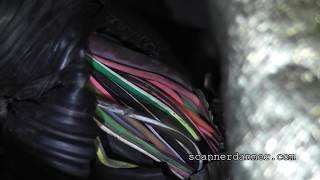
The Acadia and its platform-mates (Buick Enclave, Chevrolet Traverse, Saturn Outlook) of this era can present this confusing 'ghost' code. While a standard vehicle might have a clear issue with a specific injector, the P0268 code on this V6 platform is a strong indicator of a systemic electrical fault. GM was aware of issues that could generate a wide range of injector codes, including this impossible one. TSB PIP4924D specifically directs technicians to inspect the shared fuel injector wiring harness 🎬 Watch: How to visually inspect a harness for electrical shorts. when these codes appear, confirming the problem is often not the injector itself but the wiring that controls it.
Diagnostic Flowchart
Tap your situation to follow the diagnostic path that matches what you're seeing on this vehicle.
Symptoms You May Notice
- Check Engine Light is on
- Engine misfires or runs rough
- Rough idle
- Engine may stall
- Reduced engine power or 'limp mode'
- Engine may backfire
- Presence of other fuel injector codes (e.g., P0201-P0206)
- Searching for or attempting to diagnose Cylinder 8. This is the most common mistake, as the cylinder does not exist on this engine.
- Replacing individual fuel injectors for other cylinders (1-6) without first thoroughly inspecting the wiring harness. The problem is often in the shared harness, not the individual components.
- Replacing the ECM without first finding and fixing the shorted wiring harness that likely caused the ECM to fail in the first place.
Most Likely Causes
- Fuel Injector Wiring Harness Fault 🔴 High Probability → Shop Engine Wiring Harness As documented in GM TSB PIP4924D, the injector wiring harness is susceptible to chafing, rubbing, or developing internal opens. Common chafe points are against the intake plenum, valve cover bolts, fuel lines, and the side of the cylinder head under the plenum. The tight packaging and engine vibration contribute to this wear over time.
How to confirm: A technician will perform a thorough visual inspection of the entire fuel injector harness, which may require removing the intake plenum for full access. A 'wiggle test' (manipulating the harness with the engine running) can also help identify intermittent shorts. Technicians may also use a noid light to check for injector pulse signals while wiggling the harness.
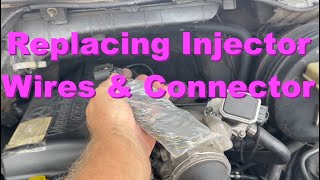
Typical fix: Repair the damaged section of the wiring harness with new connectors and wire or replace the entire injector harness if the damage is extensive. Protecting the new or repaired harness with additional loom or re-routing it slightly is critical to prevent recurrence.
Est. part cost: $50-$400 - Faulty Engine Control Module (ECM) 🟡 Medium Probability → Shop Engine Control Module (ECM) An internal short within the ECM's injector driver circuits can cause this code. This is often a secondary failure caused by a shorted wiring harness that damages the ECM.
How to confirm: This is a diagnosis of exclusion. If the wiring harness is inspected and tested to be in perfect condition (including load testing the wires, not just checking continuity), the ECM's internal injector driver circuits are then tested. This requires specialized diagnostic equipment.
Typical fix: Replace and reprogram the Engine Control Module. This must be done by a dealer or a qualified shop with programming capabilities.
Est. part cost: $400-$1000
Rare But Worth Checking
- Scan Tool Error: While less common, a low-quality or incompatible OBD-II scanner can sometimes misinterpret data and display an incorrect code. It is worth verifying the code with a professional-grade scanner before beginning expensive repairs.
Diagnosis Steps
- Confirm the code with a professional-grade scan tool to rule out a scanner error.
- Acknowledge that Cylinder 8 does not exist on the 3.6L V6 engine. Do not attempt to locate or diagnose it.
- Referencing TSB PIP4924D, prepare for a detailed visual inspection of the fuel injector wiring harness.
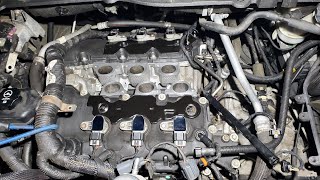
- Remove the plastic engine cover and intake plenum to gain full access to the injector harness that runs between the cylinder banks.
- Pay close attention to common chafe points: against the intake plenum, at valve cover bolts, against the fuel line, and on the side of the cylinder head. Look for any signs of melted insulation, chafing, corrosion, or pinched wires.
- Carefully unwrap sections of the harness loom to inspect the individual wires inside, as they can melt together.
- Perform a 'wiggle test' on the harness with the engine running to see if it induces a misfire or stumble, which can help pinpoint an intermittent short.
- If damage is found, repair the specific wires or replace the entire harness (GM Part No. 12621095 is a common replacement).
- If the wiring harness and its connectors are confirmed to be in good condition, the diagnostic procedure moves to testing the injector driver circuits within the Engine Control Module (ECM).
- If the ECM is found to be faulty, it will need to be replaced and reprogrammed by a qualified technician.
Parts You'll Likely Need
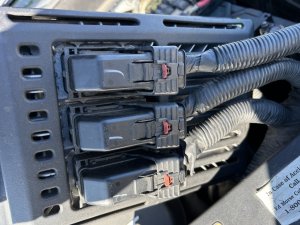
- Fuel Injector Wiring Harness
(OEM #12621095)— If damage to the harness is widespread or in a difficult-to-repair location, replacement is the best option. This part is the most common culprit for P0268.
Trusted brands: ACDelco (Genuine GM)
OEM price range: $150-$250
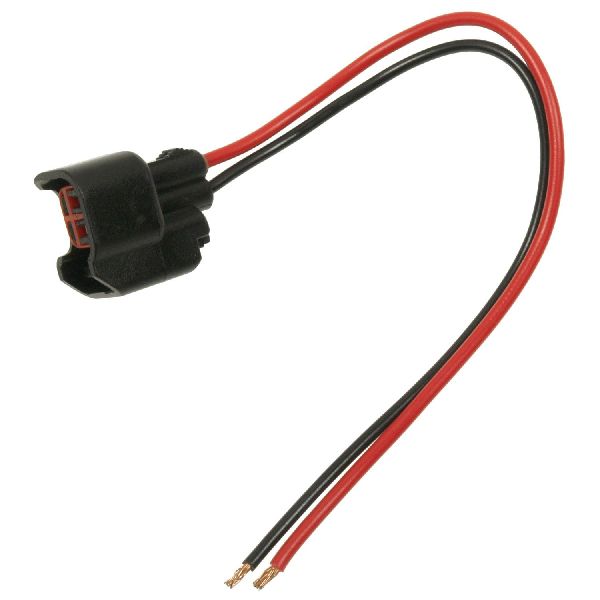
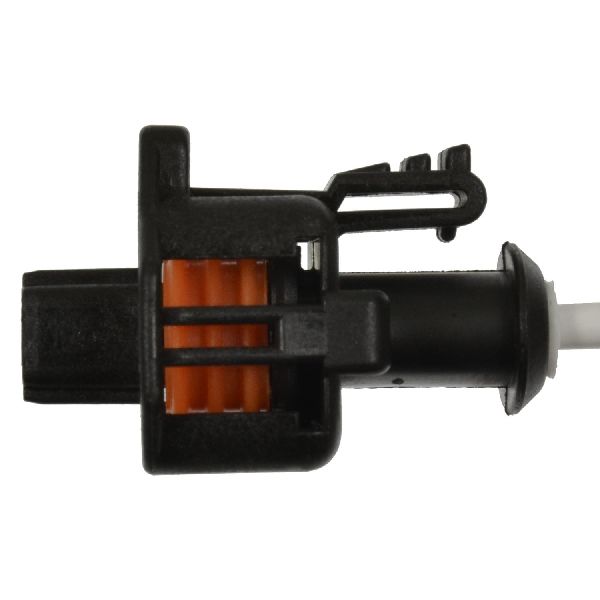
Aftermarket price range: $100-$200 - Engine Wiring Harness Repair Kit — If the damage to the injector harness is localized, a technician may repair it using specialized connectors and wiring, such as Standard Motor Products S-1024 or an ACDelco pigtail.
Trusted brands: ACDelco, Standard Motor Products
OEM price range: $25-$75
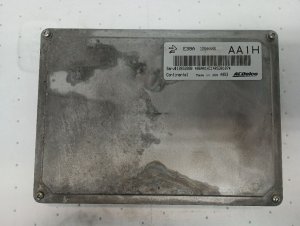
Aftermarket price range: $15-$50 - Engine Control Module (ECM) — If the wiring is confirmed to be good, the ECM itself is the next likely culprit, with failed internal drivers causing the erroneous code. It may also be damaged by a short in the harness.
Trusted brands: ACDelco
OEM price range: $500-$1000
Aftermarket price range: $300-$700
Related Codes That Often Appear With This One
- P0201-P0206 — These codes represent injector circuit malfunctions for cylinders 1-6. They often appear with P0268 because the underlying wiring harness fault can affect multiple injector circuits simultaneously.
- P2146, P2149, P2152, P2155 — These codes relate to Fuel Injector Group A or B voltage circuits. Like the other codes, their presence alongside P0268 points to a widespread electrical issue, as noted in TSB PIP4924D.
Technical Service Bulletins (TSBs) & Recalls
- PIP4924D: Addresses an SES light and misfire with a wide range of injector codes, including the 'ghost' code P0268. Recommends inspecting the fuel injector wiring harness for chafing or internal opens at specific points like the intake plenum, valve cover bolts, and fuel lines. This TSB has been updated several times (from PIP4924A, B, C, to D) to include more model years, confirming the persistent nature of the issue.
Platform-Specific Known Issues
- The 2009-2014 GMC Acadia with the 3.6L V6 engine can erroneously log the P0268 trouble code for a non-existent eighth cylinder. This is a known issue documented in GM Technical Service Bulletin PIP4924D, which points towards a fault in the fuel injector wiring harness that is common to multiple injector circuits. Owners on forums for the Acadia and its platform-mates frequently report this issue, with the ultimate fix almost always being the repair or replacement of the chafed injector harness.
Mechanic-Grade Diagnostic Values
- Fuel Injector Coil Resistance (3.6L LLT/LFX Direct Injection) — expected: 1.5 - 2.5 Ohms. Failure: A reading outside this range, or an open (OL) or shorted (near 0 Ohms) reading, indicates a faulty injector coil.
- Injector Pulse Width at Idle — expected: 2.0 - 4.0 milliseconds (ms). Failure: A value of 0 ms on one or more cylinders indicates the ECM has disabled the injector, often due to a detected circuit fault. An intermittent jump to a high value (e.g., over 8ms) can indicate a short that the ECM is trying to compensate for.
- High Pressure Fuel Rail Pressure at Idle (Direct Injection) — expected: 1.9-5.0 MPa (276-725 PSI). Failure: While not a direct cause of P0268, pressure outside this range indicates a problem with the high-pressure fuel pump or sensor, which can cause other driveability issues.
Scan Tool Commands That Help
- GM GDS2 / Tech2: Fuel Injector Balance Test — This bidirectional test commands each injector to fire for a precise duration while monitoring the drop in fuel rail pressure. While P0268 is electrical, if other individual injector codes (P0201-P0206) are present, this test can help rule out a mechanical injector issue before focusing solely on the wiring. A significant deviation in pressure drop for one cylinder compared to others would indicate a faulty injector.
- GM GDS2 / Tech2: Injector Circuit Status — While observing live data, a technician can wiggle the injector harness. If the 'Injector Circuit Status' parameter for any cylinder changes from 'OK' to 'Fault' or 'Open', it confirms an intermittent open or short in the harness.
Wiring & Ground Locations
- X160 / X161 — Multi-way harness connectors located at the rear of the intake manifold.. These are the main pass-through connectors for the fuel injector harness. TSBs and diagnostic procedures instruct technicians to disconnect these to isolate the engine-side harness from the ECM for testing. Poor terminal tension or corrosion in these connectors can cause injector circuit faults.
- G110 — On the right front of the engine, mounted to the cylinder head (Bank 2 side).. This is a primary engine ground. A loose or corroded ground at this location can introduce electrical noise and resistance, potentially causing erratic behavior in sensor and actuator circuits, including the fuel injectors controlled by the ECM.
- G113 — Located on the left side of the engine, at an engine-to-transmission stud (Bank 1 side).. This is another critical engine ground point. Similar to G110, poor integrity at this ground can lead to unpredictable electrical issues for the powertrain control system.
- Bank 1 vs Bank 2 — On the transverse-mounted 3.6L V6, Bank 1 (cylinders 1, 3, 5) is the cylinder bank closer to the firewall. Bank 2 (cylinders 2, 4, 6) is the cylinder bank closer to the radiator.. Knowing the correct bank location is critical when diagnosing related codes (P0201-P0206). The injector harness at the root of P0268 serves both banks. Technicians often report the chafing occurs as the harness routes over the Bank 1 (rear) cylinder head.
Real Owner Repair Stories
- Reddit user post (Volkswagen Tiguan (demonstrates the same failure pattern on a different vehicle)) — Intermittent rough start and misfire (P0201) with flashing engine light and EPC light, but only after a long drive followed by a short 20-30 minute stop. The problem would then disappear by the next day, making it very hard to diagnose.
❌ Tried (didn't work) New spark plugs, New coils, 4 New injectors, Intake de-carbon, ECM update, New oil separator, New O2 sensor
✅ What actually fixed it The dealer finally agreed it was an intermittent electrical fault and replaced the fuel injector wiring harness under warranty, which resolved the issue. The intermittent nature pointed away from mechanical parts and toward an electrical problem like chafing.
OEM Part Supersession History
12614941→12621095— Unknown, but likely a revision to improve durability, wire routing, or add protective material to address the known chafing issues.
Model Year Variations Within This Range
- 2009-2011 vs 2012-2014: The 3.6L V6 engine was updated for the 2012 model year from the LLT version to the LFX version. While both are direct-injected and share the same core architecture, there are differences in some components like injectors and internal parts. However, the fundamental issue of the injector wiring harness routing and its susceptibility to chafing, which causes the P0268 code, appears to persist across both the LLT and LFX engines within this generation, as TSB PIP4924D covers these years.
Helpful Videos

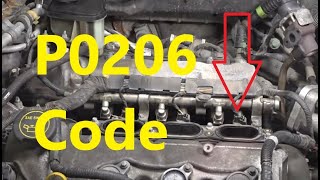
Used OEM Parts in Stock
New Aftermarket Parts Available


The information in this article is provided for general reference and educational purposes only. Vehicle specifications, procedures, and part compatibility can vary by production date, trim level, and region. Always consult your vehicle's factory service manual and verify part numbers before purchasing or performing repairs. Safety-critical components such as airbags, seat belts, and braking systems should be installed by a qualified professional.
- Gmc ACADIA:
- 🧭 Diagnostic Flowchart
- 🎬 Helpful Videos
- 🛍️ Shop This Part
- What's Unique About the 2009-2014 Gmc ACADIA
- Symptoms You May Notice
- Most Likely Causes
- Rare But Worth Checking
- Diagnosis Steps
- Parts You'll Likely Need
- Related Codes That Often Appear With This One
- Technical Service Bulletins (TSBs) & Recalls
- Platform-Specific Known Issues
- Mechanic-Grade Diagnostic Values
- Scan Tool Commands That Help
- Wiring & Ground Locations
- Real Owner Repair Stories
- OEM Part Supersession History
- Model Year Variations Within This Range
- 🎟️ Get 5% Off