

P0268 on 2009-2010 Saturn Outlook: Cylinder 3 Injector Circuit High Causes and Fixes
On a 2009-2010 Saturn Outlook, code P0268 is most often caused by a damaged fuel injector wiring harness chafing against the engine, as noted in GM TSB #PIP4924D. Specific chafe points include the intake plenum, valve cover bolts, and fuel lines. A failed fuel injector is the second most likely cause. Accessing cylinder 3, the middle cylinder on the rear bank against the firewall, requires removing the intake manifold, making this a moderately difficult repair.
- P0268 on a 2009-2010 Outlook points specifically to an electrical problem with the cylinder 3 fuel injector.
- The most likely cause is a damaged wire in the engine harness, as noted in a GM service bulletin.
- Accessing cylinder 3 requires removing the intake manifold, which increases repair time and complexity. Always replace the intake gaskets during this job.
- Do not immediately assume the injector is bad; thoroughly inspect the wiring harness first to avoid replacing good parts.
- Driving with this code can lead to catalytic converter damage, a much more expensive repair.
What's Unique About the 2009-2010 Saturn OUTLOOK
The Saturn Outlook shares its 3.6L V6 LLT engine and GM Lambda platform with the GMC Acadia, Chevrolet Traverse, and Buick Enclave. This platform is known for issues with the fuel injector wiring harness, which can become chafed or damaged where it contacts engine components. GM issued Technical Service Bulletin #PIP4924D, which specifically advises technicians to inspect the fuel injector wiring for chafing against the intake plenum, valve cover bolts, fuel lines, and the side of the cylinder head when a wide range of injector codes, including P0268, are present.
Diagnostic Flowchart
Tap your situation to follow the diagnostic path that matches what you're seeing on this vehicle.
Symptoms You May Notice
- Check Engine Light is on (may be flashing if misfire is severe)
- Engine misfire, which may feel like a buck or jerk
- Rough idle
- Reduced engine power and poor acceleration
- Decreased fuel economy
- Engine may stall
- Strong fuel smell from the exhaust
- Replacing the spark plug or ignition coil for cylinder 3. While these parts can cause a misfire (code P0303), the P0268 code specifically points to an electrical fault in the fuel injector circuit, not the ignition system.
Most Likely Causes
- Damaged Fuel Injector Wiring Harness 🔴 High Probability → Shop Engine Wiring Harness As documented in GM TSB #PIP4924D, the wiring harness on the 3.6L V6 engine is prone to chafing. Common rub points are against the intake plenum, valve cover bolts, fuel lines, and the side of the cylinder head under the intake. Engine vibrations cause the harness to rub through, leading to a short to power or an open circuit.
How to confirm: After removing the intake manifold to access the rear cylinder bank, visually inspect the entire length of the wiring harness for cylinder 3. Look for rubbed, melted, or broken wires, especially at the known chafe points. A 'wiggle test'—moving the harness while the engine is running—may cause the misfire to change, pinpointing the location of an internal break.
Typical fix: Repair the damaged section of wire using solder and heat-shrink tubing. In severe cases, the injector connector pigtail or a section of the engine harness may need to be replaced.
Est. part cost: $15-$50 for a connector pigtail, or up to $150+ for a harness section. - Failed Fuel Injector 🟡 Medium Probability → Shop Fuel Injector The 2009-2010 models use direct injection (DI). These injectors operate under very high pressure and can fail electrically over time. An internal short in the injector's coil can cause the 'circuit high' condition.
How to confirm: After confirming wiring is intact, test the injector. Disconnect it and measure the resistance across its two pins with a multimeter; a good injector for the 3.6L LLT engine should read between 1.2 and 2.5 Ohms. The most definitive test is to swap the cylinder 3 fuel injector with an injector from another cylinder (e.g., cylinder 1). Clear the codes and drive. If the code changes to P0262 (Cylinder 1 Injector Circuit High), the injector is faulty.
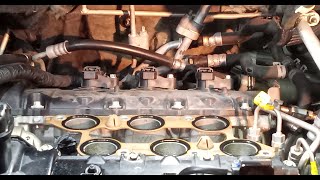
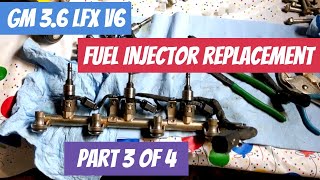
Typical fix: Replace the faulty fuel injector. 🎬 Watch: How to replace the direct injection fuel injectors It is often recommended to replace all injectors on that bank (Bank 1) at the same time, along with their Teflon seals, to ensure balanced performance.
Est. part cost: $70-$150 per injector. - Faulty Powertrain Control Module (PCM) ⚪ Low Probability → Shop Engine Control Module (ECM)
How to confirm: This should be the last resort after confirming the wiring and injector are good. A technician would use a 'noid light' to test the injector connector; if the light is on constantly instead of flashing, it may indicate a failed PCM driver. This requires professional diagnosis to rule out a wiring short to power.
Typical fix: Replace and reprogram the Powertrain Control Module.
Est. part cost: $550-$750 for a replacement PCM.
Rare But Worth Checking
- Poor Ground Connection:
Diagnosis Steps
- Read all fault codes with an OBD-II scanner. Note any other codes present, especially P0303 (Cylinder 3 Misfire).
- Identify Cylinder 3: On the transverse 3.6L V6, the rear bank against the firewall contains cylinders 1, 3, and 5 (from passenger to driver side). Cylinder 3 is the middle cylinder on the rear bank.
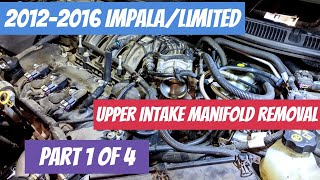
- Recognize that the upper intake manifold must be removed 🎬 Watch: Step-by-step guide to removing the intake manifold to access the injector and its wiring.
- Once the intake is removed, carefully inspect the fuel injector wiring harness for cylinder 3. Per TSB PIP4924D, look for any signs of chafing, melting, or breaks, paying close attention to contact points with the intake plenum, valve cover bolts, fuel lines, and the side of the cylinder head.
- If wiring damage is found, repair it. Replace the injector connector pigtail if necessary.
- If the wiring appears intact, disconnect the injector and use a 'noid light' to test the harness connector. The light should flash when the engine is cranked. If it stays on constantly, a short to power in the harness or a faulty PCM is likely. Note: For GDI systems, a standard noid light may not work; a lab scope is the definitive tool.
- Use a multimeter to check the resistance of the fuel injector itself. A healthy injector should measure between 1.2 and 2.5 Ohms. A reading of OL (open) or near zero (short) indicates a bad injector.
- If wiring and resistance tests are inconclusive, swap the cylinder 3 injector with one from another cylinder (e.g., cylinder 1).
- Reassemble the intake manifold using new gaskets. Clear the codes and test drive.
- If the code returns as P0268, the issue is in the wiring or PCM. If the code moves with the injector and is now P0262 (for cylinder 1), the injector is faulty and must be replaced.
- If the injector and wiring are confirmed to be good, the final step is to suspect a faulty PCM injector driver, which requires professional diagnosis.
Parts You'll Likely Need
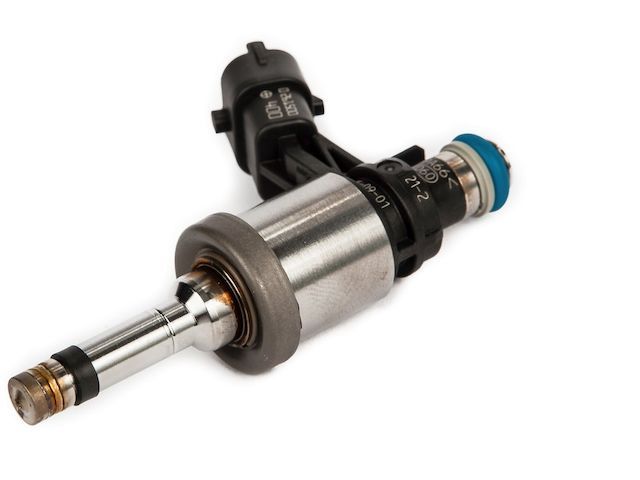
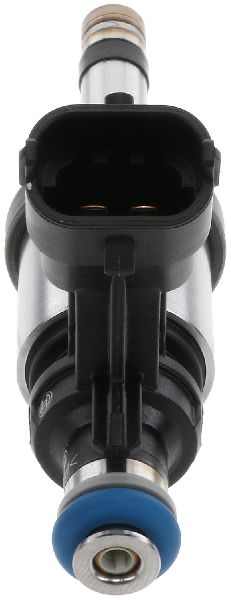
- Fuel Injector
(OEM #12669384 (replaces 12638530))— An internal electrical failure in the injector can cause the 'circuit high' fault. This is the second most common cause after wiring issues. This is the current OEM part number.
Trusted brands: ACDelco (GM Genuine), Bosch, Standard Motor Products
OEM price range: $110-$160
Aftermarket price range: $70-$120 - Upper Intake Manifold Gasket Set
(OEM #12673300)— These gaskets are single-use and must be replaced any time the intake manifold is removed to access the rear bank of injectors. Reusing old gaskets will cause vacuum leaks.
Trusted brands: ACDelco, Fel-Pro, Mahle
OEM price range: $30-$50
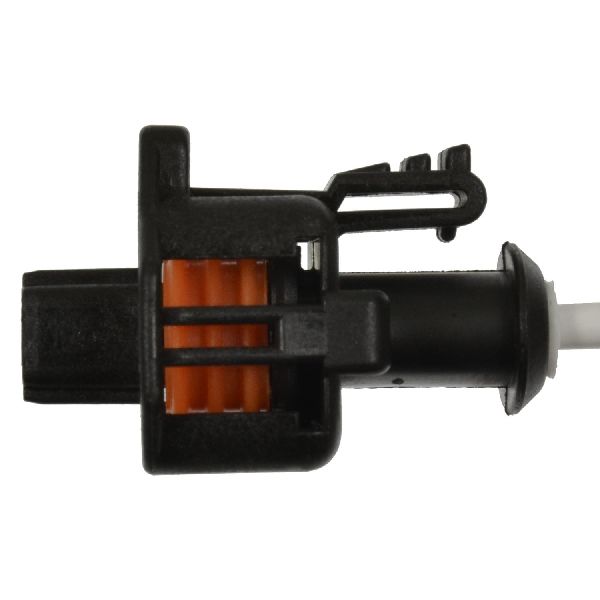
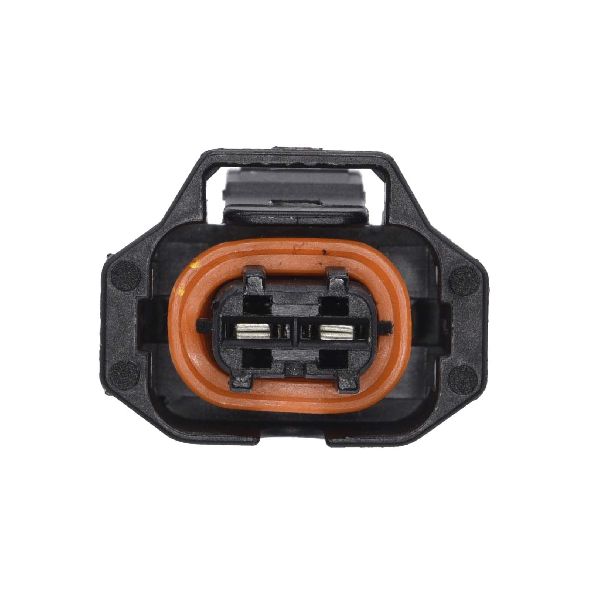
Aftermarket price range: $15-$30 - Fuel Injector Connector Pigtail
(OEM #PT2183 (ACDelco))— If the wiring is damaged or corroded at the connector itself, replacing the pigtail is the most effective repair.
Trusted brands: ACDelco, Dorman
OEM price range: $25-$40
Aftermarket price range: $15-$25 - Engine Wiring Harness Assembly
(OEM #12621095)— In rare cases of extensive or difficult-to-locate damage, replacing the entire engine wiring harness that services the injectors may be necessary.
Trusted brands: ACDelco (GM Genuine)
OEM price range: $150-$250
Related Codes That Often Appear With This One
- P0303 — P0303 means 'Cylinder 3 Misfire Detected'. Since P0268 indicates a fault that prevents the cylinder 3 injector from working correctly, the cylinder will not fire properly, logging a misfire code as a direct result.
- P0267 — P0267 is 'Cylinder 3 Injector Circuit Low'. Seeing both P0267 and P0268 intermittently could strongly indicate a wiring problem that is fluctuating between an open/short-to-power (High) and a short-to-ground (Low).
- P0300 — This code for 'Random/Multiple Cylinder Misfire' can appear if the underlying electrical issue is intermittent or if the rough running of the engine causes other cylinders to misfire sympathetically.
Technical Service Bulletins (TSBs) & Recalls
- PIP4924D: Addresses a Check Engine Light and misfire with various fuel injector circuit codes (including P0268), advising technicians to inspect the fuel injector wiring harness for damage at specific chafe points.
- PIP4924E: A later version of the TSB that supersedes PIP4924D and contains the same diagnostic advice regarding harness inspection.
- PIT5424: Corroborates the advice of other TSBs, also addressing multiple injector circuit codes and advising inspection of the engine harness routing.
Platform-Specific Known Issues
- A known issue, documented in TSB #PIP4924D and its successor PIP4924E, involves the fuel injector wiring harness chafing on various engine components.
Mechanic-Grade Diagnostic Values
- Low-Pressure Fuel System Pressure (at idle) — expected: 380-410 kPa (55-60 psi). Failure: Pressure significantly outside this range can indicate a failing fuel pump module.
- High-Pressure Fuel System Pressure (commanded) — expected: Up to 12,000 kPa (1,740 psi), varies with load.. Failure: Actual pressure failing to meet desired pressure on a scan tool can indicate a high-pressure fuel pump issue.
- Fuel Injector Pulse Width (at warm idle) — expected: Approximately 1-5 milliseconds (ms).. Failure: A pulse width of 0 ms on the affected cylinder indicates the PCM has disabled the injector due to the fault.
- Injector Balance Test Pressure Drop — expected: The pressure drop for any single injector should not differ from the average of the others by more than 20 kPa (3 psi).. Failure: A larger pressure drop difference suggests a mechanically faulty (leaking or clogged) injector.
Scan Tool Commands That Help
- GDS2 / Tech2: Fuel Injector Balance Test — To functionally test and compare fuel injectors after electrical circuit faults are ruled out. The test pulses each injector and measures the corresponding drop in fuel rail pressure to identify injectors that are clogged or leaking.
- GDS2 / Tech2 / High-End Bidirectional Scanner: Cylinder Power Balance / Injector Kill — To confirm which cylinder is misfiring. Deactivating the cylinder #3 injector should result in no change in engine idle if that injector is already non-functional due to the P0268 fault.
Wiring & Ground Locations
- G110 — Right front of the engine, mounted directly to the cylinder head.. This is a primary ground point for the Engine Control Module (ECM). A poor connection here can cause erratic sensor readings and incorrect fault codes.
- G101 — Left side of the engine compartment, on the left frame rail.. This ground serves the Engine Control Module (ECM) and Transmission Control Module (TCM). A loose or corroded connection can lead to various engine control issues.
- G103 — Left side of the engine compartment, on the left inner fender panel.. This ground point is critical for the Body Control Module (BCM) and the Data Link Connector (DLC). A fault here can cause communication issues with scan tools.
- Injector Harness Chafe Point — On the Lambda platform, a common chafe point is where the engine wiring harness passes an A/C line bracket near the firewall.. A real-world repair on a related platform found that a wire had rubbed through on this bracket, causing a short and triggering multiple injector circuit high codes, including P0268.
Real Owner Repair Stories
- Traverse Forum User (2013 Chevrolet Traverse (Lambda Platform Sibling)) — Check engine light with codes P0268, P0274, P0277 (Injector circuit high for cylinders 3, 5, and 6).
❌ Tried (didn't work) Initial diagnosis suspected a bad ECM or faulty injectors.
✅ What actually fixed it The problem was a damaged engine wiring harness. A wire had rubbed through on an A/C line bracket near the firewall, causing a short. The technician repaired the damaged wires, which resolved all codes.
OEM Part Supersession History
12611545, 12632255, 12638530→12669384— GM often updates parts to improve reliability, durability, or manufacturing efficiency. The original injectors on the LLT engine were part of an early generation of direct injection technology which was known for some reliability issues.
Heads up: Injectors for the earlier 3.6L LY7 (port-injected) engine used in 2007-2008 models are physically and functionally incompatible with the LLT direct-injection engine.
Model Year Variations Within This Range
- 2009-2012: Early production 3.6L LLT engines (approx. 2009-2012) were more susceptible to premature timing chain stretch, often exacerbated by extended oil change intervals. While not a direct cause of P0268, severe timing issues can cause erratic engine operation that may complicate diagnosis.
Helpful Videos
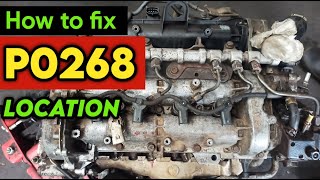
We Have This Part in Stock


The information in this article is provided for general reference and educational purposes only. Vehicle specifications, procedures, and part compatibility can vary by production date, trim level, and region. Always consult your vehicle's factory service manual and verify part numbers before purchasing or performing repairs. Safety-critical components such as airbags, seat belts, and braking systems should be installed by a qualified professional.
- Saturn OUTLOOK:
- 🧭 Diagnostic Flowchart
- 🎬 Helpful Videos
- 🛍️ Shop This Part
- What's Unique About the 2009-2010 Saturn OUTLOOK
- Symptoms You May Notice
- Most Likely Causes
- Rare But Worth Checking
- Diagnosis Steps
- Parts You'll Likely Need
- Related Codes That Often Appear With This One
- Technical Service Bulletins (TSBs) & Recalls
- Platform-Specific Known Issues
- Mechanic-Grade Diagnostic Values
- Scan Tool Commands That Help
- Wiring & Ground Locations
- Real Owner Repair Stories
- OEM Part Supersession History
- Model Year Variations Within This Range
- 🎟️ Get 5% Off