

P0269 on 2017-2018 GMC Sierra 3500: Cylinder 3 Balance Fault Causes and Fixes
On a 2017-2018 GMC Sierra 3500 with the 6.6L Duramax L5P engine, code P0269 almost always points to a problem with the #3 fuel injector or its wiring. The most common fix is replacing the injector connector pigtail, which can fail and cause an intermittent connection. Before replacing the expensive injector, the pigtail and its connection should be thoroughly inspected and tested.
- P0269 on a 2017-2018 Sierra 3500 means cylinder #3 isn't producing enough power.
- Before replacing the expensive fuel injector, thoroughly inspect and test the injector's electrical connector and pigtail, as this is the most common point of failure.
- Symptoms include a rough idle, engine vibration, loss of power, and a check engine light.
- A scan tool capable of reading cylinder balance rates is extremely helpful for diagnosis.
- Driving with this code can cause further damage to emissions components like the DPF, so prompt diagnosis is recommended.
What's Unique About the 2017-2018 Gmc SIERRA 3500
For the 2017-2018 Sierra 3500 equipped with the L5P Duramax engine, this code is frequently associated with electrical connection issues at the fuel injector itself. The injector connector pigtails, particularly the terminals within them, can develop high resistance or lose tension, leading to an intermittent open circuit. This is a widely documented issue, and many owners and technicians have found that replacing the inexpensive connector pigtail resolves the fault, making it a critical first diagnostic step before condemning a costly injector. Some sources suggest GM may have used a less robust terminal design on these newer engines compared to previous generations, contributing to the higher frequency of this failure.
Diagnostic Flowchart
Tap your situation to follow the diagnostic path that matches what you're seeing on this vehicle.
Symptoms You May Notice
- Check Engine Light (MIL) is illuminated.
- Engine running rough, especially at idle.
- Noticeable vibration or engine shaking, sometimes causing the whole truck to shake.
- Reduced engine power and sluggish acceleration, possibly entering 'limp mode'.
- Audible engine misfire, sometimes described as a 'popping' or 'sputtering' sound.
- Black smoke from the exhaust due to unburned fuel.
- Increased fuel consumption.
- Replacing the fuel injector when only the connector pigtail was faulty. This is a common and costly mistake, as the symptoms are identical. Always start with the pigtail.
Most Likely Causes
- Faulty Cylinder 3 Fuel Injector Connector/Pigtail 🔴 High Probability → Shop Engine Wiring Harness The connector terminals for the L5P injectors can lose tension, corrode, or develop high resistance over time due to engine vibration and heat cycles, creating a poor electrical connection. This is a widely documented failure point on this engine platform, sometimes referred to as 'terminal fretting'.
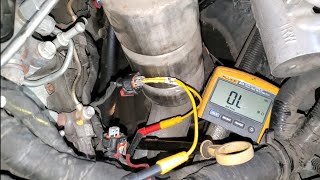
How to confirm: With the engine running, carefully wiggle the wiring harness connector at the #3 fuel injector. If the engine stumble changes or the misfire becomes more consistent, the connector is faulty. 🎬 Watch: How to troubleshoot L5P injector circuit codes and terminal issues. A thorough visual inspection of the connector pins for looseness, corrosion, or black powder is key. Many technicians diagnose this by exclusion after seeing the code, as it's the most common cause.
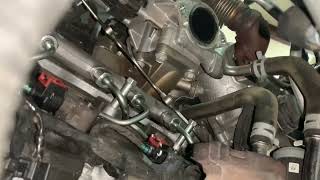
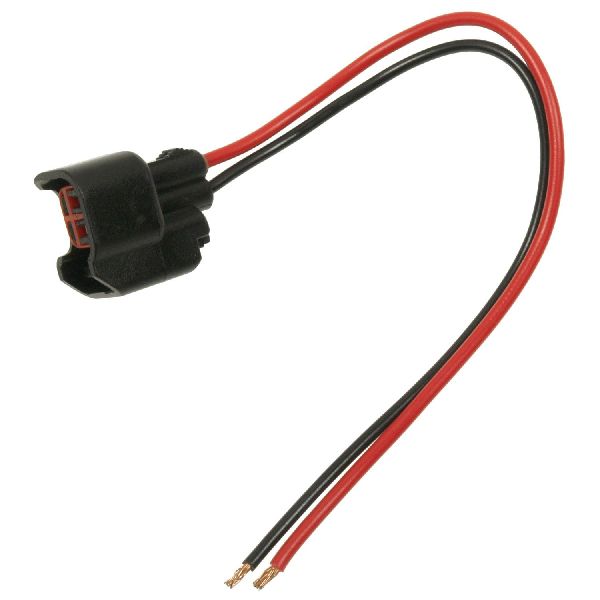
Typical fix: Replace the fuel injector connector pigtail. This involves cutting the old connector off and splicing a new one onto the engine harness using heat-shrink butt connectors to prevent moisture intrusion. 🎬 See this walkthrough for replacing the #3 injector and connector pigtail. The two wires on the pigtail are not polarity sensitive.
Est. part cost: $15-$50 - Failed Cylinder 3 Fuel Injector 🟡 Medium Probability → Shop Fuel Injector High-pressure diesel injectors operate under extreme stress and can fail internally (clogging, worn nozzle) or electrically. However, on the L5P, outright injector failure is considered less common than the connector issue.
How to confirm: Use a capable scan tool to perform a cylinder balance test; this will show the contribution rate of each cylinder. If the connector and wiring are confirmed good, swapping the #3 injector with another cylinder's injector (e.g., cylinder #1) and seeing if the fault code follows the injector (e.g., changes to P0263) will confirm a bad injector.
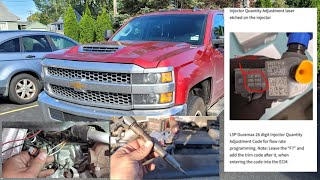
Typical fix: Replace the cylinder 3 fuel injector. This requires removing the valve cover and high-pressure fuel lines to access the injector. 🎬 Watch: A step-by-step guide to removing L5P injectors on both banks. It is recommended to also replace the high-pressure fuel line associated with the injector. After replacement, the new injector's flow rate code must be programmed into the ECM using a scan tool.
Est. part cost: $350-$600 - Low Compression in Cylinder 3 ⚪ Low Probability While not specific to this platform, mechanical issues like worn piston rings, faulty valves, or a failed head gasket can cause low compression. This is not a common failure on stock L5P engines.
How to confirm: Perform a manual compression test on cylinder 3 and compare the reading to the other cylinders. A significant drop in pressure indicates a mechanical engine problem.
Typical fix: This requires significant engine repair, such as replacing piston rings, valves, or the cylinder head gasket, depending on the cause of the low compression.
Est. part cost: $500-$3000+ - Engine Control Module (ECM) Anomaly ⚪ Low Probability → Shop Engine Control Module (ECM) As noted in TSB #17-NA-171, an anomaly in the ECM can cause this code among many others. This is often a software issue that requires an update to the latest calibration.
How to confirm: This is a diagnosis of exclusion. If the injector, wiring, and engine compression are all confirmed to be good, the ECM is the likely culprit. A GM dealership or qualified shop can check for available software updates against the vehicle's VIN.
Typical fix: Reprogram the ECM (and potentially the TCM) with the latest software calibration from the manufacturer using the TIS2Web service.
Est. part cost: $100-$250 (Labor for reprogramming)
Rare But Worth Checking
- Clogged Fuel Filter: While less likely to affect a single cylinder, a severely clogged fuel filter can cause intermittent pressure drops that might be detected as a contribution fault on one cylinder before others.
- Contaminated Fuel: Water or debris in the fuel can damage injectors, but it would typically affect multiple cylinders, not just one.
Diagnosis Steps
- Connect a professional scan tool to read the P0269 code and check for any other related codes, like P0203 or P0303.
- View live data to monitor cylinder balance rates. Confirm that cylinder #3 is the outlier with a value exceeding +/- 4.0 mm³ at warm idle.
- Locate Cylinder #3. The L5P Duramax cylinder layout is 1-3-5-7 on the passenger side (Bank 1, front to back) and 2-4-6-8 on the driver side (Bank 2, front to back). Cylinder #3 is the second one back from the front on the passenger side.
- Visually inspect the wiring harness and connector for the #3 fuel injector. Look for any signs of damage, corrosion, or loose pins. Check that the red locking tab on the connector is fully seated.
- With the engine idling, carefully wiggle the connector for the #3 injector to see if it affects the engine's idle quality. A change in engine sound or vibration strongly indicates a faulty connector.
- If an electrical issue is suspected, disconnect the batteries. Disconnect the injector connector and check the resistance of the injector itself (typically around 150k-210k ohms for L5P injectors) and the integrity of the wiring back to the ECM. Check the resistance of the connector terminals; a healthy connection is around 0.8 ohms, while a failing one can read over 3.0 ohms.
- If the wiring and connector are confirmed to be good, consider swapping the #3 injector with another cylinder's injector (e.g., cylinder #1) to see if the fault follows the part (code changes to P0263).
- If the fault remains on cylinder #3 after swapping injectors, perform a compression test to rule out mechanical engine problems.
- If all other tests pass, consult a dealership about potential ECM software updates as mentioned in TSB #17-NA-171.
Parts You'll Likely Need
- Fuel Injector Connector Pigtail
(OEM #19368140)— This is the most frequent point of failure for this code on the L5P Duramax engine due to terminal fretting or corrosion.
Trusted brands: ACDelco, Fleece Performance Engineering (FPE-HAR-L5P-INJ-PT), BD Diesel
OEM price range: $25-$50
Aftermarket price range: $15-$30 - Cylinder 3 Fuel Injector
(OEM #12684598 (Bosch: 0445118039))— If the injector itself has failed internally or electrically, it must be replaced. This is the second most likely cause after the connector.
Trusted brands: ACDelco (Bosch), Alliant Power (Remanufactured)
OEM price range: $450-$600
Aftermarket price range: $310-$500
Related Codes That Often Appear With This One
- P0303 — P0303 is a generic 'Cylinder 3 Misfire Detected' code. Since a contribution/balance fault is a type of misfire, these codes often appear together.
- P0203 — P0203 indicates a malfunction in the 'Cylinder 3 Injector Circuit'. This code points more directly to an electrical problem (like a bad connector or wiring) and is very likely to be seen with P0269 if the cause is electrical.
Technical Service Bulletins (TSBs) & Recalls
- PIP5468F: Lists P0269 with other codes and advises following standard service diagnostics.
- 17-NA-171: Suggests a possible cause is an anomaly in the Engine Control Module (ECM) and Transmission Control Module (TCM), recommending a software update as the fix.
- PIP5468D: Similar to PIP5468F, lists P0269 and advises following service diagnostics.
Platform-Specific Known Issues
- Multiple Technical Service Bulletins (TSBs) including #PIP5468F, #17-NA-171, and #PIP5468D have been issued by GM, which list P0269 among a wide array of potential engine-related DTCs. TSB #17-NA-171 specifically notes that an ECM anomaly could be the cause, potentially requiring a software update for both the ECM and TCM.
Mechanic-Grade Diagnostic Values
- Injector Balance Rate — expected: Within +/- 4.0 mm³ at warm idle in Park or Neutral with A/C off.. Failure: A consistent reading outside the +/- 4.0 mm³ range on a single cylinder indicates that injector is either over-fueling (positive number) or under-fueling (negative number) to maintain engine balance.
- Injector Harness Connector Resistance — expected: Approximately 0.8 ohms.. Failure: Resistance climbing to 3.0 ohms or higher indicates a poor connection due to pin fretting or corrosion, which will trigger an injector circuit fault.
- Fuel Injector Internal Resistance — expected: Approximately 150k - 210k ohms (0.15 - 0.21 MΩ).. Failure: A reading significantly outside this range indicates an internal electrical failure of the injector's solenoid.
Hidden / Shadow Codes Worth Checking
- P020C: Cylinder 3 Injector Timing. This code may set alongside P0269 and P0203, indicating the ECM is detecting a timing issue with the injector's mechanical response, often caused by the same electrical connection problems. (see via A professional-grade scan tool like GM GDS2 or an advanced aftermarket scanner.)
Scan Tool Commands That Help
- GM GDS2 / Professional Aftermarket (Autel, Snap-on, etc.): Injector Flow Rate Programming — This is a mandatory step after replacing a fuel injector. Each new injector has a unique multi-digit calibration code printed on it that must be programmed into the ECM to ensure precise fuel delivery. Failure to do so will result in poor performance and may cause other codes to set.
- GM GDS2 / Professional Aftermarket: Injector Balance Test / Cylinder Power Balance — Used during diagnosis to confirm which cylinder is not contributing correctly. The scan tool displays the fueling adjustments (balance rates) the ECM is making for each cylinder in real-time.
- Aftermarket (e.g., Autel, Snap-on): Injector Flow Rate Programming - Special Note — When programming a new injector with some aftermarket scan tools, you may need to add the prefix 'F7' to the beginning of the injector's flow rate code for the ECM to accept it.
Wiring & Ground Locations
- ECM Connector J2, Pin 32 — On the main 73-pin connector (J2) at the Engine Control Module (ECM).. This is the specific pin for the 'FUEL INJECTOR D (CYLINDER 3)' control circuit. Testing for continuity and voltage at this pin can help determine if a wiring fault exists between the ECM and the injector.
- Injector Pigtail Wires — The two wires on the replacement pigtail for the fuel injector connector.. The wires are not polarity sensitive. When splicing in a new pigtail, either wire can be connected to either of the harness wires, simplifying the repair.
- Engine Block to Firewall/Cab Ground Strap — Typically runs from the rear of the driver's side cylinder head to a grounding point on the vehicle's firewall or cab structure.. A poor or corroded main engine ground can cause a host of intermittent and difficult-to-diagnose electrical issues, including erratic sensor readings and injector performance. While not a direct cause, ensuring this ground is clean and tight is a crucial step in any electrical diagnosis.
Real Owner Repair Stories
- Duramaxtuner YouTube Channel (2017+ L5P Duramax (example used P0204 on cylinder 4)) — Intermittent misfire, codes P0204 (Injector Circuit), P026D (Injection Quantity), and P0300 (Random Misfire).
❌ Tried (didn't work) Replacing the fuel injector on an early diagnosis did not fix the problem, as the fault returned.
✅ What actually fixed it The root cause was found to be the injector connector pigtail. The pins inside the connector lose tension from vibration ('fretting'), causing high resistance and a poor connection. The fix is to either carefully re-tension the female pins inside the connector with a small pick or, more permanently, replace the entire connector pigtail. This issue is extremely common and should be the first check before replacing an injector. - C Farmer YouTube Channel (2019 L5P Duramax) — Rough running, Check Engine Light with codes for cylinder 3 injector circuit (P0203, P020C).
❌ Tried (didn't work) Initial diagnosis pointed to either the injector or the connector.
✅ What actually fixed it The mechanic replaced both the cylinder 3 fuel injector and the injector connector pigtail at the same time to ensure the problem was resolved. After replacement, the new injector flow rate code was programmed into the ECM using a scan tool, and the codes were cleared.
When the Usual Fixes Don't Work
- While P0269 on an L5P Duramax overwhelmingly points to a fuel injector or connector issue, it's critical not to get tunnel vision. The code fundamentally means cylinder 3 is not producing the expected power, which can have mechanical causes. In one documented case on a Powerstroke engine with the same code, a dealership replaced the fuel injector for $1,500, but the problem persisted. Further teardown revealed the actual root cause was a failed set of rocker arms for that cylinder. This serves as a critical reminder that if a new injector and connector do not solve the problem, a compression test is non-negotiable to rule out a mechanical engine failure before condemning the wiring harness or ECM.
Helpful Videos

Used OEM Parts in Stock
New Aftermarket Parts Available


The information in this article is provided for general reference and educational purposes only. Vehicle specifications, procedures, and part compatibility can vary by production date, trim level, and region. Always consult your vehicle's factory service manual and verify part numbers before purchasing or performing repairs. Safety-critical components such as airbags, seat belts, and braking systems should be installed by a qualified professional.
- Gmc SIERRA 3500:
- 🧭 Diagnostic Flowchart
- 🎬 Helpful Videos
- 🛍️ Shop This Part
- What's Unique About the 2017-2018 Gmc SIERRA 3500
- Symptoms You May Notice
- Most Likely Causes
- Rare But Worth Checking
- Diagnosis Steps
- Parts You'll Likely Need
- Related Codes That Often Appear With This One
- Technical Service Bulletins (TSBs) & Recalls
- Platform-Specific Known Issues
- Mechanic-Grade Diagnostic Values
- Hidden / Shadow Codes Worth Checking
- Scan Tool Commands That Help
- Wiring & Ground Locations
- Real Owner Repair Stories
- When the Usual Fixes Don't Work
- 🎟️ Get 5% Off