

P0271 on 2009-2014 Buick Enclave: Cylinder 4 Injector Circuit High Causes and Fixes
On a 2009-2014 Buick Enclave, code P0271 is most often caused by a damaged fuel injector wiring harness that rubs against the engine. Inspecting the harness for chafing, especially near the cylinder head and intake, is the first step before replacing the cylinder 4 fuel injector.
- Code P0271 on a 2009-2014 Enclave means there's a high voltage fault in the cylinder 4 fuel injector circuit.
- Before buying any parts, **thoroughly inspect the fuel injector wiring harness** for signs of rubbing or damage, as this is a very common and documented problem (TSB PIP4924D).
- Common symptoms include a rough idle, engine misfire, and hesitation when accelerating.
- If the wiring is intact, the next most likely cause is a failed cylinder 4 fuel injector.
- Ignoring this code can lead to more expensive repairs, such as damage to the catalytic converter.
What's Unique About the 2009-2014 Buick ENCLAVE
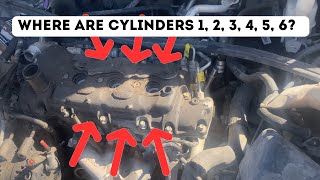
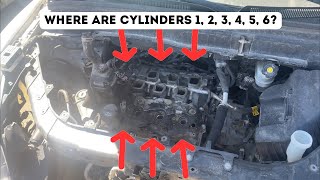
The 3.6L V6 engine used in the Enclave and its GM Lambda platform siblings is known for a specific issue documented in Technical Service Bulletin (TSB) #PIP4924D. The fuel injector wiring harness is prone to rubbing against engine components like the cylinder head, ignition coil studs, 🎬 See this guide to identify ignition coil and cylinder locations. or intake plenum, causing wires to chafe and short circuit. This known vulnerability makes a wiring inspection the most critical first step, often revealing the problem without needing to replace more expensive parts.
Diagnostic Flowchart
Tap your situation to follow the diagnostic path that matches what you're seeing on this vehicle.
Symptoms You May Notice
- Check Engine Light (MIL) is on
- Rough or unstable idle
- Engine misfire, which may feel like a stumble or shake
- Hesitation or loss of power during acceleration
- Reduced fuel economy
- Engine may run rough and then stall
- A flashing Check Engine Light, indicating a severe misfire
- Replacing the fuel injector without first thoroughly inspecting the wiring harness. The TSB for this platform makes it clear that a wiring fault is a very common cause and should be checked first to avoid unnecessary expense.
Most Likely Causes
- Fuel Injector Wiring Harness Chafing/Damage 🔴 High Probability → Shop Engine Wiring Harness As documented in GM TSB #PIP4924D, the harness routing on the 3.6L V6 engine makes it susceptible to rubbing against the cylinder head, intake plenum, fuel lines, or ignition coil mounting studs, leading to shorts or open circuits. This is the most common cause for this code on this platform.
How to confirm: Carefully perform a visual and physical inspection of the entire fuel injector harness. Pay close attention to where it contacts other engine parts, especially around the valve covers and near the ignition coils. Look for rubbed-through insulation, exposed copper wires, or corroded connectors, particularly for the wires leading to the cylinder 4 injector. The damage is often found on the underside of the harness where it's not immediately visible.
Typical fix: Repair the damaged section of wire with a new pigtail connector or by soldering and heat-shrinking the affected wire. If the damage is extensive, the entire harness may need replacement. Ensure the repaired harness is re-routed or protected with loom/conduit to prevent future chafing.
Est. part cost: $15-$50 for a pigtail, $150-$300 for a new harness - Faulty Cylinder 4 Fuel Injector 🟡 Medium Probability → Shop Fuel Injector Direct injection fuel injectors operate under high pressure and can fail internally over time, developing electrical shorts or opens. An internal short in the injector coil can cause the 'Circuit High' fault.
How to confirm: After ruling out wiring, swap the cylinder 4 injector with an injector from another cylinder (e.g., cylinder 2). Clear the codes and run the engine. If the code changes to P0265 (Cylinder 2 Injector Circuit High), the injector is confirmed to be faulty. Alternatively, check the resistance of the injector with a multimeter and compare it to a known good one; a significant difference indicates failure.
Typical fix: Replace the faulty fuel injector. It is often recommended to replace all injectors on the same bank, or at least the high-pressure seal, when one fails. Ensure you use the correct part number for your model year.
Est. part cost: $50-$150 per injector - Failed Engine Control Module (ECM) ⚪ Low Probability → Shop Engine Control Module (ECM)
How to confirm: This should only be considered after all wiring and injector faults have been definitively ruled out. A professional shop can perform advanced diagnostics to test the injector driver circuit within the ECM. This is the least likely cause.
Typical fix: Replace and reprogram the Engine Control Module.
Est. part cost: $300-$800
Diagnosis Steps
- Read all stored DTCs with an OBD-II scanner. Note any other codes present, especially misfire codes (P0300-P0306).
- Crucial Step: Perform a detailed visual inspection of the fuel injector wiring harness as per TSB PIP4924D. Check for any signs of rubbing, chafing, or melting where the harness comes close to the intake plenum, valve cover bolts, fuel lines, and cylinder head. Physically manipulate the harness while the engine is running (if safe) to see if it induces a misfire.
- If no visible damage is found, disconnect the harness from the #4 injector and the ECM. Use a multimeter to check for a short to voltage on the control wire. The circuit should not have constant power with the key on.
- Check the resistance of the fuel injector. Disconnect the injector and measure the resistance across its two terminals. Compare the reading to the manufacturer's specification (typically low ohms) and to the resistance of other injectors. A reading of infinity (open) or zero (short) indicates a failed injector.
- Use a noid light to verify the ECM is sending a pulse signal to the injector connector. Plug the noid light into the harness connector for cylinder 4. Start the engine; the light should flash, indicating the ECM is commanding the injector to fire. If it's constantly on or off, there's a wiring or ECM issue.
- As a definitive test, swap the cylinder 4 fuel injector with one from another cylinder (e.g., cylinder 2). Clear codes and drive the vehicle. If the fault code moves to the new cylinder (P0265), the injector is bad. If P0271 returns, the issue is with the wiring or ECM.
- If the injector and wiring are confirmed to be good, the fault may lie with the ECM's injector driver, which requires professional diagnosis.
Parts You'll Likely Need
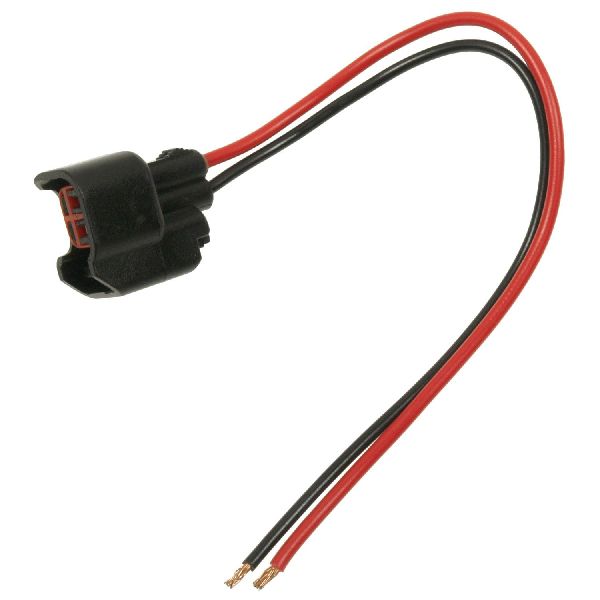
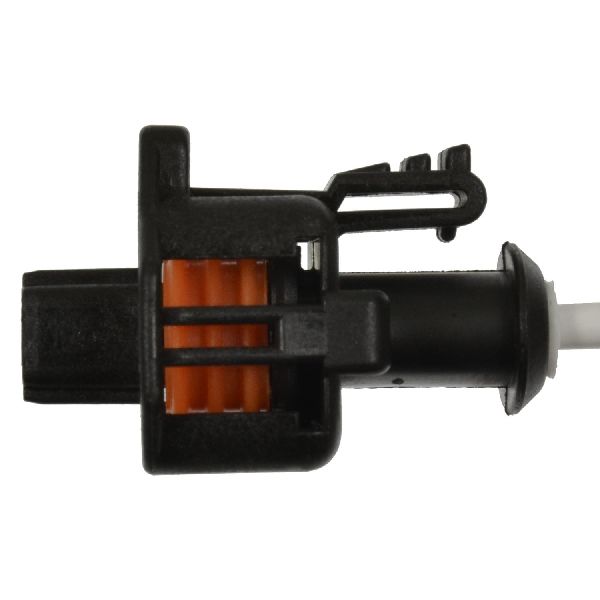
- Fuel Injector Wiring Harness Pigtail
(OEM #ACDelco PT2183 (verify fitment))— If the wiring is chafed near the connector, a pigtail is used to repair the damaged section without replacing the entire harness.
Trusted brands: ACDelco, Dorman
OEM price range: $30-$60
Aftermarket price range: $15-$40 - Fuel Injector
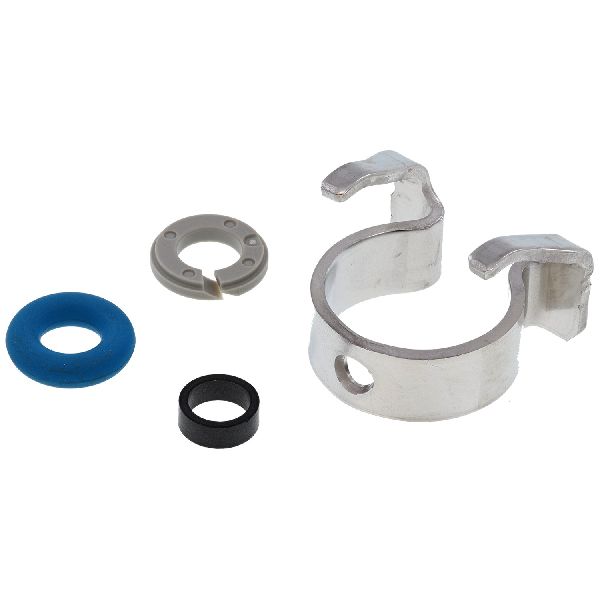
(OEM #ACDelco 12669384 (for 2009-2011), ACDelco 12663380 (for 2012-2017). Always verify by VIN.)— If the injector itself has failed with an internal short, it must be replaced. The 3.6L uses direct injection, so ensure the correct part is sourced. Part numbers changed between model years.
Trusted brands: ACDelco, Bosch, Standard Motor Products
OEM price range: $100-$180
Aftermarket price range: $50-$120
Related Codes That Often Appear With This One
- P0304 — P0304 means 'Cylinder 4 Misfire Detected'. This code is a direct result of the injector circuit fault (P0271) causing improper fueling and a misfire in that cylinder.
- P0201, P0202, P0203, P0205, P0206 — These are injector circuit codes for other cylinders. If the wiring harness is chafed, multiple injector circuits can be affected simultaneously, leading to a combination of these codes.
- P2146, P2149, P2152, P2155 — These are codes for Fuel Injector Group 'A' or 'B' Supply Voltage Circuit. Widespread harness damage can affect the main power feed to a bank of injectors, triggering these codes alongside individual circuit faults.
Technical Service Bulletins (TSBs) & Recalls
- PIP4924D: SES Light And Misfire With Injector Codes due to fuel injector wiring harness rubbing on the cylinder head or other components.
Platform-Specific Known Issues
- TSB #PIP4924D: This bulletin is the most significant issue related to this code. It explicitly calls out that an SES light with misfires and various injector codes (including P0271) is likely caused by the fuel injector wiring harness rubbing through on engine components. It advises technicians to carefully inspect the harness against the intake, valve covers, fuel lines, and cylinder head before replacing parts.
- Owner Experiences: Forum members on Enclave, Traverse, and Acadia forums frequently report solving P0271 and related codes by finding a chafed wire. A common failure point is where the harness passes over a stud for an ignition coil or rubs against the edge of the valve cover. The repair often involves a simple wire repair and rerouting or protecting the harness with additional conduit.
Mechanic-Grade Diagnostic Values
- Fuel Injector Resistance (2009-2011 3.6L LLT Engine) — expected: 11 - 14 Ohms. Failure: A reading of 0 ohms (short), infinity/OL (open), or significant deviation from this range indicates a failed injector.
- Fuel Injector Resistance (2012-2014 3.6L LFX Engine) — expected: 1.2 - 1.8 Ohms. Failure: A reading outside this very narrow range indicates an internal injector fault. Note the significant difference from the earlier LLT engine.
- Injector Control Circuit Voltage (Key On, Injector Disconnected) — expected: Near 0V. Failure: For a 'Circuit High' code, finding steady battery voltage (12V) on the control wire indicates a short to power in the harness.
- Injector Pulse Width (at idle, via scan tool) — expected: ~0.3 - 0.6 ms. Failure: A value of 0 ms or a wildly different value on cylinder 4 compared to other cylinders points to a control problem.
Scan Tool Commands That Help
- GM GDS2 / Tech2: Injector Test / Cylinder Power Balance — This bidirectional control allows a technician to command individual injectors OFF. When cylinder 4 injector is commanded off, if there is no change in engine RPM or sound, it confirms that cylinder was not contributing, pointing to a fault in that injector's circuit or the injector itself.
Wiring & Ground Locations
- Cylinder 4 Location — On the 3.6L V6, cylinder 4 is the middle cylinder on the front bank (radiator side) of the engine.. Correctly identifying cylinder 4 is the first step to locating the correct injector, wiring, and coil for testing.
- G107 — A primary engine ground located on the driver's side of the engine block, sometimes near the front of the cylinder head.. A poor or corroded connection at this ground point can cause erratic voltage and behavior in multiple engine systems, including the injector driver circuits in the ECM.
- ECM Connector X1 — One of the main connectors at the Engine Control Module (ECM) in the engine bay.. The control circuit wires for the fuel injector run from this connector to the injector. Testing for continuity and shorts must be done between the injector connector and the specific pins on this connector.
Real Owner Repair Stories
- traverseforum.com user (2011 Chevrolet Traverse 3.6L (Lambda Platform Sibling)) — Check Engine Light with code P0271.
❌ Tried (didn't work) Swapping the cylinder 4 fuel injector with the cylinder 2 injector; the code P0271 remained.
✅ What actually fixed it The owner found the wire for the #4 fuel injector was rubbing on the mounting stud for the #2 ignition coil. The insulation was worn through, causing a short. Repairing the wire and protecting it with a loom resolved the code. - enclaveforum.com user (2009 Buick Enclave) — Multiple codes including P0271 and P0304 (Cylinder 4 Misfire).
❌ Tried (didn't work) Replacing the fuel injector on cylinder 4.
✅ What actually fixed it After the new injector did not fix the problem, a thorough harness inspection revealed a chafed wire near the front of the engine. Repairing the damaged wire cleared all codes.
OEM Part Supersession History
12638530→12669384— Part revision and consolidation by the manufacturer.
Heads up: This part number trail is for the LLT engine only. Part number 12669384 also replaces previous numbers 12611545 and 12632255.
Model Year Variations Within This Range
- 2009-2011: These models use the 3.6L LLT V6 engine. This engine is equipped with higher resistance fuel injectors (approx. 11-14 ohms), a Bosch ECM, and an aluminum intake manifold.
- 2012-2014: These models use the updated 3.6L LFX V6 engine. This engine uses different, low-resistance fuel injectors (approx. 1.2-1.8 ohms), a Delphi ECM, and a composite intake manifold with integrated exhaust manifolds. Using the resistance specification from the LLT engine to test an LFX injector will lead to misdiagnosis.
Helpful Videos
We Have This Part in Stock


The information in this article is provided for general reference and educational purposes only. Vehicle specifications, procedures, and part compatibility can vary by production date, trim level, and region. Always consult your vehicle's factory service manual and verify part numbers before purchasing or performing repairs. Safety-critical components such as airbags, seat belts, and braking systems should be installed by a qualified professional.
- Buick ENCLAVE:
- 🧭 Diagnostic Flowchart
- 🎬 Helpful Videos
- 🛍️ Shop This Part
- What's Unique About the 2009-2014 Buick ENCLAVE
- Symptoms You May Notice
- Most Likely Causes
- Diagnosis Steps
- Parts You'll Likely Need
- Related Codes That Often Appear With This One
- Technical Service Bulletins (TSBs) & Recalls
- Platform-Specific Known Issues
- Mechanic-Grade Diagnostic Values
- Scan Tool Commands That Help
- Wiring & Ground Locations
- Real Owner Repair Stories
- OEM Part Supersession History
- Model Year Variations Within This Range
- 🎟️ Get 5% Off