

P0271 on 2010-2014 Cadillac CTS: Cylinder 4 Injector Circuit High Causes and Fixes
P0271 on a 2010-2014 Cadillac CTS indicates a high voltage problem in the cylinder 4 fuel injector circuit. This is frequently caused by a chafed or damaged fuel injector wiring harness, a known issue cited in GM Technical Service Bulletin #PIP4924D. It can also be caused by a failed fuel injector or a loose connector.
- P0271 on a 2010-2014 CTS points to an electrical issue with the cylinder 4 fuel injector.
- Before buying parts, thoroughly inspect the injector wiring harness for chafing or damage, as this is a known issue covered by a TSB. Check against the intake, valve covers, and fuel lines.
- A simple way to test the injector is to swap it with another cylinder and see if the trouble code follows the injector.
- Cylinder 4 is the middle cylinder on the driver's side of the engine (Bank 2).
- Driving with this code can cause catalytic converter damage over time, so it should be addressed promptly.
What's Unique About the 2010-2014 Cadillac CTS
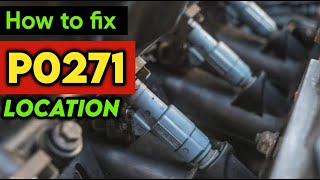
For this generation of Cadillac CTS, particularly with the V6 engines, the fuel injector wiring harness is a known weak point. General Motors issued a Technical Service Bulletin (TSB #PIP4924D) that specifically calls out inspecting the fuel injector wiring harness for rubbing or chafing that can lead to various injector circuit codes, including P0271. 🎬 Watch: Understanding the P0271 circuit high code and its causes. The TSB identifies common chafe points against the intake plenum, valve cover bolts, fuel lines, and the side of the cylinder head. This makes a wiring issue a more likely primary cause on these vehicles.
Diagnostic Flowchart
Tap your situation to follow the diagnostic path that matches what you're seeing on this vehicle.
Symptoms You May Notice
- Check Engine Light is on (may be flashing in severe misfire cases)
- Rough idle or engine stumbling
- Engine misfire, which may feel like a vibration or shudder
- Hesitation or loss of power during acceleration
- Reduced fuel economy
- Smell of unburnt fuel from the exhaust
- Replacing the fuel injector when the actual problem is the wiring harness. Given the TSB for this vehicle, the harness should always be inspected first.
- Replacing the PCM before exhaustively checking the wiring harness for shorts.
Most Likely Causes
- Fuel Injector Wiring Harness Chafed or Shorted 🔴 High Probability → Shop Engine Wiring Harness As documented in GM TSB #PIP4924D, the injector wiring harness can rub against other engine components, causing wires to short to voltage. Common chafe points are against the intake plenum, valve cover bolts, fuel lines, and the side of the cylinder head under the plenum.
How to confirm: Visually inspect the wiring harness leading to the cylinder 4 fuel injector. Look for any signs of rubbing, melted plastic, or exposed copper wires. Check for voltage at the control wire on the injector connector with the key on; it should not be at battery voltage. A YouTube video by '1A Auto' shows a similar harness repair on a CTS, highlighting where chafing can occur.
Typical fix: Repair the damaged section of the wire or replace the fuel injector connector pigtail. Ensure the harness is properly routed and secured away from any sharp edges or heat sources using zip ties or protective loom.
Est. part cost: $15-$50 - Faulty Fuel Injector 🟡 Medium Probability → Shop Fuel Injector The direct injection (DI) injectors on the LF1/LFX engines operate under very high pressure and can fail internally, causing an electrical short which leads to a 'Circuit High' code.
How to confirm: Swap the cylinder 4 fuel injector with one from another cylinder (e.g., cylinder 2). Clear the codes and run the engine. If the code changes to P0265 (Cylinder 2 Injector Circuit High), the injector is faulty. You can also measure the injector's internal resistance with a multimeter and compare it to the manufacturer's specification.
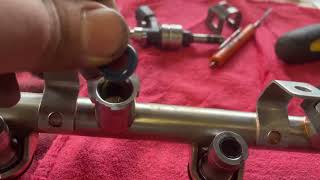
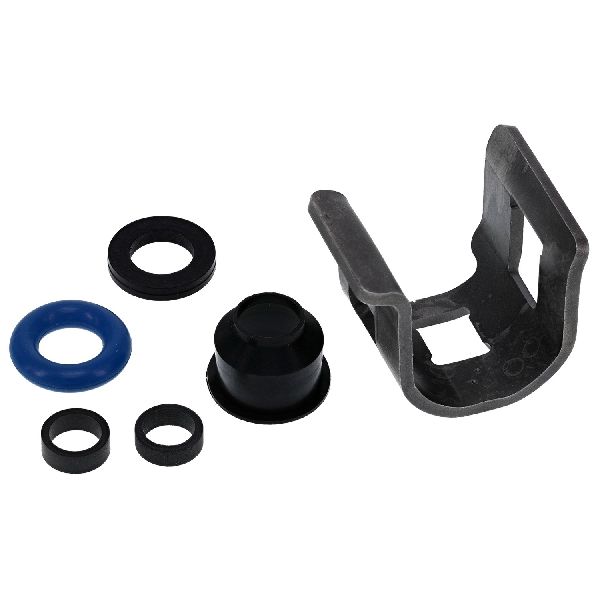
Typical fix: Replace the failed fuel injector. It is often recommended to replace the O-rings and seals for any injectors that are removed. Given the labor involved, some owners opt to replace all injectors on the affected bank at the same time.
Est. part cost: $50-$140 - Loose or Corroded Injector Connector ⚪ Low Probability
How to confirm: Visually inspect the electrical connector at the cylinder 4 injector. Check for pushed-out pins, corrosion (green or white powder), or a connector that isn't fully seated. Wiggle the connector with the engine running to see if it affects the idle.
Typical fix: Clean the connector pins with electrical contact cleaner. If the connector is damaged or the locking tab is broken, replace the connector pigtail. Ensure it 'clicks' when reinstalled.
Est. part cost: $15-$40 - Powertrain Control Module (PCM) Failure ⚪ Low Probability → Shop Engine Control Module (ECM)
How to confirm: This is a last resort after confirming the injector and wiring are good. A professional technician would use advanced tools to test the injector driver circuit within the PCM.
Typical fix: Replace and reprogram the Powertrain Control Module.
Est. part cost: $400-$800
Diagnosis Steps
- Read the trouble codes with an OBD-II scanner and note any other codes present, especially misfire codes (P0304) or other injector codes.
- Visually inspect the fuel injector wiring harness for cylinder 4 (on V6 engines, this is the middle cylinder on the driver's side bank, Bank 2). Pay close attention to areas where it might rub against the intake plenum, valve cover bolts, or fuel lines as noted in TSB #PIP4924D.
- Inspect the electrical connector at the cylinder 4 injector for corrosion, damage, or pushed-out pins. Ensure it is securely latched.
- If no visual damage is found, perform an injector swap test. Swap the cylinder 4 injector with the cylinder 2 injector (front cylinder, driver's side). This requires removing the intake manifold.
- Clear the codes and drive the vehicle. If the code returns as P0265 (Cylinder 2), the fuel injector is the problem. If P0271 returns, the issue is in the wiring or PCM.
- If the problem remains with cylinder 4, use a multimeter or test light to check for constant battery voltage on the control wire of the injector harness connector (with the injector unplugged and key on). If voltage is present, there is a short to power in the harness that must be located and repaired.
- If the wiring and injector are confirmed to be good, the final step is to suspect a faulty PCM, which should be diagnosed by a professional.
Parts You'll Likely Need
- Fuel Injector
(OEM #12634126)— If the injector itself has failed with an internal short, it will need to be replaced. This is a direct injection injector.
Trusted brands: ACDelco, GM Genuine Parts, Bosch
OEM price range: $95-$140
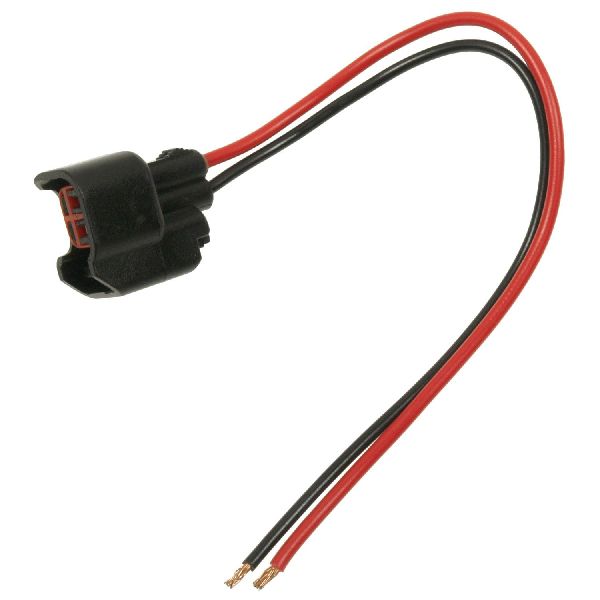
Aftermarket price range: $50-$90 - Fuel Injector Connector Pigtail
(OEM #ACDelco PT2187 (GM 88988505))— If the wiring is damaged near the connector, splicing in a new pigtail is the standard repair. This is a common fix due to the known harness chafing issue.
Trusted brands: ACDelco, Dorman
OEM price range: $25-$45
Aftermarket price range: $15-$25
Related Codes That Often Appear With This One
- P0304 — P0304 means 'Cylinder 4 Misfire Detected'. Since the P0271 code indicates a problem with the cylinder 4 injector, it will not deliver fuel correctly, causing a misfire on that same cylinder.
- P0204 — P0204 is a more generic 'Injector Circuit/Open - Cylinder 4' code. It can appear alongside P0271 as the PCM tries to diagnose the electrical fault.
- P0261, P0262, P0264, etc. — If multiple injector codes are present, it points more strongly to a widespread wiring harness issue or a failing PCM, as it's unlikely multiple injectors would fail simultaneously.
Technical Service Bulletins (TSBs) & Recalls
- PIP4924D: Notes that a misfire condition may be present and lists P0271 as a possible code. It advises technicians to inspect the fuel injector wiring harness for damage at specific points like the intake plenum, valve cover bolts, and fuel lines.
Platform-Specific Known Issues
- GM Technical Service Bulletin #PIP4924D explicitly mentions that codes like P0271 can be caused by the fuel injector wiring harness rubbing through and shorting out. Technicians are directed to inspect the harness as a primary diagnostic step, specifically checking for contact against the intake plenum, valve cover bolts, fuel lines, and the side of the cylinder head.
Mechanic-Grade Diagnostic Values
- Fuel Injector Coil Resistance — expected: 1.25 - 1.75 ohms at room temperature.. Failure: A reading of OL (open circuit), 0.0 ohms (short circuit), or a value significantly outside the expected range indicates a faulty injector. All injectors should have readings within 0.5 ohms of each other.
- Low-Side Fuel Pressure (Key On, Engine Off) — expected: 345-690 kPa (50-100 psi). Failure: Pressure below this range indicates a weak low-pressure fuel pump or a leak in the system. Pressure above this range may indicate a faulty fuel pump module.
- High-Side Fuel Pressure (for injector operation) — expected: Minimum of 2 MPa (290 psi) at 68-90°F (20-32°C). Failure: If the high-pressure pump cannot build at least this much pressure, the direct injectors may not operate correctly, though this is less likely to cause a 'Circuit High' code.
Scan Tool Commands That Help
- GM GDS2 / High-End Bidirectional Scanner: Fuel Injector Balance Test — This function should be used after verifying the wiring is intact. The tool commands the ECM to disable each injector one by one and measures the drop in either fuel pressure or engine RPM. If disabling cylinder 4 causes little or no change compared to other cylinders, it confirms that the injector is not firing correctly. This helps differentiate a wiring/ECM issue from a clogged or mechanically failed injector.
Wiring & Ground Locations
- Cylinder 4 Injector Wires at ECM — At the K20 Engine Control Module (ECM), in the X1 connector. The ECM is located in the left front of the engine compartment.. For the 3.6L direct injection engine, the cylinder 4 injector is controlled by two wires: a Light Blue wire (low side driver) at pin 50 and a Light Blue/White wire (high side driver) at pin 74. Testing for shorts or opens at these specific pins can definitively isolate a wiring fault from a failed ECM driver.
- G131 / G136 — On the rear of the left (Bank 2) cylinder head. Bank 2 is the cylinder bank closer to the firewall.. These are primary engine grounds for the cylinder bank that includes cylinder 4. A loose, corroded, or broken ground connection at this point can cause unstable voltages and unpredictable behavior in the injector circuits for cylinders 2, 4, and 6, potentially leading to a 'Circuit High' code.
- G130 — On the rear of the right (Bank 1) cylinder head.. While not directly for cylinder 4's bank, a problem with any major engine ground can introduce electrical noise into the system. It should be checked if other grounds are clean and tight.
OEM Part Supersession History
12642128→12634126— Standard part revision and update by the manufacturer.
Heads up: The new part number (12634126) is the correct replacement for the original. Using old stock of 12642128 is acceptable, but 12634126 is the current recommended part.
Model Year Variations Within This Range
- 2012-2014: In 2012, the 3.6L V6 was updated from the LLT to the LFX engine. A key physical difference is the LFX uses a composite plastic intake manifold, whereas the earlier LLT used an aluminum one. While the TSB about harness chafing applies to both, the exact points of abrasion against the intake manifold may differ slightly due to the change in material and design.
Helpful Videos
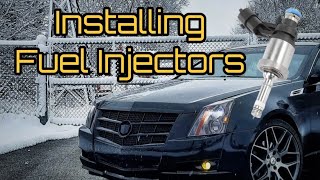
We Have This Part in Stock


The information in this article is provided for general reference and educational purposes only. Vehicle specifications, procedures, and part compatibility can vary by production date, trim level, and region. Always consult your vehicle's factory service manual and verify part numbers before purchasing or performing repairs. Safety-critical components such as airbags, seat belts, and braking systems should be installed by a qualified professional.
- Cadillac CTS:
- 🧭 Diagnostic Flowchart
- 🎬 Helpful Videos
- 🛍️ Shop This Part
- What's Unique About the 2010-2014 Cadillac CTS
- Symptoms You May Notice
- Most Likely Causes
- Diagnosis Steps
- Parts You'll Likely Need
- Related Codes That Often Appear With This One
- Technical Service Bulletins (TSBs) & Recalls
- Platform-Specific Known Issues
- Mechanic-Grade Diagnostic Values
- Scan Tool Commands That Help
- Wiring & Ground Locations
- OEM Part Supersession History
- Model Year Variations Within This Range
- 🎟️ Get 5% Off