

P0271 on 2010-2014 Cadillac SRX: Cylinder 4 Injector Circuit High Causes and Fixes
Code P0271 on a 2010-2014 SRX indicates a high voltage condition in the cylinder 4 fuel injector circuit. Cylinder 4 is on the difficult-to-access rear bank. The most likely cause is not the injector itself, but a chafed or damaged wiring harness, as noted in GM Technical Service Bulletin #PIP4924D. Always inspect the wiring thoroughly before attempting the difficult job of replacing the injector.
- P0271 means there is a high voltage fault in the cylinder 4 injector circuit.
- On the SRX V6, the most likely cause is a chafed wiring harness, per GM TSB #PIP4924D.
- Cylinder 4 is on the rear bank, making access very difficult and labor-intensive.
- Always inspect the wiring harness thoroughly before deciding to replace the fuel injector to avoid unnecessary work and expense.
What's Unique About the 2010-2014 Cadillac SRX
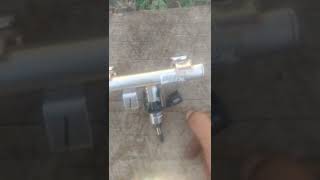
For the second-generation Cadillac SRX, two key factors make this code unique. First, the V6 engine layout can make the fuel injector wiring harness susceptible to rubbing and chafing against other engine components, particularly near the cylinder heads and firewall. This is a known issue, as highlighted by GM's own Technical Service Bulletin #PIP4924D, which specifically calls out P0271 and other related injector codes. Second, Cylinder 4 is located on the rear cylinder bank (Bank 2), tucked against the firewall. Access requires the complete removal of the upper intake manifold 🎬 Watch: How to remove the fuel rail and injectors, a significantly more labor-intensive job than working on the front cylinders. This makes the TSB's advice to exhaustively check wiring *before* replacing parts even more critical to avoid unnecessary labor.
Diagnostic Flowchart
Tap your situation to follow the diagnostic path that matches what you're seeing on this vehicle.
Symptoms You May Notice
- Check Engine Light is on
- Rough or unstable idle
- Engine misfire, which may be more noticeable under load
- Hesitation or stumbling during acceleration
- Reduced engine power
- Worse-than-usual fuel economy
- Strong fuel smell from the exhaust if the injector is stuck open
- Replacing the fuel injector without first inspecting the wiring harness. Many owners and shops replace the injector only to have the code return, because the true cause was a wiring issue. This is an especially costly mistake on this vehicle because the cylinder 4 injector is on the rear bank and requires significant labor to access.
Most Likely Causes
- Chafed or Damaged Fuel Injector Wiring Harness 🔴 High Probability → Shop Engine Wiring Harness As documented in TSB #PIP4924D, the wiring harness for the fuel injectors is known to rub against engine components, causing shorts to voltage or open circuits. Common chafe points are where the harness passes near the cylinder head, against intake manifold brackets, or close to the firewall.
How to confirm: Perform a thorough visual inspection of the wiring harness leading to the cylinder 4 fuel injector. Trace it from the injector back towards the main loom, paying close attention to any areas where it is secured by clips or makes contact with the engine. With the engine off, use a multimeter to check for a short to voltage on the control wire for the cylinder 4 injector.
Typical fix: Repair the damaged section of the wire with a quality butt connector and heat shrink tubing. If the damage is extensive or at the connector, replace the connector pigtail. Ensure the repaired harness is re-routed or protected with additional loom/conduit to prevent future chafing.
Est. part cost: $5 - $25 - Failed Fuel Injector 🟡 Medium Probability → Shop Fuel Injector Direct injection (DI) injectors operate under high pressure and can fail internally over time. While less common than the wiring issue on this platform, it is still a frequent cause.
How to confirm: Measure the internal resistance of the fuel injector using a multimeter. Compare the reading to the manufacturer's specification (approx. 12 Ohms for the 3.0L LF1 and 1.2-1.8 Ohms for the 3.6L LFX). An out-of-spec reading indicates a faulty injector. A more definitive, but labor-intensive, test is to swap the cylinder 4 injector with an adjacent one on the same bank (e.g., cylinder 2 or 6), clear the codes, and see if the fault code follows the injector (e.g., changes to P0265 or P0277).
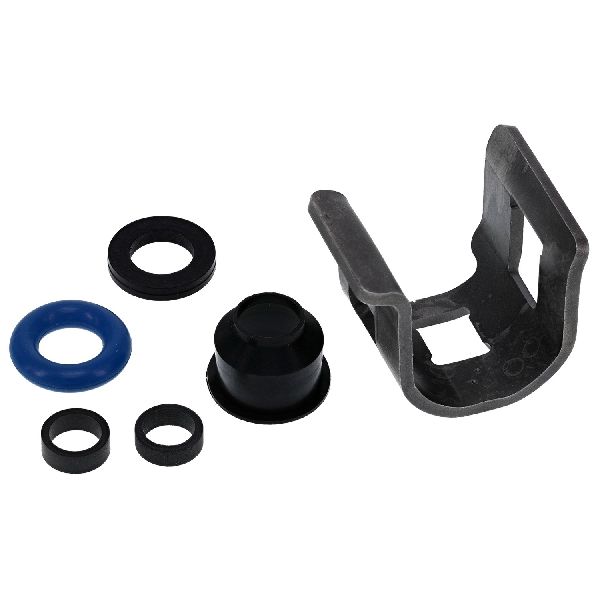
Typical fix: Replace the faulty fuel injector. Given the difficult access to the rear bank, many technicians recommend replacing all three injectors on that bank (2, 4, 6) at the same time.
Est. part cost: $75 - $150 - Loose or Corroded Injector Connector ⚪ Low Probability
How to confirm: Visually inspect the electrical connector at the fuel injector. Look for any signs of corrosion on the pins, a loose fit, or damage to the connector housing or locking tab. The locking tabs can become brittle with heat cycles and break.
Typical fix: Clean any corrosion from the connector pins using an electrical contact cleaner. If the connector is damaged or will not stay secure, replace the connector pigtail.
Est. part cost: $15 - $35
Rare But Worth Checking
- Faulty Engine Control Module (ECM): → Shop Engine Control Module (ECM) This should be the last resort after all other possibilities (wiring and injector) have been thoroughly tested and ruled out. The injector driver circuit within the ECM can fail, but it is uncommon.
Diagnosis Steps
- Scan the vehicle's computer for trouble codes and record P0271 and any other codes present.
- Confirm the location of Cylinder 4. On the transverse 3.0L/3.6L V6, it is the middle cylinder on the rear bank, against the firewall.
- Carefully perform a visual inspection of the fuel injector wiring harness for cylinder 4. Trace it from the injector back as far as possible, looking for chafing, melting, or breaks, especially where it contacts the engine or other components.
- Inspect the electrical connector at the cylinder 4 injector for damage, corrosion, or loose pins. This will require removing the intake manifold for access.
- Once the intake is removed, disconnect the injector. With the key on and engine off, check for battery voltage at the power wire of the connector.
- Measure the resistance of the fuel injector itself. A typical reading for the 3.0L LF1 engine is around 12 Ohms, while the 3.6L LFX engine should be between 1.2 and 1.8 Ohms. A significantly higher or infinite reading indicates a bad injector.
- If the injector and wiring appear good, consider swapping the cylinder 4 injector with another cylinder's injector on the same bank (e.g., cylinder 2). Clear the codes and reassemble enough to run the engine. If the code returns as P0265 (Cylinder 2 Injector Circuit High), the injector is faulty. If P0271 returns, the problem is in the wiring or ECM.
- If the wiring is suspected, perform a continuity test on the control wire from the injector connector to the ECM connector to check for opens or shorts.
- If the injector and wiring are confirmed to be good, the issue may be with the ECM's injector driver, which requires advanced diagnostics.
Parts You'll Likely Need
- Fuel Injector
(OEM #12669384)— This is the part to replace if the injector itself has failed its resistance test or if the fault follows the injector in a swap test. Part number 12634126 may be a superseded number.
Trusted brands: ACDelco, GM Genuine Parts
OEM price range: $110-$150
Aftermarket price range: $50-$90 - Fuel Injector Connector Pigtail
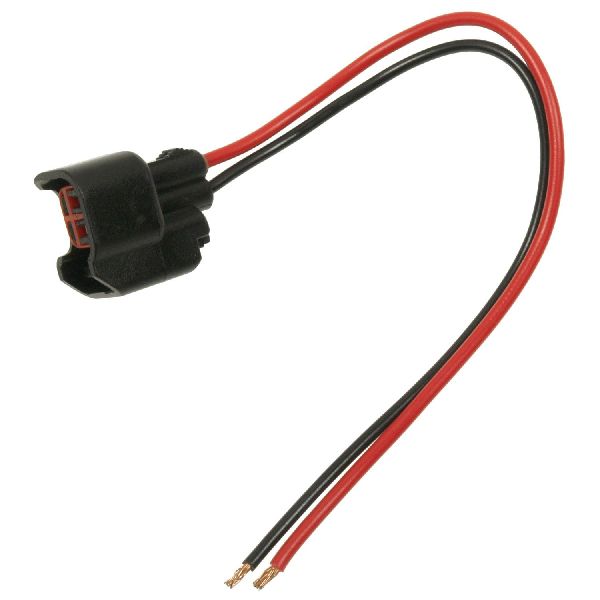
(OEM #ACDelco PT2160)— If the electrical connector or the wiring immediately attached to it is corroded, melted, or broken, this part is needed to make a solid repair. It is critical to visually match the connector before ordering, but PT2160 is a common fit.
Trusted brands: ACDelco, Dorman
OEM price range: $30-$45
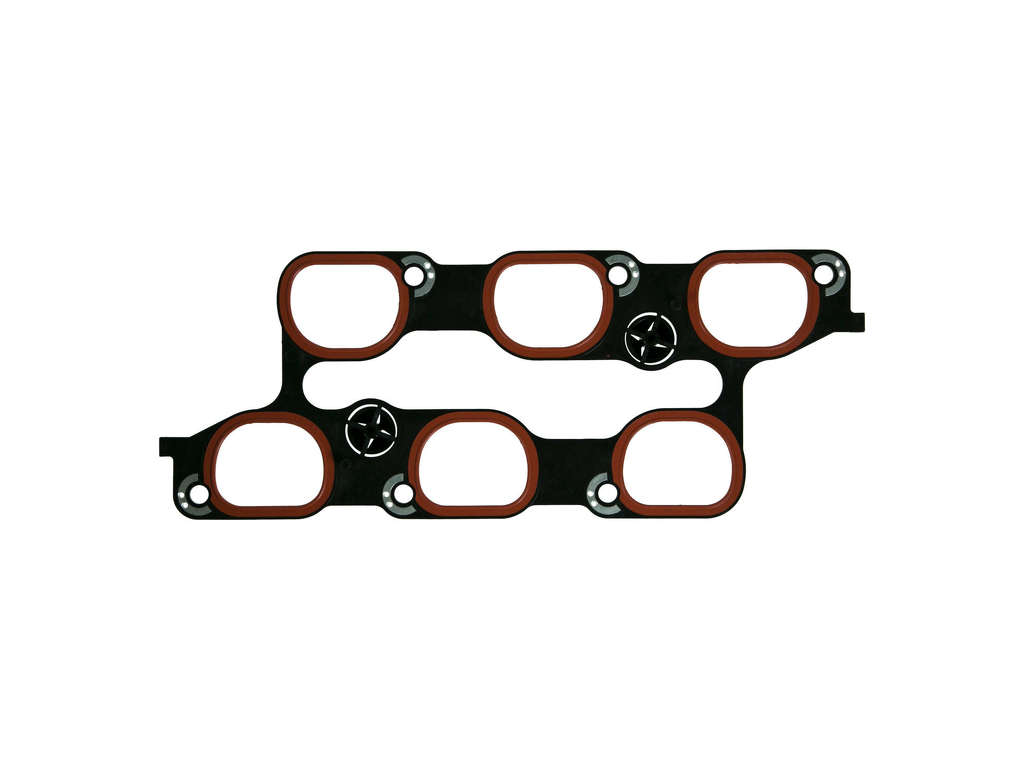
Aftermarket price range: $15-$25 - Upper Intake Manifold Gaskets — These must be replaced anytime the intake manifold is removed to access the rear bank of injectors. Re-using old gaskets will almost certainly cause a vacuum leak.
Trusted brands: Fel-Pro, ACDelco
OEM price range: $30-$50
Aftermarket price range: $15-$30
Related Codes That Often Appear With This One
- P0304 — P0304 indicates a misfire on cylinder 4. The circuit high condition of P0271 will prevent the injector from firing correctly, leading to a misfire on that same cylinder.
- P0262, P0265, P0268, P0274, P0277 — These are circuit high codes for other cylinders. If the wiring harness is damaged in a location that affects multiple injector wires, you may see several of these codes appear together.
Technical Service Bulletins (TSBs) & Recalls
- Bulletin #PIP4924D: Mentions P0271 as a potential code when the fuel injector wiring harness is rubbing or damaged, causing a circuit fault. Directs technicians to inspect the harness before replacing components.
Platform-Specific Known Issues
- The primary vehicle-specific issue is the fuel injector wiring harness being prone to chafing, as documented in GM Technical Service Bulletin #PIP4924D. This TSB covers a wide range of injector circuit codes, including P0271, and points to a common problem with the harness routing on these V6 engines.
- Cylinder 4 is located on the rear cylinder bank (Bank 2) against the firewall. Access requires removal of the upper intake manifold, making diagnosis and repair significantly more labor-intensive than for cylinders on the front bank. This makes following TSB #PIP4924D and thoroughly checking the wiring before committing to injector replacement especially important.
- Some owners have reported extreme difficulty reinstalling the rear fuel rail after service. One owner documented needing to use a hammer and chisel to slightly modify a non-critical part of a bracket to allow the rail to slide back into place.
Mechanic-Grade Diagnostic Values
- Fuel Injector Resistance (3.6L LFX V6, 2012-2014) — expected: 1.2 - 1.8 Ohms. Failure: A reading outside this range, OL (open circuit), or near 0 Ohms indicates an internal injector fault.
- Fuel Injector Resistance (3.0L LF1 V6, 2010-2011) — expected: ~11 - 14 Ohms. Failure: A significant deviation from this range, OL, or near zero indicates a failed high-impedance injector. One source cited a specific value of 11.9 Ohms.
- Injector Control Circuit Voltage (Key On, Engine Off, Injector Disconnected) — expected: System/Battery Voltage (approx. 12V). Failure: A reading of 0V on the control wire at the ECM connector while having 12V at the injector connector points to an open wire in the harness.
Scan Tool Commands That Help
- GM GDS2 (or equivalent high-end scan tool): Injector Test / Fuel Injector Balance — This bidirectional command allows the technician to individually disable each fuel injector and monitor the drop in fuel rail pressure or engine RPM. A cylinder that shows a significantly different drop compared to others can confirm a faulty (clogged or leaking) injector without physical removal, which is highly valuable given the labor to access the rear bank.
- GM GDS2 (or equivalent high-end scan tool): Cylinder Power Balance — This function provides a real-time graphical display of the power contribution from each cylinder. It can be used to quickly confirm that cylinder 4 is indeed the source of the misfire (P0304) that often accompanies the P0271 circuit code.
Wiring & Ground Locations
- ECM/PCM Location — On the 2nd generation SRX, the Engine Control Module (ECM) is typically located in the engine bay, often near the front of the engine or attached to the air filter housing.. This is the source of the control signal for the injector. All wiring tests for continuity or shorts will eventually lead back to the ECM connector. A poor ground for the ECM itself can cause various erratic codes, including injector faults.
- G102 / G107 (example ground points) — Engine grounds are typically located on the engine block or cylinder heads. For example, on similar GM V6 platforms, grounds like G102 can be found on the right side/rear of the engine, and G107 on the right rear of the engine. Specific locations for the SRX may vary slightly by year and engine.. The ECM and its sensors rely on clean, tight ground connections. A corroded or loose engine ground can create a floating reference voltage, leading the ECM to misinterpret sensor and actuator circuit voltages, potentially setting a false 'Circuit High' code.
- Injector Harness Splice Points — The main power feed (typically a pink wire on GM vehicles) for the injectors is often spliced within the harness to feed all three injectors on a bank.. While P0271 is a control circuit code, a problem at a power splice could theoretically cause voltage issues. More importantly, knowing where splices are helps in tracing wires and understanding how multiple injector circuits (e.g., P0271, P0265, P0277) could be affected simultaneously by harness damage near a splice.
OEM Part Supersession History
12638530, 12632255, 12611545→12669384— Standard part evolution, likely for improved reliability or manufacturing process.
Heads up: This injector is for the 3.6L LFX engine and is NOT compatible with the 2010-2011 3.0L LF1 engine, which uses a different injector (e.g., 12634126 or 12629927).12642128→12634126— Standard part evolution.
Heads up: This injector is for the 3.0L LF1 engine and is NOT compatible with the 2012-2014 3.6L LFX engine, which uses a different, low-impedance injector.
Model Year Variations Within This Range
- 2010-2011: These models primarily used the 3.0L LF1 V6 engine. This engine uses a high-impedance fuel injector (Part numbers like 12634126 or 12629927) with a resistance of approximately 11-14 Ohms.
- 2012-2014: These models exclusively used the updated 3.6L LFX V6 engine. This engine uses a different, low-impedance fuel injector (Part numbers like 12669384) with a resistance of approximately 1.2-1.8 Ohms. Using the wrong injector between engine types will cause immediate running issues and fault codes.
Helpful Videos
We Have This Part in Stock


The information in this article is provided for general reference and educational purposes only. Vehicle specifications, procedures, and part compatibility can vary by production date, trim level, and region. Always consult your vehicle's factory service manual and verify part numbers before purchasing or performing repairs. Safety-critical components such as airbags, seat belts, and braking systems should be installed by a qualified professional.
- Cadillac SRX:
- 🧭 Diagnostic Flowchart
- 🎬 Helpful Videos
- 🛍️ Shop This Part
- What's Unique About the 2010-2014 Cadillac SRX
- Symptoms You May Notice
- Most Likely Causes
- Rare But Worth Checking
- Diagnosis Steps
- Parts You'll Likely Need
- Related Codes That Often Appear With This One
- Technical Service Bulletins (TSBs) & Recalls
- Platform-Specific Known Issues
- Mechanic-Grade Diagnostic Values
- Scan Tool Commands That Help
- Wiring & Ground Locations
- OEM Part Supersession History
- Model Year Variations Within This Range
- 🎟️ Get 5% Off