

P0271 on 2009-2011 Cadillac STS 3.6L: Cylinder 4 Injector Circuit High Causes & Fixes
On a 2009-2011 Cadillac STS with the 3.6L V6 engine, code P0271 is most often caused by a chafed or damaged fuel injector wiring harness, a known issue documented in GM Technical Service Bulletin PIP4924D. Inspecting the harness for damage where it wraps around the driver's side cylinder head near the intake and valve covers is the first step before replacing any parts.
- For a P0271 code on a 2009-2011 STS 3.6L, immediately suspect a wiring issue.
- Reference GM TSB #PIP4924D and carefully inspect the injector harness for chafing before buying any parts, especially around the driver's side cylinder head.
- Common symptoms include a rough idle, engine misfire, and the Check Engine Light.
- Cylinder 4 is the middle cylinder on the driver's side of the engine.
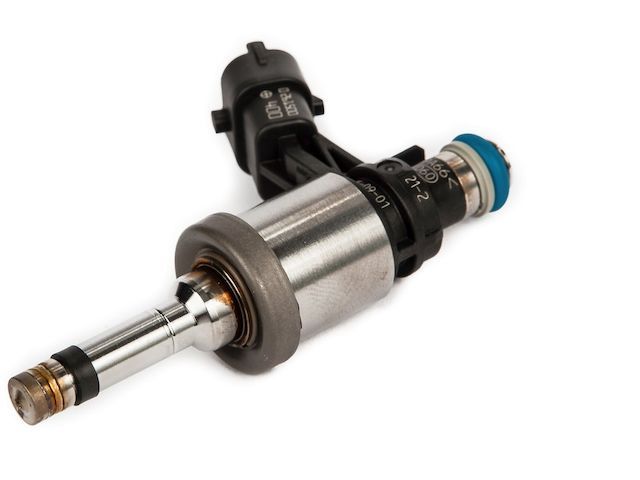
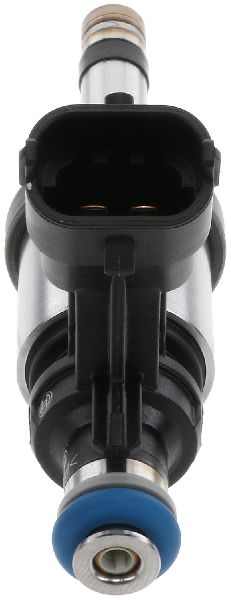
- If the wiring is good, the next step is to test or swap the cylinder 4 fuel injector (OEM Part #12638530).
- A PCM failure is a rare cause and should only be considered after ruling out wiring and the injector.
What's Unique About the 2009-2011 Cadillac STS
For this specific vehicle and engine, General Motors issued a Technical Service Bulletin (TSB #PIP4924D) that directly addresses a pattern of injector circuit codes, including P0271. The bulletin points to the fuel injector wiring harness being prone to rubbing through its insulation at several common points, such as against the intake plenum, valve cover bolts, fuel lines, and the side of the cylinder head under the plenum. This makes a wiring issue a much more likely cause on the 3.6L V6 in the STS compared to other vehicles where the injector itself might be the primary suspect.
Diagnostic Flowchart
Tap your situation to follow the diagnostic path that matches what you're seeing on this vehicle.
Symptoms You May Notice
- Check Engine Light (or Service Engine Soon light) is on
- Rough or shaky engine idle.
- Engine misfire, which may feel like a stumble or hesitation, especially under load.
- Noticeable loss of power during acceleration.
- Reduced fuel economy. 🎬 Watch: Quick solutions for fixing common Cadillac engine misfires.
- Replacing the fuel injector before thoroughly inspecting the wiring harness. The TSB for this vehicle makes the harness the most likely culprit, and many owners have wasted money on an injector when the real problem was a single chafed wire.
Most Likely Causes
- Chafed Fuel Injector Wiring Harness 🔴 High Probability → Shop Engine Wiring Harness GM Technical Service Bulletin #PIP4924D specifically identifies this as a common problem on this engine. The harness routing causes it to rub against engine components, particularly where it wraps around the driver's side (Bank 2) cylinder head.
How to confirm: Visually inspect the entire fuel injector wiring harness, paying close attention to where it contacts the intake plenum, valve cover bolts, fuel lines, and the side of the cylinder head under the plenum. A common failure point is where the harness loom is secured near the back of the driver's side cylinder head.
Typical fix: Repair the damaged section of wire with a quality splice and heat shrink tubing. Reroute the harness slightly or add protective conduit to prevent future rubbing. If damage is extensive, the harness may need to be replaced.
Est. part cost: $5-$250 - Faulty Cylinder 4 Fuel Injector 🟡 Medium Probability → Shop Fuel Injector While wiring is more common on this platform, direct injection fuel injectors can fail from internal shorts or clogging over time.
How to confirm: After confirming the wiring is good, swap the cylinder 4 injector with an injector from another cylinder (e.g., cylinder 2). Clear the codes and drive the vehicle. If the code changes to P0265 (Cylinder 2 Injector Circuit High), the injector is faulty. You can also test the injector's resistance with a multimeter; it should be between 1.5-1.6 Ω for this engine.
Typical fix: Replace the faulty fuel injector. It is often recommended to replace all injectors on the same bank (Bank 2: cylinders 2, 4, 6) for balanced performance, especially on higher mileage vehicles.
Est. part cost: $70-$220 - Damaged or Corroded Injector Connector ⚪ Low Probability
How to confirm: Unplug the connector at the cylinder 4 fuel injector and inspect the pins and terminals for corrosion, moisture, bent pins, or damage. Ensure it makes a secure connection with a distinct 'click'.
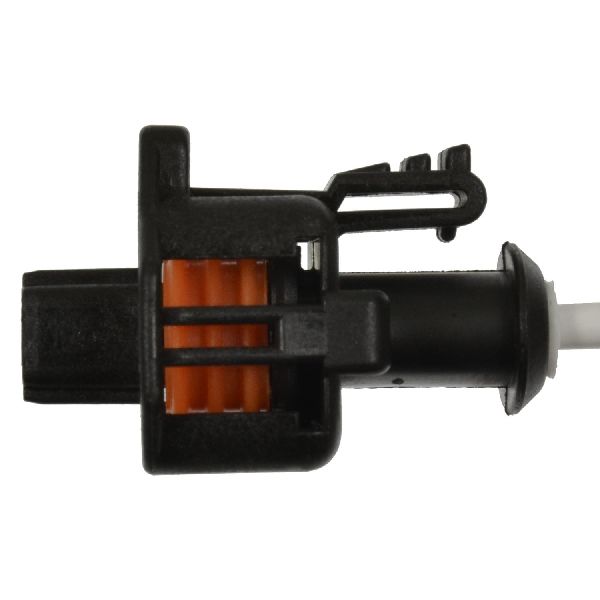
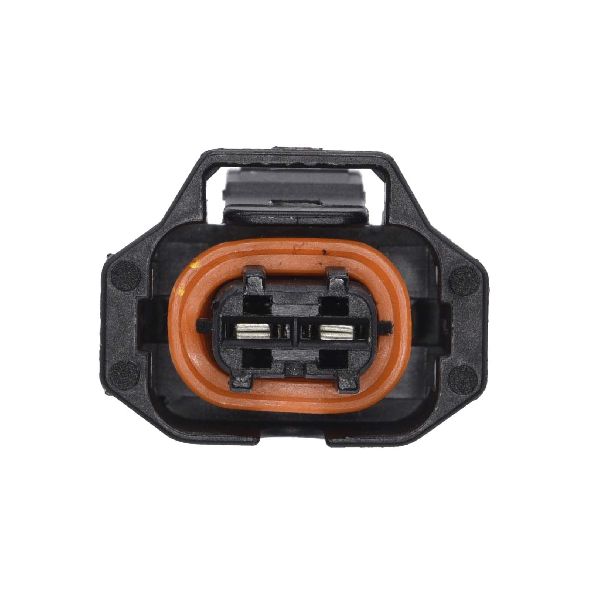
Typical fix: Clean the connector terminals carefully with electrical contact cleaner. If the connector housing or pins are damaged, replace the connector pigtail (e.g., ACDelco PT2183).
Est. part cost: $15-$40
Rare But Worth Checking
- Powertrain Control Module (PCM) Failure: → Shop Engine Control Module (ECM) This is the least likely cause. The internal driver circuit for the injector can fail, but all other possibilities, especially wiring, should be exhaustively ruled out before condemning the PCM.
Diagnosis Steps
- Verify the presence of code P0271 with an OBD-II scanner. Note any other codes present, especially P0304.
- Identify Cylinder 4. On the longitudinally mounted 3.6L V6 in the STS, Bank 1 (passenger side) has cylinders 1, 3, 5 from front to back. Bank 2 (driver's side) has cylinders 2, 4, 6. Cylinder 4 is the middle cylinder on the driver's side.
- Perform a detailed visual inspection of the fuel injector wiring harness as described in TSB #PIP4924D. Check for chafing against the intake plenum, valve cover bolts, fuel lines, and especially where the harness wraps around the side of the driver's side cylinder head.
- If damage is found, repair the wiring. Clear codes and test drive to see if the fault returns.
- If the wiring appears intact, disconnect the cylinder 4 injector connector. Check for power and a pulse signal from the PCM using a noid light or multimeter while cranking the engine.
- Inspect the injector connector for corrosion or damage.
- If signals are correct, turn the ignition off and test the resistance of the fuel injector itself with a multimeter. Compare it to the manufacturer's specification (1.5-1.6 Ohms). A reading significantly different, or open-loop (OL), indicates a failed injector.
- As a final confirmation, swap the cylinder 4 injector with one from another cylinder (e.g., cylinder 2). If the fault code moves to P0265 (Cylinder 2), the injector is confirmed to be faulty.
- If all wiring and the injector test good, the issue may be with the PCM, which requires advanced diagnostics.
Parts You'll Likely Need
- Fuel Injector Wiring Harness Repair Kit/Pigtail
(OEM #ACDelco PT2183)— This is needed if the wiring connector is found to be damaged or if a clean repair near the connector is desired. Often, just splicing the wire is sufficient.
Trusted brands: ACDelco, Dorman
OEM price range: $30-$50
Aftermarket price range: $15-$30 - Fuel Injector
(OEM #ACDelco 217-3445 (GM 12638530))— If the wiring is intact, the injector itself is the next most likely component to have failed.
Trusted brands: ACDelco, Bosch, Standard Motor Products
OEM price range: $150-$220
Aftermarket price range: $70-$140
Related Codes That Often Appear With This One
- P0304 — P0304 means 'Cylinder 4 Misfire Detected'. This code often appears with P0271 because a fuel injector circuit fault prevents proper fueling, causing that cylinder to misfire.
- P0270 — P0270 is 'Cylinder 4 Injector Circuit Low'. Seeing both P0270 and P0271 intermittently can strongly indicate a wiring short that is fluctuating between an open/high resistance state and a short-to-ground state.
- P2149 — This code relates to Fuel Injector Group 'B' (Bank 2) Supply Voltage Circuit. Since cylinder 4 is in Bank 2, a wiring harness issue affecting the main power feed to that bank of injectors could trigger this code alongside the individual cylinder code.
Technical Service Bulletins (TSBs) & Recalls
- PIP4924D: SES Light And Misfire With Injector Codes - This bulletin is the primary diagnostic path for this code on this engine. It instructs technicians to inspect the fuel injector wiring harness for rubbing or open wires as a primary cause for a range of injector codes, including P0271. Specific chafe points mentioned are against the intake plenum, valve cover bolts, fuel lines, and the side of the cylinder head.
Platform-Specific Known Issues
- A known issue documented in TSB #PIP4924D points to the fuel injector wiring harness rubbing through its insulation, causing shorts or open circuits. Common chafe points are against the intake, valve covers, and fuel lines.
- Owner Experience: A user on 2CarPros.com with a 3.6L V6 reported intermittent P0204 and P0304 codes. After replacing the injector and connector with no success, the consensus was a wiring issue in the harness section hidden under the upper intake manifold, which is consistent with the TSB.
Mechanic-Grade Diagnostic Values
- Fuel Injector Resistance — expected: 1.5 to 1.6 Ω. Failure: A reading that is significantly different, infinite (Open Loop), or zero indicates a faulty injector.
- Fuel Injector Balance Test (Pressure Drop) — expected: The pressure drop for each injector should be consistent.. Failure: A pressure drop for one cylinder that is significantly different from the average of the others (e.g., outside a 1.5 PSI variance) points to a clogged or leaking injector.
- Injector Circuit Voltage (Engine Running) — expected: Battery voltage (approx. 12-14V). Failure: A voltage reading on the affected cylinder's injector circuit that is significantly lower than other injectors points to a wiring fault or a problem with the PCM driver.
Scan Tool Commands That Help
- GDS2 / Tech 2: Fuel Injector Balance Test / Active Fuel Injector Test (AFIT) — Use this after confirming the wiring is intact. This bidirectional command individually fires each injector and measures the corresponding drop in fuel rail pressure. It is the definitive test to confirm if an injector is mechanically faulty (clogged) or has a flow issue, which a simple resistance test cannot detect.
- GDS2 / Professional Scan Tool: Cylinder Power Balance — This can be used as an initial diagnostic step to confirm which cylinder is not contributing power. The tool deactivates injectors one by one, and the cylinder that causes little or no drop in engine RPM when disabled is the source of the misfire.
Wiring & Ground Locations
- G100 / G106 — Located on the rear side of the right-side (Bank 1) cylinder head.. These are primary engine grounds. A loose or corroded ground on the cylinder head can create intermittent electrical issues for sensors and actuators on the engine, including the fuel injectors. While the TSB focuses on chafing, a bad ground should also be checked.
- Injector Harness Wires — In the harness running from the ECM to the fuel injectors.. On the 3.6L DI engine, the injector wires are a twisted pair. The solid color wire is the low-side driver control, and the wire with a white tracer is the high-side driver feed. Knowing this helps in accurately testing the correct wires at the ECM connector for continuity or shorts.
- G101 — Near the left front strut tower, at the bottom of the inside fender well.. This ground serves the Engine Control Module (ECM). A fault at this location could cause a wide range of erratic engine behavior and codes, including injector circuit faults.
OEM Part Supersession History
12611545, 12632255→12638530— Standard part evolution and consolidation by the manufacturer.
Heads up: The part number 12638530 (also sold as ACDelco 217-3445) is the correct service replacement for the 2009-2011 STS 3.6L LLT engine. The older numbers may still be found but have been replaced.
Helpful Videos
We Have This Part in Stock


The information in this article is provided for general reference and educational purposes only. Vehicle specifications, procedures, and part compatibility can vary by production date, trim level, and region. Always consult your vehicle's factory service manual and verify part numbers before purchasing or performing repairs. Safety-critical components such as airbags, seat belts, and braking systems should be installed by a qualified professional.
- Cadillac STS:
- 🧭 Diagnostic Flowchart
- 🎬 Helpful Videos
- 🛍️ Shop This Part
- What's Unique About the 2009-2011 Cadillac STS
- Symptoms You May Notice
- Most Likely Causes
- Rare But Worth Checking
- Diagnosis Steps
- Parts You'll Likely Need
- Related Codes That Often Appear With This One
- Technical Service Bulletins (TSBs) & Recalls
- Platform-Specific Known Issues
- Mechanic-Grade Diagnostic Values
- Scan Tool Commands That Help
- Wiring & Ground Locations
- OEM Part Supersession History
- 🎟️ Get 5% Off