

P0271 on 2012-2014 Chevrolet Impala: Cylinder 4 Injector Circuit Low Causes and Fixes
On a 2012-2014 Impala with the 3.6L V6, P0271 is most often caused by a chafed or damaged fuel injector wiring harness, as noted in GM TSB #PIP4924D. Before replacing the injector, thoroughly inspect the wiring loom for damage, especially where it may rub against fuel line brackets, the intake plenum, or the side of the cylinder head. A wiring repair is the most common fix; a faulty injector is the next likely cause.
- P0271 indicates a 'Circuit Low' fault for the cylinder 4 fuel injector.
- On the 2012-2014 Impala 3.6L, the most probable cause is a damaged wiring harness, as per GM TSB #PIP4924D. Always inspect the wiring before buying parts.
- Symptoms will include a rough running engine, loss of power, and a solid Check Engine Light.
- If the wiring is good, the next most likely cause is a failed fuel injector.
- Do not drive for an extended period with this code, as it can lead to expensive catalytic converter damage.
What's Unique About the 2012-2014 Chevrolet IMPALA
For this generation of Impala with the 3.6L LFX V6 engine, there is a well-documented issue with the fuel injector wiring harness. A General Motors Technical Service Bulletin (TSB #PIP4924D and its revisions) specifically points out that the harness is prone to rubbing against engine components, causing wires to chafe and short out. Common chafe points are against the intake plenum, valve cover bolts, fuel lines, and the side of the cylinder head under the plenum. This makes a thorough wiring inspection the most critical first step, as it's a more common failure than the injector itself.
Diagnostic Flowchart
Tap your situation to follow the diagnostic path that matches what you're seeing on this vehicle.
Generation note: The 2012-2013 models are all 9th generation Impalas. In 2014, Chevrolet sold both the 9th generation (as the 'Impala Limited' for fleets) and the all-new 10th generation. Both could be equipped with the 3.6L LFX V6 engine to which this guide primarily applies.
Symptoms You May Notice
- Check Engine Light is on
- Rough or shaky idle
- Engine hesitation or stumbling during acceleration
- Noticeable loss of power
- Poor fuel economy
- Strong fuel smell from the exhaust
- Replacing the fuel injector without first thoroughly inspecting the wiring harness. Given the known TSB, the wiring is the most likely culprit and checking it first can save significant time and money.
Most Likely Causes
- Damaged Fuel Injector Wiring Harness 🔴 High Probability → Shop Engine Wiring Harness As documented in GM TSB #PIP4924D, the harness routing on the 3.6L engine makes it susceptible to rubbing. Specific chafe points include against the intake plenum, valve cover bolts, fuel line brackets, and the side of the cylinder head.
How to confirm: Carefully and thoroughly inspect the entire fuel injector wiring harness, especially for cylinder #4. Pull back the plastic loom and check for any signs of rubbing, exposed copper wires, or damage where the harness makes contact with engine parts.
Typical fix: Repair the damaged section of wire with a new piece of wire and solder/heat-shrink connections. Secure the repaired harness away from the contact point with zip ties or re-route it. In cases of severe damage, the harness pigtail or entire harness section may need replacement.
Est. part cost: $5-$50 - Failed Fuel Injector 🟡 Medium Probability → Shop Fuel Injector
How to confirm: First, test the injector's resistance with a multimeter. For the LFX direct injection engine, it should be between 1.2 and 1.8 ohms. If the resistance is out of spec, the injector is bad. Alternatively, swap the cylinder 4 injector with an adjacent one (e.g., cylinder 2). Clear the codes and run the engine. If the code moves to P0265 (Cylinder 2 Injector Circuit Low), the injector is bad.
Typical fix: Replace the faulty fuel injector. It is often recommended to replace all injectors on the same bank if they are high mileage.
Est. part cost: $50-$150 - Poor Connection at Injector or ECM ⚪ Low Probability
How to confirm: Disconnect the connector at the fuel injector and the ECM. Inspect for any bent, loose, or corroded pins. Clean any corrosion with electrical contact cleaner and ensure a snug fit upon reconnection.
Typical fix: Clean or repair the connector. If the connector or terminals are damaged, replace the connector pigtail.
Est. part cost: $15-$40
Rare But Worth Checking
- Faulty Engine Control Module (ECM): → Shop Engine Control Module (ECM) This is very rare. The ECM's internal driver for the injector can fail, but this should only be considered after all wiring and component tests have definitively ruled out other causes.
Diagnosis Steps
- Verify the Check Engine Light is on and scan for codes. Confirm P0271 and note any others, especially P0304.
- Locate cylinder 4. On the transverse 3.6L V6, Bank 2 is the front bank (near the radiator) and Bank 1 is the rear bank (near the firewall). The cylinders are numbered 2-4-6 on Bank 2, from the front of the engine (passenger side) to the back (driver side). Cylinder 4 is the middle cylinder on the front bank. 🎬 Watch this complete guide to intake removal and injector access.
- Begin with a detailed visual inspection of the fuel injector wiring harness, as recommended by TSB #PIP4924D. Check for chafing against the intake, valve covers, fuel line brackets, and cylinder head.
- Inspect the electrical connector for the cylinder 4 injector. Check for loose pins, corrosion, or damage.
- Use a 'noid light' to test for a signal at the injector connector. If the light flashes when the engine is cranked, the ECM is sending a signal and the wiring is likely intact.
- If the noid light test passes, test the injector. Disconnect the battery, then unplug the injector and measure its resistance with a multimeter. Compare the reading to the factory specification for a direct injector, which should be approximately 1.2-1.8 ohms.
- If the resistance is out of spec, replace the fuel injector. 🎬 See a step-by-step walkthrough of the fuel injector replacement process. If it's in spec, perform an injector swap with cylinder 2. Clear codes, run the engine, and see if the fault code moves to P0265. If it does, the injector is faulty.
- If the P0271 code returns after the swap, the problem is in the wiring between the ECM and the injector.
- If the noid light test fails (no flash), check for continuity on both wires between the injector connector and the ECM connector to find a break or short in the harness. On the LFX engine, the cylinder 4 injector wires are a twisted pair (Light Blue and Light Blue/White) that go to pins 50 and 74 of the X1 ECM connector. Repair as needed.
- Only consider the ECM as the cause if all other tests have been passed and the wiring is confirmed to be good.
Parts You'll Likely Need
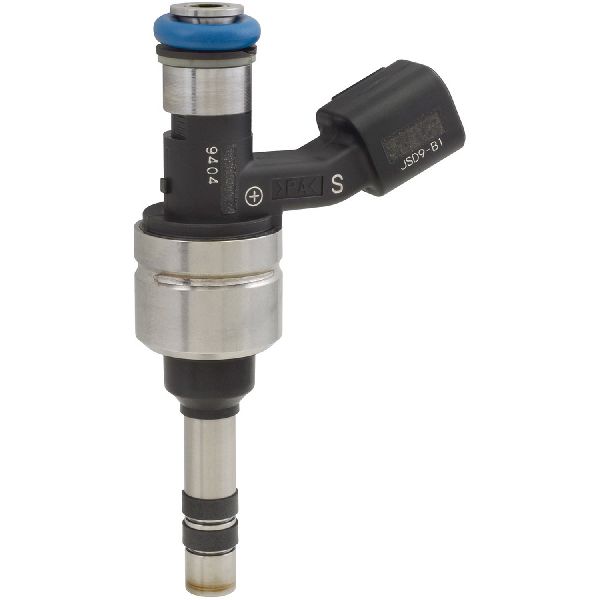
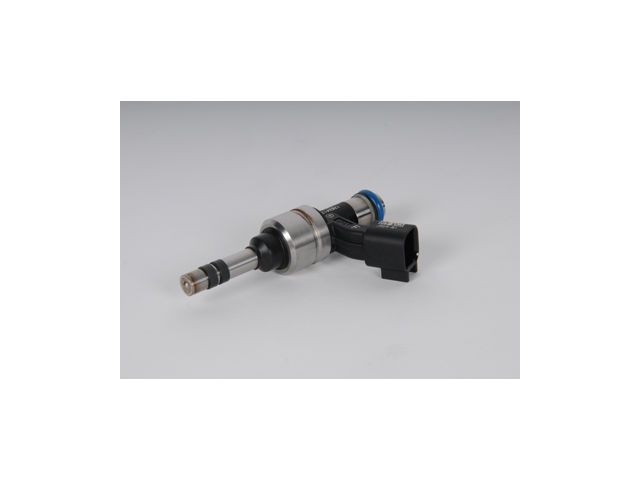
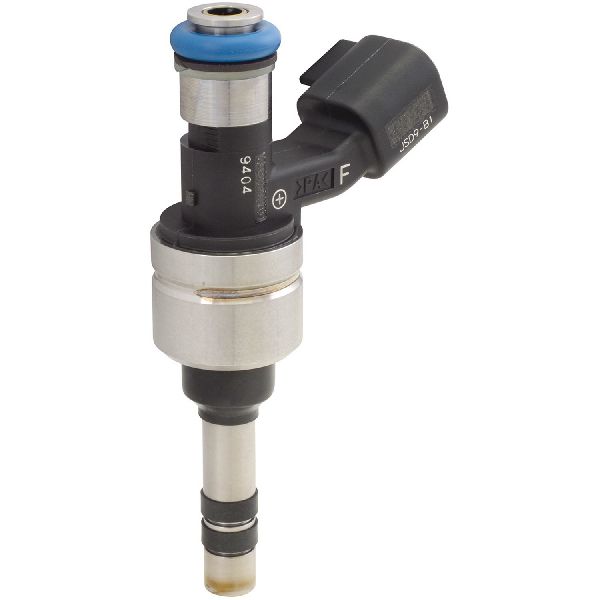
- Fuel Injector
(OEM #12669384)— This is the second most likely cause of failure after a wiring issue. This part number supersedes previous versions 12638530, 12632255, and 12611545.
Trusted brands: ACDelco, Bosch, Delphi
OEM price range: $90-$140
Aftermarket price range: $50-$100 - Fuel Injector Connector Pigtail
(OEM #ACDelco PT2183 / GM 88988963)— If the electrical connector itself is damaged, corroded, or has a broken locking tab, replacing the pigtail is the proper repair. This part provides a new connector and wires to splice into the existing harness.
Trusted brands: ACDelco, Dorman
OEM price range: $25-$45
Aftermarket price range: $15-$25
Related Codes That Often Appear With This One
- P0304 — This code means "Cylinder 4 Misfire Detected." It is a direct consequence of the injector circuit failing, as the cylinder is not receiving the proper amount of fuel to fire correctly.
- P0204 — This is a more general code for "Cylinder 4 Injector Circuit Malfunction." It often appears with the more specific 'Circuit Low' (P0271) or 'Circuit High' codes.
- P2149 — This code refers to 'Fuel Injector Group 'B' (Bank 2) Supply Voltage Circuit'. Since cylinder 4 is in Bank 2, a significant wiring issue could affect the entire bank and trigger this code.
Technical Service Bulletins (TSBs) & Recalls
- Bulletin #PIP4924D (and later revisions like PIP4924E): Advises inspection of the fuel injector wiring harness for rubbing or chafing that can cause various fuel injector circuit codes, including P0271, on a range of GM vehicles including the 2012-2014 Impala.
Platform-Specific Known Issues
- A General Motors Technical Service Bulletin (TSB #PIP4924D) is highly relevant to this code on the 2012-2014 Impala. It explicitly states that injector circuit codes are often caused by the fuel injector wiring harness rubbing through on engine components like the intake plenum or valve covers, and advises technicians to inspect the harness carefully before replacing parts.
Mechanic-Grade Diagnostic Values
- Fuel Injector Coil Resistance (3.6L LFX Engine) — expected: 1.2 - 1.8 Ohms. Failure: A reading outside this range, or an Open Loop (OL) or short (near 0 Ohms) reading, indicates a faulty injector coil.
- Injector Balance Test Pressure Drop (Tech 2 / GDS2) — expected: All injectors should have a similar pressure drop.. Failure: If one injector's pressure drop differs from the average by more than 20 kPa (3 psi), it indicates a flow issue with that injector.
Scan Tool Commands That Help
- GM GDS2 / Tech 2: Fuel Injector Balance Test — Use this bidirectional test when electrical tests (resistance, noid light) are inconclusive. The test individually fires each injector and measures the drop in fuel rail pressure. A cylinder 4 injector that causes a significantly different pressure drop compared to others points to a mechanical or flow issue with the injector itself, rather than a wiring problem.
Wiring & Ground Locations
- ECM Connector X1, Pins 50 & 74 — The Engine Control Module (ECM) is in the left front of the engine compartment. X1 is one of the large connectors plugging into it.. For the 3.6L LFX, the cylinder 4 injector control wires are a twisted pair: Light Blue and Light Blue/White. They terminate at pins 50 and 74 of the X1 connector. Testing for continuity between these pins and the injector connector is the definitive way to confirm a wiring break or short.
- G107 — Located on the upper left front side of the engine block.. This is a primary engine and ECM ground point. A loose or corroded connection here can cause unstable reference voltages for the entire engine management system, potentially leading to false injector circuit codes.
- G109 — Located on the upper left rear side of the 3.6L engine.. This is another key engine ground. Like G107, ensuring it is clean and tight is a crucial step when diagnosing any electrical fault, as a poor ground can cause unpredictable behavior in the injector driver circuits.
Real Owner Repair Stories
- YouTube channel 'Certified Shadetree' (2012 Chevrolet Impala with 3.6L LFX engine) — A severe misfire and a P0276 code (Cylinder 6 Injector Circuit Low, a similar fault) that would only appear when it snowed.
❌ Tried (didn't work) Initially suspected the fuel injector was the problem.
✅ What actually fixed it The problem was a fault in the injector wiring harness for the affected cylinder. This real-world example demonstrates the intermittent nature of wiring faults and reinforces the TSB's advice to check wiring before replacing components, even when symptoms seem weather-related.
OEM Part Supersession History
12638530, 12632255, 12611545→12669384— Standard part evolution for improved reliability, manufacturing process changes, or material updates.
Heads up: These part numbers are specific to the LFX/LLT direct injection engines. They are not interchangeable with injectors from older port-injected 3.6L (LY7) engines or other GM engines, which have different electrical and flow characteristics.
Model Year Variations Within This Range
- 2014: In 2014, Chevrolet sold two different Impalas. The 9th generation was continued as the 'Impala Limited' for fleet sales and is mechanically identical to the 2012-2013 models. The all-new 10th generation Impala was also introduced. Both could have the 3.6L LFX V6, and this guide applies to both versions, but technicians should verify which model they are working on as body and interior parts are completely different.
Helpful Videos
We Have This Part in Stock



The information in this article is provided for general reference and educational purposes only. Vehicle specifications, procedures, and part compatibility can vary by production date, trim level, and region. Always consult your vehicle's factory service manual and verify part numbers before purchasing or performing repairs. Safety-critical components such as airbags, seat belts, and braking systems should be installed by a qualified professional.
- Chevrolet IMPALA:
- 🧭 Diagnostic Flowchart
- 🎬 Helpful Videos
- 🛍️ Shop This Part
- What's Unique About the 2012-2014 Chevrolet IMPALA
- Symptoms You May Notice
- Most Likely Causes
- Rare But Worth Checking
- Diagnosis Steps
- Parts You'll Likely Need
- Related Codes That Often Appear With This One
- Technical Service Bulletins (TSBs) & Recalls
- Platform-Specific Known Issues
- Mechanic-Grade Diagnostic Values
- Scan Tool Commands That Help
- Wiring & Ground Locations
- Real Owner Repair Stories
- OEM Part Supersession History
- Model Year Variations Within This Range
- 🎟️ Get 5% Off