

P0271 on 2009-2010 Saturn Outlook: Cylinder 4 Injector Circuit High Causes and Fixes
On a 2009-2010 Saturn Outlook, code P0271 is most often caused by a chafed or shorted fuel injector wiring harness, a known issue covered by GM TSB #PIP4924D. Before replacing the cylinder 4 fuel injector, a thorough inspection of the wiring harness for damage, particularly where it rubs against the intake, fuel lines, or cylinder head, is the critical first step.
- P0271 on a 2009-2010 Saturn Outlook means there is a high voltage fault in the cylinder 4 fuel injector circuit.
- The most likely cause is a damaged wiring harness, as documented in GM Technical Service Bulletin #PIP4924D. Always inspect the harness before buying parts.
- Other potential causes include a failed fuel injector or a bad electrical connector.
- Driving with this code can lead to a rough running engine, poor fuel economy, and potential damage to the catalytic converter.
- Accessing the injectors requires removing the intake manifold, so if an injector is being replaced, it's wise to replace the intake gaskets as well.
What's Unique About the 2009-2010 Saturn OUTLOOK
The Saturn Outlook shares its platform and 3.6L LLT engine with the GMC Acadia, Buick Enclave, and Chevy Traverse. This entire family of vehicles is known for a specific wiring harness vulnerability. General Motors issued Technical Service Bulletin #PIP4924D, which directly addresses a range of injector circuit codes, including P0271. The bulletin points to the fuel injector wiring harness rubbing against engine components like the intake plenum, valve cover bolts, fuel lines, or the side of the cylinder head under the plenum, causing the wires to short out. This makes a wiring fault a much higher probability on this vehicle than a randomly failed fuel injector.
Diagnostic Flowchart
Tap your situation to follow the diagnostic path that matches what you're seeing on this vehicle.
Symptoms You May Notice
- Check Engine Light is on
- Rough or vibrating idle
- Engine hesitation or stumbling during acceleration
- Noticeable loss of engine power
- Reduced fuel economy
- Engine may misfire, particularly on cylinder 4
- Engine may be difficult to start
- Replacing the fuel injector without first inspecting the wiring harness. The TSB makes it clear that the harness is the most common failure point on this platform.
- Replacing spark plugs or ignition coils. While a misfire is a symptom (P0304), the P0271 code points specifically to an electrical fault in the injector circuit, not the ignition system. A real-world example from a Traverse owner involved replacing the plug, coil, and injector, none of which fixed the issue, before finally finding the chafed harness wire.
Most Likely Causes
- Chafed or Shorted Fuel Injector Wiring Harness 🔴 High Probability → Shop Engine Wiring Harness As documented in GM TSB #PIP4924D, the harness routing on the 3.6L V6 engine makes it susceptible to rubbing. Specific chafe points are against the intake plenum, valve cover bolts, fuel lines, and the side of the cylinder head under the plenum. Engine vibration eventually wears through the wire insulation, causing a short.
How to confirm: Carefully inspect the entire fuel injector wiring harness, especially the sections that run over the top of the engine and near the cylinder heads. The plastic loom may need to be opened for a proper inspection. Look for shiny, flattened, or worn-through spots in the loom and wire insulation. A 'wiggle test' on the harness with the engine running may induce or change the misfire.
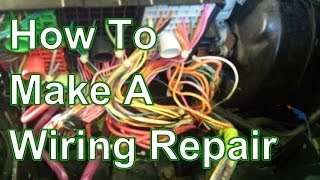
Typical fix: Repair the damaged section of wire. 🎬 See this guide on how to repair damaged wiring harnesses. This involves soldering the broken wire and protecting it with heat-shrink tubing, or splicing in a new connector pigtail if the damage is near the injector. Reroute or add protective conduit to the repaired harness to prevent recurrence.
Est. part cost: $15-$50 - Failed Fuel Injector 🟡 Medium Probability → Shop Fuel Injector The direct injection (DI) injectors on the 3.6L LLT engine operate under high pressure and can fail electrically over time. An internal short in the injector's solenoid coil will cause a 'Circuit High' fault.
How to confirm: Using a multimeter, measure the resistance of the cylinder 4 fuel injector. A healthy high-impedance injector for the 3.6L LLT engine should have a resistance of approximately 11-14 Ohms. A reading of zero, infinity (OL), or one that is significantly different from the other injectors indicates a faulty injector. You can also swap the cylinder 4 injector with an adjacent one (e.g., cylinder 2 or 6) and see if the fault code follows to that cylinder (e.g., P0265 or P0277).
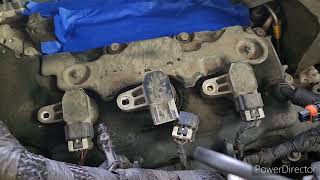
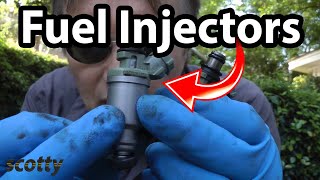
Typical fix: Replace the faulty fuel injector. 🎬 Watch: A step-by-step walkthrough of the fuel injector replacement process. Since accessing the injectors requires removing the upper intake manifold, 🎬 Watch: How to remove the intake manifold and access injectors. many technicians recommend replacing all three injectors on the same bank (Bank 2) at the same time.
Est. part cost: $70-$140 per injector - Loose or Corroded Injector Connector ⚪ Low Probability
How to confirm: Visually inspect the electrical connector at the cylinder 4 fuel injector. Check for bent, backed-out, or corroded pins, and ensure the connector is securely latched and the weather seal is intact.
Typical fix: Clean the connector terminals with electrical contact cleaner and apply dielectric grease. If the connector is damaged, replace it with a new pigtail.
Est. part cost: $15-$30
Rare But Worth Checking
- Faulty Engine Control Module (ECM): → Shop Engine Control Module (ECM) This is the least likely cause. The internal driver circuit for the injector can fail, but this should only be considered after the wiring and injector have been definitively ruled out.
Diagnosis Steps
- Scan the vehicle for fault codes and confirm that P0271 is present. Note any other codes, such as P0304.
- Locate Cylinder #4. On the transverse 3.6L V6 engine, the bank closer to the radiator is Bank 2. The cylinders are numbered 2-4-6 from the passenger side to the driver side. Cylinder 4 is the middle cylinder on the front bank.
- Perform a thorough visual inspection of the fuel injector wiring harness, focusing on the known chafe points mentioned in TSB #PIP4924D (against the intake plenum, valve cover bolts, fuel lines, and the side of the cylinder head).
- Inspect the electrical connector for cylinder 4's fuel injector for damage, corrosion, or loose pins.
- If no wiring damage is found, use a multimeter to test the resistance of the cylinder 4 fuel injector. A good injector for this LLT engine should read between 11-14 Ohms. Compare the reading to an adjacent injector. A reading that is significantly different indicates a faulty injector.
- As a definitive test, swap the cylinder 4 fuel injector with the injector from cylinder 2. Clear the codes and drive the vehicle. If the code changes to P0265 (Cylinder 2 Injector Circuit High), the injector is faulty.
- If the code remains P0271 after swapping the injector, the fault lies in the wiring harness or the ECM. Re-inspect the harness for a less obvious, intermittent short.
- If all wiring and the injector test good, the fault may be within the ECM's injector driver, which requires professional diagnosis.
Parts You'll Likely Need
- Fuel Injector
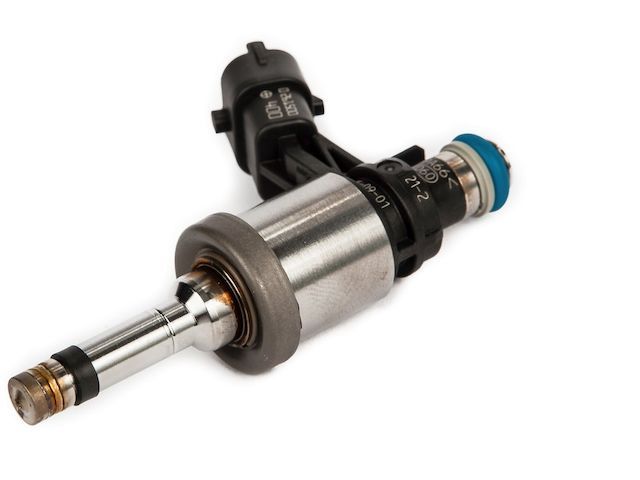
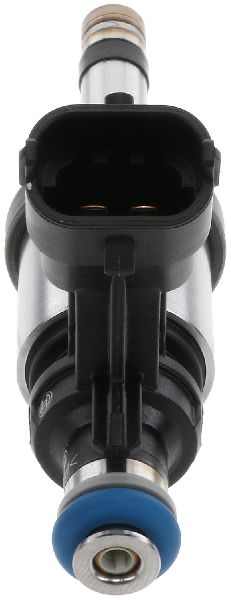
(OEM #12669384)— If the injector's internal coil has shorted, it must be replaced. This is the second most common cause after a wiring issue. Part number 12669384 is the correct OE part for the 3.6L LLT engine.
Trusted brands: ACDelco, Bosch, Standard Motor Products
OEM price range: $90-$140
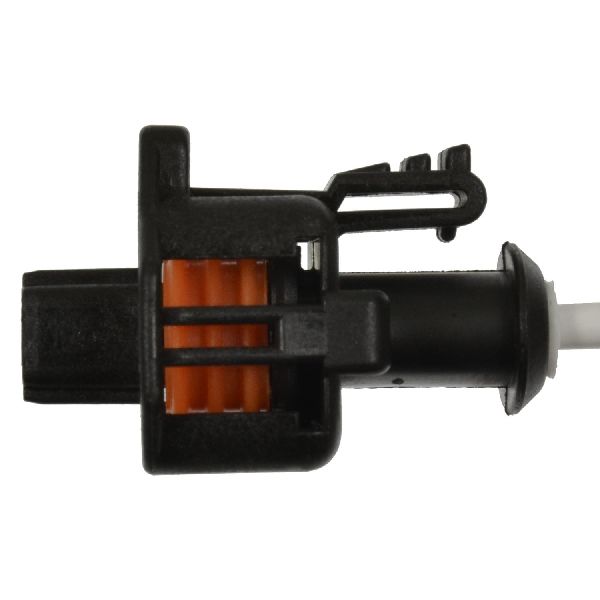
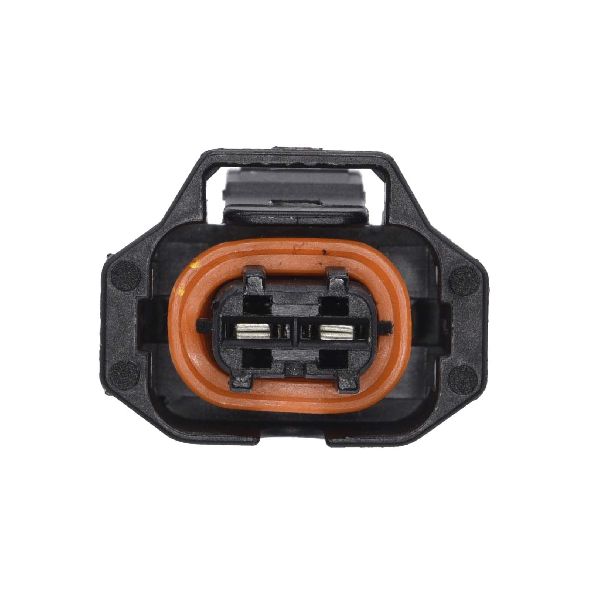
Aftermarket price range: $60-$100 - Fuel Injector Connector Pigtail — If the wiring harness is damaged at the connector, splicing in a new pigtail is the standard repair. No single OEM pigtail number is specified, but they are widely available.
Trusted brands: ACDelco, Dorman, AIP Electronics
OEM price range: $25-$40
Aftermarket price range: $15-$25 - Upper and Lower Intake Manifold Gaskets — These must be replaced anytime the intake manifold is removed to access the fuel injectors. A common aftermarket set is Fel-Pro MS 96916.
Trusted brands: Fel-Pro, Mahle, ACDelco
OEM price range: $50-$80
Aftermarket price range: $30-$60
Related Codes That Often Appear With This One
- P0304 — This code for 'Cylinder 4 Misfire Detected' is a direct result of the fuel injector not functioning correctly due to the P0271 circuit fault.
- P0204 — This is a more generic code for 'Injector Circuit/Open - Cylinder 4' and often appears with P0271, pointing to the same electrical problem.
- P2149, P2152, P2155 — These are codes for injector group circuits (Bank 2). If the wiring harness damage affects a common power or ground wire for a bank of injectors, a group fault code may be set along with the individual cylinder code.
Technical Service Bulletins (TSBs) & Recalls
- PIP4924D: 'Engine Misfire And/Or A P0201 - P0206, P0261, P0262, P0264, P0265, P0267, P0268, P0270, P0271, P0273, P0274, P0276, P0277, P2146, P2149, P2152, P2155, P216A, And Or P216D'. This TSB identifies a chafed fuel injector wiring harness as a primary cause for these codes on 2009-2013 GM vehicles with 3.0L and 3.6L engines.
Platform-Specific Known Issues
- TSB #PIP4924D: This General Motors bulletin is the most critical piece of information for this code on this vehicle. It explicitly states that a misfire with various injector DTCs (including P0271) is likely caused by the fuel injector wiring harness rubbing through. It advises technicians to 'Carefully inspect the fuel injector wiring harness for rub through or internal wire opens. Some common spots are against the intake plenum, at valve cover bolts, against the fuel line and on the side of the head under the plenum.' before replacing any parts.
Mechanic-Grade Diagnostic Values
- Fuel Injector Coil Resistance (3.6L LLT Engine) — expected: 11.8 - 12.6 Ohms. Failure: A reading significantly outside this range, or showing an open (OL) or shorted (near 0) circuit.
- Low-Pressure Fuel System Pressure (at idle) — expected: 380-410 kPa (55-60 psi). Failure: Pressure significantly above or below this range indicates a problem with the in-tank pump or fuel pressure regulator.
- Injector Balance Test Pressure Drop — expected: Pressure drop for each injector should be consistent.. Failure: A pressure drop for one injector that differs from the average by more than 20 kPa (3 psi) indicates a faulty (leaking or clogged) injector.
- Injector Connector Voltage (Key On, Engine Off) — expected: Should be close to battery voltage (~12V) on the power feed wire.. Failure: Low or no voltage indicates a problem in the wiring harness leading to the injector.
Scan Tool Commands That Help
- GM GDS2 / Tech2: Injector Balance Test — Used to identify a leaking or clogged injector by measuring the fuel pressure drop as each injector is commanded to fire. This is a key test recommended by GM TSBs for fuel-related codes.
- Kent-Moore AFIT (Active Fuel Injector Tester): Injector Flow Test / Electrical Measurement — This specialized tool may be required for 2009 models where the injector balance test is not available via the standard GDS2 scan tool. It connects directly to the injector harness to perform advanced electrical and flow tests.
- GM GDS2 / Tech2: Output Controls (e.g., Fuel Injector Kill) — Allows a technician to manually disable individual injectors while the engine is running to confirm which cylinder is misfiring and to observe changes in engine performance.
Wiring & Ground Locations
- ECM Connector X1 (Pins 50 & 74) — The larger of the two main connectors at the Engine Control Module (ECM).. These are the specific termination points for the cylinder 4 injector circuit. Pin 50 is the control wire (typically Light Blue) and Pin 74 is the high-side driver wire (typically Light Blue/White). Testing for continuity or shorts should be performed from these pins to the injector connector.
- G104 — On the rear of the driver's side cylinder head (Bank 2).. This is a primary engine ground for Bank 2, which includes cylinder 4. A loose or corroded connection at G104 can cause erratic electrical behavior and faults for all components on that bank, including the injectors.
- G110 — Right front of the engine, mounted to the cylinder head (Bank 1).. While not the primary ground for cylinder 4, a poor ground anywhere on the engine can introduce electrical noise and voltage issues that may trigger faults. It should be checked as part of a thorough electrical diagnosis.
OEM Part Supersession History
12611545, 12632255, 12638530→12669384— Part has been updated or consolidated by the manufacturer.
Heads up: When replacing a fuel injector on the 3.6L LLT engine, ensure you are using the latest part number (12669384) or a direct aftermarket equivalent to guarantee compatibility and performance.
Model Year Variations Within This Range
- 2009: The 2009 model year introduced the direct-injection 3.6L V6 LLT engine, replacing the previous port-injected LY7. This makes diagnosis fundamentally different from earlier Outlook models.
- 2009: For 2009 models, the Injector Balance Test may not be available in the standard GDS2 scan tool, requiring the use of a specialized Active Fuel Injector Tester (AFIT) tool for proper diagnosis.
- 2009-2010 (LLT Engine): These models use high-impedance direct fuel injectors with a resistance of ~11.8-12.6 Ohms. This is critically different from the low-impedance (~1.2-1.8 Ohms) injectors used in the later 3.6L LFX engine (2012+), and using the wrong specification will lead to misdiagnosis.
Helpful Videos
We Have This Part in Stock


The information in this article is provided for general reference and educational purposes only. Vehicle specifications, procedures, and part compatibility can vary by production date, trim level, and region. Always consult your vehicle's factory service manual and verify part numbers before purchasing or performing repairs. Safety-critical components such as airbags, seat belts, and braking systems should be installed by a qualified professional.
- Saturn OUTLOOK:
- 🧭 Diagnostic Flowchart
- 🎬 Helpful Videos
- 🛍️ Shop This Part
- What's Unique About the 2009-2010 Saturn OUTLOOK
- Symptoms You May Notice
- Most Likely Causes
- Rare But Worth Checking
- Diagnosis Steps
- Parts You'll Likely Need
- Related Codes That Often Appear With This One
- Technical Service Bulletins (TSBs) & Recalls
- Platform-Specific Known Issues
- Mechanic-Grade Diagnostic Values
- Scan Tool Commands That Help
- Wiring & Ground Locations
- OEM Part Supersession History
- Model Year Variations Within This Range
- 🎟️ Get 5% Off