

P0271 on 2009-2010 Saturn VUE: Cylinder 4 Injector Circuit High Causes and Fixes
On a 2009-2010 Saturn VUE with the 3.6L V6 engine, code P0271 is most often caused by a damaged fuel injector wiring harness chafing against the engine. This is a well-documented issue in GM Technical Service Bulletin #PIP4924D. Before replacing the injector, thoroughly inspect the harness for damage, especially where it runs near the intake plenum, valve covers, and fuel lines.
- P0271 means there is a high voltage fault in the cylinder 4 fuel injector circuit.
- The most likely cause on a 2009-2010 Saturn VUE is a chafed wiring harness, as noted in GM TSB #PIP4924D. Always inspect the wiring before replacing parts.
- Cylinder 4 is the middle cylinder on the engine bank closer to the radiator.
- Other potential causes include a failed fuel injector or, more rarely, a faulty ECM.
- Driving with this code can lead to a rough running engine, poor fuel economy, and potential damage to the catalytic converter.
What's Unique About the 2009-2010 Saturn VUE
The 2009-2010 Saturn VUE with the 3.6L V6 (LLT) engine shares its powertrain and known issues with a wide range of GM vehicles, including the Chevrolet Traverse, GMC Acadia, Buick Enclave, and Saturn Outlook. This family of vehicles is notorious for issues with the fuel injector wiring harness routing. GM TSB #PIP4924D specifically points out that the harness can rub against the intake plenum, valve cover bolts, or fuel lines, leading to chafed wires and causing injector circuit faults like P0271. This makes a wiring inspection the most critical first step, as it's a more common failure point than the injector itself on this specific platform.
Diagnostic Flowchart
Tap your situation to follow the diagnostic path that matches what you're seeing on this vehicle.
Symptoms You May Notice
- Check Engine Light is on
- Rough or unstable idle
- Engine stumbles or hesitates during acceleration
- Noticeable loss of engine power
- Reduced fuel economy
- Engine misfire may be felt or heard
- Raw fuel smell from the exhaust
- Replacing the fuel injector without first inspecting the wiring harness. Given the known TSB, the wiring is a more likely culprit and checking it first can save time and money.
Most Likely Causes
- Damaged Fuel Injector Wiring Harness 🔴 High Probability → Shop Engine Wiring Harness As documented in GM Technical Service Bulletin #PIP4924D, the injector harness on this platform is susceptible to rubbing against engine components. Common chafe points are against the intake plenum, valve cover bolts, fuel lines, and the side of the cylinder head under the plenum. Engine movement can cause the harness to rub through, exposing wires that can short to each other or to ground.
How to confirm: Carefully inspect the entire wiring harness leading to the fuel injectors, especially for cylinder 4. On the 3.6L V6, cylinder 4 is the middle cylinder on the front bank (closest to the radiator). Look for signs of rubbing, melting, or exposed copper wires where the harness makes contact with metal brackets or engine parts. Wiggling the harness in suspected areas while monitoring the circuit voltage can help pinpoint the short.
Typical fix: Repair the damaged section of the wire using a quality butt connector and heat shrink tubing. Protect the harness from future damage by re-routing it or covering it with a protective loom. If the connector itself is damaged, replace the connector pigtail.
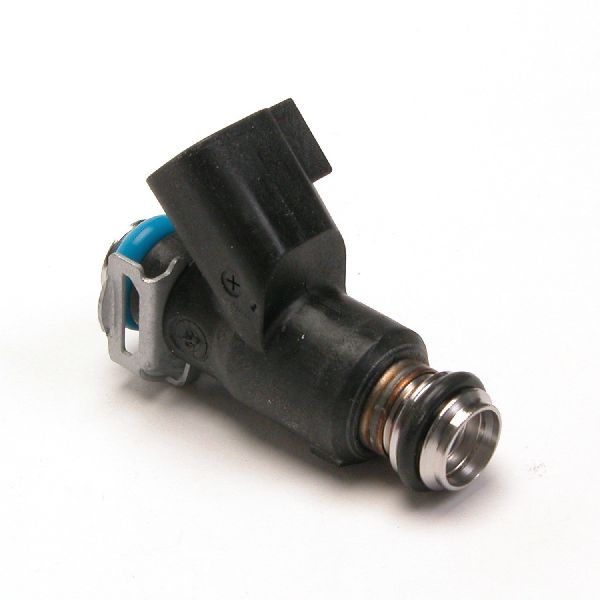
Est. part cost: $15-$50 - Faulty Cylinder 4 Fuel Injector 🟡 Medium Probability → Shop Fuel Injector While less common than the wiring issue, the direct fuel injectors can fail internally, causing a short or open circuit that results in a 'Circuit High' code.
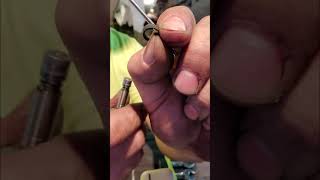
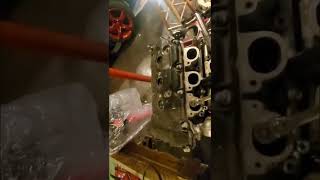
How to confirm: Swap the fuel injector from cylinder 4 with one from another cylinder (e.g., cylinder 2 or 6). Clear the codes and drive the vehicle. If the code changes to P0265 (Cylinder 2) or P0277 (Cylinder 6), the injector is faulty. If P0271 returns, the problem is in the wiring or ECM. Accessing the injectors requires removing the upper intake manifold. 🎬 See how to access and service the direct injection system. Alternatively, measure the injector's resistance. For the 3.6L LLT direct injection engine, it should be very low, around 1.5-2.5 ohms.
Typical fix: Replace the faulty fuel injector. It is often recommended to replace all injectors on a high-mileage engine as a set, especially since the intake manifold must be removed for the job.
Est. part cost: $70-$200 - Faulty Engine Control Module (ECM) ⚪ Low Probability → Shop Engine Control Module (ECM)
How to confirm: This should be the last resort after confirming the wiring and fuel injector are good. A professional shop can perform advanced tests to confirm if the injector driver circuit within the ECM has failed. This involves checking the signal directly at the ECM connector pins.
Typical fix: Replace and reprogram the Engine Control Module. This requires special tools and software.
Est. part cost: $300-$800
Diagnosis Steps
- Scan the vehicle for any other stored trouble codes to get a complete picture of the issue.
- Crucial First Step: Perform a thorough visual inspection of the fuel injector wiring harness, as recommended by TSB #PIP4924D. On the 3.6L V6, cylinder 4 is the middle cylinder on the bank closer to the radiator. Look for any signs of chafing, melting, or corrosion, especially where the harness may contact the intake plenum, valve cover bolts, or fuel lines.
- If the wiring appears damaged, repair the affected wires and secure the harness away from the contact point. Use protective loom for added security. Clear the codes and test drive.
- If the wiring appears intact, use a multimeter to check for voltage at the injector connector. With the key on, one wire should have battery voltage. The other is the control wire from the ECM.
- Use a 'noid light' to test the signal from the ECM at the cylinder 4 injector connector. The light should flash steadily as the engine is cranked, indicating the ECM is trying to fire the injector. If there is no flash or the light stays on constantly, suspect a wiring or ECM issue.
- To test the injector itself, swap the cylinder 4 injector with an adjacent one (like cylinder 2 or 6). This requires removing the upper intake manifold. Clear the codes and see if the fault follows the injector (e.g., P0265 or P0277 appears). If it does, the injector is bad.
- Alternatively, test the injector's resistance. Disconnect the injector and measure the resistance across its two terminals. For the 3.6L LLT direct injection engine, a good injector will have a very low resistance, between 1.5 and 2.5 ohms. A reading far outside this range indicates failure.
- If the P0271 code returns after the swap, the issue lies in the wiring or the ECM's driver circuit. Perform a continuity test on the injector control wire from the ECM connector to the injector connector to rule out an open or short in the harness.
- If the wiring is confirmed to be good from the connector back to the ECM and the injector is good, the ECM is the most likely point of failure.
Parts You'll Likely Need
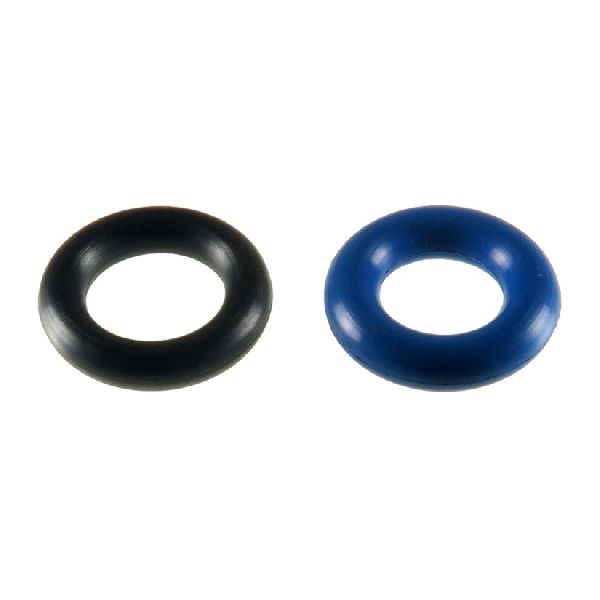
- Fuel Injector
(OEM #12638530 (superseded by 12669384))— If the injector has failed internally with a short, it will cause a 'Circuit High' condition. This is the second most common cause after wiring issues. The 3.6L LLT engine uses this specific part number.
Trusted brands: ACDelco, Bosch, Standard Motor Products
OEM price range: $120-$200
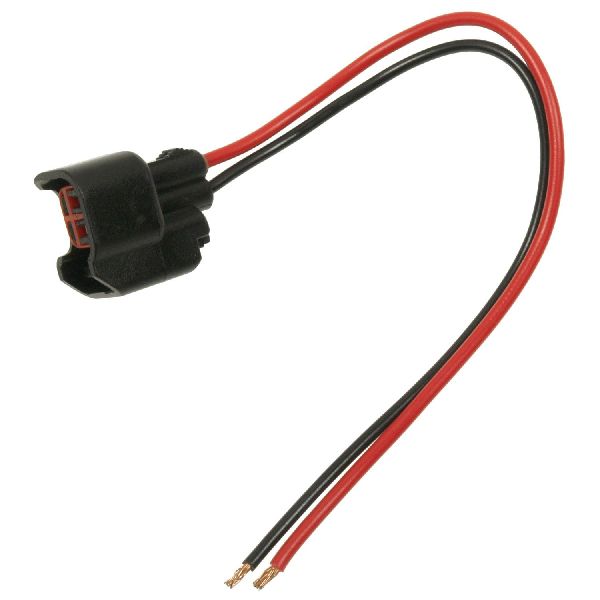
Aftermarket price range: $70-$150 - Fuel Injector Connector Pigtail
(OEM #ACDelco PT2185 (GM 88988620))— If the wiring harness is damaged at the connector, or the connector lock is broken, replacing the pigtail is the standard repair.
Trusted brands: ACDelco, Dorman
OEM price range: $25-$50
Aftermarket price range: $15-$30
Related Codes That Often Appear With This One
- P0304 — P0304 is a 'Cylinder 4 Misfire' code. Since P0271 indicates a problem with the cylinder 4 injector circuit, that cylinder cannot get the correct amount of fuel, leading to a misfire.
- P0204 — P0204 is a general 'Injector Circuit Malfunction - Cylinder 4' code. P0271 is a more specific version, indicating a 'Circuit High' condition, and they may appear together.
- P0300 — P0300 is 'Random/Multiple Cylinder Misfire'. If the wiring harness damage is severe enough to affect multiple injector wires, it can cause misfires on several cylinders simultaneously.
Technical Service Bulletins (TSBs) & Recalls
- PIP4924D: Mentions that a misfire and various injector DTCs (including P0271) can be caused by a fuel injector wiring harness rubbing on engine components and advises inspecting the harness for damage. This TSB applies to a wide range of GM vehicles with 3.0L and 3.6L engines.
Platform-Specific Known Issues
- A known issue documented in Technical Service Bulletin #PIP4924D involves the fuel injector wiring harness rubbing on engine components, leading to various injector circuit codes, including P0271. This makes a wiring inspection a mandatory first step.
- On the 3.6L V6, the front bank of cylinders (2, 4, 6) is easier to access than the rear bank (1, 3, 5). Cylinder 4 is the middle cylinder on the front bank, making it relatively accessible for testing once the engine cover is removed.
Mechanic-Grade Diagnostic Values
- Fuel Injector Coil Resistance (3.6L LLT Direct Injection) — expected: 1.5 - 2.5 Ohms. Failure: A reading significantly outside this range, especially an open circuit (OL) or a dead short (near 0 Ohms), indicates a failed injector.
- Injector Control Circuit Voltage (Key On, Engine Off) — expected: One wire should show battery voltage (approx. 12V), the other is the control circuit from the ECM.. Failure: Voltage significantly different from battery voltage on the supply wire, or voltage present on the control wire when not cranking, can indicate a short or open.
- Injector Pulse Width (Live Data at Idle) — expected: 2 - 4 milliseconds (ms). Failure: A value of 0 ms on cylinder 4 while other cylinders show a normal pulse width indicates the ECM is not commanding the injector, likely due to detecting the circuit fault.
Scan Tool Commands That Help
- GDS2 (GM Tech 2 successor): Injector Balance Test — This bidirectional test commands the ECM to pulse each injector individually while monitoring the drop in fuel rail pressure. A cylinder where the pressure drop is significantly different from the others indicates a flow problem with that injector. This can help confirm a faulty injector after wiring has been ruled out.
- Kent Moore J-39021 / AFIT (Active Fuel Injector Tester): Injector Balance Test — This is a specialized GM tool that connects directly to the injector harness to perform a more precise flow and balance test than the scan tool function. It measures the pressure drop for each injector activation to identify leaking or clogged injectors. This is a professional-level tool used to definitively diagnose injector faults.
Wiring & Ground Locations
- ECM (Engine Control Module) — On the 3.6L V6, the ECM is located on the left front of the engine compartment, sometimes mounted to the valve cover.. The ECM contains the high-voltage drivers that control the direct injectors. Testing for the control signal for injector #4 must be done at the ECM connector to definitively rule out a wiring problem between the ECM and the injector.
- G101 — At the left front of the engine compartment.. This is a primary chassis and engine harness ground. A poor connection here can cause a variety of unpredictable electrical issues, including erratic sensor readings and control module problems. While not a direct cause of a single injector circuit high code, ensuring it's clean and tight is a fundamental step in any electrical diagnosis.
- G107 — At the rear of the engine.. This is an engine block ground. A loose or corroded G107 can affect the ground reference for various engine components, potentially causing electrical noise or voltage issues that could be misinterpreted by the ECM.
- Cylinder 4 Injector Wires at ECM — At the ECM's X1 connector (a 72-pin connector). The wires for the direct injectors are paired (high and low side control). For cylinder 4, the wires are typically labeled 'IC 4 ctrl' and 'Hi volt sply cyl 4'.. To perform a definitive continuity or short-to-ground test on the injector circuit, you must test from these specific pins at the ECM connector to the corresponding pins at the fuel injector connector. This isolates the harness completely.
Real Owner Repair Stories
- acadiaforum.net user (2010 GMC Acadia (sister vehicle with 3.6L LLT)) — Check Engine Light with codes P0271 and P0304.
❌ Tried (didn't work) Initial diagnosis pointed towards a bad fuel injector.
✅ What actually fixed it The owner found the injector wiring harness had chafed through against a metal bracket on the cylinder head. Repairing the two damaged wires and securing the harness away from the bracket resolved both codes. - Go-Parts.com repair database (2010-2014 GMC Terrain (sister vehicle with 3.6L LLT)) — P0271, rough running.
❌ Tried (didn't work) Replacing the fuel injector without checking wiring first.
✅ What actually fixed it The fuel injector wiring harness was found to be rubbing against the metal fuel line for the high-pressure fuel pump. The insulation on one wire wore through, causing a short. Repairing the wire and protecting the harness with a loom fixed the problem.
OEM Part Supersession History
12638530→12669384— This is a common supersession for GM parts due to minor revisions, manufacturing changes, or consolidation of part numbers. No specific reason for the change is publicly documented, but the new part is the correct service replacement.
Heads up: The part 12669384 also replaces older numbers 12611545 and 12632255. It is the correct OEM replacement for the 3.6L LLT engine in the 2009-2010 VUE.
Model Year Variations Within This Range
- 2009-2010: The 2009-2010 Saturn VUE with the V6 option used the 3.6L direct-injected LLT engine. Earlier 2008 V6 models used the port-injected 3.6L LY7 engine, which uses different fuel injectors and has different diagnostic specifications. It is critical to ensure you are diagnosing the LLT engine, as injector resistance values and other specs are not interchangeable.
Helpful Videos
We Have This Part in Stock


The information in this article is provided for general reference and educational purposes only. Vehicle specifications, procedures, and part compatibility can vary by production date, trim level, and region. Always consult your vehicle's factory service manual and verify part numbers before purchasing or performing repairs. Safety-critical components such as airbags, seat belts, and braking systems should be installed by a qualified professional.
- Saturn VUE:
- 🧭 Diagnostic Flowchart
- 🎬 Helpful Videos
- 🛍️ Shop This Part
- What's Unique About the 2009-2010 Saturn VUE
- Symptoms You May Notice
- Most Likely Causes
- Diagnosis Steps
- Parts You'll Likely Need
- Related Codes That Often Appear With This One
- Technical Service Bulletins (TSBs) & Recalls
- Platform-Specific Known Issues
- Mechanic-Grade Diagnostic Values
- Scan Tool Commands That Help
- Wiring & Ground Locations
- Real Owner Repair Stories
- OEM Part Supersession History
- Model Year Variations Within This Range
- 🎟️ Get 5% Off