

P0273 on 2010-2015 Chevrolet Equinox V6: Cylinder 5 Injector Circuit Low Causes and Fixes
On a 2010-2015 Equinox with a V6 engine, code P0273 is most often caused by a damaged fuel injector wiring harness rubbing against the engine. Before replacing the cylinder 5 fuel injector, thoroughly inspect the wiring harness for chafing or breaks, as a harness repair is a common and less expensive fix. The chafing often occurs where the harness passes near the intake plenum, valve cover bolts, or the side of the cylinder head.
- This code only applies to 2010-2015 Equinox models with a V6 engine.
- Always inspect the engine wiring harness for damage before buying any parts. This is the most common cause according to manufacturer service bulletins.
- The specific areas to check for chafing are where the harness runs near the intake plenum, valve cover bolts, and the side of the cylinder head.
- If multiple injector circuit codes appear at once, it is almost certainly a wiring harness problem.
What's Unique About the 2010-2015 Chevrolet EQUINOX
For the second-generation Equinox V6 models, this code is frequently not an injector failure but a wiring issue. General Motors issued Technical Service Bulletins (TSBs) highlighting that the fuel injector wiring harness is prone to rubbing through or chafing where it's routed near the back of the engine. Specific chafe points mentioned in TSB PIP4924D include contact against the intake plenum, valve cover bolts, fuel lines, and the side of the cylinder head under the plenum. This specific vulnerability means a visual inspection of the harness is the most critical first step, often revealing the true cause of the P0273 code and saving the cost of an unnecessary injector replacement.
Diagnostic Flowchart
Tap your situation to follow the diagnostic path that matches what you're seeing on this vehicle.
Symptoms You May Notice
- Check Engine Light is on
- Rough or shaking idle
- Engine misfire, which may feel like a shudder or stumble
- Poor acceleration and loss of power
- Reduced fuel economy
- Engine may hesitate or stall
- Flashing Check Engine Light under load
- Replacing the cylinder 5 fuel injector without first inspecting the wiring harness. Given the known TSBs for this vehicle, the wiring is a more probable culprit than the injector itself.
Most Likely Causes
- Chafed or Damaged Fuel Injector Wiring Harness 🔴 High Probability → Shop Engine Wiring Harness As documented in GM Technical Service Bulletins PIT5424 and PIP4924D, the engine harness routing on these V6 engines makes it susceptible to rubbing against engine components. Common chafe points are against the intake plenum, valve cover bolts, fuel lines, and the side of the cylinder head under the plenum, leading to short circuits.
How to confirm: Visually inspect the entire length of the fuel injector wiring harness, especially between the ECM and the upper rear of the engine. Carefully check the specific areas mentioned in TSB PIP4924D. Look for any signs of rubbing, exposed copper wires, or breaks in the protective loom. The damage may be on the underside of the harness and difficult to see without moving it.
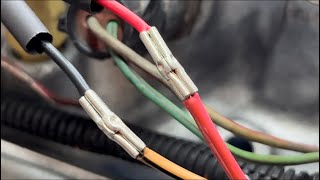
Typical fix: Repair the damaged section of the wire. This involves cutting out the bad section, soldering in a new piece of wire, and protecting the repair with heat-shrink tubing. 🎬 Watch: A step-by-step guide to repairing damaged engine harness wiring. Ensure the repaired harness is re-routed or protected with additional loom to prevent future rubbing.
Est. part cost: $5-$25 - Faulty Cylinder 5 Fuel Injector 🟡 Medium Probability → Shop Fuel Injector These are direct injection engines, and the injectors operate under high pressure and can fail internally over time, leading to an electrical short.
How to confirm: After confirming the wiring is intact, test the injector. Use a multimeter to check its resistance; it should be between 1.5 and 2.5 ohms for a typical GM direct injector, but always verify specs for the specific part. Compare the reading to the other injectors. A reading significantly lower than the others (or near zero) indicates a short. You can also swap the cylinder 5 injector with one from another cylinder (e.g., cylinder 3) and see if the trouble code follows the injector (e.g., changes to P0267).
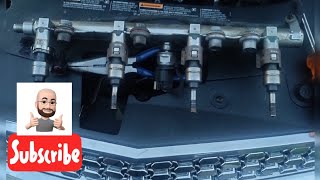
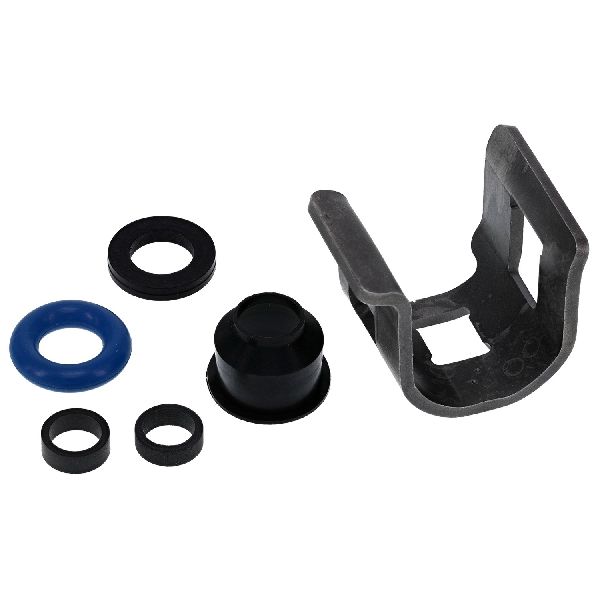
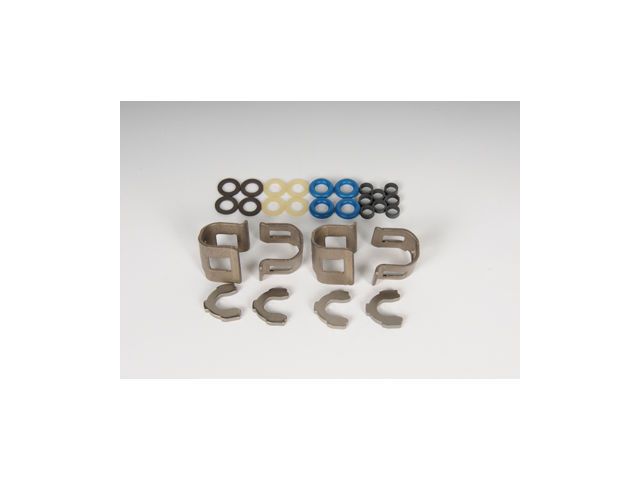
Typical fix: Replace the failed fuel injector. It is often recommended to replace all injectors on that bank (or all six) if they are original and high-mileage, as others may fail soon. New seals are required for installation. 🎬 See this walkthrough on how to replace the fuel injectors.
Est. part cost: $50-$180 - Loose or Corroded Connector ⚪ Low Probability
How to confirm: Unplug the connector at the cylinder 5 fuel injector and the ECM. Inspect the pins and terminals for corrosion, moisture, or being bent/loose. Ensure a snug fit when reconnected. Check for any signs of plastic degradation or broken locking tabs.
Typical fix: Clean the connector terminals with an electrical contact cleaner or replace the connector pigtail if it's damaged. Ensure the weather seal is intact.
Est. part cost: $10-$25
Rare But Worth Checking
- Faulty Engine Control Module (ECM): → Shop Engine Control Module (ECM) This is the least likely cause. The internal driver circuit for the injector can fail, but all other possibilities, especially wiring and the injector itself, must be exhaustively ruled out before condemning the ECM. This would typically require professional diagnosis with advanced tools.
Diagnosis Steps
- Scan the vehicle for all stored DTCs. Note any other injector or misfire codes, especially for other cylinders.
- Carefully perform a visual inspection of the fuel injector wiring harness, focusing on the areas mentioned in TSBs PIT5424 and PIP4924D (between the ECM and the upper rear of the engine, specifically against the intake plenum, valve cover bolts, and cylinder head).
- If no wiring damage is found, disconnect the cylinder 5 injector and check for a clean, tight connection.
- Use a noid light to test for an injector pulse signal from the ECM at the connector. A flashing light indicates the ECM is trying to fire the injector. A solid light or no light points to a wiring short or ECM issue.
- If the signal test is inconclusive, measure the resistance of the fuel injector with a multimeter. Compare it to the resistance of an adjacent injector. A significantly lower reading (near 0 ohms) indicates a shorted injector that needs replacement.
- As a final confirmation, swap the cylinder 5 injector with another cylinder's injector (e.g., cylinder 3). Clear the codes and run the engine. If the 'Circuit Low' code moves to the new cylinder (P0267), the injector is faulty.
- If the code remains on cylinder 5 after the swap, the problem is definitively in the wiring or the ECM.
- If all tests point away from the injector and wiring, the ECM's injector driver may be at fault, which typically requires professional diagnosis.
Parts You'll Likely Need
- Fuel Injector
(OEM #12634126)— If the injector itself has failed (shorted internally), it must be replaced to restore proper circuit function and fueling. This is a direct injection injector.
Trusted brands: ACDelco, Bosch, Delphi, Standard Motor Products
OEM price range: $120-$180
Aftermarket price range: $50-$110 - Fuel Injector Connector Pigtail
(OEM #PT2160 (ACDelco))— If the wiring harness is damaged right at the connector, or the connector itself is corroded or broken, replacing the pigtail is the standard repair.
Trusted brands: ACDelco, Dorman, Standard Motor Products (S-824)
OEM price range: $20-$40
Aftermarket price range: $10-$25
Related Codes That Often Appear With This One
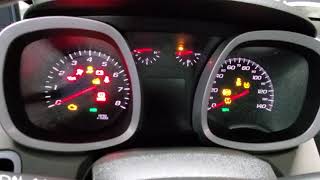
- P0305 — P0305 means 'Cylinder 5 Misfire Detected'. Since a faulty injector circuit (P0273) prevents proper fueling, it directly causes the cylinder to misfire. 🎬 Watch: A simple explanation of the P0305 cylinder 5 misfire.
- P0205 — This code indicates a general malfunction in the cylinder 5 injector circuit. It often appears alongside the more specific 'Circuit Low' P0273 code.
- P0261, P0264, P0267, P0270, P0276 — These are 'Circuit Low' codes for other cylinders. If they appear with P0273, it strongly points to a widespread wiring harness issue affecting multiple injector circuits or a failing ECM, as noted in TSB #PIT5424.
Technical Service Bulletins (TSBs) & Recalls
- PIT5424: Addresses multiple injector circuit codes (P0261, P0264, P0267, P0270, P0273, P0276) and P0641, advising inspection of the engine harness routing.
- PIP4924D: Cites a long list of injector codes, including P0273, and directs technicians to inspect the fuel injector wiring harness for rub-through damage. This TSB applies to a wide range of GM vehicles with the 3.0L and 3.6L engines.
Platform-Specific Known Issues
- TSB #PIT5424: Points to potential Service Engine Soon light with codes including P0273 due to engine harness routing issues between the ECM and the upper rear of the engine.
- TSB #PIP4924D: Warns of potential misfires and various injector codes (including P0273) caused by the fuel injector wiring harness rubbing through on engine components. It specifically calls out contact points against the intake plenum, valve cover bolts, fuel lines, and the side of the head under the plenum.
Mechanic-Grade Diagnostic Values
- Fuel Injector Coil Resistance (Direct Injection) — expected: 1.5 to 2.5 ohms is a general specification for GM GDI injectors. Readings should be consistent across all injectors.. Failure: A reading near zero ohms indicates a shorted injector. A significantly higher or infinite reading indicates an open circuit within the injector.
- Injector Circuit Voltage (Key On, Engine Off) — expected: Approximately 12V (battery voltage) should be present at the power feed wire of the injector connector.. Failure: Voltage below 11.5V suggests excessive resistance or a short in the power supply or ground circuit.
- Injector Circuit Voltage (Engine Running) — expected: A healthy circuit should show battery voltage.. Failure: A consistent low voltage reading on the cylinder 5 injector circuit while the engine is running points to a short to ground in the control circuit or a failing ECM driver.
Scan Tool Commands That Help
- GDS2 / Tech2: Fuel Injector Balance Test — This function is used to diagnose a potentially faulty injector after wiring issues have been ruled out. The tool commands the ECM to pulse each injector for a specific duration while monitoring the drop in fuel rail pressure. A pressure drop for cylinder 5 that is significantly different from the other cylinders indicates a faulty injector. For GDI engines, this test measures the pressure drop from the high-pressure rail.
- GDS2 / Tech2: Injector Test / Cylinder Power Balance — This is a more general misfire diagnostic tool. It allows the technician to disable one cylinder at a time to see the effect on engine RPM. If disabling cylinder 5 causes no change in engine speed or smoothness, it confirms that cylinder is not contributing, which supports the P0273 diagnosis.
Wiring & Ground Locations
- G105 / G106 — These are primary engine-to-chassis ground straps. While locations vary slightly by year and engine, they are typically found on the engine block or cylinder head, connecting to the firewall or frame rail. For example, on related GM platforms, G105 is often on the firewall near the I/P harness pass-through, and G106 is on the engine side of the left front wheel well.. A loose or corroded main engine ground can cause erratic voltage and current fluctuations across all engine sensors and actuators, including the fuel injectors. This can lead to intermittent 'Circuit Low' codes as the ECM's reference voltage becomes unstable.
- ECM Connector X2, Pin 49 (LFX Engine) — This is the main engine control module connector, typically black, located in the engine bay. Pin 49 is the control circuit for the cylinder 5 fuel injector.. When diagnosing a persistent P0273 after checking the harness near the engine, a technician would test for continuity and shorts to ground directly at this pin. This definitively isolates the problem to the wiring harness, the injector, or the ECM itself.
- Injector Harness Connectors X160 / X161 — These are multi-way connectors located at the rear of the intake manifold that serve as an intermediate connection point for the fuel injector harness.. A poor connection, corrosion, or terminal damage at these connectors can cause a P0273 fault. TSBs sometimes reference checking for poor terminal tension at these specific connectors as part of the diagnostic procedure.
OEM Part Supersession History
12642128→12634126— Standard part revision and consolidation by the manufacturer.
Model Year Variations Within This Range
- 2010-2012 (3.0L LF1) vs. 2013-2015 (3.6L LFX): The 3.0L LF1 and 3.6L LFX are both V6 engines but have significant differences. The LFX (2013+) features a lighter composite intake manifold and integrated exhaust manifold/cylinder heads. While they may share the same injector part number (12634126), their ECMs are different (Bosch for LLT/LF1 family vs. Delphi for LFX), which means diagnostic approaches and software functions may vary. The fundamental wiring chafe issue, however, is common to both V6 platforms in this chassis.
Helpful Videos
![How to Fix P0305 Engine Code in 3 Minutes [2 DIY Methods / Only $4.53]](https://img.youtube.com/vi/iu7X5E-N1II/mqdefault.jpg)


We Have This Part in Stock



The information in this article is provided for general reference and educational purposes only. Vehicle specifications, procedures, and part compatibility can vary by production date, trim level, and region. Always consult your vehicle's factory service manual and verify part numbers before purchasing or performing repairs. Safety-critical components such as airbags, seat belts, and braking systems should be installed by a qualified professional.
- Chevrolet EQUINOX:
- 🧭 Diagnostic Flowchart
- 🎬 Helpful Videos
- 🛍️ Shop This Part
- What's Unique About the 2010-2015 Chevrolet EQUINOX
- Symptoms You May Notice
- Most Likely Causes
- Rare But Worth Checking
- Diagnosis Steps
- Parts You'll Likely Need
- Related Codes That Often Appear With This One
- Technical Service Bulletins (TSBs) & Recalls
- Platform-Specific Known Issues
- Mechanic-Grade Diagnostic Values
- Scan Tool Commands That Help
- Wiring & Ground Locations
- OEM Part Supersession History
- Model Year Variations Within This Range
- 🎟️ Get 5% Off