

P0273 on 2009-2013 Chevrolet Malibu: Cylinder 5 Injector Circuit Low Causes and Fixes
On a 2009-2012 Malibu with the 3.6L V6, code P0273 is almost always caused by the fuel injector wiring harness chafing and shorting to ground. Before replacing the #5 injector, inspect the harness thoroughly as per GM Technical Service Bulletin #PIP4924C. A wiring repair is often all that is needed. The chafing commonly occurs where the harness contacts the intake plenum, valve cover bolts, or the side of the cylinder head.
- This code only applies to 2009-2012 Malibu models with the 3.6L V6 engine.
- The most common cause is a chafed fuel injector wiring harness, not a bad injector.
- ALWAYS inspect the wiring harness for damage before spending money on a new fuel injector.
- Cylinder 5 is on the bank of cylinders closer to the firewall (Bank 1) on a transversely mounted 3.6L V6.
- Driving with this code can lead to costly catalytic converter damage, so it should be addressed promptly.
What's Unique About the 2009-2013 Chevrolet MALIBU
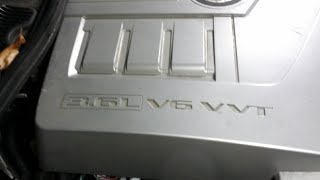
The 7th generation Malibu (2009-2012) equipped with the 3.6L V6 engine (RPO codes LLT and LFX) is particularly susceptible to this code due to a known issue with the fuel injector wiring harness. As documented by General Motors in TSB #PIP4924C, the harness is prone to rubbing against engine components. Specific, common chafe points are against the intake plenum, at valve cover bolts, against a fuel line, and on the side of the cylinder head underneath the plenum. This chafing can wear through the wire's insulation, causing a short circuit and triggering the P0273 code. This issue is so prevalent that the TSB was issued to guide technicians to inspect the wiring before replacing any parts.
Diagnostic Flowchart
Tap your situation to follow the diagnostic path that matches what you're seeing on this vehicle.
Generation note: The 2009-2013 range covers two Malibu generations. The 7th generation (2009-2012) offered the 3.6L V6 engine (LLT) to which this code applies. The 8th generation (starting in 2013) did not offer a V6 engine in North America, primarily using 4-cylinder engines. Therefore, this guide is most relevant for 2009-2012 V6 models. The wiring issue is also noted on the later LFX version of the 3.6L engine found in other GM vehicles.
Symptoms You May Notice
- Check Engine Light is on
- Rough idle or engine shaking/vibrating.
- Engine hesitation or loss of power, especially during acceleration
- Noticeable decrease in fuel economy
- Engine misfire, which may sound like a popping or tapping from the engine bay
- Vehicle may enter 'Restricted Performance' or 'limp mode'.
- Replacing the fuel injector without first inspecting the wiring harness. The chafed harness is a very common cause on this specific engine, and replacing the injector will not fix the problem, leading to repeated codes and frustration.
Most Likely Causes
- Chafed/Damaged Fuel Injector Wiring Harness 🔴 High Probability → Shop Engine Wiring Harness As documented in TSB #PIP4924C and its revisions, the harness routing on the 3.6L V6 engine makes it susceptible to rubbing against the intake plenum, valve cover bolts, or the side of the cylinder head, causing a short to ground. This is the most common cause for this code on this platform.
How to confirm: Visually inspect the entire fuel injector harness, especially the section going to cylinder 5 (the rearmost cylinder on the firewall side). Look for any signs of rubbing, exposed copper wires, or damage where the harness makes contact with metal engine parts. Wiggle the harness with the engine running to see if it affects the idle.
Typical fix: Repair the damaged section of the wire using butt connectors and heat shrink tubing. Protect the harness from future damage using a high-temp wire loom or by re-routing it away from the contact points. In severe cases, a new harness pigtail connector may be needed.
Est. part cost: $10-$50 - Faulty Cylinder 5 Fuel Injector 🟡 Medium Probability → Shop Fuel Injector Injectors can fail electrically over time, developing an internal short circuit. While less common than the wiring issue on this engine, it is still a significant possibility.
How to confirm: After confirming the wiring is good, test the injector. The 3.6L V6 uses direct injection (GDI) injectors which have a low resistance. The expected resistance is between 1.2 and 1.8 ohms. A reading near zero ohms indicates a shorted injector. You can also swap the cylinder 5 injector with an injector from another cylinder (e.g., cylinder 3). If the code changes to P0267 (Cylinder 3 Injector Circuit Low), the injector is faulty.
Typical fix: Replace the faulty fuel injector. It is often recommended to replace the Teflon seal and decoupler anytime an injector is removed.
Est. part cost: $50-$180 - Poor Connection or Damaged Connector ⚪ Low Probability
How to confirm: Inspect the electrical connector at the fuel injector and the ECM for corrosion, bent/broken pins, or a loose fit. Ensure the connector clicks securely into place and that the weather seal is intact.
Typical fix: Clean the connector with electrical contact cleaner. If pins are damaged, the connector pigtail must be replaced.
Est. part cost: $15-$40
Rare But Worth Checking
- Faulty Engine Control Module (ECM): → Shop Engine Control Module (ECM) This is very rare. The ECM's internal driver for the injector circuit can fail. This should only be considered after all other possibilities, especially wiring and the injector itself, have been exhaustively ruled out.
Diagnosis Steps
- Read the trouble codes from the ECM using an OBD-II scanner.
- Confirm the cylinder location. On the transverse (sideways) mounted 3.6L V6 in the Malibu, Bank 1 (odd cylinders 1-3-5) is against the firewall, and Bank 2 (even cylinders 2-4-6) is against the radiator. Cylinder 5 is the cylinder on the driver's side, closest to the firewall.
- Carefully perform a visual inspection of the fuel injector wiring harness, focusing on the path to cylinder 5. Per TSB #PIP4924C, check for rubbing against the intake plenum, valve cover bolts, fuel lines, and the side of the cylinder head.
- If no visible damage is found, disconnect the harness at cylinder 5 and use a 'noid' light to verify if the ECM is sending a pulse signal 🎬 Watch: How to diagnose fuel injector circuit malfunctions. to the injector while the engine is cranked. A flashing light is normal; no light or a solid light indicates a wiring or ECM problem.
- Turn the engine off. Disconnect the injector and measure its internal resistance with a multimeter. For the 3.6L GDI engine, the specification is approximately 1.2 to 1.8 Ohms. An out-of-spec reading (especially near 0 Ohms) indicates a bad injector.
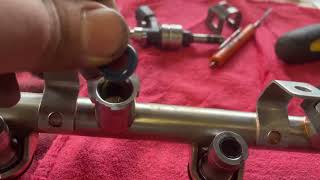
- If the resistance is good, consider swapping the cylinder 5 injector with another one (e.g., cylinder 3). This requires removing the intake manifold. 🎬 See this walkthrough for removing the intake and injectors. Clear the codes and run the engine. If the code returns as P0267 (for cylinder 3), the injector is confirmed to be the problem.
- If the code remains P0273 after swapping the injector, the fault lies in the wiring harness between the ECM and the injector connector. A continuity test from the ECM connector to the injector connector would be the final confirmation.
Parts You'll Likely Need
- Fuel Injector Wiring Harness Pigtail
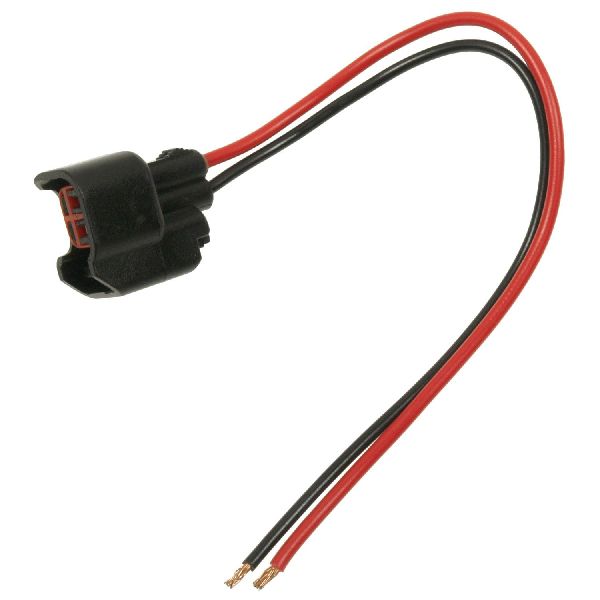
(OEM #88988963 / PT1846)— If the wiring is chafed near the connector, replacing the pigtail is the most reliable repair. This part provides a new connector and a few inches of wire to splice into the main harness.
Trusted brands: ACDelco, Dorman, Standard Motor Products (HP3945)
OEM price range: $30-$50
Aftermarket price range: $15-$30 - Fuel Injector
(OEM #12634126)— If the injector itself has failed (shorted internally), it will need to be replaced. This is the second most likely cause after wiring issues. Note that this is a direct injector (GDI).
Trusted brands: ACDelco (GM Genuine), Bosch (0280156300), Standard Motor Products
OEM price range: $100-$180
Aftermarket price range: $50-$120
Related Codes That Often Appear With This One
- P0305 — P0305 means 'Cylinder 5 Misfire Detected'. The injector circuit fault (P0273) prevents proper fueling, which directly causes a misfire on that cylinder.
- P0205 — This is a more general code for a malfunction in the cylinder 5 injector circuit and often appears with the more specific P0273.
- P0261, P0264, P0267, etc. — If the wiring harness is damaged in multiple spots, you may see 'Circuit Low' codes for several other cylinders simultaneously, as noted in TSB PIP4924C.
Technical Service Bulletins (TSBs) & Recalls
- Bulletin #PIP4924C: Warns of potential misfires and various injector codes (including P0273) caused by the fuel injector wiring harness rubbing through on engine components. It instructs technicians to inspect the harness for rub-through before replacing parts.
- Bulletin #PIP4924D: A superseding bulletin that updates the model list and years affected by the same wiring harness chafing issue, confirming the problem persists across a wide range of GM vehicles with the 3.6L engine.
Platform-Specific Known Issues
- The primary vehicle-specific issue is the high likelihood of the fuel injector wiring harness rubbing through its insulation, as detailed in GM Technical Service Bulletin #PIP4924C and its successors (like PIP4924D). This bulletin specifically calls out misfire and injector circuit codes as symptoms and directs technicians to inspect the harness for rub-through against the intake plenum, valve cover bolts, and cylinder head before replacing parts.
Mechanic-Grade Diagnostic Values
- Fuel Injector Coil Resistance (3.6L LLT/LFX GDI) — expected: 1.2 to 1.8 Ohms. Failure: A reading near 0 Ohms indicates a shorted injector. A reading of infinity (OL) indicates an open circuit. Any reading outside the specified range suggests a faulty injector.
- Injector Circuit Voltage (Key On, Engine Off) — expected: Approximately 12V (Battery Voltage) on the power feed wire at the injector connector.. Failure: Voltage significantly below battery voltage (e.g., under 11.5V) points to high resistance or a short in the power supply circuit.
- Injector Pulse Width (at idle) — expected: 2 - 4 milliseconds (ms). Failure: A value of 0 ms for cylinder 5 while other cylinders show normal pulse width indicates the ECM is not commanding the injector, likely due to detecting the short circuit.
- Injector Circuit Voltage Spike (Oscilloscope) — expected: 60 - 80 Volts. Failure: When the ECM grounds and then un-grounds the injector circuit, the collapsing magnetic field in the injector coil should create a sharp voltage spike. The absence of this 'inductive kick' on an oscilloscope trace for cylinder 5 points to a problem in the control circuit, the injector coil itself, or the ECM driver.
Hidden / Shadow Codes Worth Checking
- P124C: Injector 5 Positive Voltage Control Circuit Shorted to Control Circuit. This is a more specific GM-proprietary code that can sometimes accompany P0273. It indicates the ECM has detected that the high voltage supply and high voltage control circuits for injector 5 are shorted together. (see via This code may be visible on professional-grade scan tools like the GM GDS2/Tech2 or other advanced scanners that can read manufacturer-specific DTCs.)
Scan Tool Commands That Help
- GDS2 / Tech2Win: Fuel Injector Balance Test — This bidirectional command is used after confirming the wiring is intact. The tool commands each injector to fire for a set duration and measures the corresponding drop in fuel rail pressure. If the pressure drop for cylinder 5 is significantly different from the others, it confirms a faulty (clogged or electrically weak) injector.
- GDS2 / Tech2Win: Cylinder Power Balance — This function allows a technician to disable individual fuel injectors one by one while the engine is running. If disabling cylinder 5 causes little or no change in engine RPM, it confirms that cylinder was not contributing power, which is the expected result of a P0273 fault.
- Advanced Scan Tool: Injector Control Circuit Status — When monitoring this parameter, wiggling the wiring harness can help pinpoint an intermittent short. If the status changes from 'OK' to 'Fault' or 'Open' while manipulating the harness, it confirms a wiring issue.
Wiring & Ground Locations
- ECM Connector X1, Pin 49 — The ECM is located on the left (driver's) side of the engine compartment. Pin 49 in the X1 connector is the control circuit for the cylinder 5 fuel injector.. Testing for continuity and shorts to ground directly at this pin allows a technician to definitively isolate the fault between the ECM itself and the entire wiring harness going to the injector.
- G106 / G107 — For the 3.6L V6, G106 is on the right front of the engine, and G107 is at the center rear of the engine. These are primary engine block grounds.. A loose or corroded engine ground can create a voltage potential difference between the engine block and the chassis, causing erratic behavior in sensors and actuators, including the fuel injectors. The ECM relies on these grounds as a stable reference.
- G111 / G113 — On the 3.6L V6, G111 is located on the right rear of the engine, and G113 is on the left rear of the engine.. These grounds are also critical for engine components. The ignition coils for the rear bank (including cylinder 5) ground near here, and electrical noise from a bad ground could potentially affect nearby injector circuits.
- X160 / X161 Connectors — These are multi-pin harness connectors located at the rear of the intake manifold, serving as an intermediate junction for the fuel injector harness.. A poor connection, corrosion, or backed-out pin in these connectors can cause an open or high resistance in the cylinder 5 injector circuit, mimicking a wiring failure further down the line. They are a key point to check for issues before condemning the main harness or ECM.
Real Owner Repair Stories
- Traverse Forum user (2011 Chevrolet Traverse 3.6L LLT (mechanically similar engine and platform)) — Check Engine Light with codes P0273 (Cyl 5 Injector Circuit Low) and P0305 (Cyl 5 Misfire).
❌ Tried (didn't work) The owner first suspected the fuel injector itself.
✅ What actually fixed it Upon inspection, the owner found the wiring harness had chafed through on the back of the cylinder head, near the firewall. The wires for the #5 injector were shorting to ground. The fix was to repair the damaged wires and protect the harness with a new loom. This resolved both codes.
OEM Part Supersession History
12634126→12634491, 12663380— Standard part evolution and supplier changes.
Heads up: The superseding part numbers are generally backwards compatible for the LLT and LFX engines. However, it is always best practice to replace injectors in a complete set (or at least a bank of 3) to ensure matched flow rates.
Model Year Variations Within This Range
- 2009-2012: These model years primarily used the 3.6L LLT engine. The wiring harness chafing issue described in TSB PIP4924C is most well-documented for this period.
- 2012-2013: A transition to the updated 3.6L LFX engine occurred around 2012. While mechanically similar, some components and part numbers may differ slightly. The LFX engine continued to have injector harness chafing issues, as noted in later revisions of the TSB.
Helpful Videos

We Have This Part in Stock


The information in this article is provided for general reference and educational purposes only. Vehicle specifications, procedures, and part compatibility can vary by production date, trim level, and region. Always consult your vehicle's factory service manual and verify part numbers before purchasing or performing repairs. Safety-critical components such as airbags, seat belts, and braking systems should be installed by a qualified professional.
- Chevrolet MALIBU:
- 🧭 Diagnostic Flowchart
- 🎬 Helpful Videos
- 🛍️ Shop This Part
- What's Unique About the 2009-2013 Chevrolet MALIBU
- Symptoms You May Notice
- Most Likely Causes
- Rare But Worth Checking
- Diagnosis Steps
- Parts You'll Likely Need
- Related Codes That Often Appear With This One
- Technical Service Bulletins (TSBs) & Recalls
- Platform-Specific Known Issues
- Mechanic-Grade Diagnostic Values
- Hidden / Shadow Codes Worth Checking
- Scan Tool Commands That Help
- Wiring & Ground Locations
- Real Owner Repair Stories
- OEM Part Supersession History
- Model Year Variations Within This Range
- 🎟️ Get 5% Off