

OBD-II Code P0274: Cylinder 5 Fuel Injector Circuit High
What P0274 means, why it triggers, and how to fix it
- P0274 means the engine computer detects abnormally high voltage in the cylinder 5 fuel injector circuit, instantly disabling the injector.
- A failed internal injector coil causes over 70% of P0274 codes, requiring a $200 to $500 replacement depending on your engine type.
- Driving with a flashing check engine light dumps raw fuel into the exhaust, destroying a $1,500 catalytic converter in under 50 miles.
- Before buying parts, test the injector's resistance with a multimeter; a reading outside the typical 10 to 16 Ohm range confirms the injector is dead.
What Does P0274 Mean?
P0274 means your Powertrain Control Module (PCM) detects a voltage or current in the cylinder 5 fuel injector's electrical circuit that exceeds the normal operational range. This electrical fault prevents the injector from firing, causing a dead miss in cylinder 5.
Technical definition: The SAE/OBD-II definition is "Cylinder 5 Injector Circuit High." The PCM uses a transistor driver to rapidly switch the injector circuit's ground on and off. A "high" code sets when the PCM attempts to ground the circuit (turn the injector on) but continues to see high system voltage. This indicates a short to a power source or an open in the ground path.
Can I Drive With P0274?
Yes, But With Caution. You can drive for short, essential trips (under 50 miles), but we strongly advise against it. The engine runs poorly, and continuing to drive sends unburnt fuel into the exhaust, which rapidly destroys the catalytic converter. This turns a $200-$500 injector repair into an additional $800-$2,500 converter replacement. Stop driving immediately if the Check Engine Light flashes, indicating severe, active catalyst damage.
Common Causes
- Faulty Cylinder 5 Fuel Injector (Very Common) — The internal electrical coil of the fuel injector fails, creating an internal short or high resistance. This accounts for the vast majority of P0274 cases. 🎬 Watch: A complete walkthrough of P0274 diagnosis and repair.
- Wiring Harness or Connector Issue (Common) — Wires leading to the injector are damaged, frayed, or shorted to power. The connector itself is loose, corroded, or contaminated with oil, preventing a solid electrical connection.
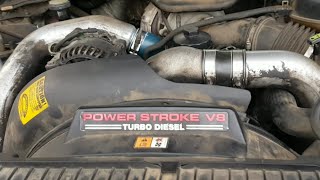
- Fuel Injector Control Module (FICM) Failure (Less Common) — Specific to diesel engines like the Ford 6.0L Powerstroke. 🎬 See how to perform a diesel injector electrical buzz test. The FICM's internal power supply fails, dropping below the required 48V and triggering circuit codes across multiple injectors.
- Poor Ground Connection (Less Common) — The circuit relies on a solid ground back to the PCM. A loose or corroded ground strap causes resistance and voltage anomalies that trigger the code.
- Alternator Overcharging (Rare) — A failing voltage regulator causes system-wide voltage spikes above 15V. The PCM's over-voltage protection registers this on the injector circuit.
- Powertrain Control Module (PCM) Failure (Very Rare) — The internal MOSFET transistor driver controlling cylinder 5 fails. Consider this only after exhaustively eliminating wiring and injector faults.
Symptoms
- Engine Misfire, Rough Idle, or Vibration — The engine runs unevenly and shakes violently because cylinder 5 is dead and not contributing power.
- Check Engine Light (CEL) is on — The PCM stores the fault and illuminates the dashboard light. It flashes if catalyst damage is actively occurring.
- Reduced Engine Power — The vehicle feels sluggish, hesitates during acceleration, and struggles to climb hills on 5 cylinders.
- Smell of Raw Fuel — Unburnt fuel passes into the exhaust, creating a strong gasoline smell from the tailpipe.
- Decreased Fuel Economy — The engine runs inefficiently, dumping wasted fuel and drastically lowering MPG.
- Stalling and Hard Starting — The severe cylinder imbalance causes the engine to stall at low speeds or stumble during startup.
Diagnostic Flowchart
Tap your situation to follow the diagnostic path that matches what you're seeing on this code.
Common Fixes & Costs
- Replace Cylinder 5 Fuel Injector — Parts: $50-$300, Labor: $150-$500, ~1.5 hr book time (Intermediate)
- Replace Fuel Injector Connector Pigtail — Parts: $15-$50, Labor: $75-$200, ~0.8 hr book time (DIY)
- Repair Wiring Harness — Parts: $10-$50, Labor: $150-$600, ~3.0 hr book time (Professional)
- Replace/Repair Fuel Injector Control Module (FICM) — Parts: $200-$800, Labor: $150-$300, ~1.5 hr book time (Professional)
- Replace Powertrain Control Module (PCM) — Parts: $500-$1500, Labor: $150-$300, ~1.5 hr book time (Professional)
Used vs. New Parts: Buying Guide
When a used part is worth it: For a simple port fuel injector on an older, high-mileage vehicle, a used part from a reputable salvage yard is a budget-friendly option.
Donor-vehicle mileage cap: roughly under 80000 miles for the part to have meaningful remaining life.
Donor quality checklist:
- Verify the donor vehicle was not scrapped for engine or emissions failures.
- Match the part number and color bands on the injector body exactly.
- Ask for the donor vehicle's VIN to confirm compatibility.
Decision logic:
- If Vehicle is less than 8 years old or has under 100K miles → Buy new (OEM or quality aftermarket). The reliability outweighs the small savings of a used part.
- If The part is for a GDI or high-pressure diesel system → Buy new or professionally remanufactured parts due to the extreme pressures and tight tolerances.
- If Budget is the primary concern on a vehicle over 150K miles → A tested, used injector is acceptable, but carries a higher risk of premature failure.
Warranty tradeoff: Used parts offer a 30-90 day warranty. Remanufactured injectors offer 1-year warranties. New OEM parts offer 1-year to limited lifetime warranties.
Worst-case if a used part fails: $200-$500 if a used part fails, requiring repeat labor costs plus another replacement part.
What Happens If You Wait — Timeline
- 0-1 week: Check Engine Light illuminates. Engine idles roughly and hesitates during acceleration. Fuel economy drops noticeably. (MPG impact: 5-10%% · Added cost: $0-$50 in wasted fuel)
- 1-4 weeks: Misfire becomes violent. Raw fuel consistently coats the catalytic converter, causing it to overheat. (MPG impact: 10-20%% · Added cost: $100-$200 in wasted fuel)
- 1-2 months: The catalytic converter operates at extreme temperatures, melting its internal substrate. Exhaust smells heavily of sulfur and raw fuel. (MPG impact: 20-30%% · Added cost: $800 - $2,500 (Catalytic converter replacement required))
- 2+ months: The catalytic converter completely clogs, causing a no-start condition. Long-term misfires wash oil from cylinder walls, leading to permanent compression loss. (MPG impact: 30%+% · Added cost: $3,000 - $5,000+ (Includes converter, O2 sensors, and engine rebuild))
Cost of Not Fixing It
- 0-2 weeks: Noticeable drop in fuel economy, rough idle, and poor acceleration. Risk of stalling in traffic. (Added cost: $50-$100 in wasted fuel)
- 2-8 weeks: Raw fuel washes over the catalytic converter, causing it to overheat, melt internally, and fail. (Added cost: $800-$2,500)
- 8+ weeks: Severe misfires cause piston wash-down (fuel washing oil from cylinder walls), leading to scoring, loss of compression, and engine failure. (Added cost: $3,000-$8,000+)
Diagnosis Steps
- Scan for Codes & Review Freeze Frame Data
Use an OBD-II scanner to confirm P0274 and check for related codes (e.g., P0305). Record the freeze frame data to see the exact engine conditions (RPM, load, temperature) when the code set.
Tools: OBD-II Scanner (Beginner) - Visual Inspection of Wiring and Connector
Inspect the wiring harness and connector for the cylinder 5 injector. Look for chafing, melting, corrosion, or pushed-out pins. Pay close attention to areas where the harness rubs against engine brackets.
Tools: Flashlight (Beginner) - The 'Screwdriver Test' (Mechanical Check)
With the engine running, place the tip of a long screwdriver on the cylinder 5 injector body and press your ear to the handle. You must hear a consistent, rhythmic clicking. Silence means the injector is dead or receiving no signal.
Tools: Long Screwdriver or Mechanic's Stethoscope (Beginner) - Test Injector Resistance
Disconnect the cylinder 5 injector. Use a multimeter set to Ohms (Ω) to measure resistance between the two pins on the injector. Compare this to the manufacturer's spec (typically 10-16 Ohms for port injection). A reading of OL (open) or near zero confirms a dead injector.
Tools: Multimeter (Intermediate) - Perform a 'Noid' Light Test (Signal Check)
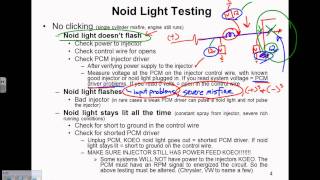
Plug a noid light into the disconnected injector harness. Start the engine. A steady flash indicates the PCM and wiring are delivering the signal properly. No light means a broken wire; a solid light means a short to ground.
Tools: Noid Light Set (Intermediate) - The 'Injector Swap' Test
Swap the cylinder 5 injector with an adjacent cylinder (e.g., cylinder 3). Clear codes and run the engine. If the code moves (e.g., P0268 for cylinder 3), the injector is faulty. If P0274 returns, the wiring or PCM is to blame.
Tools: Basic hand tools (sockets, wrenches) (Intermediate) - Check for Voltage and Ground at the Connector
With the key on (engine off), probe the disconnected harness. One pin must show battery voltage (~12V). The control wire from the PCM must show near 0V. Battery voltage on the control wire confirms a short to power in the harness.
Tools: Multimeter (Advanced) - PRO TIP: Perform a Voltage Drop Test
Connect the black multimeter lead to the battery negative and the red lead to the ground pin on the plugged-in injector connector while the engine runs. A reading above 0.5V proves excessive resistance in the ground path.
Tools: Multimeter with long leads (Advanced) - PRO TIP: Analyze with an Oscilloscope
Use an oscilloscope to view the circuit's voltage pattern. A healthy pattern drops sharply to near-zero when the injector opens, followed by a 60-80V inductive spike when it closes. A 'Circuit High' fault shows a pattern where voltage never drops to zero.
Tools: Oscilloscope (Professional) - PRO TIP: Scan Tool Live Data Analysis
Monitor Bank 2 Fuel Trims. A high positive percentage (+10% or more) indicates the PCM is compensating for a dead injector. Use bi-directional controls to perform an 'Injector Balance Test' to measure pressure drops and pinpoint the failure.
Tools: Advanced Bi-Directional OBD-II Scanner (Professional)
When This Code Triggers (Freeze-Frame Conditions)
- Engine Coolant Temp: 180-200°F (The fault is most often detected when the engine is fully warmed up and operating in closed-loop fuel control.)
- RPM: 1500-2500 (The code sets during steady-state cruising or light acceleration, not typically at idle.)
- Engine Load: 30-60% (Moderate load ensures injector function is stable, making electrical anomalies easier for the PCM to detect.)
- Vehicle Speed: 35-55 mph (Consistent speed prevents rapid voltage fluctuations caused by heavy acceleration or deceleration.)
Related Codes
- P0305 — Cylinder 5 Misfire Detected. P0274 identifies the electrical cause, while P0305 reports the resulting misfire. Fixing the P0274 circuit issue automatically resolves the P0305 code.
- P0205 — Injector Circuit / Open - Cylinder 5. P0274 means the PCM sees excessive voltage (short to power), while P0205 means it sees a break in the circuit. Both require identical wiring and resistance diagnostics.
- P0272 — Cylinder 5 Contribution/Balance. A performance code indicating cylinder 5 lacks power. P0274 is a common cause, but P0272 also triggers from clogged injectors or mechanical engine damage.
- P0300 — Random/Multiple Cylinder Misfire. A severe electrical issue like an overcharging alternator or a major ground fault causes multiple injector circuits to fail, logging P0300 alongside P0274.
Climate & Environmental Factors
- Heat Cycles: Constant engine heat bakes wiring insulation and plastic connectors until they crack. This is highly prevalent on harnesses routed over the engine, causing shorts to power or ground.
- Vibration: Engine vibration forces wiring harnesses to chafe against brackets and intake manifolds, wearing through the insulation. This is the documented root cause of P0274 on GM 3.6L V6 engines.
- Humidity and Moisture: Water intrusion from pressure washing or deep puddles accelerates corrosion inside electrical connectors. Compromised weather-pack seals allow moisture to wick into pins, creating high resistance.
How to Talk to a Mechanic About This Code
Say this: "I have a check engine light with code P0274 for the cylinder 5 injector circuit. I'd like to schedule a diagnostic appointment to determine if the fault is the injector itself, the wiring harness, or the computer. Please test the circuit before recommending a part replacement."
This signals you are an informed customer. It directs the technician to perform proper electrical diagnostics instead of just replacing the injector, saving you money if the issue is a simple broken wire.
Avoid saying:
- 'My check engine light is on, can you just fix it?'
- 'Just replace the cylinder 5 injector.'
- 'Do whatever you think is best.'
Questions to ask before authorizing the repair:
- Did you test the injector's resistance and check for a signal with a noid light?
- Did you inspect the wiring harness for damage, especially in areas mentioned in TSBs for my vehicle?
- What is the warranty on the recommended parts and labor?
- Can you provide me with the old parts when the repair is complete?
Where to Take It: Dealer vs Independent vs Chain
- Dealer:
A safe but expensive choice. Best if a known TSB applies or if the vehicle is under warranty.
Best for: Vehicles under warranty or with an active recall/TSB., Complex electrical issues on newer European vehicles., When you want a guaranteed OEM part and manufacturer warranty.
Downsides: Highest labor rates and parts costs, often 40-50% more than independent shops., May replace an entire wiring harness rather than perform a cost-effective wire repair. (Typical cost: +40% vs. baseline) - Independent Shop:
Best fit for most owners. A competent independent shop handles P0274 diagnostics and repairs effectively and affordably.
Best for: Out-of-warranty vehicles where cost is a major factor., Common vehicles where parts and repair information are widely available., Building a long-term relationship with a trusted mechanic.
Downsides: Quality varies widely; you must vet the shop's reputation and look for ASE certifications., May lack manufacturer-specific diagnostic tools for brand-new models. (Typical cost: +0% vs. baseline) - Chain Shop:
Use with caution. Acceptable for a free code scan, but avoid authorizing complex electrical diagnostics here.
Best for: Getting the code read for free., Simple, non-diagnostic jobs like oil changes.
Downsides: Technician skill is inconsistent., High pressure to meet sales quotas leads to upselling unnecessary parts., Often lack the in-depth electrical diagnostic experience required for a circuit fault. (Typical cost: -10% vs. baseline)
When to Walk Away From the Repair
If the estimated repair cost exceeds 40-50% of your car's private-party value, seriously consider not making the repair.
- Car worth $4000, fix is $800: Fix it. The repair cost is 20% of the vehicle's value, making it a good investment.
- Car worth $4000, fix is $2000: Borderline. At 50% of the car's value, get a second opinion and weigh the car's overall health.
- Car worth $3000, fix is $2200: Walk away. The repair cost is over 70% of the car's value. Sell the car as-is.
What Scan Tool You Need for This Code
Minimum: A scanner that reads and clears codes, displays live sensor data, and shows freeze frame data.
A $20 code reader only tells you P0274 exists. It won't show freeze frame data or live fuel trims essential for confirming the diagnosis.
Budget: BlueDriver Pro (~$99) — Connects to your smartphone via Bluetooth. Reads freeze frame data and graphs live data to monitor the circuit post-repair.
Mid-range: Foxwell NT510 Elite (~$180) — Offers bi-directional control. Allows you to command the injector to fire, quickly determining if the injector is dead or missing a signal.
Professional: Autel MaxiCOM MK808 (~$500) — Provides full bi-directional controls, including an 'Injector Balance Test' to measure the performance of each injector.
Rent vs buy: For a one-time diagnosis, auto parts stores offer free loaner tools. If you do your own maintenance, buying a budget or mid-range scanner is a worthwhile investment.
How to Clear the Code After You Fix It
- Use an OBD-II scan tool to clear the diagnostic trouble code.
- Perform a complete drive cycle to allow the vehicle's readiness monitors to run.
- Verify the code does not return pending.
Drive cycle (~30 minutes): Start the engine cold and idle for 3 minutes. Drive in mixed city/highway conditions, including 10 minutes of steady cruising between 45-60 mph. Perform smooth accelerations and decelerations.
Readiness monitors affected: Comprehensive Component Monitor, Misfire Monitor, Catalyst Monitor, O2 Sensor Monitor
Before emissions retest: drive at least 50 miles to fully set monitors.
Watch out for:
- Clearing the code resets readiness monitors to 'Not Ready', causing an immediate emissions test failure.
- The code returns instantly upon startup if the electrical fault was not properly repaired.
Will This Fail Emissions / State Inspection?
Yes — this code typically fails an OBD-II emissions inspection.
- California: An illuminated Check Engine Light is an automatic failure. All required OBD readiness monitors must be 'Ready' to pass.
- New York: A vehicle fails the NYVIP3 inspection if the CEL is on. For 2001+ vehicles, only one readiness monitor is allowed to be 'Not Ready'.
- Texas: An illuminated CEL results in an automatic failure. After repairs, drive 50-100 miles to reset readiness monitors before re-testing.
Most Commonly Affected Vehicles
- Ford F-250/F-350 Super Duty (2003-2007) — Extremely common on the 6.0L Powerstroke diesel due to FICM power supply failures. Testing FICM voltage is the critical first step.
- GMC / Chevrolet Terrain / Equinox / CTS / SRX / Impala (2010-2017) — 3.0L and 3.6L V6 engines suffer from injector wiring harnesses chafing against engine components (GM TSB #PIP4924D).
- Chevrolet / GMC Silverado / Sierra (2001-2004) — On the 6.6L Duramax LB7, injectors and the wiring harness located under the valve covers become brittle from heat and fail frequently.
- Ford F-150 (2004-2010) — The 5.4L 3V Triton engine is prone to fuel injector electrical failures where the internal coil shorts out.
- Dodge / Ram 2500/3500 (2003-2007) — The 5.9L Cummins main wiring harness running over the valve cover becomes brittle from heat and vibration, cracking and shorting.
- Hyundai Sonata / Tucson / Santa Fe (2002-2008) — V6 models frequently trigger this code due to a poor connection where a terminal backs out of the plastic connector housing.
- Kia Sorento / Optima (2003-2009) — Similar to Hyundai, check for backed-out pins in the connector before replacing the injector.
- Honda Accord / Odyssey (2003-2024) — Wiring issues are rare; P0274 on these models almost exclusively points to a failed fuel injector.
Manufacturer-Specific Notes
- Ford: On 6.0L Powerstroke diesels (2003-2007), P0274 is almost always caused by a failing Fuel Injector Control Module (FICM), not the injector. Always test FICM output voltage before replacing injectors.
- General Motors: On 2010s V6 engines, TSB #PIP4924D highlights a factory routing flaw where the injector wiring harness rubs against the intake plenum or valve cover bolts, shorting the wires.
- Dodge / Ram: On 5.9L Cummins engines, the main wiring harness over the valve cover bakes from engine heat, causing internal wires to crack and short against the engine block.
- Hyundai / Kia: On 2000s V6 models, the female pins inside the injector's plastic connector lose tension or push back into the housing. Replace the connector pigtail before buying a new injector.
Real Owner Stories
2011 Chevy Silverado 1500, P0274 & P0305
Truck developed a rough idle and hesitation. CEL illuminated with codes P0274 and P0305 (Cylinder 5 Misfire).
What they tried:
- Performed a screwdriver test and heard no clicking from the cylinder 5 injector.
- Tested the resistance of the injector and found it was 'open loop' (infinite resistance), confirming internal failure.
Outcome: Replaced the single fuel injector for cylinder 5. The codes were cleared and did not return. The engine ran smoothly.
Lesson: When an injector circuit code pairs with a misfire code, the circuit is the primary suspect. A simple resistance check confirms a bad injector before you waste money on spark plugs or coils.
2010 Cadillac SRX 3.6L V6 with 115K miles
CEL appeared with code P0274. The car had a slightly rough idle.
What they tried:
- Mechanic replaced the cylinder 5 fuel injector, but P0274 returned within a day.
- A second shop referenced GM TSB #PIP4924D regarding harness chafing.
- Inspection revealed a section of the harness under the intake plenum rubbed through on a valve cover bolt.
Outcome: The damaged wire was repaired and rerouted with protective conduit. The owner paid for an unnecessary injector replacement due to the first shop's misdiagnosis.
Lesson: Always check Technical Service Bulletins (TSBs). For GM V6 engines, a chafed wiring harness is a more likely cause for P0274 than a failed injector.
2006 Ford F-250 6.0L Powerstroke Diesel
Truck was hard to start, ran rough, and threw multiple injector codes, including P0274.
What they tried:
- Monitored FICM voltage during startup using a scan tool.
- Found the voltage dropping to 32V, well below the required 48V minimum.
Outcome: Replaced the FICM. After replacement, all injector faults disappeared and the truck ran perfectly.
Lesson: On vehicles with known systemic issues like the 6.0L Powerstroke, a central module failure triggers codes for individual components. Always test the FICM before replacing diesel injectors.
How to Prevent This Code From Triggering
- Protect Wiring Harnesses from Heat and Abrasion (During any engine repair) — Wiring insulation breaks down from heat or rubbing against engine components. Add high-temperature wire loom or heat-reflective tape to vulnerable sections to prevent shorts.
- Periodically Inspect and Clean Engine Grounds (Every 30,000 miles) — The injector circuit relies on a solid ground path. A loose engine-to-chassis ground strap causes unstable voltage, triggering 'Circuit High' codes.
- Test Battery and Alternator Health Annually (Once per year) — A failing alternator voltage regulator causes system-wide voltage spikes. Ensuring the charging system operates correctly (13.8V - 14.5V) prevents the PCM from registering over-voltage faults.
Frequently Asked Questions
Will a fuel injector cleaner fix code P0274?
No. P0274 indicates an electrical circuit problem (high voltage), not a clogged injector. Cleaners cannot fix a broken wire, a bad coil, or a faulty computer module.
How do I find cylinder 5 on my engine?
Cylinder location varies by manufacturer and engine layout. Search online for a 'cylinder layout diagram' or 'firing order' for your specific year, make, and model to locate it accurately.
Is P0274 an urgent fix?
Yes. Driving with a dead cylinder dumps raw fuel into the exhaust, rapidly destroying the catalytic converter. A flashing check engine light means catalyst damage is actively occurring.
I replaced the injector, but the code came back. What now?
The problem lies in the wiring or the PCM. Inspect the wiring harness for chafing or shorts, and test the PCM driver circuit. It is also possible the replacement injector was faulty out of the box.
What is a common misdiagnosis for P0274?
Immediately replacing the fuel injector without testing the circuit is a costly mistake. The code frequently stems from a wiring issue, such as a wire rubbing against the engine block and shorting to power.
Can the code P0274 clear itself?
No. P0274 indicates a hard electrical fault requiring physical repair. The code remains stored and the Check Engine Light stays on until the underlying issue is fixed.
What is the difference between P0274 and P0305?
P0274 is an electrical code identifying high voltage in the cylinder 5 injector circuit. P0305 is a performance code indicating cylinder 5 is misfiring. P0274 directly causes P0305, so fix the electrical issue first.
Key Takeaways
- P0274 means the engine computer detects abnormally high voltage in the cylinder 5 fuel injector circuit, instantly disabling the injector.
- A failed internal injector coil causes over 70% of P0274 codes, requiring a $200 to $500 replacement depending on your engine type.
- Driving with a flashing check engine light dumps raw fuel into the exhaust, destroying a $1,500 catalytic converter in under 50 miles.
- Before buying parts, test the injector's resistance with a multimeter; a reading outside the typical 10 to 16 Ohm range confirms the injector is dead.
Helpful Videos
Shop the Parts Behind P0274
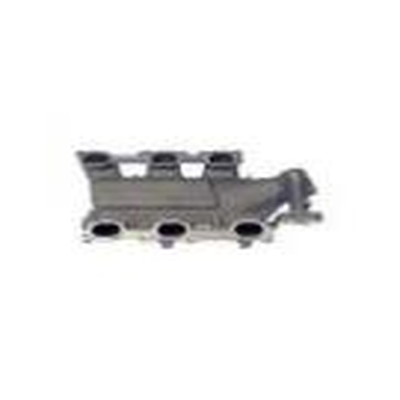
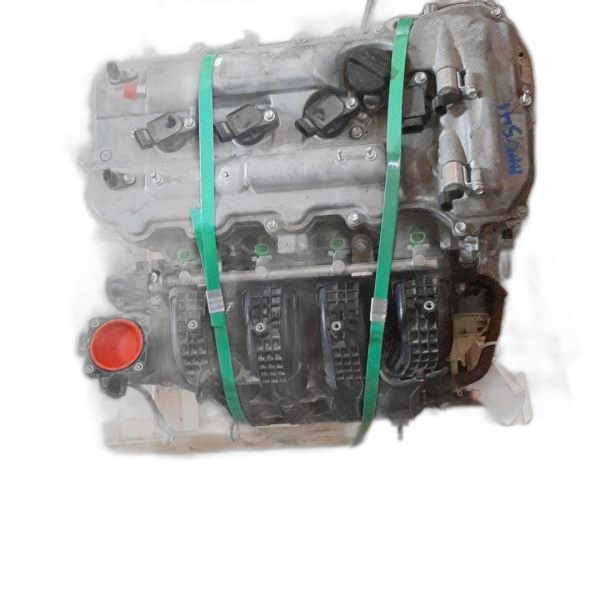
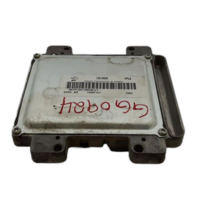
Below are the parts most often responsible for code P0274, ranked by how frequently each one is the actual culprit (per the diagnosis above). Tap any to see what we have for your vehicle.





The information in this article is provided for general reference and educational purposes only. Vehicle specifications, procedures, and part compatibility can vary by production date, trim level, and region. Always consult your vehicle's factory service manual and verify part numbers before purchasing or performing repairs. Safety-critical components such as airbags, seat belts, and braking systems should be installed by a qualified professional.
- 🧭 Diagnostic Flowchart
- 🎬 Helpful Videos
- 🛍️ Shop This Part
- What Does P0274 Mean?
- Can I Drive With P0274?
- Common Causes
- Symptoms
- Common Fixes & Costs
- Used vs. New Parts: Buying Guide
- What Happens If You Wait — Timeline
- Cost of Not Fixing It
- Diagnosis Steps
- When This Code Triggers (Freeze-Frame Conditions)
- Related Codes
- Climate & Environmental Factors
- How to Talk to a Mechanic About This Code
- Where to Take It: Dealer vs Independent vs Chain
- When to Walk Away From the Repair
- What Scan Tool You Need for This Code
- How to Clear the Code After You Fix It
- Will This Fail Emissions / State Inspection?
- Most Commonly Affected Vehicles
- Manufacturer-Specific Notes
- Real Owner Stories
- 2011 Chevy Silverado 1500, P0274 & P0305
- 2010 Cadillac SRX 3.6L V6 with 115K miles
- 2006 Ford F-250 6.0L Powerstroke Diesel
- How to Prevent This Code From Triggering
- Frequently Asked Questions
- Will a fuel injector cleaner fix code P0274?
- How do I find cylinder 5 on my engine?
- Is P0274 an urgent fix?
- I replaced the injector, but the code came back. What now?
- What is a common misdiagnosis for P0274?
- Can the code P0274 clear itself?
- What is the difference between P0274 and P0305?
- Key Takeaways
- 🎟️ Get 5% Off