

P0274 on 2010-2014 Cadillac SRX: Cylinder 5 Injector Circuit High Causes and Fixes
On a 2010-2014 Cadillac SRX, code P0274 is most often caused by a chafed fuel injector wiring harness rubbing against the engine, as documented in a GM Technical Service Bulletin. The fix involves accessing the rear cylinder bank by removing the intake manifold to inspect and repair the damaged wire. If the harness is intact, the fuel injector itself has likely failed.
- For code P0274 on a 2010-2014 SRX, the most likely culprit is a chafed wiring harness, not the injector itself.
- Diagnosis requires removing the upper intake manifold to access cylinder 5 on the rear bank.
- Always inspect the wiring harness for damage before replacing the fuel injector to avoid unnecessary costs.
- Due to the labor involved in removing the intake, this is a difficult DIY repair (4/5 difficulty).
- If you replace the injector, you must also replace the intake manifold gaskets to prevent vacuum leaks.
What's Unique About the 2010-2014 Cadillac SRX
What makes this code particularly noteworthy on the second-generation Cadillac SRX is a known design issue. General Motors issued a Technical Service Bulletin (TSB #PIP4924D) that specifically identifies the fuel injector wiring harness as being prone to rubbing through its insulation. This chafing against engine components like the intake plenum, valve cover bolts, fuel lines, or the side of the cylinder head is the leading cause of P0274 and related injector codes (P0205, P0305) on this platform, making a wiring inspection the mandatory first step in diagnosis.
Diagnostic Flowchart
Tap your situation to follow the diagnostic path that matches what you're seeing on this vehicle.
Symptoms You May Notice
- Check Engine Light is on
- Rough or shaking idle
- Engine misfire, often felt as a stutter or hesitation
- Noticeable loss of power and sluggish acceleration
- Reduced fuel economy
- Strong fuel smell from the exhaust
- Replacing the fuel injector without first thoroughly inspecting the wiring harness. Due to the known TSB, the harness is the more probable failure point, and skipping this inspection can lead to unnecessary expense and repeated repairs.
- Replacing only the fuel injector and re-using the old intake manifold gaskets, which can lead to vacuum leaks and new engine performance problems.
Most Likely Causes
- Chafed Fuel Injector Wiring Harness 🔴 High Probability → Shop Engine Wiring Harness As per GM TSB #PIP4924D, the harness routing for the rear bank of cylinders (including cylinder 5) makes it highly susceptible to rubbing against the intake plenum, valve cover bolts, fuel lines, or the side of the cylinder head, causing a short circuit. This is a well-documented failure point across many GM vehicles using these V6 engines.
How to confirm: After removing the upper intake manifold to access the rear bank of cylinders, visually and physically inspect the entire length of the injector harness for bare, melted, or damaged wires. Pay extremely close attention to any point where the harness makes contact with a metal engine component.
Typical fix: Repair the damaged section of the wire using a solder and heat-shrink connection. Re-route or wrap the harness with protective conduit or high-quality automotive tape (like Tesa tape) to create clearance and prevent future chafing. Ensure the harness is secured away from any sharp edges or vibration points.
Est. part cost: $5-$25 - Failed Cylinder 5 Fuel Injector 🟡 Medium Probability → Shop Fuel Injector Direct injection (GDI) fuel injectors operate under high pressure and can fail internally over time. An internal short in the injector's solenoid winding will cause a 'Circuit High' code.
How to confirm: If the wiring harness is intact, swap the cylinder 5 fuel injector with another injector (e.g., from cylinder 3). If the trouble code moves to the new cylinder (e.g., P0270 for cylinder 3), the injector is faulty. You can also test the injector's resistance with a multimeter; a reading far outside the specified range indicates a failure (approx. 11-14 Ohms for 3.0L LF1, 1.2-1.8 Ohms for 3.6L LFX). A silent injector when listening with a mechanic's stethoscope or long screwdriver is also a sign of failure.
Typical fix: Replace the faulty fuel injector. Since the intake manifold must be removed for access, it is highly recommended to replace the upper and lower intake manifold gaskets at the same time to prevent future vacuum leaks.
Est. part cost: $70-$140
Rare But Worth Checking
- Faulty Engine Control Module (ECM): → Shop Engine Control Module (ECM) This is the least likely cause. The internal driver circuit for the injector can fail, but this should only be considered after definitively ruling out both the wiring harness and the fuel injector itself. A professional diagnosis is required to condemn the ECM.
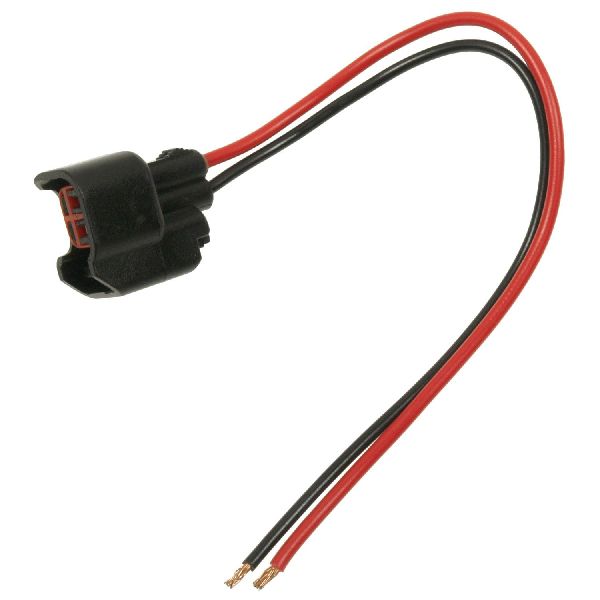
- Corroded or Damaged Injector Connector: Less common than harness chafing, but the plastic connector at the fuel injector can become brittle, or the pins can corrode, leading to a poor connection and high resistance. Inspect the connector for damage or corrosion when you access the injector.
Diagnosis Steps
- Scan the vehicle's computer to confirm P0274 and any other related codes like P0305.
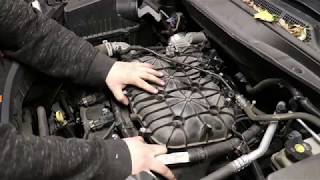
- To access cylinder 5 (rear bank, middle position on the firewall side), the upper intake manifold must be removed. This is a labor-intensive step.
- Once access is gained, perform a detailed visual and tactile inspection of the fuel injector wiring harness. Look for signs of rubbing, melting, or exposed wires, paying close attention to areas where it contacts the intake plenum, fuel lines, and valve cover bolts, as noted in TSB PIP4924D.
- If damage is found, repair the wire, protect the harness with loom or tape, and reassemble. Clear codes and test drive.
- If the harness appears perfect, proceed to test the injector. The most reliable method is to swap the cylinder 5 injector with another accessible injector on the same bank (e.g., cylinder 1 or 3).
- Reassemble the fuel rail and connectors (you do not need to fully reinstall the intake manifold for this test). Clear the codes and run the engine briefly.
- If the code changes to the cylinder where the suspect injector was moved (e.g., P0268 for cylinder 1), the injector is confirmed bad.
- If the code remains P0274, the fault lies in the wiring you may have missed or, rarely, the ECM.
- Before condemning the ECM, use a multimeter to check the injector connector's control wire for a short to voltage with the key on, engine off. You can also check the resistance of the injector itself, which should be within the specified range for your engine (approx. 11-14 Ohms for 3.0L LF1, 1.2-1.8 Ohms for 3.6L LFX).
Parts You'll Likely Need
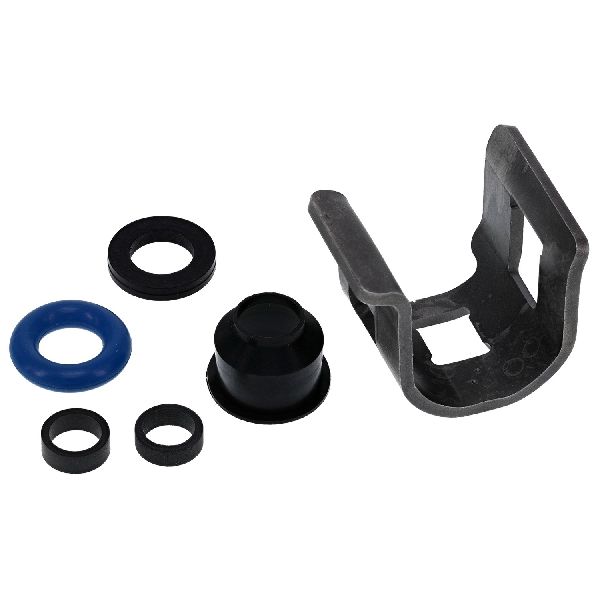
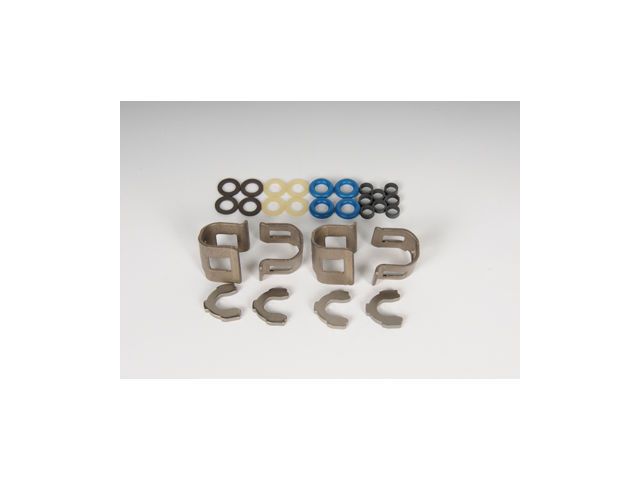
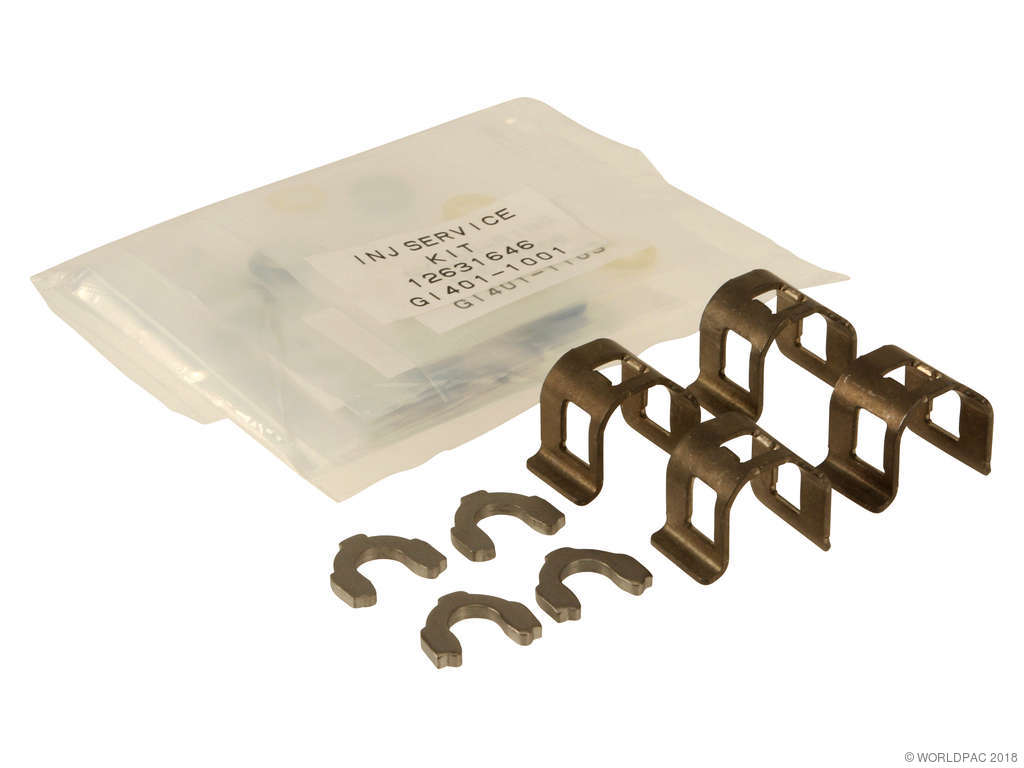
- Fuel Injector
(OEM #12634126 (for 3.0L LF1 & 3.6L LFX))— This is the second most common cause after a wiring issue. If the injector has an internal short, it must be replaced.
Trusted brands: ACDelco, GM Genuine Parts, Bosch
OEM price range: $110-$215
Aftermarket price range: $70-$100 - Upper and Lower Intake Manifold Gaskets
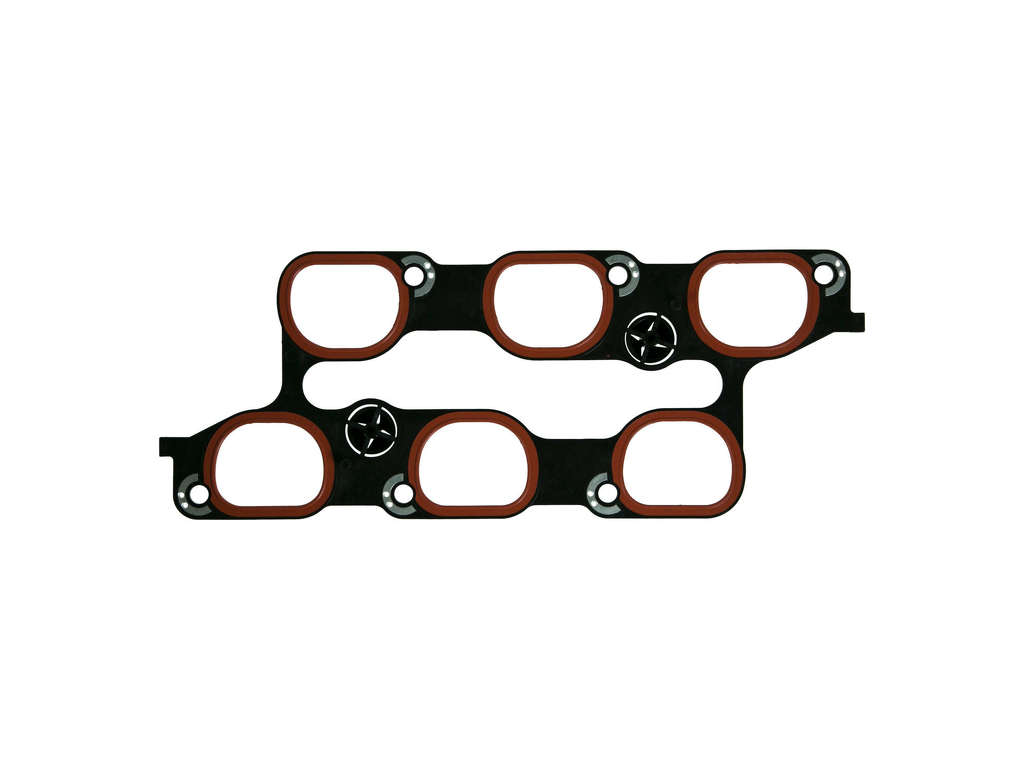
(OEM #Fel-Pro MS 97222 (for 3.6L LFX))— These must be replaced anytime the intake manifold is removed to access the rear injectors, preventing vacuum leaks upon reassembly. Fel-Pro is a highly regarded aftermarket brand for this part.
Trusted brands: ACDelco, Fel-Pro
OEM price range: $40-$60
Aftermarket price range: $25-$45
Related Codes That Often Appear With This One
- P0305 — P0305 means 'Cylinder 5 Misfire Detected'. Since P0274 causes the cylinder 5 injector to malfunction, it will almost always be accompanied by a misfire on that same cylinder.
- P0205 — P0205 indicates a general malfunction in the cylinder 5 injector circuit. P0274 is a more specific version of this, pointing to a 'High' circuit condition, often a short to power.
Technical Service Bulletins (TSBs) & Recalls
- PIP4924D: SES Light And Misfire With Injector Codes. This bulletin notes that codes like P0274 are often due to the fuel injector wiring harness rubbing through against the intake, fuel lines, or cylinder head. It applies to the 2.8L, 3.0L, and 3.6L engines.
Platform-Specific Known Issues
- A GM Technical Service Bulletin (PIP4924D) was issued for a wide range of vehicles including the 2010-2014 SRX, warning technicians that injector codes are frequently caused by the fuel injector wiring harness rubbing through against engine components.
- The location of cylinder 5 is on the rear bank (against the firewall), which requires the removal of the upper intake manifold for any service, significantly increasing labor time and complexity compared to the front cylinders.
Mechanic-Grade Diagnostic Values
- Fuel Injector Resistance (3.6L LFX V6, 2012-2014) — expected: 1.2 - 1.8 Ohms. Failure: A reading outside this range, an open circuit (OL), or a short (near 0 Ohms) indicates an internal injector fault.
- Fuel Injector Resistance (3.0L LF1 V6, 2010-2011) — expected: 11 - 14 Ohms. Failure: A significant deviation from this range indicates a fault in the high-impedance injector's coil.
- High-Pressure Fuel Rail Pressure (at idle) — expected: 1.9-5.0 MPa (276-725 PSI). Failure: Pressure significantly below or above the ECM's desired pressure on a scan tool can indicate other fuel system issues, though not typically the cause of a single injector circuit code.
- Injector Pulse Width (at idle) — expected: 2 - 4 milliseconds (ms). Failure: A value of 0 ms on the affected injector while others are pulsing indicates the ECM has shut down the circuit or there is an open in the wiring.
- Injector Circuit Voltage (Key On, Engine Off) — expected: Approx. 12V (Battery Voltage) on the power supply wire at the injector connector.. Failure: No voltage indicates a problem with the power feed from the fuse block.
Scan Tool Commands That Help
- GM GDS2 / High-End Aftermarket Scanners: Fuel Injector Balance Test — This automated test is used after confirming the wiring is intact. The tool individually disables each injector and measures the corresponding drop in fuel rail pressure. A cylinder that shows little to no pressure drop indicates a clogged or non-functioning injector, confirming a bad part without having to physically swap injectors.
Wiring & Ground Locations
- Engine Control Module (ECM) — On 3.6L LFX models, the ECM is located in the engine bay, underneath the main fuse box assembly.. This is the source of the control signal for the fuel injector. All wiring tests for continuity or shorts will terminate at the ECM's harness connectors (often labeled X1, X2, X3).
- G101 — Typically located at the front of the engine, sometimes on the left cylinder head or frame cross rail.. This is a primary engine ground point and is often a critical ground for the Engine Control Module (ECM). A loose or corroded connection here can cause a variety of erratic electrical issues, including injector driver faults.
- G103 — Located at the left rear of the engine compartment on the cowl, often near the brake booster.. This ground serves multiple modules, including the Body Control Module (BCM) and Instrument Panel Cluster (IPC), and is a grounding point for the Data Link Connector (DLC). A fault here can disrupt communication and cause widespread electrical problems.
Real Owner Repair Stories
- Car Forums user, adapted from a P0203 report (2005 Cadillac SRX 3.6L) — Engine misfire on a single cylinder with a corresponding injector circuit fault code (P0203).
❌ Tried (didn't work) Swapped the suspect fuel injector with one from a known good cylinder; the fault code remained on the original cylinder (#3)., Traced the wiring harness from the ECM to the injector and checked for shorts, finding no visible issues.
✅ What actually fixed it After confirming the injector and wiring were good, a lab scope was used to check the signal at the injector. No ground pulse was found from the ECM on the affected cylinder's circuit, while all other cylinders showed a normal signal. This isolated the failure to the internal injector driver within the ECM, requiring ECM replacement or repair.
OEM Part Supersession History
12642128→12634126— Standard part revision and consolidation by the manufacturer.
Heads up: The new part number (12634126) is the correct replacement for the original. Using old stock of 12642128 is acceptable, but 12634126 is the current production part.
Model Year Variations Within This Range
- 2010-2011: These models primarily use the 3.0L LF1 V6 engine. This engine uses high-impedance fuel injectors with a resistance of approximately 11-14 Ohms and a Bosch family ECM.
- 2012-2014: These models use the 3.6L LFX V6 engine. This engine uses low-impedance fuel injectors with a resistance of approximately 1.2-1.8 Ohms and a Delphi family ECM. Using the wrong injector type will cause immediate running issues and codes.
Helpful Videos
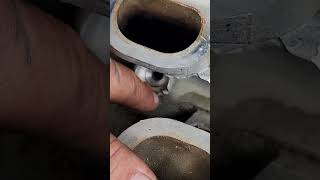
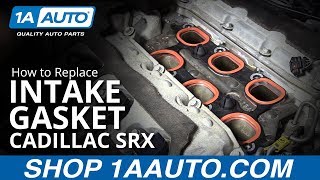
We Have This Part in Stock


The information in this article is provided for general reference and educational purposes only. Vehicle specifications, procedures, and part compatibility can vary by production date, trim level, and region. Always consult your vehicle's factory service manual and verify part numbers before purchasing or performing repairs. Safety-critical components such as airbags, seat belts, and braking systems should be installed by a qualified professional.
- Cadillac SRX:
- 🧭 Diagnostic Flowchart
- 🎬 Helpful Videos
- 🛍️ Shop This Part
- What's Unique About the 2010-2014 Cadillac SRX
- Symptoms You May Notice
- Most Likely Causes
- Rare But Worth Checking
- Diagnosis Steps
- Parts You'll Likely Need
- Related Codes That Often Appear With This One
- Technical Service Bulletins (TSBs) & Recalls
- Platform-Specific Known Issues
- Mechanic-Grade Diagnostic Values
- Scan Tool Commands That Help
- Wiring & Ground Locations
- Real Owner Repair Stories
- OEM Part Supersession History
- Model Year Variations Within This Range
- 🎟️ Get 5% Off