

P0274 on 2009-2012 Chevrolet Malibu 3.6L: Injector Circuit High Causes and Fixes
On a 2009-2012 Malibu with the 3.6L V6 (LLT), code P0274 is most often caused by a chafed or shorted fuel injector wiring harness, a known issue covered by GM Technical Service Bulletin #PIP4924C. Before suspecting the cylinder 5 fuel injector, a thorough inspection of the wiring harness for damage, especially where it contacts the engine or brackets, is the critical first step.
- This code applies ONLY to 2009-2012 Malibus with the 3.6L V6 engine.
- The most likely cause is a chafed wiring harness, as documented in a GM service bulletin. Inspect the wiring thoroughly before buying parts.
- The second most likely cause is a failed fuel injector on cylinder 5.
- Cylinder 5 is located against the firewall on the passenger side of the engine.
- Do not replace the spark plug or ignition coil to fix this code; it is a fuel circuit electrical fault.
What's Unique About the 2009-2012 Chevrolet MALIBU
This code is a known issue on the 3.6L V6 (RPO code LLT) engine used across many GM platforms from 2009-2012, including the Malibu. General Motors issued Technical Service Bulletin (TSB) #PIP4924C, which specifically identifies the fuel injector wiring harness rubbing through and shorting out. The TSB points to common chafe points against the intake plenum, valve cover bolts, and the side of the cylinder head. This makes a wiring inspection the most critical first step, as opposed to immediately suspecting a bad injector.
Diagnostic Flowchart
Tap your situation to follow the diagnostic path that matches what you're seeing on this vehicle.
Generation note: The specified range 2009-2013 in the prompt was slightly incorrect. The P0274 code on a Malibu is applicable to the 2009-2012 models equipped with the 3.6L V6 engine. The 8th generation Malibu, beginning in 2013, did not offer the 3.6L V6 engine. This issue is common to the GM High Feature 3.6L LLT V6 engine family.
Symptoms You May Notice
- Check Engine Light is on
- Rough or unstable idle
- Engine misfiring or stumbling, especially under load
- Noticeable loss of power and poor acceleration
- Reduced fuel economy
- Engine shaking at stops
- Replacing the spark plug or ignition coil for cylinder 5. While these parts can cause a misfire (P0305), they will not cause an injector circuit code like P0274.
Most Likely Causes
- Chafed or Shorted Fuel Injector Wiring Harness 🔴 High Probability → Shop Engine Wiring Harness GM TSB #PIP4924C explicitly calls this out. Engine vibration causes the harness to rub against components like the intake plenum, valve cover bolts, fuel lines, or the side of the cylinder head, eventually exposing a wire and causing a short to power.
How to confirm: Carefully disconnect the harness and peel back the protective loom. Visually inspect the individual wires for any signs of rubbing, exposed copper, or melting. Pay extra attention to the areas mentioned in the TSB: where the harness bends, is secured by clips, or runs close to metal engine parts.
Typical fix: Repair the damaged wire(s) using a solder-and-heat-shrink splice. If the damage is right at the connector, replace the pigtail (ACDelco PT2183 is a common part). Protect the repaired area and other vulnerable spots with high-quality anti-abrasion tape (e.g., Tesa cloth tape) or a new loom to prevent recurrence.
Est. part cost: $10-$50 - Failed Fuel Injector 🟡 Medium Probability → Shop Fuel Injector Injectors can fail electrically over time. An internal short in the injector's solenoid winding will cause a 'Circuit High' fault.
How to confirm: Swap the cylinder 5 fuel injector with an adjacent one (e.g., cylinder 3). Clear the codes and run the engine. If the code changes to P0272 (Cylinder 3 Injector Circuit High), the injector is faulty. Alternatively, check the injector's resistance with a multimeter. A healthy injector for the 3.6L LLT engine should have a resistance of approximately 1.5 to 1.6 ohms. A reading significantly outside this range indicates failure.
Typical fix: Replace the faulty fuel injector. It is often recommended to replace all injectors on the same bank, or all six, if they are high-mileage to ensure balanced performance.
Est. part cost: $60-$120 - Dirty or Clogged Fuel Injector ⚪ Low Probability → Shop Fuel Injector
How to confirm: This is unlikely to cause a 'Circuit High' code, which is electrical. A clog would typically cause a performance or contribution code (like P0275). However, if all electrical checks pass, it's a remote possibility. Diagnosis requires specialized flow testing equipment.
Typical fix: Professional off-car fuel injector cleaning or, more commonly, replacement of the injector.
Est. part cost: $60-$120
Rare But Worth Checking
- Powertrain Control Module (PCM) Failure: → Shop Engine Control Module (ECM) This is very rare. The internal driver circuit for the cylinder 5 injector within the PCM can fail. This should only be considered after the wiring harness and the injector itself have been definitively ruled out as the cause.
- Corroded or Damaged Injector Connector: The plastic connector or its pins can become corroded or damaged, leading to a poor connection and high resistance or a short. A visual inspection of the connector pins for green corrosion or physical damage is necessary.
Diagnosis Steps
- Verify the Check Engine Light is on and scan for codes. Confirm P0274 is present, and note any other codes like P0305.
- Identify cylinder 5. On the transverse 3.6L V6, the cylinders against the firewall are Bank 1 (odd numbers: 1-3-5). Cylinder 5 is the passenger-side cylinder on the firewall-side bank.
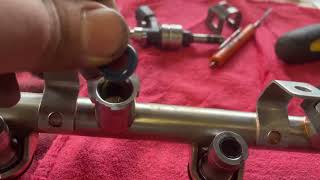
- Perform a thorough visual inspection of the fuel injector wiring harness, focusing on the areas outlined in TSB PIP4924C: against the intake plenum, at valve cover bolts, against the fuel line, and on the side of the head under the plenum. 🎬 See this walkthrough for accessing injectors on the 3.6L engine. Look for chafing, melting, or exposed wires.
- If harness damage is found, repair the wiring and clear the codes. Protect the repair with abrasion-resistant tape. Test drive to see if the code returns.
- If no harness damage is visible, disconnect the cylinder 5 injector and inspect the connector pins for corrosion or damage.
- Test the injector. The easiest field test is to swap the cylinder 5 fuel injector with the cylinder 3 injector (middle cylinder on the same bank). Clear codes and start the engine. If the code changes to P0272 (Cylinder 3), the injector you moved is faulty and must be replaced.
- Alternatively, test the injector's resistance with a multimeter. It should be between 1.5 and 1.6 ohms. If it's out of spec, replace it.
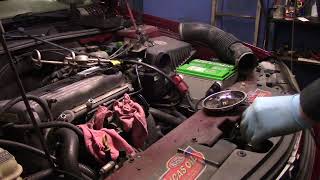
- If the code remains P0274 after the swap, the problem is in the wiring or the PCM. Use a noid light on the cylinder 5 connector to verify the PCM is sending a pulse signal. 🎬 Watch: How to diagnose and solve injector circuit malfunctions. A steady light or no light indicates a wiring or PCM problem.
- If a noid light flashes correctly, re-inspect the wiring for a more hidden intermittent short. If all wiring is confirmed to be good, a faulty PCM becomes the primary suspect.
Parts You'll Likely Need
- Fuel Injector Wiring Harness Pigtail
(OEM #ACDelco PT2183 (GM 88988963))— If the wiring is damaged at the connector, a new pigtail is the standard repair. This part provides a new connector and a length of wire to splice into the main harness.
Trusted brands: ACDelco, Dorman
OEM price range: $35-$50
Aftermarket price range: $15-$30 - Fuel Injector
(OEM #12669384 (supersedes 12638530, 12632255, 12611545))— If the injector itself has an internal short, it must be replaced. This is the second most common cause after wiring issues. Part number 12669384 is the current revision.
Trusted brands: ACDelco, Bosch, Standard Motor Products
OEM price range: $90-$150
Aftermarket price range: $60-$100 - Anti-Abrasive Wiring Harness Tape — Essential for protecting the repaired wiring harness from future chafing, addressing the root cause of the problem.
Trusted brands: Tesa, 3M
OEM price range: $10-$20
Aftermarket price range: $5-$15
Related Codes That Often Appear With This One
- P0305 — P0305 means 'Cylinder 5 Misfire Detected'. Since the P0274 fault prevents the injector from firing correctly, a misfire on that cylinder is a direct and common consequence.
- P0205 — This is a more generic 'Injector Circuit/Open - Cylinder 5' code. It can appear alongside P0274 as the ECM tries to diagnose the electrical problem.
- P0273 — This code is for 'Cylinder 5 Injector Circuit Low'. It's possible for both high and low circuit codes to be stored intermittently if the wiring is shorting to both ground and another power source.
Technical Service Bulletins (TSBs) & Recalls
- PIP4924C: Addresses multiple diagnostic trouble codes (including P0274) related to the fuel injector circuits on 2.8L, 3.0L, and 3.6L engines. It cites the cause as the wiring harness rubbing through and advises inspection at several common chafe points.
Platform-Specific Known Issues
- TSB #PIP4924C documents that the fuel injector wiring harness is prone to rubbing through and shorting out, which is a primary cause for a range of injector circuit codes, including P0274. Specific chafe points to inspect are against the intake plenum, valve cover bolts, and fuel lines.
Mechanic-Grade Diagnostic Values
- Direct Injection Fuel Injector Resistance — expected: 1.5 - 1.6 ohms. Failure: A reading significantly outside this range, or an open/short, indicates a faulty injector coil.
- Injector Circuit Voltage (Initial Pulse) — expected: ~65 Volts. Failure: Absence of this high-voltage opening pulse indicates a problem with the ECM's internal step-up converter.
- Injector Circuit Voltage (Hold Pulse) — expected: Pulse-Width Modulated (PWM) 12V. Failure: An incorrect or missing 12V PWM signal after the initial opening pulse points to a fault in the ECM driver circuit.
Scan Tool Commands That Help
- GDS2 (GM Dealer Software): Fuel Injector Balance Test — This is a primary diagnostic function used to isolate a faulty injector when electrical tests are inconclusive. The tool commands each injector to fire and measures the corresponding drop in fuel rail pressure, allowing comparison between cylinders.
- GDS2 / Tech2: Cylinder Power Balance — This test deactivates one cylinder at a time to measure the RPM drop. A cylinder with a smaller RPM drop indicates it was not contributing as much as the others, which can help pinpoint the location of a misfire related to the P0274 code.
Wiring & Ground Locations
- G106 — On the 3.6L engine, this ground is located on the right front of the engine.. A poor engine ground can cause a variety of electrical issues and unpredictable voltage readings across multiple sensors and actuators, including the fuel injectors. Verifying this ground is clean and tight is a crucial step in diagnosing any electrical fault.
- Engine Control Module (ECM) — On the 2009-2012 Malibu, the ECM (an E39 type) is located on the left front of the engine compartment.. This is the source of the injector driver signals. The harness chafing issue (TSB PIP4924C) often occurs between the ECM and the engine, making it important to know the location of both ends of the harness.
- J130 — A splice or connector within the fuel injector harness, located 4 cm from the breakout to fuel injector 2.. Wiring diagrams identify this as a junction point within the harness. While not specific to cylinder 5, damage or corrosion at such a splice point can affect multiple injector circuits and is a potential area to inspect for faults.
Real Owner Repair Stories
- Acadia Forum user (2011 GMC Acadia 3.6L LLT, ~100,000 miles) — Check engine light with codes P0274 (Cylinder 5 Injector Circuit High) and P0305 (Cylinder 5 Misfire). Rough idle and engine stumbling.
❌ Tried (didn't work) Replaced spark plug and ignition coil on cylinder 5., Swapped fuel injectors between cylinders 3 and 5; the code did not move and remained P0274.
✅ What actually fixed it The problem was a broken wire in the fuel injector wiring harness. The wire was broken inside the insulation near the connector for cylinder 5, so there was no visible external chafing. The break was found by performing a continuity test (wiggle test) on the harness while monitoring the circuit.
Model Year Variations Within This Range
- 2009-2012: The 3.6L V6 in this Malibu is the LLT engine. In 2013, the Malibu lineup changed and the V6 option was replaced by other powerplants. The LLT engine is known for timing chain stretch and carbon buildup issues, which can cause other codes but are not direct causes of P0274. The successor engine, the LFX, had design improvements to address some of these issues.
Helpful Videos

We Have This Part in Stock



The information in this article is provided for general reference and educational purposes only. Vehicle specifications, procedures, and part compatibility can vary by production date, trim level, and region. Always consult your vehicle's factory service manual and verify part numbers before purchasing or performing repairs. Safety-critical components such as airbags, seat belts, and braking systems should be installed by a qualified professional.
- Chevrolet MALIBU:
- 🧭 Diagnostic Flowchart
- 🎬 Helpful Videos
- 🛍️ Shop This Part
- What's Unique About the 2009-2012 Chevrolet MALIBU
- Symptoms You May Notice
- Most Likely Causes
- Rare But Worth Checking
- Diagnosis Steps
- Parts You'll Likely Need
- Related Codes That Often Appear With This One
- Technical Service Bulletins (TSBs) & Recalls
- Platform-Specific Known Issues
- Mechanic-Grade Diagnostic Values
- Scan Tool Commands That Help
- Wiring & Ground Locations
- Real Owner Repair Stories
- Model Year Variations Within This Range
- 🎟️ Get 5% Off