

P0274 on 2009-2014 Chevrolet Traverse: Cylinder 5 Contribution Fault Causes and Fixes
On a 2009-2014 Traverse, code P0274 is most often caused by a chafed fuel injector wiring harness, as noted in a GM technical bulletin, or a faulty fuel injector for cylinder 5. Cylinder 5 is on the front bank (Bank 1), closer to the radiator. Inspecting the harness for damage near the intake plenum and EVAP solenoid bracket is the critical first step before replacing parts.
- Always inspect the fuel injector wiring harness first for P0274 on this Traverse. This is a known issue documented by GM, with specific rub points near the intake and EVAP bracket.
- A simple and effective diagnostic step is to swap the cylinder 5 fuel injector with one from another cylinder (like #3) to see if the trouble code follows it.
- Cylinder 5 is on the front bank of the engine (closer to the radiator), making access for inspection and repair easier than the rear bank.
- This code indicates a fuel delivery or electrical circuit problem, not an ignition problem. Don't waste money on spark plugs or coils until the fuel system is ruled out.
What's Unique About the 2009-2014 Chevrolet TRAVERSE
The key issue for the Traverse and its platform mates (Acadia, Enclave, Outlook) with the 3.6L V6 engine is a known problem with the fuel injector wiring harness. A General Motors Technical Service Bulletin (TSB #PIP4924D) specifically calls out that the harness is prone to rubbing against the intake plenum, EVAP purge solenoid bracket, or fuel lines, leading to chafed wires and causing various injector codes, including P0274. This makes a thorough harness inspection a critical first step, potentially saving you from buying an injector you don't need.
Diagnostic Flowchart
Tap your situation to follow the diagnostic path that matches what you're seeing on this vehicle.
Generation note: The 2009-2014 model years all fall within the first generation of the Chevrolet Traverse (2009-2017). However, there was an engine update within this period. 2009-2011 models have the 3.6L LLT engine, while 2012-2014 models have the updated 3.6L LFX. While the P0274 code applies to both, part numbers for components like fuel injectors differ. Cylinder 5 is part of Bank 1, located on the front side of the engine bay (closer to the radiator), making it relatively easier to access than the rear bank.
Symptoms You May Notice
- Check Engine Light (SES light) is on
- Rough or shaking idle
- Engine misfire, which may be felt as a shudder or hesitation, especially under load.
- Reduced engine power and poor acceleration
- Potential decrease in fuel economy
- Strong fuel smell from the exhaust if the injector is stuck open
- Replacing the spark plug or ignition coil for cylinder 5. While these can cause a misfire (P0305), the P0274 code is specific to a fuel injector contribution/balance issue, which is a fuel delivery or electrical circuit problem, not an ignition problem.
Most Likely Causes
- Chafed Fuel Injector Wiring Harness 🔴 High Probability → Shop Engine Wiring Harness As documented in GM TSB #PIP4924D, the harness routing can cause it to rub against sharp edges. Specific rub points mentioned are the corner of the intake plenum, the EVAP purge solenoid bracket, and high-pressure fuel lines. This can expose wires, leading to shorts or open circuits.
How to confirm: Visually inspect the entire fuel injector harness, especially the plastic conduit. Look for worn-through spots. Pay close attention to the area where the harness for Bank 1 (front bank) passes by the EVAP solenoid and wraps around the intake. You may need to remove the engine cover and gently move the harness to see the damage.
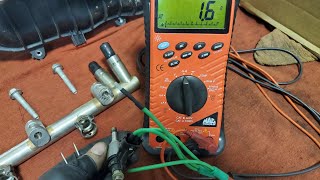
Typical fix: Repair the damaged wire(s) using solder and heat shrink tubing for a durable, moisture-proof seal. After repair, wrap the area in anti-abrasion tape (Tesa tape) and secure the harness away from the contact point using zip ties to prevent recurrence. In severe cases, a new harness pigtail may be needed. 🎬 See a real-world diagnosis of an injector circuit short.
Est. part cost: $5-$50 - Faulty Fuel Injector (Cylinder 5) 🟡 Medium Probability → Shop Fuel Injector The direct injection fuel injectors on these engines operate under very high pressure and can fail electrically (internal short/open) or mechanically (clogging, sticking). Carbon buildup on the injector tip can also disrupt the spray pattern.
How to confirm: Swap the fuel injector from cylinder #5 with an injector from another cylinder on the same bank (e.g., cylinder #3). Clear the codes and drive the vehicle. If the code changes to P0271 (Cylinder 3 Contribution/Balance), the injector is faulty. You can also test the injector's resistance with a multimeter; a healthy LLT (2009-2011) injector should read 11-14 Ohms, while a healthy LFX (2012-2014) injector should read 1.2-1.8 Ohms.
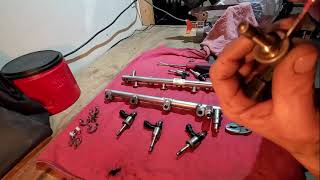
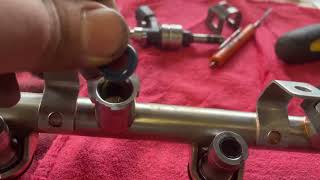
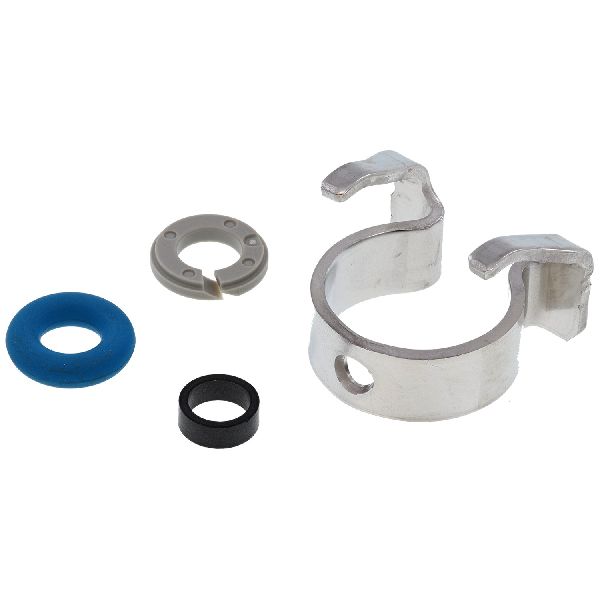
Typical fix: Replace the faulty fuel injector. It is critical to replace the Teflon seal and any associated O-rings at the same time to prevent high-pressure fuel leaks. It's often recommended to replace all injectors on the same bank if they are high mileage.
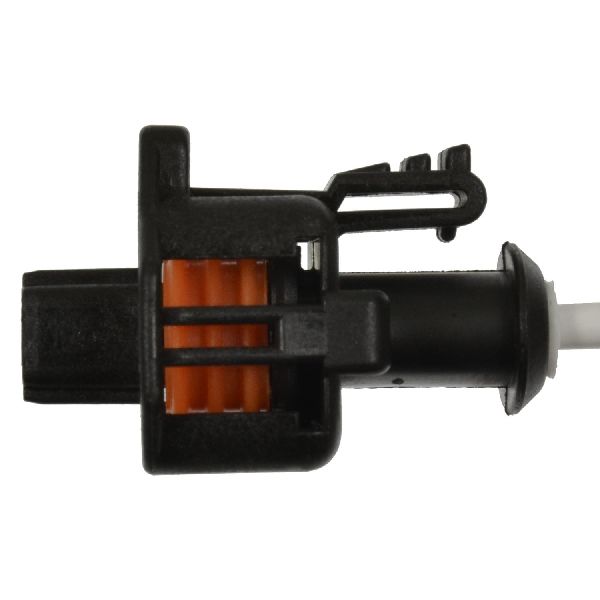
Est. part cost: $70-$180 - Intermittent or Faulty Injector Connector ⚪ Low Probability The connector for the fuel injector can become brittle from heat cycles, or the terminal pins can lose tension, causing a poor connection. This can mimic a wiring or injector fault.
How to confirm: With the engine running, gently wiggle the connector for the cylinder 5 injector. If the engine stumbles or the idle changes, the connector or its connection to the injector is likely faulty. Visually inspect the connector for broken locking tabs, corrosion, or spread pins.
Typical fix: Clean the connector pins with electrical contact cleaner. If pins are loose, they may need to be carefully re-tensioned or the connector pigtail replaced. Apply dielectric grease to the connector seal before reconnecting to keep moisture out.
Est. part cost: $15-$40 for a pigtail - Intake Valve Carbon Buildup ⚪ Low Probability As a direct injection (DI) engine, fuel is sprayed directly into the cylinder, so it doesn't wash over and clean the intake valves. Over time, oil vapor from the PCV system can bake onto the valves, restricting airflow into a specific cylinder and causing a contribution fault.
How to confirm: This is difficult to confirm without a borescope inspection of the intake ports and valves with the intake manifold removed. It is usually diagnosed after all other fuel and ignition causes are ruled out.
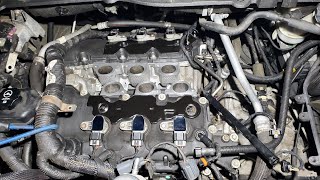
Typical fix: The intake valves need to be manually cleaned. The most effective method is walnut shell blasting. This is a labor-intensive job that requires removing the intake manifold. 🎬 Watch: How to perform intake valve cleaning and injector installation.
Est. part cost: $0 (if DIY cleaning) - $50 (walnut shells)
Rare But Worth Checking
- Powertrain Control Module (PCM) Failure: → Shop Engine Control Module (ECM) This is very rare. The internal driver circuit for the cylinder 5 injector can fail. This should only be considered after all wiring, the connector, and the injector itself have been proven to be good.
Diagnosis Steps
- Scan the PCM for P0274 and any other stored codes. Note the freeze frame data.
- Perform a detailed visual inspection of the Bank 1 fuel injector wiring harness. Per TSB #PIP4924D, focus on areas where it might rub against the intake plenum, fuel lines, or the EVAP purge solenoid bracket. Look for shiny spots on the harness conduit which indicate rubbing.
- If harness damage is found, repair the wire(s), protect the harness with anti-abrasion tape, and secure it away from the rub point.
- If the harness looks good, perform an injector swap test. Swap the cylinder 5 injector with the cylinder 3 injector (on the same bank).
- Clear the codes and run the engine. If the code moves to P0271 (Cylinder 3), the injector is confirmed bad and must be replaced.
- If the code remains P0274 after the swap, the issue is in the wiring or the PCM driver circuit.
- Use a multimeter to check for continuity on the two wires from the PCM connector to the injector connector. Check for shorts to ground or power on the cylinder 5 injector circuit.
- With the engine running, use a noid light at the cylinder 5 connector to verify the PCM is sending a pulse signal. If there is no pulse, and wiring is good, a PCM fault is likely.
- If all wiring and the injector are confirmed good, the final step would be to suspect a faulty PCM driver, though this is extremely uncommon.
Parts You'll Likely Need
- Fuel Injector (LLT Engine)
(OEM #12638530)— For 2009-2011 models with the LLT engine. This is the component that fails if the wiring harness is intact. Confirm with VIN.
Trusted brands: ACDelco (217-3449), GM Genuine Parts
OEM price range: $115-$160
Aftermarket price range: $60-$120 - Fuel Injector (LFX Engine)
(OEM #12634126)— For 2012-2014 models with the LFX engine. This is the component that fails if the wiring harness is intact. Confirm with VIN.
Trusted brands: ACDelco (217-3350), GM Genuine Parts
OEM price range: $130-$180
Aftermarket price range: $70-$130 - Fuel Injector Seal Kit
(OEM #12644827 (LFX) / 12644934 (LLT))— It is mandatory to replace the Teflon seal and O-rings whenever a direct fuel injector is removed and reinstalled to prevent high-pressure fuel and compression leaks. Part numbers differ by engine.
Trusted brands: ACDelco, Fel-Pro
OEM price range: $20-$40
Aftermarket price range: $10-$25
Related Codes That Often Appear With This One
- P0305 — A Cylinder 5 Misfire Detected code often accompanies P0274 because a fuel delivery problem will inevitably lead to a misfire on that cylinder.
- P0205 — This code for 'Cylinder 5 Injector Circuit/Open' may appear if the wiring harness issue is a complete break in the wire or a bad connector, rather than an intermittent short.
- P0261, P0264, P0267, P0270, P0273 — If the wiring harness is chafed in a spot that affects multiple injector wires, you may see contribution/balance or circuit fault codes for other cylinders on the same bank (Bank 1: Cylinders 1, 3, 5).
Technical Service Bulletins (TSBs) & Recalls
- PIP4924D - Recommends inspecting the fuel injector wiring harness for rubbing through or internal wire opens when various injector codes, including P0274, are present. Specifies looking where the harness contacts the intake, valve covers, and fuel lines.
Platform-Specific Known Issues
- Fuel Injector Wiring Harness Chafing: → Shop Engine Wiring Harness The most significant issue is the fuel injector wiring harness chafing, as documented in GM TSB #PIP4924D. The harness for Bank 1 (firewall side, cylinders 1-3-5) and Bank 2 (radiator side, cylinders 2-4-6) can rub against multiple points, including the intake plenum, valve cover bolts, and fuel lines, causing wires to short or break. This makes a thorough inspection of the harness loom a mandatory first step for any injector-related code on this platform.
Mechanic-Grade Diagnostic Values
- Fuel Injector Resistance (2009-2011 3.6L LLT) — expected: 11.8 - 12.6 Ohms. Failure: A reading of infinity (Open Loop), near zero (short), or significantly outside the specified range.
- Fuel Injector Resistance (2012-2014 3.6L LFX) — expected: 1.2 - 1.8 Ohms. Failure: A reading outside this narrow range indicates an internal injector fault. Note this is a low-impedance injector.
- Injector Pulse Width (at normal idle) — expected: 2 - 4 milliseconds (ms). Failure: A value of 0 ms on the affected cylinder while others show a normal pulse indicates a command or wiring issue.
- Low-Side Fuel Pressure (Key On, Engine Off) — expected: 50 - 62 PSI. Failure: Pressure below this range indicates a weak in-tank fuel pump, which can cause contribution issues under load.
- High-Side Fuel Pressure (at idle) — expected: Ramps up to over 2,000 PSI, but desired vs. actual should be nearly identical on a scan tool.. Failure: Actual pressure significantly lower than desired pressure points to a failing High-Pressure Fuel Pump (HPFP).
Scan Tool Commands That Help
- GDS2 (GM Dealer Software): Cylinder Power Balance Test — This automated test disables each cylinder one by one and measures the RPM drop. If cylinder 5 shows a significantly smaller RPM drop than the others, it confirms it is not contributing equal power. This is the definitive test for a P0274 fault.
- GDS2 / Professional Scan Tool: Fuel Injector Balance Test — This test commands each injector to open for a set duration while monitoring the drop in fuel rail pressure. If cylinder 5 shows a pressure drop that is significantly different from the others, it can indicate a clogged or failing injector. This test is useful after confirming the wiring is intact.
Wiring & Ground Locations
- G110 — On the right rear of the engine, mounted to the back of the cylinder head, sometimes on a bracket above the power steering pump pressure hose.. This ground is shared by the ECM and TCM. A poor connection here can cause erratic behavior and communication loss codes, potentially leading to incorrect fault codes being set.
- G113 — Located at the stud where the engine and transmission are joined.. This is a primary engine block ground. Corrosion or a loose connection here can affect the entire engine management system, including the reference for injector circuits.
- ECM Connector X1/X2 — The Engine Control Module (ECM) is located in the engine compartment. The injector control circuits run from these main connectors to the injectors.. When diagnosing a persistent wiring fault, you must test for continuity from the specific pin for the cylinder 5 injector at the ECM connector to the pin at the injector connector itself. A pinout diagram is required for this.
- Injector Harness Chafe Points — Most common spots are against the intake plenum, at valve cover bolts, against the fuel line, and on the side of the cylinder head under the plenum.. These are the specific, documented failure points from TSB #PIP4924D. Engine vibration causes the harness to rub through at these locations, directly causing the open or short circuit that triggers P0274.
OEM Part Supersession History
12638530 (LLT Engine)→12669384— Likely for improved internal components or manufacturing process.
Heads up: This is the correct injector for 2009-2011 models. It is a high-impedance injector (~12 Ohms) and is not compatible with 2012+ LFX engines.12642128 (LFX Engine)→12634126— Likely for improved durability or sealing design.
Heads up: This is the correct injector for 2012-2014 models. It is a low-impedance injector (~1.5 Ohms) and is not compatible with pre-2012 LLT engines.
Model Year Variations Within This Range
- 2009-2011: These models use the 3.6L LLT V6 engine with high-impedance fuel injectors (~12 Ohms) and a Bosch ECM. The intake manifolds are aluminum.
- 2012-2014: The engine was updated to the 3.6L LFX V6. These models use different, low-impedance fuel injectors (1.2-1.8 Ohms) and a Delphi ECM. The intake manifolds are composite. Using diagnostic values or parts from the LLT engine will lead to misdiagnosis and incompatibility.
Helpful Videos
We Have This Part in Stock


The information in this article is provided for general reference and educational purposes only. Vehicle specifications, procedures, and part compatibility can vary by production date, trim level, and region. Always consult your vehicle's factory service manual and verify part numbers before purchasing or performing repairs. Safety-critical components such as airbags, seat belts, and braking systems should be installed by a qualified professional.
- Chevrolet TRAVERSE:
- 🧭 Diagnostic Flowchart
- 🎬 Helpful Videos
- 🛍️ Shop This Part
- What's Unique About the 2009-2014 Chevrolet TRAVERSE
- Symptoms You May Notice
- Most Likely Causes
- Rare But Worth Checking
- Diagnosis Steps
- Parts You'll Likely Need
- Related Codes That Often Appear With This One
- Technical Service Bulletins (TSBs) & Recalls
- Platform-Specific Known Issues
- Mechanic-Grade Diagnostic Values
- Scan Tool Commands That Help
- Wiring & Ground Locations
- OEM Part Supersession History
- Model Year Variations Within This Range
- 🎟️ Get 5% Off