

P0274 on 2009-2014 GMC Acadia: Cylinder 5 Injector Circuit High Causes and Fixes
On a 2009-2014 GMC Acadia, code P0274 is most often caused by a faulty cylinder 5 fuel injector or a chafed wiring harness. Due to the injector's location under the intake manifold, expect a professional repair to cost between $900 and $1,200. Always inspect the wiring harness per TSB #PIP4924D before replacing parts.
- P0274 on your Acadia means there's a high voltage fault in the cylinder 5 injector circuit.
- Before buying parts, thoroughly inspect the injector wiring harness for chafing, especially in the spots mentioned in TSB #PIP4924D. This is a known issue and a free fix if you can repair the wire yourself.
- If the wiring is good, the cylinder 5 fuel injector has likely failed internally.
- Replacing the injector is a significant job requiring removal of the intake manifold, making it costly in labor. Consider replacing all injectors on the bank at the same time.
What's Unique About the 2009-2014 Gmc ACADIA
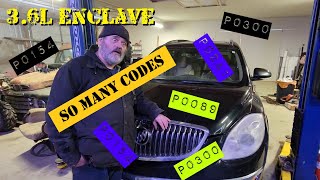
The 2009-2014 Acadia uses a 3.6L V6 engine with direct injection (DI). Unlike traditional port injection, DI injectors are located directly in the cylinder and operate under very high pressure and voltage. This makes them more complex and expensive. Most importantly for this code, GM issued Technical Service Bulletin #PIP4924D, which specifically points to the fuel injector wiring harness rubbing through on these vehicles, causing shorts and triggering codes like P0274. This known wiring issue is a very common culprit and should be investigated before replacing expensive parts. 🎬 Watch: Step-by-step diagnosis for the P0274 injector circuit code Accessing the injectors or harness requires removing the entire upper intake manifold, a labor-intensive job that adds significantly to the repair cost.
🎬 See this walkthrough for removing the intake and injectorsDiagnostic Flowchart
Tap your situation to follow the diagnostic path that matches what you're seeing on this vehicle.
Symptoms You May Notice
- Check Engine Light is on
- Rough or unstable idle
- Engine misfire, which may be felt as a shudder or vibration
- Noticeable loss of power and poor acceleration
- Reduced fuel economy
- Engine stalling, especially under load
- A raw fuel smell from the exhaust
- Replacing the spark plug or ignition coil for cylinder 5. While these can cause a misfire (P0305), they will not cause an injector circuit code like P0274. Always check the specific code definition before replacing parts.
Most Likely Causes
- Chafed or Shorted Fuel Injector Wiring Harness 🔴 High Probability → Shop Engine Wiring Harness As documented in GM TSB #PIP4924D, the injector harness is known to rub against the intake plenum, valve cover bolts, fuel lines, or the side of the cylinder head under the plenum, causing wires to short to voltage.
How to confirm: After removing the intake manifold, carefully inspect the entire fuel injector wiring harness, especially where it makes contact with other engine components. Look for any signs of rubbing, exposed copper wire, or melted insulation. Pay close attention to the harness routing near sharp metal edges.
Typical fix: Repair the damaged section of wire with a new pigtail connector or by soldering and heat-shrinking. If damage is extensive, the harness may need replacement. Reroute the repaired harness with zip ties to prevent future contact.
Est. part cost: $25-$50 for a pigtail, $200+ for a harness - Failed Cylinder 5 Fuel Injector 🔴 High Probability → Shop Fuel Injector Direct injectors operate under high stress. An internal failure, such as a short in the coil winding, can cause an electrical fault that the ECM reads as a 'circuit high' condition. Carbon buildup can also cause injectors to fail.
How to confirm: Swap the cylinder 5 injector with an injector from another cylinder (e.g., cylinder 3). Clear the codes. If the code changes to P0268 (Cylinder 3 Injector Circuit High), the injector is faulty. If P0274 returns, the problem is in the wiring or ECM. This requires removing the intake manifold for access.
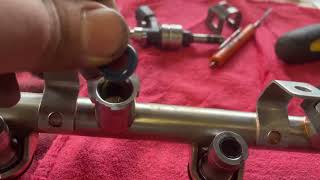
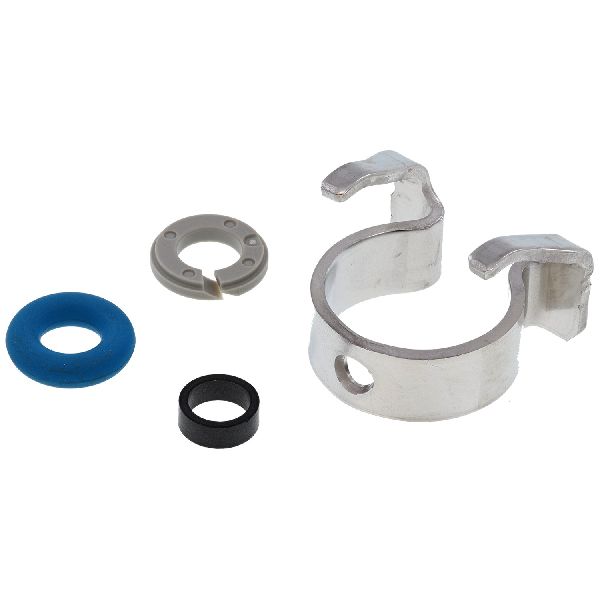
Typical fix: Replace the faulty fuel injector. It is often recommended to replace all injectors on that bank (Bank 1: Cylinders 1, 3, 5) or all six at once, along with their Teflon seals and O-rings, to ensure balanced flow and prevent future failures.
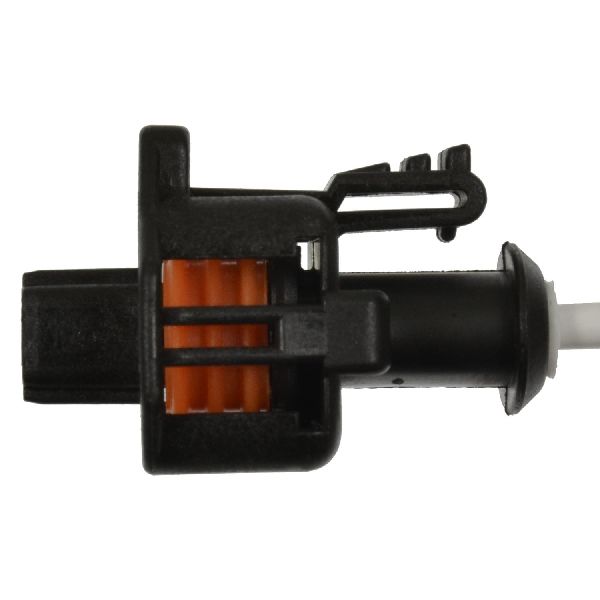
Est. part cost: $60-$150 per injector - Damaged or Corroded Injector Connector 🟡 Medium Probability The connector is located under the intake manifold, where it's exposed to heat cycles and potential oil/fluid contamination, which can degrade the plastic and pins over time.
How to confirm: Visually inspect the electrical connector at the cylinder 5 injector. Look for bent, loose, or corroded pins, and ensure the locking tab isn't broken and that it is securely seated.
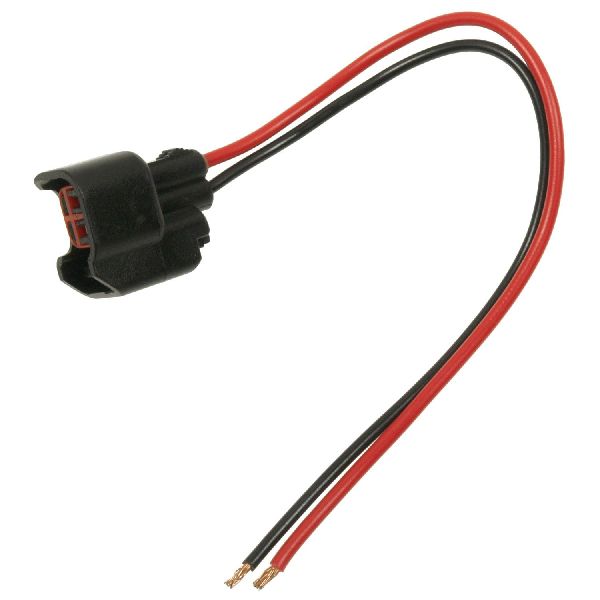
Typical fix: Clean the connector terminals with electrical contact cleaner or replace the connector pigtail if it's damaged. The common pigtail is ACDelco PT2160.
Est. part cost: $25-$50 - Faulty Engine Control Module (ECM) ⚪ Low Probability → Shop Engine Control Module (ECM)
How to confirm: This is diagnosed by exclusion. If the injector, wiring, and connector are all confirmed to be good through testing (swapping, continuity checks), the injector driver circuit inside the ECM is the likely failure point.
Typical fix: Replace and reprogram the Engine Control Module. This must be programmed to the vehicle's VIN.
Est. part cost: $400-$800+
Rare But Worth Checking
- Failing High-Pressure Fuel Pump:
Diagnosis Steps
- Read all fault codes with an OBD-II scanner. Note any other codes present, especially misfire codes (P0305) or other injector circuit codes.
- Freeze frame data can help identify the conditions under which the fault occurred.
- Remove the engine cover and intake manifold to access the fuel injector harness and injectors. This is a multi-hour job.
- Thoroughly inspect the fuel injector wiring harness for signs of chafing, melting, or damage, as highlighted in TSB #PIP4924D. Pay close attention to contact points with the intake, valve covers, and fuel lines.
- Inspect the electrical connector on the cylinder 5 fuel injector for corrosion, damage, or loose pins.
- If no visual issues are found, swap the cylinder 5 fuel injector with one from another cylinder (e.g., cylinder 3).
- Clear all fault codes and drive the vehicle. If the code returns as P0274, the issue is in the wiring or ECM. If the code moves to the swapped cylinder (e.g., P0268 for cylinder 3), the fuel injector itself is faulty.
- If the wiring is suspected, use a multimeter to test for a short to voltage on the control circuit wire between the ECM connector and the injector connector. Check for continuity and resistance to ground.
- If the injector and wiring have been ruled out, the ECM is the most likely cause.
Parts You'll Likely Need
- Direct Fuel Injector
(OEM #12638530)— An internal short in the injector is a very common cause of a 'Circuit High' fault. This part number also fits many other GM 3.6L vehicles from the era.
Trusted brands: ACDelco, Bosch
OEM price range: $100-$180
Aftermarket price range: $60-$120 - Fuel Injector Wiring Harness Pigtail
(OEM #88861094 (ACDelco PT2160))— If the wiring is chafed or the connector is damaged near the injector, a pigtail is used to repair it without replacing the entire harness. This is a common repair for the TSB-related issue.
Trusted brands: ACDelco, Dorman
OEM price range: $25-$50
Aftermarket price range: $15-$30 - Intake Manifold Gasket Set — The upper and lower intake manifolds must be removed to access the fuel injectors. The gaskets are one-time use and must be replaced to prevent vacuum leaks.
Trusted brands: Fel-Pro, ACDelco
OEM price range: $50-$80
Aftermarket price range: $25-$50
Related Codes That Often Appear With This One
- P0305 — P0305 means 'Cylinder 5 Misfire Detected'. Since P0274 causes the ECM to shut down the cylinder 5 injector, that cylinder will not fire, directly causing a P0305 code to be stored.
- P0205 — This is a generic code for 'Injector Circuit/Open - Cylinder 5'. It can appear alongside P0274 depending on the exact nature of the electrical fault.
- P216A — This is a GM-specific code for 'Cylinder 5 Injector High Control Circuit'. It is functionally identical to P0274 and is often listed alongside it in service manuals.
Technical Service Bulletins (TSBs) & Recalls
- PIP4924D: SES Light And Misfire With Injector Codes. Points to inspecting the fuel injector wiring harness for chafing and shorts as a primary diagnostic step. This TSB applies to a wide range of GM vehicles with 3.0L and 3.6L engines, including the Acadia, Enclave, Traverse, and CTS.
Platform-Specific Known Issues
- TSB #PIP4924D: This GM bulletin directly addresses SES lights and misfires with a host of injector codes, including P0274. It instructs technicians to 'Carefully inspect the fuel injector wiring harness for rub through or internal wire opens.' Common chafe spots are noted against the intake plenum, at valve cover bolts, against the fuel line and on the side of the head under the plenum. 🎬 Watch: Real-world example of a shorted injector control circuit
Mechanic-Grade Diagnostic Values
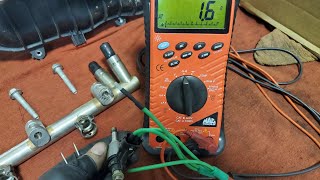
- Fuel Injector Coil Resistance (2012-2014 LFX Engine) — expected: 1.5 - 2.5 ohms. Failure: A reading near 0 ohms indicates a shorted injector; an 'OL' or infinite reading indicates an open circuit.
- Fuel Injector Coil Resistance (2009-2011 LLT Engine) — expected: 11 - 14 ohms. Failure: A reading significantly outside this range indicates a faulty injector coil.
- Injector Control Voltage (Boost Phase) — expected: ~65 Volts DC. Failure: This is a very brief, boosted voltage pulse from an internal ECM capacitor used to open the direct injector. It is difficult to measure without an oscilloscope, but its absence would point to an ECM driver issue.
- Injector Connector Voltage (Key On, Engine Off) — expected: Battery Voltage (~12.0-12.6V). Failure: Low or no voltage indicates a problem in the supply circuit from the ECM.
- High-Pressure Fuel Rail (Scan Tool Data at Idle) — expected: ~4 MPa (580 PSI). Failure: Significantly lower or wildly fluctuating pressure could indicate a high-pressure fuel pump issue, though this does not directly cause a circuit code.
Scan Tool Commands That Help
- GDS2 / Tech2 (GM Specific): Fuel Injector Balance Test — This bidirectional test is used to assess injector performance without removing them. The tool commands each injector to fire for a set duration while monitoring the drop in fuel rail pressure. A cylinder with a significantly different pressure drop compared to others may have a clogged or failing injector. This helps differentiate a mechanical/flow issue from a purely electrical one.
Wiring & Ground Locations
- ECM Connector J2, Pin 49 — On the main Engine Control Module (ECM), which is located on the left side of the engine.. This is the specific control circuit for the cylinder 5 fuel injector. The wire is typically Light Green with a White stripe. Testing for a short to voltage or ground at this pin can definitively isolate a wiring fault from an injector or ECM fault.
OEM Part Supersession History
12638530→12669384— Standard part lifecycle update by the manufacturer. The new part is considered the current service replacement.
Heads up: This part number is specific to the 2009-2011 LLT engine. It is not compatible with the 2012-2014 LFX engine, which uses a different injector with lower resistance.
Model Year Variations Within This Range
- 2009-2011: These models use the 3.6L LLT engine. Key features include an aluminum intake manifold, a Bosch ECM, and fuel injectors (PN 12638530) with a resistance of 11-14 ohms.
- 2012-2014: These models use the updated 3.6L LFX engine. Key differences include a lighter composite intake manifold, integrated exhaust manifolds (part of the cylinder head), a Delphi ECM, and different fuel injectors with a much lower resistance of 1.5-2.5 ohms. Parts, especially injectors, are not interchangeable between LLT and LFX engines.
Helpful Videos
We Have This Part in Stock


The information in this article is provided for general reference and educational purposes only. Vehicle specifications, procedures, and part compatibility can vary by production date, trim level, and region. Always consult your vehicle's factory service manual and verify part numbers before purchasing or performing repairs. Safety-critical components such as airbags, seat belts, and braking systems should be installed by a qualified professional.
- Gmc ACADIA:
- 🧭 Diagnostic Flowchart
- 🎬 Helpful Videos
- 🛍️ Shop This Part
- What's Unique About the 2009-2014 Gmc ACADIA
- Symptoms You May Notice
- Most Likely Causes
- Rare But Worth Checking
- Diagnosis Steps
- Parts You'll Likely Need
- Related Codes That Often Appear With This One
- Technical Service Bulletins (TSBs) & Recalls
- Platform-Specific Known Issues
- Mechanic-Grade Diagnostic Values
- Scan Tool Commands That Help
- Wiring & Ground Locations
- OEM Part Supersession History
- Model Year Variations Within This Range
- 🎟️ Get 5% Off