

OBD-II Code P0275: Cylinder 5 Contribution/Balance
The Ultimate 2026 Guide: What P0275 means, why it triggers, and how to fix it for good
- Code P0275 indicates cylinder #5 is underperforming, which is caused by a faulty or clogged fuel injector in 80% of cases.
- Never replace a $400 fuel injector without first testing the electrical connector, as wiring chafing and corrosion are highly common.
- On 2003-2007 Ford 6.0L diesels, verify the Fuel Injection Control Module (FICM) outputs a steady 48 volts before diagnosing individual injectors.
- Driving more than 50 miles with an active P0275 code forces unburnt fuel into the exhaust, risking a $2,500 catalytic converter or DPF failure.
What Does P0275 Mean?
Your vehicle's Powertrain Control Module (PCM) detected that cylinder 5 is producing less power than the other cylinders. The computer monitors crankshaft rotational speed after each cylinder fires; if it misses the expected acceleration from cylinder 5, it sets P0275. You will feel this power imbalance as a rough idle or hesitation during acceleration.
Technical definition: The SAE/OBD-II definition is "Cylinder 5 Contribution/Balance Fault." The PCM uses the Crankshaft Position Sensor (CKP) to measure the micro-acceleration of the crankshaft during each cylinder's power stroke. When cylinder 5's power contribution falls below a calibrated threshold compared to the rest of the engine, the PCM triggers this code.
Can I Drive With P0275?
Yes, But With Caution. You can drive short distances, but avoid heavy towing or highway speeds. The engine imbalance causes poor fuel economy, reduced power, and engine shake. Continuing to drive forces unburnt fuel into the exhaust, which overheats and destroys the catalytic converter (gas) or Diesel Particulate Filter (diesel). This turns a $500 injector problem into a $1,500 to $4,000 exhaust repair.
Common Causes
- Faulty or Clogged Fuel Injector (Very Common) — The cylinder 5 injector is clogged with carbon, suffers from internal wear (like 'stiction' on Ford 6.0L engines), or has failed electrically. This restricts fuel delivery and directly causes the weak power stroke.
- Injector Wiring or Connector Issue (Common) — Engine vibration and heat cycles loosen, corrode, or damage the injector's electrical connector. The GM L5P Duramax specifically suffers from fretting corrosion inside this connector, which interrupts the signal.
- Fuel Injection Control Module (FICM) Failure (Common) — On Ford 6.0L Powerstroke engines, the FICM provides the 48V needed to fire the injectors. When its internal power supply drops below 45V, it fails to operate the injector correctly, triggering contribution codes on cold starts.
- Incorrectly Installed or Coded Injector (Uncommon) — If this code appears immediately after a repair, the new injector is improperly seated, has damaged O-rings, or was not programmed (coded) to the ECU. Uncoded injectors force the ECU to use incorrect calibration data.
- Low Fuel Pressure (Less Common) — A weak fuel pump or clogged filter starves the engine. While this usually affects all cylinders (setting P0087), it sometimes isolates a single cylinder located at the end of the fuel rail.
- Vacuum Leak or Unmetered Air (Uncommon) — On gasoline engines, a cracked intake manifold gasket near cylinder 5 introduces unmetered air. This leans out the air/fuel mixture for that specific cylinder, reducing its power output.
- Internal Engine Mechanical Problems (Rare) — Low compression from a worn piston ring, burnt valve, leaking head gasket, or flattened camshaft lobe physically prevents the cylinder from making power, regardless of fuel delivery.
- PCM/ECM Internal Fault (Very Rare) — An internal driver circuit failure or corrupted firmware causes the PCM to misinterpret data and falsely set P0275. Suspect this only after exhausting all electrical and mechanical tests.
Symptoms
- Rough or Shaking Idle — The engine vibrates, shudders, or sounds uneven, especially when stopped in gear.
- Reduced Engine Power and Acceleration — The vehicle feels sluggish, hesitates, or 'misses' when you press the gas pedal under load.
- Check Engine Light is On — The Malfunction Indicator Lamp (MIL) illuminates. If the misfire is actively damaging the catalytic converter, the light flashes.
- Decreased Fuel Economy — The engine runs inefficiently to compensate for the weak cylinder, burning noticeably more fuel.
- Black Smoke from Exhaust (Diesel) — A malfunctioning diesel injector stuck open dumps unburnt fuel into the exhaust, creating heavy black smoke.
- Unusual Engine Noises — A rhythmic clicking, knocking, or ticking sound isolates to cylinder 5, indicating a noisy injector or valvetrain damage.
Diagnostic Flowchart
Tap your situation to follow the diagnostic path that matches what you're seeing on this code.
Common Fixes & Costs
- Replace Fuel Injector #5 — Parts: $250-$700, Labor: $300-$1200, ~3.0 hr book time (Advanced)
- Repair or Replace Fuel Injector Connector/Pigtail — Parts: $20-$50, Labor: $100-$250, ~1.5 hr book time (DIY)
- Repair or Replace Fuel Injection Control Module (FICM) — Parts: $150-$1400, Labor: $100-$250, ~1.5 hr book time (Intermediate)
- Perform a Professional Fuel System Cleaning — Parts: $50-$100, Labor: $150-$300, ~1.0 hr book time (Professional)
DIY vs Professional
- Replace Fuel Injector 🟢 Beginner
Tools: Torque wrench, fuel line disconnect tools, bidirectional scan tool (for coding). - Replace Injector Connector/Pigtail 🟢 Beginner
Tools: Wire strippers, crimpers, heat gun, heat-shrink butt connectors. - Replace Fuel Injection Control Module (FICM) 🟢 Beginner
Tools: Basic socket set.
Used vs. New Parts: Buying Guide
When a used part is worth it: Never buy a 'used' injector. A 'remanufactured' injector from a reputable supplier is a viable option, as it has new internal components and meets OEM specs.
Donor-vehicle mileage cap: roughly under 100000 miles for the part to have meaningful remaining life.
Donor quality checklist:
- Verify remanufactured injectors use new OEM nozzles and seals.
- Ensure a warranty of at least 12 months.
- Match the part number exactly, ensuring it is the latest revision index.
Decision logic:
- If The vehicle is a high-performance or newer model under warranty → Buy new OEM to ensure compatibility and maintain warranty.
- If Budget is tight and the vehicle is older → Buy a quality remanufactured injector with a 1-year warranty.
- If The part is a cheap aftermarket injector from an unknown brand → Avoid entirely. Cheap injectors fail quickly and double your labor costs.
Warranty tradeoff: Used: No warranty. Remanufactured: 1 year. New Aftermarket: 1 year. New OEM: 1-2 years.
Worst-case if a used part fails: 500-2000
What Happens If You Wait — Timeline
- 0-2 weeks: Code P0275 sets, MIL illuminates. Driver notices a slightly rough idle when cold. (MPG impact: 0-5%% · Added cost: $0)
- 2 weeks - 3 months: Rough idle becomes consistent. Noticeable hesitation during acceleration. DPF regeneration cycles become frequent on diesels. (MPG impact: 5-15%% · Added cost: $50-200 in wasted fuel)
- 3-8 months: Unburnt fuel consistently enters the exhaust. The catalytic converter substrate melts, or the DPF clogs with wet soot. (MPG impact: 10-20%% · Added cost: $1,500-4,000)
- 8+ months: Catastrophic emissions failure. Extreme exhaust backpressure destroys the turbocharger or internal engine components. (MPG impact: 20-40%% · Added cost: $2,500-7,000+)
Cost of Not Fixing It
- 0-1 month: Noticeable drop in fuel economy (5-15%), rough idle, and poor acceleration. Minimal risk of further damage. (Added cost: 50-150)
- 1-6 months: Unburnt fuel overheats the catalytic converter (gas) or clogs the Diesel Particulate Filter (DPF). You will smell rotten eggs from the exhaust. (Added cost: 1500-4000)
- 6+ months: Complete failure of emissions systems. Extreme exhaust backpressure damages the turbocharger or internal engine components. (Added cost: 2500-7000)
Diagnosis Steps
- Scan Codes and Review Freeze Frame Data
Use an OBD-II scanner to confirm P0275 and check for related codes (P0305, P0205). Analyze freeze frame data to pinpoint the exact RPM, load, and temperature when the fault occurred.
Tools: OBD-II Scanner (Beginner) - Perform a Cylinder Balance Test
Use a bidirectional scan tool to run a 'Cylinder Balance' test. For Duramax engines, check injector balance rates at operating temperature in Park. Rates outside the -4.0 to +4.0 mm³ range confirm a fueling issue on cylinder 5.
Tools: Advanced OBD-II Scanner (Intermediate) - Inspect the Injector Connector and Wiring
Visually inspect the #5 fuel injector electrical connector for corrosion, backed-out pins, or melted plastic. Wiggle the connector with the engine running; if the idle changes, you found a wiring break.
Tools: Flashlight (Beginner) - Verify Injector Pulse with a Noid Light
Disconnect the #5 injector and plug in a noid light. Start the engine. A steady flash confirms the PCM and wiring are sending the correct trigger signal. No flash means an electrical circuit failure.
Tools: Noid Light Set (Intermediate) - Check FICM Voltage (Ford 6.0L Only)
Monitor the 'FICM_V' PID on a scan tool. Voltage must remain at or above 45.0V during Key On Engine Off (KOEO), cranking, and running. Drops below 45.0V require FICM replacement before touching injectors.
Tools: Advanced OBD-II Scanner or Digital Multimeter (Advanced) - Swap the Fuel Injector
Swap the cylinder 5 injector with an adjacent cylinder (e.g., cylinder 3). Clear codes and drive. If the code moves to P0269 (Cylinder 3), the injector is definitively bad. If P0275 returns, the injector is fine.
Tools: Socket Set, Wrenches, Torque Wrench (Advanced) - Check for Mechanical Issues (Compression Test)
If fuel and electrical tests pass, perform a compression test on cylinder 5. Low compression points to internal engine failure (rings, valves, head gasket) requiring major repair.
Tools: Compression Tester (Advanced)
When This Code Triggers (Freeze-Frame Conditions)
- Engine Coolant Temp: 170-205°F (Fully warmed up, often after driving for a few miles.)
- RPM: 650-800 RPM (At idle, where the imbalance is most noticeable to the driver and the PCM.)
- Engine Load: 20-40% (Light load or steady cruising, where a single cylinder's weakness is easier to detect.)
Related Codes
- P0305 — Cylinder 5 Misfire. P0275 indicates a subtle power imbalance, while P0305 indicates a complete, consistent misfire. Having both confirms a severe failure on cylinder 5.
- P0205 — Injector Circuit/Open Cylinder 5. This guarantees an electrical problem. If present with P0275, the issue is a broken wire, loose connector, or dead injector coil, not a clog.
- P0611 — FICM Performance. On Ford 6.0L engines, this code proves the FICM is failing. Stop diagnosing the injector and test the FICM voltage immediately.
- P0263-P0284 — Contribution codes for other cylinders. Multiple codes point to a systemic issue like low fuel pressure, bad fuel, or a failing FICM, rather than a single bad injector.
Climate & Environmental Factors
- Cold Weather: Cold, thick engine oil worsens 'stiction' on Ford 6.0L HEUI injectors, causing delayed injection. This sets P0275 on cold starts, which often clears as the engine warms.
- High Humidity and Road Salt: Moisture accelerates fretting corrosion inside electrical connectors. This is the primary failure cause for GM L5P Duramax injector pigtails.
- High Altitude: Thinner air alters engine load calculations. This pushes an already borderline, weak injector past the PCM's fault threshold.
How to Talk to a Mechanic About This Code
Say this: "I have a P0275 code for cylinder 5. Please start by checking the injector wiring and running a cylinder balance test. If it's a diesel, I need the injector balance rates checked before authorizing parts replacement."
This directs the technician toward a logical diagnostic path (electrical, specific tests) rather than immediately defaulting to an expensive injector replacement.
Avoid saying:
- 'My truck is shaking, can you fix it?'
- 'The check engine light is on, I think it's a bad injector.'
- 'Just replace the number 5 injector.'
Questions to ask before authorizing the repair:
- What were the exact injector balance rates for cylinder 5?
- Did you inspect the injector connector and wiring for corrosion?
- What specific tests confirmed the injector itself failed, rather than the wiring?
Where to Take It: Dealer vs Independent vs Chain
- Dealer:
Recommended for warranty work, TSBs, or complex German makes.
Best for: Vehicles under warranty or with a known TSB., Complex issues requiring brand-specific software, like BMW injector coding.
Downsides: Highest labor rates ($150-$250/hr)., Often recommends replacing entire assemblies instead of repairing components. (Typical cost: +50% vs. baseline) - Independent Shop:
Best fit for most scenarios. A specialized diesel independent shop has more experience with these failures than a general dealer technician.
Best for: Out-of-warranty diesel trucks (Ford, GM, Dodge)., Getting better value on labor and flexible parts options.
Downsides: Quality varies; vetting the shop's diesel expertise is crucial. (Typical cost: +0% vs. baseline) - Chain Shop:
AVOID. This code requires diagnostic expertise beyond the scope of chain shops.
Best for: Simple jobs like oil changes and tires.
Downsides: Technicians lack specialized diagnostic training., High risk of misdiagnosis and unnecessary upsells. (Typical cost: -10% vs. baseline)
When to Walk Away From the Repair
If the estimated repair cost exceeds 50% of the vehicle's private-party market value, sell or trade it in.
- Car worth $8000, fix is $4500: Walk away. The repair cost is over 50% of the truck's value.
- Car worth $25000, fix is $2200: Fix it. The repair cost is well below the 50% threshold.
What Scan Tool You Need for This Code
Minimum: A bidirectional scan tool that performs a 'Power Balance' test and reads 'Injector Balance Rates'.
A $20 code reader only shows the P0275 code. It cannot perform the active tests needed to confirm which cylinder is weak or why.
Budget: Veepeak OBDCheck BLE + Car Scanner App (~$50) — Displays live data, including injector balance rates on many diesel trucks, but lacks bidirectional control.
Mid-range: BlueDriver Pro (~$120) — Reads freeze frame data and accesses manufacturer-specific PIDs like FICM voltage on Ford trucks.
Professional: Autel MaxiCOM MK808S (~$450) — Offers full bidirectional control. Commands cylinder power balance tests, reads balance rates, and codes new injectors to the ECU.
Rent vs buy: For a one-time diagnosis, use AutoZone's 'Loan-A-Tool' program. If you do your own maintenance, buying a pro-level scanner is mandatory for modern diesels.
How to Clear the Code After You Fix It
- Use an OBD-II scan tool to clear the P0275 code from the PCM's memory.
- Reconnect the battery if it was disconnected during repair.
- Perform a complete OBD-II drive cycle to reset readiness monitors.
Drive cycle (~30 minutes): Start with a cold engine. Idle for 3 minutes with A/C on. Drive 15-20 minutes mixing city and highway speeds, including 5 minutes of steady driving at 55 mph. Allow the vehicle to cool completely.
Readiness monitors affected: Catalyst Monitor, Evaporative (EVAP) System Monitor, Oxygen (O2) Sensor Monitor
Before emissions retest: drive at least 50 miles to fully set monitors.
Watch out for:
- Disconnecting the battery clears the code but resets all monitors to 'Not Ready', guaranteeing an emissions failure.
- The code returns immediately if the mechanical or electrical fault wasn't actually fixed.
Will This Fail Emissions / State Inspection?
Yes — this code typically fails an OBD-II emissions inspection.
- California: An active P0275 is an automatic failure. After repair, all OBD readiness monitors must be 'Ready', requiring a full 50-100 mile drive cycle before retesting.
- New York: The NYS DMV inspection includes an OBD-II scan. An illuminated Check Engine Light for P0275 results in an automatic failure.
- Texas: In emissions-testing counties, an illuminated Check Engine Light is an automatic fail. The MIL command status must be 'OFF'.
Most Commonly Affected Vehicles
- Ford F-250 / F-350 / Excursion (6.0L Powerstroke) (2003-2007) — Extremely common. Usually caused by a failing FICM or injector 'stiction'. Always verify FICM voltage is above 45V before replacing injectors.
- GMC / Chevrolet Sierra / Silverado 2500HD / 3500HD (6.6L L5P) (2017-2022) — The electrical connector pigtail develops high resistance from fretting corrosion. GM released an updated connector kit (Part No. 19368140) to fix this.
- BMW 550i / 750i / X5 50i (N63 V8) (2008-2013) — Piezo-electric direct injectors fail frequently. Replace with the latest Index 12 revision and code them to the DME using diagnostic software.
- Ford F-250 / F-350 (6.7L Powerstroke) (2017) — TSB 18-2015 addresses a PCM software glitch causing incorrect injector timing and P0275. The fix is a dealer PCM reflash, not parts replacement.
- Ford F-150 (3.5L EcoBoost) (2011-2017) — Severe carbon buildup on the intake valves for cylinder 5 causes an airflow imbalance, triggering this code on GDI engines.
- Dodge / Ram 2500 / 3500 (6.7L Cummins) (2007-2018) — High-mileage injector failure is common. A leaking or clogged injector directly causes the contribution fault.
Manufacturer-Specific Notes
- Ford (6.0L Powerstroke): The FICM power supply burns out from heat and vibration, dropping voltage below 48V. This causes weak injector performance (stiction) and is the leading cause of P0275.
- GM (6.6L L5P Duramax): The injector connector terminals lose tension and corrode. Always inspect and replace the $30 pigtail before condemning the $400 injector.
- BMW (N63 V8): Injectors must be replaced with the latest 'Index 12' version and digitally coded to the engine computer. Failing to code them guarantees the code will return.
Real Owner Stories
2006 Ford F-250 6.0L Powerstroke
Truck ran great cold, but after 5 minutes of driving, it ran rough and threw P0275.
What they tried:
- Treated with stiction additive, which worked temporarily.
- Verified FICM voltage was a consistent 48.5 volts.
- Performed a buzz test, which passed for all injectors.
Outcome: Replacing the #5 fuel injector solved the problem. The injector had an internal electronic fault that only manifested when heat-soaked.
Lesson: Injectors can pass cold resistance and buzz tests but fail when hot. Swapping the suspect injector to another cylinder definitively proves the failure.
2018 Chevy Silverado 2500HD 6.6L L5P Duramax
Check engine light illuminated with P0275 and P0205 (Injector Circuit/Open). The truck had a severe rough idle.
What they tried:
- Inspected the connector for cylinder 5 based on forum advice.
- Found the pins inside were discolored from fretting corrosion.
Outcome: Replacing the injector connector pigtail (GM Part No. 19368140) fixed the open circuit and cleared the code. Total cost was under $100.
Lesson: Always inspect the connector and wiring before condemning a $400 fuel injector, especially if accompanied by a circuit code like P0205.
How to Prevent This Code From Triggering
- Use Top Tier Fuel and Additives (Every fill-up) — Top Tier gasoline prevents carbon buildup on GDI injectors. Diesel additives add lubricity that prevents internal injector wear and clogging.
- Perform Regular Synthetic Oil Changes (Per manufacturer's schedule) — On HEUI engines, oil powers the injectors. Broken-down oil forms varnish ('stiction') that causes injectors to stick.
- Maintain Battery and Charging System Health (Annually) — A weak battery provides low voltage to the FICM, increasing amperage draw and burning out the module's circuitry.
Frequently Asked Questions
What are the most common misdiagnosis mistakes for P0275?
Mechanics often replace the expensive fuel injector without checking the electrical connector for corrosion. On Ford 6.0L engines, condemning an injector before verifying the FICM outputs 48 volts is a costly error. Always check for software update TSBs before replacing hard parts.
Can I just use a fuel injector cleaner additive to fix P0275?
Additives are a cheap first step but rarely provide a permanent fix. They cannot repair a failed electrical coil, a severe clog, or mechanical wear. A professional, pressurized injector flush is much more effective.
What is 'stiction' and does it cause P0275?
Stiction is a gummy oil residue that builds up on the spool valves of Ford 6.0L HEUI injectors. It makes the valve stick when the engine oil is cold, causing rough running and P0275. The code often disappears once the engine reaches operating temperature.
Why did the code appear right after I got fuel?
Contaminated fuel containing water or debris instantly clogs the microscopic holes in a fuel injector nozzle. Putting gasoline in a diesel engine also destroys the injector's internal lubrication, leading to immediate failure.
Is it okay to replace just one fuel injector?
Yes, replacing only the failed injector is standard practice. However, if the labor requires removing the intake manifold, it is often cheaper in the long run to replace the entire bank of injectors at once.
What happens if you don't 'code' a new injector?
Modern injectors have slight manufacturing variances. Coding inputs a unique calibration number into the ECU to ensure exact fuel delivery. Without coding, the ECU over- or under-fuels the cylinder, causing rough idle and returning the P0275 code.
Why does my truck only run rough when hot with P0275?
Heat causes metal and wiring to expand. An injector coil or a circuit board inside the PCM may have a microscopic break that only separates and loses connection when it reaches operating temperature.
Key Takeaways
- Code P0275 indicates cylinder #5 is underperforming, which is caused by a faulty or clogged fuel injector in 80% of cases.
- Never replace a $400 fuel injector without first testing the electrical connector, as wiring chafing and corrosion are highly common.
- On 2003-2007 Ford 6.0L diesels, verify the Fuel Injection Control Module (FICM) outputs a steady 48 volts before diagnosing individual injectors.
- Driving more than 50 miles with an active P0275 code forces unburnt fuel into the exhaust, risking a $2,500 catalytic converter or DPF failure.
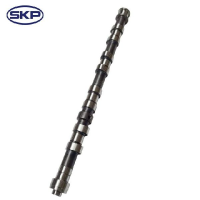
Shop the Parts Behind P0275
Below are the parts most often responsible for code P0275, ranked by how frequently each one is the actual culprit (per the diagnosis above). Tap any to see what we have for your vehicle.





The information in this article is provided for general reference and educational purposes only. Vehicle specifications, procedures, and part compatibility can vary by production date, trim level, and region. Always consult your vehicle's factory service manual and verify part numbers before purchasing or performing repairs. Safety-critical components such as airbags, seat belts, and braking systems should be installed by a qualified professional.
- 🧭 Diagnostic Flowchart
- 🛍️ Shop This Part
- What Does P0275 Mean?
- Can I Drive With P0275?
- Common Causes
- Symptoms
- Common Fixes & Costs
- DIY vs Professional
- Used vs. New Parts: Buying Guide
- What Happens If You Wait — Timeline
- Cost of Not Fixing It
- Diagnosis Steps
- When This Code Triggers (Freeze-Frame Conditions)
- Related Codes
- Climate & Environmental Factors
- How to Talk to a Mechanic About This Code
- Where to Take It: Dealer vs Independent vs Chain
- When to Walk Away From the Repair
- What Scan Tool You Need for This Code
- How to Clear the Code After You Fix It
- Will This Fail Emissions / State Inspection?
- Most Commonly Affected Vehicles
- Manufacturer-Specific Notes
- Real Owner Stories
- 2006 Ford F-250 6.0L Powerstroke
- 2018 Chevy Silverado 2500HD 6.6L L5P Duramax
- How to Prevent This Code From Triggering
- Frequently Asked Questions
- What are the most common misdiagnosis mistakes for P0275?
- Can I just use a fuel injector cleaner additive to fix P0275?
- What is 'stiction' and does it cause P0275?
- Why did the code appear right after I got fuel?
- Is it okay to replace just one fuel injector?
- What happens if you don't 'code' a new injector?
- Why does my truck only run rough when hot with P0275?
- Key Takeaways
- 🎟️ Get 5% Off