

P0275 on 2016-2019 Chevy Silverado 1500: Cylinder 5 Balance Fault Guide
On 2016-2019 Silverado 1500s, code P0275 usually points to a faulty or clogged fuel injector on cylinder #5. Other possibilities include wiring issues, an ECM software glitch, or, less commonly, an internal engine mechanical problem, which on these trucks can be related to the Active Fuel Management (AFM) system's lifters.
- P0275 on your Silverado means cylinder #5 isn't working as hard as the others, most often due to a fuel injector issue.
- While a faulty injector is the most likely culprit, be aware of GM Technical Service Bulletins that point to possible ECM software glitches or more serious internal engine mechanical problems.
- A common and effective diagnostic step is to swap the cylinder #5 fuel injector with one from another cylinder to see if the problem moves.
- Due to the potential for more complex issues beyond a simple injector swap, professional diagnosis is highly recommended to avoid unnecessary expense and ensure the root cause is addressed.
What's Unique About the 2016-2019 Chevrolet SILVERADO 1500
For the 2016-2019 Silverado with the 5.3L (L83) and 6.2L (L86) engines, this code is not just a simple injector problem. Manufacturer Technical Service Bulletins (TSBs) indicate that P0275 can be linked to wider issues. These include potential ECM software anomalies requiring an update (TSB 17-NA-171) and, more seriously, a lack of lubrication in the valvetrain that can cause mechanical engine damage (TSB PIP-5400). Furthermore, these engines are known for issues with the Active Fuel Management (AFM) system, where lifter failure can present with contribution/balance codes. A collapsed lifter can lead to camshaft damage, making a correct diagnosis critical to avoid catastrophic engine failure.
Diagnostic Flowchart
Tap your situation to follow the diagnostic path that matches what you're seeing on this vehicle.
Generation note: The 2016-2019 year range covers two generations of the Silverado 1500: the end of the third generation (K2XX, 2016-2018) and the first year of the fourth generation (T1XX, 2019). The 2019 model year also included a 'Limited' or 'LD' version, which was a carryover of the K2XX platform. While the causes are similar, part numbers for components like fuel injectors may differ between generations. Both generations in this range utilize engines with Active Fuel Management (AFM), a common source of related mechanical issues.
Symptoms You May Notice
- Rough or vibrating idle.
- Hesitation or stumbling during acceleration.
- Noticeable loss of engine power.
- Reduced fuel economy.
- Solid or flashing Check Engine Light.
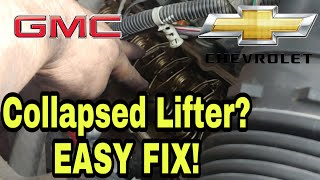
- Engine ticking or chirping noise, which could indicate a mechanical lifter issue. 🎬 Listen to the specific ticking noise of a collapsed lifter.
- Replacing spark plugs or ignition coils. While these can cause a misfire (P0305), a contribution/balance code like P0275 is more specific to the relative power output of the cylinder, which is more directly influenced by fuel delivery or mechanical compression. A bad plug or coil is less likely to be the sole cause of P0275 without an accompanying P0305.
Most Likely Causes
- Faulty or Clogged Fuel Injector 🔴 High Probability → Shop Fuel Injector The direct injection (GDI) fuel injectors on these engines operate under high pressure and can be susceptible to clogging from carbon buildup or fuel contaminants. An injector can also fail internally, either electrically or mechanically.
How to confirm: A technician can perform a cylinder balance test with a scan tool. A common DIY method is to swap the cylinder #5 injector with another cylinder (e.g., cylinder #1). If the code changes to P0263 (Cylinder 1 Contribution/Balance), the injector is faulty. Listening to the injector with a mechanic's stethoscope or a long screwdriver should reveal a consistent clicking sound; silence indicates a problem.
Typical fix: Replace the fuel injector for cylinder #5. 🎬 Watch: Step-by-step fuel injector replacement for the 5.3L engine. It is highly recommended to replace all injector seals on that fuel rail at the same time using a specific seal kit. Some owners choose to replace all injectors on one bank or all eight at once as a preventative measure.
Est. part cost: $50-$120 for a single injector. A full set of 8 seals is around $40. - Engine Control Module (ECM) Anomaly 🟡 Medium Probability TSB 17-NA-171 explicitly states that an "anomaly in the Engine Control Module (ECM)" can cause this code on 2017 models, and this logic often applies to surrounding years. The bulletin recommends reprogramming both the ECM and TCM (Transmission Control Module) to the latest software version.
How to confirm: A GM dealership or qualified shop with access to GM's Technical Information System (TIS2Web) must check for available ECM/TCM software updates for the vehicle's VIN.
Typical fix: Reprogramming the ECM and TCM with the latest software calibration. This is a dealer or specialty shop-level repair.
Est. part cost: $0 if under warranty, otherwise shop labor rates apply for programming (typically 1-2 hours). - Wiring or Connector Issue 🟡 Medium Probability
How to confirm: Visually inspect the wiring harness and connector for the cylinder #5 fuel injector for any signs of damage, corrosion, loose pins, or arcing. Use a multimeter to check for proper voltage and continuity at the connector. A noid light can also be used to verify the injector is receiving a pulse signal from the ECM.
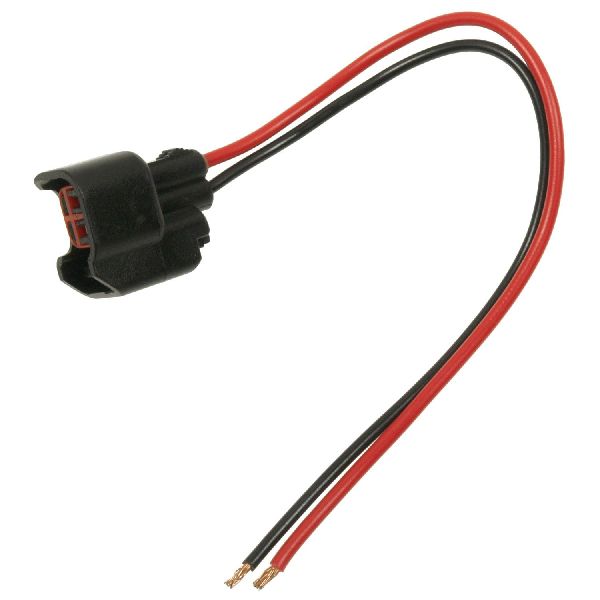
Typical fix: Repair the damaged section of the wiring harness or replace the injector connector pigtail.
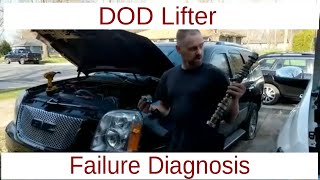
Est. part cost: $15-$40 for a connector pigtail. - Internal Engine Mechanical Fault (AFM Lifter Failure) ⚪ Low Probability The Active Fuel Management (AFM) system in the L83 and L86 engines uses special lifters that can fail, get stuck, or collapse. TSB PIP-5400 for 2016 models links this code to a potential lack of lubrication to rocker arms and valve train components, which is a symptom of lifter and camshaft issues. A failed lifter will not open the valve correctly, leading to a loss of compression and a contribution/balance fault. 🎬 See how a pro diagnoses these infamous AFM lifter failures.
How to confirm: Perform a compression test and a cylinder leak-down test on cylinder #5. If they fail, further mechanical inspection is needed. This usually involves removing the valve cover to inspect the rocker arms and pushrods, and may require removing the cylinder head to inspect the lifters and camshaft lobe for wear or damage.
Typical fix: This is a major repair that involves replacing all AFM lifters, lifter guides, and often the camshaft and other valvetrain components. Many owners opt for an 'AFM delete' kit at this time. The cylinder head(s) must be removed.
Est. part cost: $500-$2500+ depending on the extent of the damage and whether an AFM delete is performed.
Diagnosis Steps
- Check for other stored DTCs to see if other systems are affected, paying close attention to misfire codes (P0305, P0300).
- Analyze freeze frame data to understand the engine conditions (RPM, load, temperature) when the code was set.
- Use a scan tool to perform a cylinder balance test to confirm the power deficit in cylinder #5.
- Inspect the wiring and connector for the cylinder #5 fuel injector for damage or corrosion. Check for a pulse signal with a noid light.
- Listen to the injector with a stethoscope or long screwdriver for a steady clicking noise.
- Swap the cylinder #5 fuel injector with another cylinder's injector (e.g., cylinder #1). Clear codes and run the engine to see if the fault code follows the injector (e.g., P0275 becomes P0263 if swapped with cylinder #1). If it does, the injector is bad.
- If the code stays on cylinder #5 after the swap, perform a compression test and cylinder leak-down test to rule out mechanical issues like piston rings, valves, or a failed AFM lifter.
- If all fuel and mechanical tests pass, check with a GM dealer for any available ECM/TCM software updates as per TSB 17-NA-171.
Parts You'll Likely Need
- Fuel Injector
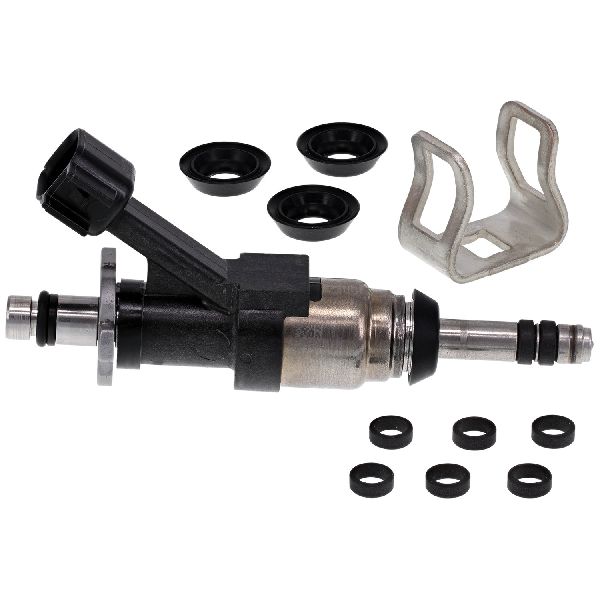
(OEM #12668390 (or superseding part #12681212))— This is the most frequent cause for a cylinder-specific contribution fault. The injector may be clogged, dirty, or have an internal electrical failure.
Trusted brands: ACDelco, Bosch
OEM price range: $90-$150
Aftermarket price range: $50-$100 - Fuel Injector Seal Kit
(OEM #19432442)— These seals are single-use and must be replaced anytime an injector is removed. A kit typically services four injectors, so two kits are needed for all eight.
Trusted brands: ACDelco, Fel-Pro
OEM price range: $20-$25 per kit (for 4 injectors)
Aftermarket price range: $15-$20 per kit
Related Codes That Often Appear With This One
- P0305 — This code indicates a "Cylinder 5 Misfire". It is very common to see this with P0275, as the underlying condition causing the balance fault will almost always result in a detectable misfire.
- P0300 — This indicates a "Random/Multiple Cylinder Misfire". If the cause is a widespread issue like an AFM lifter failure that is beginning to affect other cylinders, or a major fuel delivery problem, P0300 may be present.
- P0263, P0266, P0269, P0272, P0278, P0281, P0284 — These are the contribution/balance fault codes for the other cylinders. The provided TSBs list them together, suggesting a common root cause (like an ECM issue or widespread mechanical problem) could potentially trigger faults on multiple cylinders.
Technical Service Bulletins (TSBs) & Recalls
- PIP5468F: Mentions P0275 in a long list of engine-related DTCs and advises following standard diagnostics.
- 17-NA-171: Directly links P0275 and other contribution/balance codes to a potential ECM/TCM software anomaly that may be corrected with a software update.
- PIP-5400: Connects P0275 with misfire codes and suggests the cause may be a lack of lubrication to valvetrain components, indicating a possible mechanical failure related to lifters and camshaft.
Platform-Specific Known Issues
- TSB 17-NA-171 notes that an ECM software anomaly can cause this code to set, requiring a dealer re-flash of both the ECM and TCM.
- TSB PIP-5400 warns that for some vehicles, P0275 can be a symptom of a serious mechanical issue involving a lack of lubrication to the valvetrain, potentially leading to damage of rocker arms and other components.
- Active Fuel Management (AFM) lifter failure is a well-documented problem on these engines. A collapsed or stuck lifter on cylinder #5 will cause a contribution/balance fault and can lead to cam
Mechanic-Grade Diagnostic Values
- Low-Pressure Fuel System Pressure (at fuel rail test port) — expected: 55-62 PSI with key on, engine off.. Failure: Pressure below 50-55 PSI may indicate a weak in-tank fuel pump, though some sources note that as low as 45 PSI can be acceptable but is on the low end.
- High-Pressure Fuel Rail Pressure (GDI System, via Scan Tool) — expected: Approximately 500-700 PSI at idle.. Failure: Significantly lower readings at idle could indicate a failing high-pressure fuel pump (HPFP). Unplugging the sensor should result in a 0 PSI reading; a short to the 5V reference may cause an erroneously high reading of over 4,000 PSI.
- Fuel Injector Coil Resistance — expected: These are high-impedance injectors, typically expected to be between 8 and 16 Ohms. Some aftermarket injectors for these trucks are specified at 12.5 ohms.. Failure: A reading of 0 ohms indicates a short, while an infinite (OL) reading indicates an open circuit. Any reading significantly outside the 8-16 Ohm range suggests a faulty injector coil.
Scan Tool Commands That Help
- GDS2 (GM Dealer Scan Tool): Cylinder Power Balance — This is the primary professional diagnostic function to graph the contribution of each cylinder in real-time. It visually confirms the power loss from cylinder #5 that triggered the P0275 code, helping to verify the fault before and after repairs.
- GDS2 (GM Dealer Scan Tool): Fuel Injector Balance Test — This function allows a technician to individually disable injectors to observe the corresponding drop in RPM. If disabling cylinder #5 causes little or no change in engine operation compared to other cylinders, it confirms that cylinder is not contributing correctly.
Wiring & Ground Locations
- G103 / G104 — G103 is located on the front of the passenger side (right) cylinder head. G104 is a ground strap on the rear of the driver's side (left) cylinder head.. Poor engine grounds are a known cause of various electrical issues and erratic sensor readings on these trucks. While not specific to P0275, checking that these main engine grounds are clean and tight is a critical step in ruling out electrical interference or voltage problems that could affect the ECM or injector circuits.
- Cylinder #5 Fuel Injector Connector (at ECM) — On the E92 ECM used in these trucks, the fuel injector control circuits are located in the various multi-pin connectors. A wiring diagram is required for the specific year and engine to identify the exact pin for the cylinder 5 injector control and voltage supply wires for continuity testing from the ECM to the injector.. If an injector swap does not resolve the code, testing the wiring for a break or short between the ECM and the injector connector is the next logical step. This confirms the integrity of the harness itself.
Real Owner Repair Stories
- Ford Truck Enthusiasts Forums (on a Powerstroke, but diagnostic logic is universal) (2004 Ford F250 6.0L) — Rough running, code P0275 for cylinder 5 contribution.
❌ Tried (didn't work) Swapped injector #3 and #5, but the P0275 code remained on cylinder 5.
✅ What actually fixed it After the injector swap failed, the owner inspected the valvetrain and found a bent pushrod on cylinder #5. After replacing the bent pushrod, the truck ran great initially, but the code returned. A subsequent swap of injector #1 and #5 caused the code to move to cylinder #1 (P0263), indicating the original injector was also faulty. The final fix was replacing the bent pushrod AND the faulty injector.
OEM Part Supersession History
12668390→12681212— Standard part evolution and revision by the manufacturer.
Heads up: Part number 12681212 is a direct supersession for 12668390 and several other numbers. They are functionally identical. It is noted that these injectors may be designated as 'low', 'nominal', or 'high' flow, but as long as all eight injectors match, there is no functional difference.
Model Year Variations Within This Range
- 2019: The 2019 model year was a transition year. The 'Silverado 1500 LD' or 'Limited' was a carryover of the third-generation K2XX platform (2014-2018). The all-new fourth-generation T1XX platform also debuted in 2019. While both platforms used 5.3L and 6.2L engines with AFM, there can be differences in wiring, module locations, and specific part numbers. The T1XX platform introduced Dynamic Fuel Management (DFM), a more advanced version of AFM, on some engine configurations.
Helpful Videos

We Have This Part in Stock


The information in this article is provided for general reference and educational purposes only. Vehicle specifications, procedures, and part compatibility can vary by production date, trim level, and region. Always consult your vehicle's factory service manual and verify part numbers before purchasing or performing repairs. Safety-critical components such as airbags, seat belts, and braking systems should be installed by a qualified professional.
- Chevrolet SILVERADO 1500:
- 🧭 Diagnostic Flowchart
- 🎬 Helpful Videos
- 🛍️ Shop This Part
- What's Unique About the 2016-2019 Chevrolet SILVERADO 1500
- Symptoms You May Notice
- Most Likely Causes
- Diagnosis Steps
- Parts You'll Likely Need
- Related Codes That Often Appear With This One
- Technical Service Bulletins (TSBs) & Recalls
- Platform-Specific Known Issues
- Mechanic-Grade Diagnostic Values
- Scan Tool Commands That Help
- Wiring & Ground Locations
- Real Owner Repair Stories
- OEM Part Supersession History
- Model Year Variations Within This Range
- 🎟️ Get 5% Off