

P0275 on 2025-2026 Ram 3500: Cylinder 5 Contribution/Balance Causes and Fixes
P0275 on a 2025-2026 Ram 3500 with the 6.7L Cummins engine indicates a performance issue with cylinder #5, most often caused by a faulty fuel injector. A software update at the dealership may also be required, as indicated by several manufacturer bulletins. Other causes include wiring issues or, more rarely, mechanical engine problems.
- P0275 means cylinder #5 on your 6.7L Cummins is not performing correctly, usually due to a fuel injector issue.
- Before replacing parts, check with a Ram dealer for any available software updates, as multiple TSBs exist for this issue on 2025-2026 models.
- The most common repair is replacing the cylinder 5 fuel injector and its connector tube.
- This is not a DIY-friendly repair. The high-pressure fuel system is dangerous and requires special tools and procedures.
- Do not ignore this code. Continued driving can lead to more severe and costly damage to your engine and emissions system.
What's Unique About the 2025-2026 Ram 3500
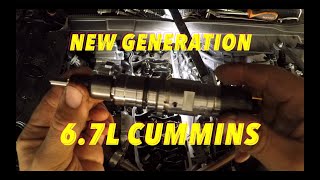
For the 2025 model year, the 6.7L Cummins was significantly updated, featuring a new high-pressure fuel pump (Bosch CP8), new top-feed injectors, and an increased rail pressure of up to 39,000 PSI. This makes the system highly precise and sensitive to injector performance. 🎬 Watch: A mechanic's deep dive into Cummins injector diagnostics. Ram has issued multiple Technical Service Bulletins (TSBs) that include code P0275, often alongside contribution codes for other cylinders. This suggests that the root cause may be systemic, sometimes requiring an ECM software calibration update at a dealership rather than an immediate hardware replacement.
Diagnostic Flowchart
Tap your situation to follow the diagnostic path that matches what you're seeing on this vehicle.
Symptoms You May Notice
- Check Engine Light is on
- Rough or vibrating idle
- Loss of engine power and slower acceleration
- Engine hesitation or surging
- Increased black or white smoke from the exhaust
- Poor fuel economy
- Engine knocking sound, especially under load
- Replacing only the fuel filter without addressing the underlying injector or software issue.
- Assuming a major mechanical failure before performing proper fuel system diagnostics.
- Replacing a fuel injector without also replacing the single-use high-pressure connector tube, leading to leaks.
Most Likely Causes
- Faulty Cylinder 5 Fuel Injector 🔴 High Probability → Shop Fuel Injector Fuel injectors are high-wear items in a high-pressure system. The leading causes of failure are fuel contamination (water, debris, corrosion) and poor fuel filtration. Internal components can wear or stick, preventing proper fuel atomization.
How to confirm: A technician can perform a cylinder contribution test or an injector kill test with a professional scan tool to isolate the weak cylinder. An injector return flow test can measure if the injector is leaking internally. A simple DIY test is to listen for a consistent 'clicking' from the injector body with a mechanic's stethoscope or long screwdriver.
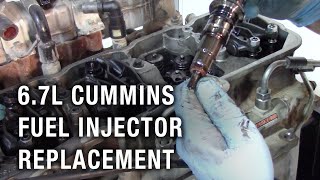
Typical fix: Replace the cylinder 5 fuel injector and the associated high-pressure connector tube. It is often recommended to replace all six injectors on high-mileage trucks. The injector bore must be thoroughly cleaned before installing the new injector. The new injector's IQA code may need to be programmed into the ECM.
Est. part cost: $300-$600 - Engine Control Module (ECM) Software Glitch 🟡 Medium Probability Multiple TSBs (#18-102-25, #18-009-26 REV.A, #18-014-26, #18-075-25 REV. A) have been issued for 2025-2026 models that list P0275 and other contribution codes. This indicates the ECM's calibration for monitoring cylinder balance may be too sensitive, leading to false codes. [1, 2, 3, 4 of pass 1]
How to confirm: A Ram dealership can check the vehicle's VIN against their database for open TSBs or available software updates for the Powertrain Control Module (PCM/ECM).
Typical fix: Reprogram the ECM with the latest manufacturer software. This must be done at a dealership or a properly equipped independent shop with a subscription to OEM service tools.
Est. part cost: $0-$250 - Fuel Injector Wiring or Connector Issue ⚪ Low Probability → Shop Fuel Injector Engine vibrations can cause wiring to chafe or connectors to become loose or corroded over time, interrupting the signal to the injector. The nuts on the injector solenoid posts can also loosen.
How to confirm: Visually inspect the wiring harness leading to the cylinder 5 injector for any signs of damage, corrosion, or loose pins at the connector. Check that the solenoid wire nuts are tight, but be extremely careful as they require very low torque (approx. 11-13 in-lbs). A mechanic can also check for proper voltage and signal at the injector connector.
Typical fix: Repair the damaged section of the wiring harness or replace the injector pigtail connector. Tighten loose connections to the correct, very low torque specification.
Est. part cost: $20-$100
Rare But Worth Checking
- Low Engine Compression: If the fuel system checks out, a mechanical issue like worn piston rings, a bad valve, or a failing head gasket could be the cause. A relative compression test (via scan tool) or a manual compression test is needed to confirm this.
- Contaminated Fuel: Water or debris in the fuel can damage multiple injectors. If P0275 appears with other contribution codes, check the fuel quality and replace both chassis and engine-mounted fuel filters.
- Faulty ECM Injector Driver: In rare cases, the internal driver circuit within the Engine Control Module (ECM) for a specific injector can fail. This can mimic the symptoms of a bad injector or wiring. If a known-good injector still fails on cylinder 5 and the wiring is intact, the ECM itself may be the culprit.
Diagnosis Steps
- Connect a professional OBD-II scanner to read the code and check for any other related codes.
- Check for applicable Technical Service Bulletins (TSBs) for your vehicle's VIN. The presence of TSBs #18-102-25, #18-009-26 REV.A, #18-014-26, or #18-075-25 REV. A suggests a dealer visit for a potential software update should be a primary step.
- Using the scan tool, perform a cylinder balance/contribution test to confirm that cylinder 5 is the source of the imbalance.
- Perform an injector 'kill' test to see if disabling cylinder 5 causes a noticeable change in idle. If there is little to no change, the injector is not working correctly.
- Listen to the injector with the engine running using a long screwdriver or stethoscope. A lack of a steady clicking sound indicates an electrical or internal injector failure.
- Visually inspect the wiring harness and connector for cylinder 5 for any damage, corrosion, or loose connections. Check torque on the injector solenoid nuts (use caution, spec is very low at ~13 in-lbs).
- If wiring is okay, perform an injector return flow test to check for excessive internal leakage.
- If the injector is suspected, remove and replace it. It is highly recommended to also replace the high-pressure connector tube. Thoroughly clean the injector bore before installation.
- If a new injector does not solve the issue, perform a mechanical compression test on cylinder 5 to rule out internal engine problems.
Parts You'll Likely Need
- Cylinder 5 Fuel Injector
(OEM #Mopar: 68568033AA (Standard Output), 68568034AA (High Output). Bosch: 0445124062 (SO), 0445124071 (HO). Note: These are for 2022-2024 models and may be superseded for 2025-2026.)— This is the most frequent cause of a cylinder contribution fault. The injector is responsible for delivering the precise amount of fuel, and failure leads directly to this code.
Trusted brands: Bosch, Mopar
OEM price range: $450-$600
Aftermarket price range: $300-$450 - Fuel Injector High-Pressure Connector Tube
(OEM #Bosch: F00RC00647. Note: This part number fits a wide range of 6.7L Cummins engines.)— This tube connects the fuel rail to the injector. It is a single-use, torque-to-yield part and must be replaced anytime an injector is replaced to ensure a proper seal under extreme pressure. Failure to replace it can cause persistent leaks.
Trusted brands: Bosch, Mopar, XDP
OEM price range: $40-$70
Aftermarket price range: $25-$50
Related Codes That Often Appear With This One
- P0305 — P0305 is a generic misfire code for cylinder 5. P0275 is the more specific diesel code indicating which cylinder is underperforming, and they often appear together.
- P0263, P0266, P0269, P0272, P0278 — These are the contribution/balance codes for the other cylinders. Seeing multiple codes together points towards a systemic issue like a software problem, contaminated fuel, or a failing fuel pump, as noted in the TSBs. [1, 2, 3, 4 of pass 1]
Technical Service Bulletins (TSBs) & Recalls
- 18-102-25: Lists P0275-00 - Cylinder 5 Contribution/Balance among others, suggesting a software update.
- 18-009-26 REV.A: Also lists P0275-00 with other cylinder balance codes, pointing to a potential calibration issue.
- 18-014-26: Another bulletin including P0275-00, reinforcing the likelihood of a software-based solution.
- 18-075-25 REV. A: Lists P0275-00 as part of a group of cylinder contribution codes, often addressed by an ECM re-flash.
Platform-Specific Known Issues
- TSB Software Updates for Contribution Codes: Ram has issued several bulletins for 2025-2026 models (TSB #18-102-25, #18-009-26 REV.A, #18-014-26, #18-075-25 REV. A) that list P0275-00 (Cylinder 5 Contribution/Balance) along with similar codes for all other cylinders. These bulletins suggest the primary fix is often an ECM software re-flash to adjust the sensitivity of the cylinder balance monitoring logic, rather than a hardware fault.
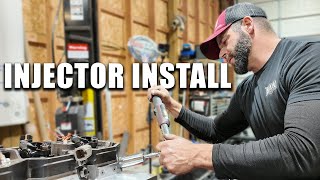
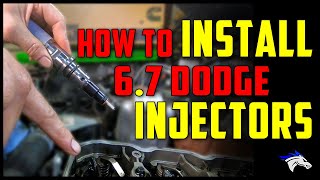
- Injector Installation Torque Criticality: The installation of a new injector on the 6.7L Cummins is highly sensitive to proper torque procedures. The high-pressure connector tube nut must be torqued to a final spec of ~37-41 ft-lbs, while the injector hold-down bolts are torqued to ~71 in-lbs. The electrical solenoid nuts are extremely delicate and only require ~11-13 in-lbs. Failure to follow the multi-stage torque sequence can result in fuel leaks or a poorly seated injector.
Mechanic-Grade Diagnostic Values
- Fuel Injector Solenoid Resistance — expected: Less than 1.0 Ohm, and greater than 0 Ohms (after zeroing meter leads).. Failure: An open circuit (OL/infinite resistance) or a reading of 0 Ohms indicates a failed injector solenoid.
- High-Pressure Fuel Rail (Common Rail) Pressure - Cranking — expected: Minimum of 4,000 PSI required for injectors to fire and engine to start.. Failure: Failure to build at least 4,000 PSI during crank can indicate leaking injectors, a bad pressure relief valve, or a weak high-pressure pump.
- High-Pressure Fuel Rail (Common Rail) Pressure - Idle — expected: Approximately 4,000-5,000 PSI.. Failure: Pressure that fluctuates more than 500 PSI at idle can indicate a faulty Fuel Control Actuator (FCA).
- Fuel Rail Pressure Sensor Voltage (Key On, Engine Off) — expected: Approximately 0.5 Volts.. Failure: A reading significantly different from 0.5V, or a pressure reading on a scan tool that is not near 0 PSI, points to a faulty sensor or wiring issue.
- Total Injector Return Flow (All Injectors) — expected: Less than 210 mL in 30 seconds during a Fuel Pressure Override Test.. Failure: Total return flow exceeding 210 mL indicates excessive leakage from one or more injectors.
- Individual Injector Return Flow Contribution — expected: Less than 40 mL per injector during the 30-second test.. Failure: Any single injector contributing more than 40 mL to the total return volume is considered faulty.
Scan Tool Commands That Help
- wiTECH 2.0 (OEM Dealer Tool): Injector Kill Test — Used to electronically disable one cylinder at a time. If disabling cylinder #5 results in no change to engine idle quality, it confirms that cylinder was not contributing power.
- wiTECH 2.0 (OEM Dealer Tool): Fuel Pressure Override Test — This function commands the fuel pump to build maximum pressure (e.g., 26,000+ PSI) while the engine is running at a set RPM (e.g., 1200 RPM). It is used to stress-test the system and is required for performing an accurate injector return flow test.
- wiTECH 2.0 (OEM Dealer Tool): View All DTCs — Essential for checking for related codes, including any proprietary or 'shadow' codes that may not be visible on generic scanners. This can provide more context than the standard P-code alone.
Wiring & Ground Locations
- Injector Harness Connector (Bank 2) — On the driver's side of the valve cover, the rearmost of the two large harness connectors is for cylinders 4, 5, and 6.. This is the main pass-through connector for the cylinder 5 injector circuit. A poor connection, corrosion, or damage at this specific plug can cause an electrical fault for P0275.
- Engine Block Grounds — Key ground points are located on the lower left front of the engine block and below the battery tray.. A poor engine ground can cause fluctuating voltage and erratic behavior in electronic components, including the ECM and injector drivers, potentially leading to false contribution codes.
- Fuel Rail Pressure Sensor Connector — Located on the fuel rail, typically towards the rear top of the engine on the driver's side.. While not directly for the injector, an erratic signal from this sensor can cause the ECM to misinterpret cylinder performance, and its wiring is in the same general harness area.
Real Owner Repair Stories
- Reddit user on r/Diesel (2009 Ram 2500 6.7L Cummins) — Intermittent low fuel pressure codes.
❌ Tried (didn't work) Replaced the lift pump, Replaced the fuel filter, Replaced the fuel pressure regulator (FCA)
✅ What actually fixed it The root cause was a massive fluctuation in voltage. After cleaning all four battery terminals and properly clearing the original stored codes (not just the light), the problem was resolved. A dealership had quoted $16,500 to replace the entire fuel system.
OEM Part Supersession History
Unknown→Mopar: 68568033AA / Bosch: 0445124062— Standard part for 2022-2024 Standard Output engines.
Heads up: These part numbers are confirmed for 2022-2024 models. While the 2025 engine is heavily revised, these may still be the correct service parts, but verification with a dealer is critical.Unknown→Mopar: 68568034AA / Bosch: 0445124071— Standard part for 2022-2024 High Output engines.
Heads up: The 2025 model year standardizes on the High Output engine configuration, but uses new 'top-feed' injectors. It is highly likely that injectors for 2024 and older models are NOT compatible with the 2025 engine.
Model Year Variations Within This Range
- 2025-2026: The 2025 model year introduced a significant engine update, sometimes called 'Gen 4.5'. It features a new Bosch CP8 high-pressure fuel pump, new 'top-feed' injectors, and rail pressure increased to 39,000 PSI. It also replaces the grid heater with glow plugs. These changes mean that fuel system components, especially injectors and the high-pressure pump, are likely not interchangeable with 2024 or older models. Diagnostic procedures related to pressure will also have different target values.
Helpful Videos
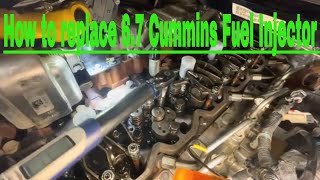
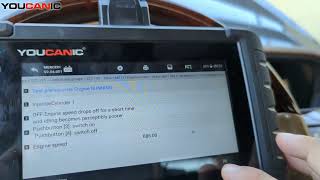

The information in this article is provided for general reference and educational purposes only. Vehicle specifications, procedures, and part compatibility can vary by production date, trim level, and region. Always consult your vehicle's factory service manual and verify part numbers before purchasing or performing repairs. Safety-critical components such as airbags, seat belts, and braking systems should be installed by a qualified professional.
- Ram 3500:
- 🧭 Diagnostic Flowchart
- 🎬 Helpful Videos
- What's Unique About the 2025-2026 Ram 3500
- Symptoms You May Notice
- Most Likely Causes
- Rare But Worth Checking
- Diagnosis Steps
- Parts You'll Likely Need
- Related Codes That Often Appear With This One
- Technical Service Bulletins (TSBs) & Recalls
- Platform-Specific Known Issues
- Mechanic-Grade Diagnostic Values
- Scan Tool Commands That Help
- Wiring & Ground Locations
- Real Owner Repair Stories
- OEM Part Supersession History
- Model Year Variations Within This Range
- 🎟️ Get 5% Off