

P0276 on 2009-2014 GMC Acadia: Cylinder 6 Injector Circuit Low Causes and Fixes
On a 2009-2014 GMC Acadia, code P0276 is most often caused by a chafed or damaged fuel injector wiring harness, as documented in GM Technical Service Bulletin #PIP4924D. Before replacing the injector, thoroughly inspect the harness for rub spots against the engine, brackets, or other components, a very common failure point for this platform.
- For a P0276 code on a 2009-2014 Acadia, suspect a wiring problem before a part problem.
- Thoroughly inspect the fuel injector wiring harness for rub marks, especially near the intake and valve covers, as per GM TSB #PIP4924D.
- Cylinder 6 is located at the front of the engine (near the radiator) on the driver's side.
- Do not drive the vehicle extensively with a flashing check engine light, as this can cause expensive catalytic converter damage.
- This is a shared problem across the GM Lambda platform (Buick Enclave, Chevy Traverse, Saturn Outlook).
What's Unique About the 2009-2014 Gmc ACADIA
For this generation of GMC Acadia and its platform mates (Buick Enclave, Chevrolet Traverse, Saturn Outlook) with the 3.6L V6 engine, there is a well-documented, high-frequency issue with the fuel injector wiring harness. General Motors issued Technical Service Bulletin #PIP4924D specifically advising technicians to inspect the harness for damage where it can rub against the intake plenum, valve cover bolts, EVAP purge solenoid bracket, or fuel lines. This makes a wiring fault a much higher probability on this vehicle compared to simply having a bad fuel injector. Forum discussions are filled with owners who have fixed this exact code by finding and repairing a chafed wire.
Diagnostic Flowchart
Tap your situation to follow the diagnostic path that matches what you're seeing on this vehicle.
Symptoms You May Notice
- Check Engine Light is on, and may be flashing
- Engine runs rough or shakes, especially at idle
- Noticeable loss of power and sluggish acceleration
- Reduced fuel economy
- Engine may hesitate or stall
- Replacing the spark plug and ignition coil for cylinder 6 without first diagnosing the fuel injector circuit. A circuit code like P0276 points specifically to an electrical issue with the injector system, not an ignition component.
Most Likely Causes
- Chafed or Damaged Fuel Injector Wiring Harness 🔴 High Probability → Shop Engine Wiring Harness This is a documented issue cited in GM Technical Service Bulletin #PIP4924D. The harness routing makes it susceptible to rubbing against engine components, causing wires to short out. Common chafe points mentioned by owners and in TSBs include the corner of the cylinder head, the drive belt idler pulley bracket, and the EVAP purge solenoid bracket.
How to confirm: Visually inspect the entire fuel injector harness, paying close attention to contact points with the intake manifold, cylinder heads, and fuel lines. Look for worn insulation or exposed copper wires. You may need to remove the engine cover and gently move the harness to see the damage. In many cases, the damage is on the underside of the loom.
Typical fix: Repair the damaged section of wire with a new connector pigtail or by soldering and heat-shrinking. Ensure the repaired harness is re-routed or protected with additional conduit or tape to prevent the issue from recurring.
Est. part cost: $15-$50 for a pigtail, $500-$1000+ for a full harness - Failed Cylinder 6 Fuel Injector 🟡 Medium Probability → Shop Fuel Injector The direct injection (DI) injectors on the 3.6L engine operate under high pressure and can fail internally, causing an electrical short.
How to confirm: After confirming the wiring is intact, swap the cylinder 6 fuel injector with an injector from another cylinder (e.g., cylinder 4). Clear the codes and run the engine. If the code changes to P0270 (Cylinder 4 Injector Circuit Low), the injector is faulty. This is a definitive test.
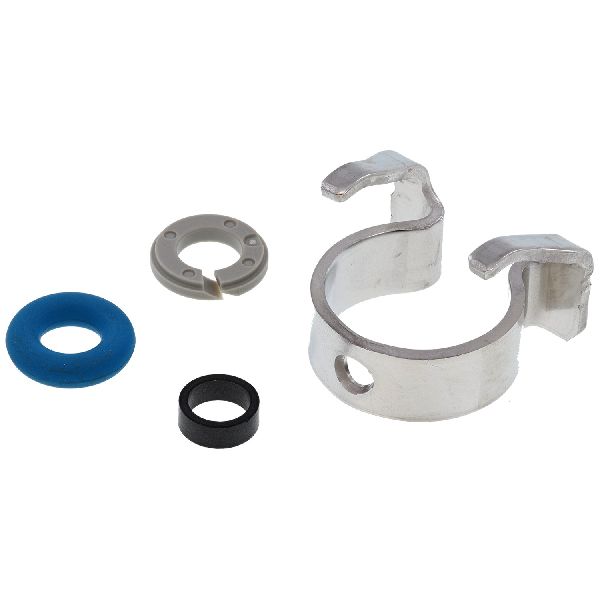
Typical fix: Replace the faulty fuel injector. It is often recommended to replace all injectors on the same bank, or all six, if they are high mileage to ensure balanced fuel delivery. Note that replacing DI injectors also requires replacing the Teflon seals.
Est. part cost: $50-$155 per injector - Corroded or Loose Injector Connector ⚪ Low Probability
How to confirm: Unplug the connector at the cylinder 6 fuel injector and inspect the pins for corrosion (green or white powder) or damage. Ensure it clicks securely back into place. Check for broken locking tabs.
Typical fix: Clean the connector terminals with an electrical contact cleaner or replace the connector pigtail if it's damaged or the lock is broken.
Est. part cost: $15-$50
Rare But Worth Checking
- Faulty Powertrain Control Module (PCM): → Shop Engine Control Module (ECM) This is rare, but if the wiring and injector are confirmed to be good, the injector driver circuit inside the PCM may have failed. This should be the last item to check.
Diagnosis Steps
- Scan the vehicle for all stored trouble codes. Note if P0306 or other injector codes are present.
- Identify Cylinder 6. On the transverse 3.6L V6, the front bank of cylinders (closest to the radiator) is 2-4-6, from passenger to driver side. Cylinder 6 is on the driver's side, closest to the front.
- Perform a thorough visual inspection of the fuel injector wiring harness as recommended by TSB #PIP4924D. Check for any signs of rubbing, melting, or chafing against the engine, particularly near the EVAP purge solenoid bracket and where the harness bends around the cylinder head.
- If no wiring damage is found, disconnect the harness at the cylinder 6 injector. Use a multimeter to check the resistance of the injector. A good injector will typically have a low resistance value (check service manual for spec, but compare to an adjacent injector). An open circuit (OL) or zero resistance (short) indicates a bad injector.
- If injector resistance is okay, use a noid light to verify if the ECM is sending a pulse signal while the engine is cranked. A noid light that doesn't flash points to a wiring or ECM issue.
- If a signal is present and injector resistance is good, consider swapping the cylinder 6 injector with the cylinder 4 injector. Clear codes, run the engine, and see if the fault code moves to cylinder 4 (P0270). If it does, the injector is bad.
- If the fault code remains on cylinder 6 after the swap, the problem is in the wiring between the ECM and the injector connector. Use a multimeter to check for continuity on the control and supply wires from the injector connector to the ECM connector. Then, check for a short to ground on the same wires with the connectors unplugged at both ends.
Parts You'll Likely Need
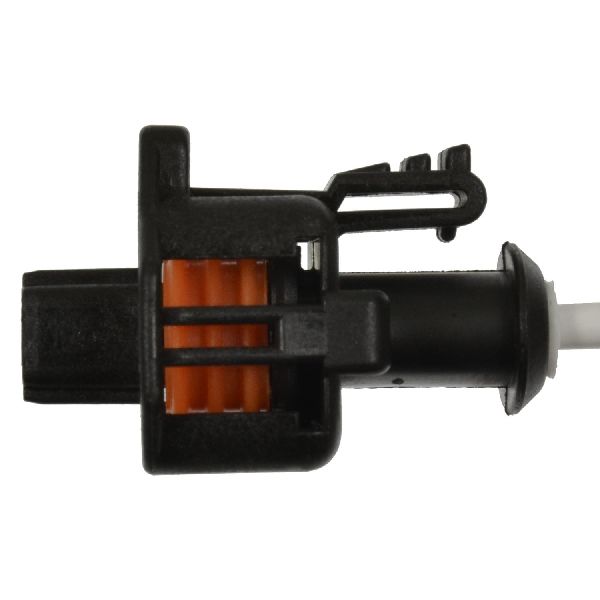
- Fuel Injector Wiring Harness Connector Pigtail
(OEM #e.g., ACDelco PT2183)— This is used to repair a damaged or corroded connector or a short section of the harness, which is the most common cause on this vehicle.
Trusted brands: ACDelco, Dorman, Standard Motor Products
OEM price range: $30-$60
Aftermarket price range: $15-$40 - Fuel Injector
(OEM #ACDelco 12638530 (or superseding part number 12669384))— If the injector itself has failed with an internal short, it will need to be replaced.
Trusted brands: ACDelco, Bosch, Standard Motor Products
OEM price range: $90-$155
Aftermarket price range: $50-$120
Related Codes That Often Appear With This One
- P0306 — This code means 'Cylinder 6 Misfire Detected'. It is almost always present with P0276 because the injector circuit fault prevents proper fueling, causing the cylinder to misfire.
- P0300 — This 'Random Misfire' code can appear with P0306 if the misfire is severe or intermittent enough to confuse the ECM's cylinder identification logic.
- P0206, P0267, P0273, etc. — If the wiring harness is chafed badly, it can affect multiple injector circuits at once, causing a variety of injector circuit codes for other cylinders to appear alongside P0276. TSB PIP4924D lists over 20 possible injector codes related to this harness issue.
Technical Service Bulletins (TSBs) & Recalls
- PIP4924D: Instructs technicians to inspect the fuel injector wiring harness for rubbing or internal opens when encountering a list of injector codes including P0276. Specific inspection points include contact with the EVAP purge solenoid bracket, the engine block, and the front corner of the left-hand cylinder head.
Platform-Specific Known Issues
- TSB #PIP4924D documents a known issue with the fuel injector wiring harness rubbing through against engine components, causing various injector circuit codes, including P0276.
- Owners on acadiaforum.net frequently report finding the injector wiring harness chafed near the front, driver's side of the engine bay, sometimes against a bracket for an A/C line or the EVAP purge solenoid.
Mechanic-Grade Diagnostic Values
- Direct Fuel Injector Resistance — expected: 1.5 - 2.5 ohms. Failure: A reading near zero indicates a short; an infinite (OL) reading indicates an open circuit.
- Injector Connector Voltage (Key On, Engine Off) — expected: 12.0 V ± 0.5 V on the power supply wire. Failure: A significant voltage drop or no voltage indicates a fault in the power supply circuit from the fuse block.
- Injector Control Circuit to Ground Resistance — expected: Greater than 10,000 ohms (10 kΩ). Failure: A low resistance reading indicates a short to ground in the control wire between the ECM and the injector.
Scan Tool Commands That Help
- GM GDS2 / High-End Aftermarket: Fuel Injector Balance Test — This automated test commands each injector to fire sequentially while monitoring the drop in fuel rail pressure. It can identify a weak or clogged injector that may not have a hard electrical fault. GM specifies that the pressure drop for each injector should be within a certain tolerance (e.g., 1.5 PSI or 10 kPa) of the others.
- GM GDS2 / Tech2 / High-End Aftermarket: Cylinder Power Balance / Injector Kill — This function allows the technician to manually disable one cylinder at a time. When disabling cylinder 6, if there is little to no change in engine RPM or sound, it confirms that cylinder 6 was not contributing, pointing to a fault in its fuel, spark, or compression. This helps isolate the issue to a specific cylinder.
Wiring & Ground Locations
- G110 — Right front of the engine, mounted to the cylinder head.. This is a primary ground point for various engine components. A loose or corroded G110 can cause erratic behavior and intermittent faults in sensor and actuator circuits, including the potential for voltage issues that could affect injector operation.
- G113 — Left side of the engine, at the engine-to-transmission stud.. This is another critical engine ground. Given its location, it can be disturbed during transmission or clutch work. A poor connection here can lead to a host of engine management faults.
- ECM Connector X1 — On the Engine Control Module (ECM), located on the left side of the engine.. This is the main connector where the injector control circuits originate. A poor pin connection, corrosion, or backed-out terminal for the cylinder 6 injector driver wire at this connector can cause a P0276 code. A pinout diagram is required for testing continuity from this connector to the injector.
Real Owner Repair Stories
- acadiaforum.net user (2009-2014 GMC Acadia (specific year not mentioned, but applies to platform)) — Check Engine Light with codes P0276 and P0306 (Cylinder 6 misfire).
❌ Tried (didn't work) Initially suspected a bad fuel injector.
✅ What actually fixed it Found the injector wiring harness rubbing on a metal A/C line bracket near the front of the engine. The insulation on one wire was worn through, causing a short. The fix was to repair the wire with tape and use a zip tie to secure the harness away from the bracket.
OEM Part Supersession History
12638530→12669384— This is a common supersession for GM parts, typically indicating minor revisions for improved reliability, durability, or manufacturing efficiency.
Heads up: The parts are interchangeable. Part number 12669384 also replaces previous numbers 12611545 and 12632255. When replacing, it is best practice to use the latest part number available.
Model Year Variations Within This Range
- 2009-2011 (LLT) vs 2012-2014 (LFX): The 3.6L V6 engine was updated from the LLT to the LFX version starting in the 2012 model year. While the fundamental design and P0276 diagnosis are similar, there are key differences. The LFX has a different, composite intake manifold and integrated exhaust manifolds (part of the cylinder head), which changes disassembly procedures. The LFX also uses a different ECM (Delphi instead of Bosch), which could alter some specific diagnostic software functions or pinouts. However, the primary cause of P0276 related to harness chafing remains a known issue across both engine versions in this chassis.
We Have This Part in Stock



The information in this article is provided for general reference and educational purposes only. Vehicle specifications, procedures, and part compatibility can vary by production date, trim level, and region. Always consult your vehicle's factory service manual and verify part numbers before purchasing or performing repairs. Safety-critical components such as airbags, seat belts, and braking systems should be installed by a qualified professional.
- Gmc ACADIA:
- 🧭 Diagnostic Flowchart
- 🛍️ Shop This Part
- What's Unique About the 2009-2014 Gmc ACADIA
- Symptoms You May Notice
- Most Likely Causes
- Rare But Worth Checking
- Diagnosis Steps
- Parts You'll Likely Need
- Related Codes That Often Appear With This One
- Technical Service Bulletins (TSBs) & Recalls
- Platform-Specific Known Issues
- Mechanic-Grade Diagnostic Values
- Scan Tool Commands That Help
- Wiring & Ground Locations
- Real Owner Repair Stories
- OEM Part Supersession History
- Model Year Variations Within This Range
- 🎟️ Get 5% Off