

OBD-II Code P0277: Cylinder 6 Injector Circuit High
What P0277 means, why it triggers, and how to fix it
- P0277 indicates the engine computer detects excessive voltage in the cylinder 6 fuel injector circuit, causing an immediate misfire.
- On GM 3.0L and 3.6L V6 engines (2009-2017), a chafed wiring harness rubbing against the engine is the primary cause, documented in TSB #PIP5029H.
- On Ford 6.0L Powerstroke diesels (2003-2007), this code almost always points to a failed logic board inside the Fuel Injection Control Module (FICM).
- Driving with an active P0277 dumps unburned fuel into the exhaust, which destroys the catalytic converter and turns a $200 repair into a $2,500+ replacement within weeks.
What Does P0277 Mean?
P0277 means the Engine Control Module (ECM) detects excessive voltage in the cylinder #6 fuel injector electrical circuit. This high voltage prevents the injector from opening, starving the cylinder of fuel and causing an immediate engine misfire, rough idle, and power loss.
Technical definition: The SAE/ISO definition is "Cylinder 6 Injector 'A' Circuit High". The PCM uses a transistor driver to rapidly pulse the ground connection, turning the injector on and off. P0277 sets when the PCM detects voltage above the pre-programmed threshold on this control circuit, almost always due to a short to a 12V power source.
Can I Drive With P0277?
Yes, But With Caution. You can drive for short, essential trips (under 50 miles), but it is strongly discouraged. Driving with a misfiring cylinder sends unburned fuel into the exhaust, rapidly overheating and destroying the catalytic converter. Ignoring the issue turns a sub-$500 repair into a $1,500-$3,000+ replacement. If the check engine light flashes, stop driving immediately.
Common Causes
- Damaged or Chafed Wiring Harness (Very Common) — The fuel injector control wire rubs against engine parts or brackets, wearing away the insulation and shorting directly to a 12V power source. This is the primary cause on GM V6 engines with known harness routing flaws.
- Faulty Cylinder 6 Fuel Injector (Common) — An electrical short within the injector's internal solenoid coil causes the circuit's voltage to read abnormally high. This occurs frequently on high-mileage vehicles as internal windings break down.
- Failed Fuel Injection Control Module (FICM) (Common) — On Ford 6.0L Powerstroke diesels, the FICM generates the 48V needed to fire the injectors. A failed internal logic board sends an incorrect high-voltage signal, triggering P0277.
- Corroded or Loose Electrical Connection (Less Common) — Moisture intrusion or a loose connector at the fuel injector creates high resistance or an intermittent short, leading to abnormal voltage readings.
- Rodent Damage (Rare) — Rodents chew through the soy-based wiring insulation used in modern engine bays, causing the injector control wires to short together or to a power source.
- Faulty Powertrain Control Module (PCM) (Rare) — The internal driver circuit within the engine's computer fails. This is the least likely cause and requires replacing or reprogramming the PCM.
Symptoms
- Check Engine Light is On — The ECM illuminates the Malfunction Indicator Lamp (MIL). It flashes if the misfire is severe enough to damage the catalytic converter.
- Engine Misfire and Hesitation — The vehicle stumbles, hesitates, or shudders during acceleration because cylinder 6 is not contributing power.
- Rough or Shaky Idle — The engine runs unevenly and vibrates noticeably when stopped or at low RPMs.
- Smell of Unburned Fuel — A strong gasoline odor emits from the exhaust pipe as raw fuel dumps into the exhaust system.
- Reduced Engine Power — The vehicle feels sluggish, especially under load or climbing hills. The PCM often enters 'limp mode' to prevent damage.
- Decreased Fuel Economy — Overall fuel consumption increases noticeably due to the engine's lost efficiency.
Diagnostic Flowchart
Tap your situation to follow the diagnostic path that matches what you're seeing on this code.
Common Fixes & Costs
- Repair Damaged Wiring Harness — Parts: $10-$50, Labor: $180-$650, ~1.5 hr book time (Intermediate)
- Replace Cylinder 6 Fuel Injector — Parts: $60-$250, Labor: $150-$500, ~2.5 hr book time (Intermediate)
- Replace Fuel Injection Control Module (FICM) — Parts: $400-$1000, Labor: $150-$300, ~1.5 hr book time (Intermediate)
- Replace Fuel Injector Connector Pigtail — Parts: $15-$40, Labor: $100-$250, ~1.2 hr book time (Intermediate)
- Replace Powertrain Control Module (PCM) — Parts: $600-$1200, Labor: $200-$300, ~1.5 hr book time (Professional)
DIY vs Professional
- Repair Damaged Wiring Harness — Beginner: False
Tools: Multimeter, wire cutters/strippers, soldering iron, heat shrink tubing, electrical tape. - Replace Cylinder 6 Fuel Injector — Beginner: False
Tools: Socket set, torque wrench, new injector seals, intake manifold gasket set. - Replace Fuel Injection Control Module (FICM) — Beginner: True
Tools: Socket set (8mm, 10mm), Torx bits (T10, T20). - Replace Powertrain Control Module (PCM) — Beginner: False
Tools: Socket set, specialized programming tools.
Used vs. New Parts: Buying Guide
When a used part is worth it: A professionally remanufactured fuel injector balances cost and reliability. A used wiring harness from a non-accident vehicle is viable if a new OEM harness is prohibitively expensive.
Donor-vehicle mileage cap: roughly under 80000 miles for the part to have meaningful remaining life.
Donor quality checklist:
- Verify the part number matches exactly.
- Inspect wiring for brittleness, previous repairs, or corroded connectors.
- Ensure remanufactured injectors are flow-tested and include a warranty.
Decision logic:
- If The vehicle is under powertrain warranty → Use a new OEM part to avoid warranty complications.
- If The vehicle is out of warranty → A quality aftermarket or remanufactured fuel injector offers the best value.
- If The part is a complex wiring harness and budget is tight → A used harness from a trusted salvage source is acceptable but carries higher risk.
Warranty tradeoff: Used parts typically have a 30-90 day warranty. Aftermarket parts offer 1-year to lifetime warranties. OEM parts carry a 12-month warranty.
Worst-case if a used part fails: $300-$800 if a faulty aftermarket part fails, requiring repeat labor and replacement costs.
What Happens If You Wait — Timeline
- 0-1 week: Check Engine Light illuminates. A slight rough idle is noticeable on cold starts. (MPG impact: 0-5%% · Added cost: $0)
- 1 week - 2 months: Misfire becomes consistent, causing engine vibration and hesitation. Unburned fuel enters the exhaust. (MPG impact: 5-15%% · Added cost: $20-$80 in wasted fuel)
- 2-6 months: The catalytic converter substrate melts from raw fuel bombardment. The vehicle feels severely underpowered. (MPG impact: 15-25%% · Added cost: $1,200 - $2,800 (Catalytic converter replacement required))
- 6+ months: Catalytic converter clogs completely. Unburned fuel washes oil from cylinder walls, accelerating engine wear. (MPG impact: 25-50%+% · Added cost: $3,000 - $5,000+)
Cost of Not Fixing It
- 0-1 month: Noticeable drop in fuel economy (5-15%), rough idle, and poor acceleration. (Added cost: Negligible, other than increased fuel costs.)
- 1-6 months: Raw fuel overheats and destroys the catalytic converter and fouls oxygen sensors. (Added cost: $1200-$2800)
- 6+ months: Unburned fuel washes oil from the cylinder wall, causing severe piston ring and cylinder wear. (Added cost: $3000+)
Diagnosis Steps
- Read Codes and Review Freeze Frame Data
Use an OBD-II scanner to confirm P0277. Note any accompanying codes like P0306 (Cylinder 6 Misfire), which confirms the electrical fault is causing a performance issue. Review freeze frame data to identify engine conditions when the fault occurred.
Tools: OBD-II Scan Tool (Beginner) - Thoroughly Inspect the Wiring Harness
Visually inspect the wiring loom routing to the cylinder 6 injector. Look for chafing, melting, or exposed copper where the harness touches the engine block, brackets, or fuel lines. On GM V6 models, scrutinize the harness near the intake plenum.
Tools: Flashlight, Inspection Mirror (Beginner) - Inspect the Injector Connector
Unplug the cylinder 6 injector connector. Check for green corrosion, moisture, or bent pins. Ensure the locking tab clicks securely when reconnected.
Tools: Flashlight (Beginner) - Test the Injector's Resistance
With the injector unplugged, measure the resistance across its two pins using a multimeter set to Ohms (Ω). Most high-impedance injectors measure 10-16 ohms. A reading near zero confirms an internal short, requiring replacement.
Tools: Multimeter (Intermediate) - Perform a Noid Light Test
Plug a noid light into the injector harness connector and crank the engine. A flashing light indicates a healthy circuit. A light that stays on solid confirms a 'circuit high' condition where the control wire is shorted to power.
Tools: Noid Light Set (Intermediate) - Check for a Short to Voltage
Turn the key 'On' (engine off). Probe both terminals in the unplugged harness connector with a multimeter set to DC Volts (black lead to battery ground). One wire shows ~12V (power feed). If the other wire (PCM control) also shows battery voltage, it is shorted to power in the harness.
Tools: Multimeter (Advanced) - Swap the Fuel Injector
Swap the cylinder 6 injector with an adjacent cylinder (e.g., cylinder 4). Clear codes and run the engine. If the code changes to P0275 (Cylinder 4 Circuit High), the injector is faulty. If P0277 returns, the wiring or PCM is the culprit.
Tools: Basic hand tools (Advanced) - Perform a Voltage Drop Test
Measure voltage drop across the ground and power circuits while cranking. Readings above 0.1V on the ground side or 0.2V on the power side indicate excessive resistance in the wiring.
Tools: Multimeter (Advanced) - Analyze the Injector Waveform
Connect an oscilloscope to the injector control wire. A healthy waveform drops sharply to near zero when commanded on, followed by a 60V+ inductive spike when turned off. A missing spike or failure to drop to zero confirms a circuit high fault.
Tools: Oscilloscope, Back-probe pins (Professional) - Check Live Fuel Trim Data
Monitor Short-Term (STFT) and Long-Term Fuel Trims (LTFT) for Bank 2. Consistently high negative values (-15% or more) indicate the PCM is pulling fuel to compensate for an injector stuck open by a shorted circuit.
Tools: Advanced OBD-II Scan Tool (Advanced)
When This Code Triggers (Freeze-Frame Conditions)
- Engine Coolant Temp: 180-200°F (Fully warmed up)
- RPM: 1500-2500 (Cruise / steady throttle)
- Engine Load: 30-60% (Light to moderate acceleration)
- Vehicle Speed: 35-55 mph (City or highway driving)
Related Codes
- P0306 — Cylinder 6 Misfire Detected. P0277 is the electrical fault causing this misfire. Diagnose P0277 first to resolve both codes.
- P0276 — Cylinder 6 Injector Circuit Low. This is the opposite of P0277 (short to ground vs short to voltage). If both appear intermittently, a damaged wire is randomly touching ground and power sources.
- P0206 — Injector Circuit/Open - Cylinder 6. A chafed wire causes both codes if it intermittently breaks contact (Open) and then touches a power source (High).
- P2155 — Fuel Injector Group D Circuit Low/Open. A severe wiring short causing P0277 on cylinder 6 affects the entire bank's circuit, triggering this group code.
Climate & Environmental Factors
- Cold Weather: Cold temperatures exacerbate issues with a failing Fuel Injection Control Module (FICM) on Ford 6.0L Powerstroke engines, leading to hard-start conditions. Cold weather also drives rodents into engine bays, increasing wiring damage risks.
- Rodent Infestation: Rodents chew on soy-based wire insulation, causing shorts that trigger P0277. This is common in vehicles parked outdoors for extended periods.
How to Talk to a Mechanic About This Code
Say this: "I have a P0277 code for the cylinder 6 injector circuit. I'd like to schedule a diagnostic that includes a visual inspection of the wiring harness for chafing and a resistance test of the injector before replacing parts."
This directs the technician to perform specific electrical diagnostic steps rather than immediately replacing the most expensive part.
Avoid saying:
- 'Just fix whatever's wrong'
- 'My check engine light is on, can you look at it?'
- 'Whatever you recommend'
Questions to ask before authorizing the repair:
- Did you find a short-to-voltage on the control wire for the #6 injector?
- What was the resistance measurement of the fuel injector in Ohms?
- Did you confirm the fault by swapping the injector to another cylinder?
- Will you perform a spot repair or replace the harness pigtail?
- What is the warranty on parts and labor?
Where to Take It: Dealer vs Independent vs Chain
- Dealer:
Recommended if your vehicle is under warranty or is a GM model with the known wiring harness TSB.
Best for: Vehicles under powertrain warranty, Vehicles with known TSBs for this issue (e.g., GM 3.6L V6 models), Complex electrical issues requiring manufacturer-specific tools
Downsides: Highest labor rates., Dealers prefer replacing entire harnesses rather than performing cost-effective spot repairs. (Typical cost: +50% vs. baseline) - Independent Shop:
Best fit for most out-of-warranty vehicles. A reputable independent shop effectively diagnoses P0277 at a lower cost.
Best for: Out-of-warranty vehicles where cost is a factor., Diagnosing common electrical faults or failed components.
Downsides: Quality varies; look for ASE certification in electrical systems. (Typical cost: +0% vs. baseline) - Chain Shop:
Not recommended. Electrical troubleshooting requires a higher skill level than typically found at chain shops.
Best for: Routine maintenance like oil changes or brake pads.
Downsides: Technician skill for complex electrical diagnosis is inconsistent., Often defaults to replacing the injector without proper circuit testing. (Typical cost: -10% vs. baseline)
When to Walk Away From the Repair
If the total estimated repair cost exceeds 40-50% of the car's private-party value, consider selling or trading in the vehicle.
- Car worth $4000, fix is $750: Fix it — this repair is well below the threshold and restores core engine function.
- Car worth $8000, fix is $3500: Borderline (44%) — get a second opinion. If the fix involves replacing the PCM and a wiring harness, the cost approaches the walk-away point.
- Car worth $3000, fix is $1800: Walk away (60%) — the repair cost is too high relative to the car's value.
What Scan Tool You Need for This Code
Minimum: A scanner that reads codes, shows freeze-frame data, and displays live data streams.
A $20 reader only provides the code. Diagnosing P0277 requires freeze-frame data and bidirectional control to command the injector and actively test the circuit.
Budget: BlueDriver Pro (~$99) — Connects to a smartphone to provide detailed definitions, freeze-frame data, and live data graphing. Lacks bidirectional control.
Mid-range: Foxwell NT510 Elite (~$180) — Offers bidirectional control to command the #6 injector on and off, actively testing the driver and circuit.
Professional: Autel MaxiCOM MK808S (~$369) — Provides dealer-level diagnostic capabilities, extensive bidirectional controls, and injector balance tests to pinpoint tough electrical faults.
Rent vs buy: Borrow a basic reader from an auto parts store for a one-time check. Buy a mid-range scanner with bidirectional capabilities for long-term DIY repairs.
How to Clear the Code After You Fix It
- Use an OBD-II scan tool to clear the diagnostic trouble code.
- Perform a complete drive cycle to reset the vehicle's readiness monitors.
Drive cycle (~30 minutes): Start cold and idle for 3 minutes. Drive in mixed city conditions for 15 minutes, followed by 10 minutes of steady highway speeds (55 mph). Allow the vehicle to cool down completely.
Readiness monitors affected: Catalyst monitor, Oxygen (O2) sensor monitor, Misfire monitor
Before emissions retest: drive at least 100 miles to fully set monitors.
Watch out for:
- Disconnecting the battery clears the code but resets all readiness monitors to 'Not Ready', causing an automatic emissions failure.
- The code returns immediately if the electrical short is not repaired.
- Failing to drive under varied conditions prevents readiness monitors from setting.
Will This Fail Emissions / State Inspection?
Yes — this code typically fails an OBD-II emissions inspection.
- California: An illuminated Check Engine Light is an automatic failure. A drive cycle must set all readiness monitors before re-testing.
- New York: A vehicle automatically fails if the Check Engine Light is on. A drive cycle must be completed after clearing codes.
- Texas: An active P0277 results in automatic failure. Inspection stations detect recently cleared codes and reject vehicles until monitors are set.
Most Commonly Affected Vehicles
- Chevrolet Equinox / GMC Terrain (V6 models) (2010-2017) — Extremely common due to the wiring harness chafing against the intake plenum or cylinder head. Covered under GM TSB #PIP5029H.
- Chevrolet Traverse / GMC Acadia / Buick Enclave (2009-2017) — These platform-mates share the 3.6L V6 and are highly susceptible to the wiring harness chafing issue detailed in GM TSB #PIP5029H.
- Cadillac CTS, SRX, STS (2008-2015) — Models equipped with the 3.0L or 3.6L V6 engines are prone to the same wiring harness chafing fault.
- Ford F-Series Super Duty (with 6.0L Powerstroke) (2003-2007) — A 'Circuit High' code on these engines frequently points to a failed logic board inside the Fuel Injection Control Module (FICM).
- Chevrolet Silverado / GMC Sierra (2007-2024) — Injector circuit issues arise from both injector failure and wiring harness integrity problems where the harness passes over hot engine components.
- Chevrolet Impala (2012-2014) — Impala models using the 3.6L LFX V6 engine are included in GM TSB #PIP5029H for the injector harness chafing problem.
- Dodge / Chrysler Grand Caravan / Town & Country (2011-2019) — The 3.6L Pentastar V6 experiences P0277 due to failed injectors or wiring. Accessing cylinder 6 requires removing the upper intake manifold.
- Jeep Wrangler (JK) (2012-2018) — The 3.6L Pentastar V6 sets this code primarily due to internal injector failure or harness damage.
- Hyundai / Kia Santa Fe / Sorento (V6 models) (2003-2010) — V6 models from this era experience injector circuit faults pointing to either wiring degradation or injector failure.
Manufacturer-Specific Notes
- General Motors (Chevrolet, GMC, Cadillac, Buick): GM issued TSB #PIP5029H for 3.0L and 3.6L V6 models (2009-2017). It warns that P0277 is frequently caused by the fuel injector wiring harness rubbing through its insulation against the engine. Always inspect the harness before replacing parts.
- Ford: On 6.0L Powerstroke diesels (2003-2007), 'Injector Circuit High' codes for any cylinder point to a failed logic board on the Fuel Injection Control Module (FICM). A failing FICM also presents as a hard-start condition in cold weather.
- Chrysler / Dodge / Jeep: On the 3.6L Pentastar V6, cylinder #6 is located on the rear bank against the firewall. Accessing the injector requires removing the upper intake manifold, adding significant labor time.
- General Motors (Direct Injection Engines): Direct injection fuel systems operate at extreme pressures, producing a rapid ticking sound. This is normal operation and should not be confused with a mechanical engine problem during diagnosis.
Real Owner Stories
2010 GMC Acadia with 3.6L V6
Check engine light illuminated with codes P0277 and P0306.
What they tried:
- Initial diagnosis suggested a bad injector.
Outcome: The owner found the fuel injector wiring harness chafed and shorting on the cylinder head, matching GM TSB #PIP5029H. Repairing the wire resolved the issue.
Lesson: On GM 3.6L V6 engines, inspect the wiring harness for chafing at known rub points before replacing the fuel injector.
2013 Buick LaCrosse with 3.6L V6
Codes P0277 and P0306 present. Engine misfired at low idle.
What they tried:
- Changed spark plugs
- Swapped ignition coils
- Replaced the cylinder 6 fuel injector
Outcome: Replacing the injector did not fix the problem. Further diagnosis traced the issue to a short in the wiring harness.
Lesson: If replacing the injector doesn't fix the code, the problem is in the wiring. Swapping the injector with another cylinder first is a free diagnostic step that prevents wasted money.
2006 Ford F-250 with 6.0L Powerstroke Diesel
Hard starting in cold weather, eventually setting P0277 and other injector circuit high codes.
What they tried:
- Tested battery and alternator.
Outcome: The owner diagnosed a failing Fuel Injection Control Module (FICM). Voltage output was below 48V. Replacing the FICM solved the starting issues and cleared the codes.
Lesson: On Ford 6.0L diesels, multiple injector circuit high codes and cold-start problems are classic symptoms of a failing FICM. Test FICM voltage before inspecting wiring.
How to Prevent This Code From Triggering
- Use Top Tier certified gasoline (Every fill-up) — High-quality fuels contain detergent additives that keep injector nozzles clean and prevent internal sticking.
- Perform periodic fuel system cleaning (Annually or every 15,000 miles) — Fuel injector cleaner additives dissolve carbon deposits, ensuring a proper spray pattern.
- Inspect and secure wiring harnesses (During oil changes) — Ensuring the harness does not rub against engine components prevents the most common cause of P0277.
- Install protective heat shielding on vulnerable wiring (Once, proactively) — Adding high-temperature wire loom prevents insulation from becoming brittle and cracking near hot exhaust parts.
Frequently Asked Questions
What is the difference between P0277 (Circuit High) and P0276 (Circuit Low)?
P0277 means the control wire is shorted to a power source. P0276 means the control wire is shorted to ground. Both are frequently caused by a damaged wire in the same harness.
I replaced the injector, but P0277 came back. What now?
If a new injector fails to clear the code, the problem is in the wiring harness or the PCM. Re-inspect the entire circuit for an intermittent short to power. Swapping the injector to another cylinder first prevents this misdiagnosis.
Can a bad battery or alternator cause P0277?
Yes. An overcharging alternator producing excessive voltage stresses sensitive electronics and triggers circuit high codes. This is usually accompanied by P0563 (System Voltage High).
Will P0277 clear itself?
No. P0277 indicates a hard electrical fault that requires physical repair. The Check Engine Light remains on until the short or failed component is fixed.
How do I find cylinder 6?
On a V6 or V8, cylinder 6 is typically the rearmost cylinder on the bank opposite cylinder 1 (Bank 2). For inline-6 engines, it is the sixth cylinder from the front. Always consult a vehicle-specific diagram to confirm.
What happens if I ignore P0277?
Ignoring P0277 causes a constant misfire that dumps raw fuel into the exhaust. This rapidly overheats and destroys the catalytic converter. A delayed repair turns a cheap wiring fix into a $2,500+ exhaust replacement.
Key Takeaways
- P0277 indicates the engine computer detects excessive voltage in the cylinder 6 fuel injector circuit, causing an immediate misfire.
- On GM 3.0L and 3.6L V6 engines (2009-2017), a chafed wiring harness rubbing against the engine is the primary cause, documented in TSB #PIP5029H.
- On Ford 6.0L Powerstroke diesels (2003-2007), this code almost always points to a failed logic board inside the Fuel Injection Control Module (FICM).
- Driving with an active P0277 dumps unburned fuel into the exhaust, which destroys the catalytic converter and turns a $200 repair into a $2,500+ replacement within weeks.
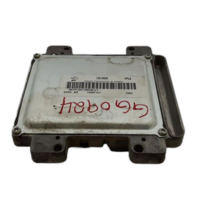
Shop the Parts Behind P0277
Below are the parts most often responsible for code P0277, ranked by how frequently each one is the actual culprit (per the diagnosis above). Tap any to see what we have for your vehicle.






The information in this article is provided for general reference and educational purposes only. Vehicle specifications, procedures, and part compatibility can vary by production date, trim level, and region. Always consult your vehicle's factory service manual and verify part numbers before purchasing or performing repairs. Safety-critical components such as airbags, seat belts, and braking systems should be installed by a qualified professional.
- 🧭 Diagnostic Flowchart
- 🛍️ Shop This Part
- What Does P0277 Mean?
- Can I Drive With P0277?
- Common Causes
- Symptoms
- Common Fixes & Costs
- DIY vs Professional
- Used vs. New Parts: Buying Guide
- What Happens If You Wait — Timeline
- Cost of Not Fixing It
- Diagnosis Steps
- When This Code Triggers (Freeze-Frame Conditions)
- Related Codes
- Climate & Environmental Factors
- How to Talk to a Mechanic About This Code
- Where to Take It: Dealer vs Independent vs Chain
- When to Walk Away From the Repair
- What Scan Tool You Need for This Code
- How to Clear the Code After You Fix It
- Will This Fail Emissions / State Inspection?
- Most Commonly Affected Vehicles
- Manufacturer-Specific Notes
- Real Owner Stories
- 2010 GMC Acadia with 3.6L V6
- 2013 Buick LaCrosse with 3.6L V6
- 2006 Ford F-250 with 6.0L Powerstroke Diesel
- How to Prevent This Code From Triggering
- Frequently Asked Questions
- What is the difference between P0277 (Circuit High) and P0276 (Circuit Low)?
- I replaced the injector, but P0277 came back. What now?
- Can a bad battery or alternator cause P0277?
- Will P0277 clear itself?
- How do I find cylinder 6?
- What happens if I ignore P0277?
- Key Takeaways
- 🎟️ Get 5% Off