

P0277 on 2010-2014 Cadillac CTS: Cylinder 6 Injector Circuit Causes and Fixes
On a 2010-2014 Cadillac CTS, code P0277 is most often caused by a chafed or damaged fuel injector wiring harness, a known issue documented in GM Technical Service Bulletin #PIP4924D. Before replacing the cylinder 6 fuel injector, meticulously inspect the wiring harness where it rubs against the intake plenum, valve cover bolts, and fuel lines.
- For P0277 on a 2010-2014 CTS, immediately suspect a wiring harness issue as per GM TSB #PIP4924D.
- Thoroughly inspect the harness for chafing against the engine before spending money on a new fuel injector.
- Cylinder 6 is on the driver's side of the engine.
- Driving with this code can lead to costly catalytic converter damage, so address it promptly.
- If the wiring is good, confirm the injector is bad by swapping it with another cylinder before replacing it.
What's Unique About the 2010-2014 Cadillac CTS
The GM 3.0L and 3.6L V6 engines used in this generation of Cadillac CTS are known for a specific wiring harness vulnerability. A Technical Service Bulletin (TSB #PIP4924D) was issued because the fuel injector wiring harness is prone to rubbing against engine components. Common chafe points are against the sharp edges of the intake plenum, valve cover bolts, and metal fuel lines, which can wear through the wire's insulation and cause a short circuit that triggers P0277 and related injector codes.
Diagnostic Flowchart
Tap your situation to follow the diagnostic path that matches what you're seeing on this vehicle.
Symptoms You May Notice
- Check Engine Light (SES Light) is on
- Rough or unstable idle
- Engine misfire, which may feel like a shake or stumble, especially under load
- Noticeable loss of power and poor acceleration
- Reduced fuel economy
- In some cases, the engine may be hard to start
- A smell of raw fuel from the exhaust may be present
- Replacing the fuel injector without first thoroughly inspecting the wiring harness. The TSB-documented harness issue is very common, and replacing the injector will not fix a shorted wire, causing the code to return immediately or shortly after the repair.
- Mistaking the normal, loud ticking sound of the high-pressure direct injection fuel pump and injectors for a mechanical engine problem. GM issued a separate bulletin (07-06-04-025H) to inform owners that this sound is normal.
Most Likely Causes
- Chafed or Damaged Fuel Injector Wiring Harness 🔴 High Probability → Shop Engine Wiring Harness As documented in GM TSB #PIP4924D, the harness routing makes it susceptible to rubbing against the intake plenum, valve cover bolts, or fuel lines, causing wires to short out.
How to confirm: Visually inspect the entire fuel injector wiring harness after removing the upper intake manifold. Pay extra close attention to points where the harness passes over or near valve cover bolts, touches the edges of the intake plenum, or runs alongside the metal high-pressure fuel line. Look for worn insulation, exposed copper wire, or pinch points, often right near the injector connector itself.
Typical fix: Repair the damaged section of wire with a quality butt connector and heat shrink tubing. If the damage is extensive or in multiple spots, the entire harness bank (e.g., driver side harness GM Part #12642952) may need to be replaced. Secure the repaired harness away from the contact point using zip ties or re-routing to prevent recurrence.
Est. part cost: $5-$20 for wire repair, $100-$150 for a new harness section. - Failed Cylinder 6 Fuel Injector 🟡 Medium Probability → Shop Fuel Injector Fuel injectors can fail electrically over time, developing an internal short or open circuit that causes a 'Circuit Low' or 'Circuit High' condition.
How to confirm: After confirming the wiring is intact, swap the cylinder 6 fuel injector with an injector from another cylinder (e.g., cylinder 4). Clear the codes and run the engine. If the code changes to P0271 (Cylinder 4 Injector Circuit Low), the injector is faulty. You can also test the injector's resistance with a multimeter; it should be within GM specification (typically 1.25-1.75 ohms for LFX, 11-14 ohms for LLT/LF1, but verify for the specific part).
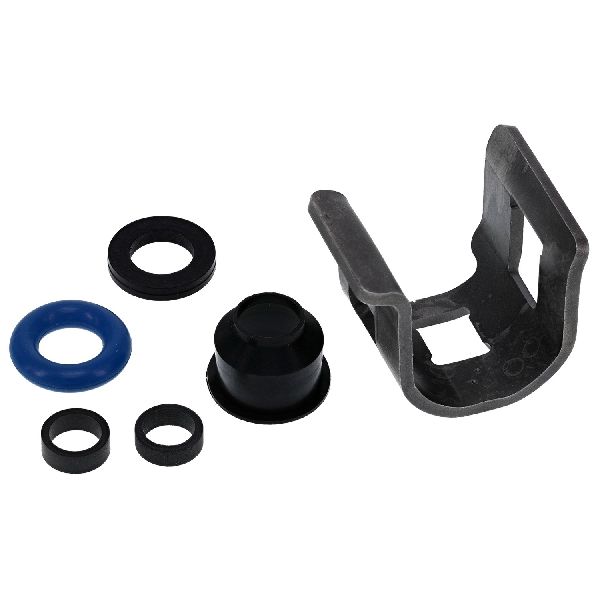
Typical fix: Replace the faulty fuel injector. When replacing a direct injector, it's critical to also replace its Teflon seal and lubricate the new O-rings with clean engine oil before installation to ensure a proper seal. It is often recommended to replace all injectors on the same bank if they are high mileage.
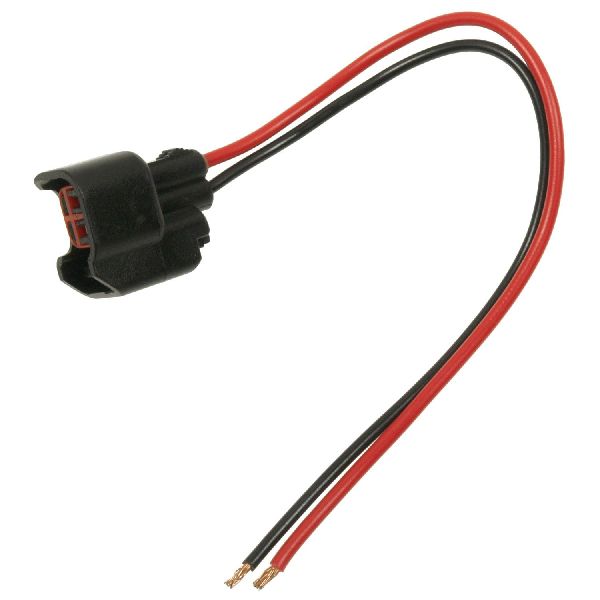
Est. part cost: $60-$140 for a single OEM injector. - Damaged or Corroded Injector Connector ⚪ Low Probability
How to confirm: Unplug the connector at the cylinder 6 fuel injector and inspect the terminals for corrosion, moisture, or bent/broken pins. Ensure the locking tab is intact and provides a secure connection.
Typical fix: Clean the connector terminals with electrical contact cleaner or replace the connector pigtail if it is physically damaged.
Est. part cost: $15-$40 for a new connector pigtail.
Rare But Worth Checking
- Failed Engine Control Module (ECM): → Shop Engine Control Module (ECM) This is the least likely cause. The ECM's internal driver for the cylinder 6 injector can fail, but all other possibilities, especially wiring and the injector itself, should be exhaustively ruled out before condemning the ECM.
Diagnosis Steps
- Read Stored DTCs: Use an OBD-II scanner to confirm P0277 and note any other codes like P0306 or other injector circuit faults.
- Identify Cylinder 6: On the 3.0L/3.6L V6, cylinders 2, 4, and 6 are on the driver's side (left side) of the engine, from front to back. Cylinder 6 is the one closest to the firewall on the driver's side.
- Inspect the Fuel Injector Wiring Harness: This is the most critical step. Access requires removing the upper intake manifold. Once removed, carefully inspect the harness that serves the driver's side injectors. Per TSB #PIP4924D, check for chafing against the intake plenum, where it passes valve cover bolts, and where it runs near the fuel line. The damage is often found very close to the injector connector itself.
- Check the Injector Connector: Disconnect the electrical connector at the cylinder 6 fuel injector. Inspect for corrosion, bent pins, or damage. Ensure it clicks securely back into place.
- Perform an Injector Swap: If the wiring appears perfect, swap the cylinder 6 fuel injector with one from an adjacent, non-faulting cylinder (like cylinder 4). Clear the codes and drive the vehicle. If the code returns as P0271 (for cylinder 4), the fuel injector is the problem. If P0277 returns, the issue is in the wiring or ECM.
- Test the Circuit with a Noid Light: A noid light plugs into the injector connector and flashes when the ECM commands the injector to fire. If the noid light flashes steadily, it confirms the ECM and wiring are sending a signal, pointing towards a failed injector. If it stays on solid or doesn't light up, the problem is in the wiring or ECM.
- Check for a Short to Ground: With the injector and ECM disconnected, use a multimeter set to Ohms. Check for continuity between the control wire for cylinder 6 at the injector connector and a good chassis ground. There should be no continuity (infinite resistance, or 'OL'). If you get a low resistance reading, you have confirmed a short in the harness that must be located and repaired.
Parts You'll Likely Need
- Fuel Injector Wiring Harness (Driver Side)
(OEM #12642952)— This is the most probable cause of the fault due to the known chafing issue documented in GM TSB #PIP4924D.
Trusted brands: GM Genuine Parts, ACDelco
OEM price range: $100-$150
Aftermarket price range: $70-$120 - Fuel Injector
(OEM #12634126 (supersedes 12642128))— If the wiring is intact, the injector itself is the next most likely component to have failed with an internal short.
Trusted brands: ACDelco, Standard Motor Products, Bosch
OEM price range: $100-$140
Aftermarket price range: $50-$90 - Upper Intake Manifold Gasket Set
(OEM #12632519 (example, verify by VIN))— Required for re-installing the intake manifold after accessing the injectors and harness. Reusing old gaskets is not recommended as it can cause vacuum leaks.
Trusted brands: Fel-Pro, ACDelco, Mahle
OEM price range: $30-$50
Aftermarket price range: $15-$30
Related Codes That Often Appear With This One
- P0306 — P0306 means 'Cylinder 6 Misfire Detected'. An electrical fault in the injector circuit (P0277) will prevent proper fueling, directly causing a misfire on that cylinder.
- P0300 — This code for 'Random/Multiple Cylinder Misfire' can appear if the wiring harness issue is intermittent or if the short is affecting multiple injector wires, causing instability across several cylinders.
- P0206, P0276 — P0206 is a general 'Cylinder 6 Injector Circuit' fault, and P0276 is 'Cylinder 6 Injector Circuit Low'. These are closely related and often appear with P0277, all pointing to the same electrical issue.
Technical Service Bulletins (TSBs) & Recalls
- PIP4924D: For a list of injector codes including P0277, instructs technicians to inspect the fuel injector wiring harness for rubbing through or internal wire opens at common chafe points before replacing components.
- 07-06-04-025H: Informs that a rapid clicking/ticking sound from the engine compartment is a normal characteristic of the SIDI high-pressure fuel system and parts should not be replaced to address the noise.
Platform-Specific Known Issues
- GM Technical Service Bulletin #PIP4924D specifically calls out that the fuel injector wiring harness can rub through against engine components, causing various injector circuit codes, including P0277. The bulletin advises technicians to carefully inspect the harness for chafing against the intake plenum, at valve cover bolts, against the fuel line, and on the side of the cylinder head under the plenum before replacing any parts.
- The high-pressure direct injection system on these engines produces a noticeable ticking or clicking sound, which is especially evident at idle. This is normal operation of the fuel pump and injectors. GM released bulletin #07-06-04-025H to address this, advising not to replace parts for this normal noise.
Mechanic-Grade Diagnostic Values
- Fuel Injector Resistance (3.6L LFX Engine, 2012-2014) — expected: 1.2 - 1.8 Ohms. Failure: A reading outside this range, OL (open circuit), or near zero (short circuit) indicates a failed injector. These are low-impedance injectors.
- Fuel Injector Resistance (3.0L LF1 / 3.6L LLT Engines, 2010-2011) — expected: 11 - 14 Ohms. Failure: A reading significantly outside this range indicates an internal fault. These are high-impedance injectors.
- Injector Pulse Width (at idle, engine warm) — expected: 2 - 4 milliseconds (ms). Failure: A value of 0 ms on cylinder 6 while other cylinders show normal pulse width points to the ECM not commanding the injector, likely due to a wiring fault or a failed ECM driver.
- Injector Circuit Voltage (Key On, Engine Off) — expected: Approx. 12V (Battery Voltage) on one wire at the injector connector.. Failure: No voltage indicates a problem with the power supply feed to the injectors, possibly a blown fuse or relay issue.
- Low-Side Fuel Pressure (Engine Idling) — expected: 300-400 kPa (43-58 psi). Failure: While not a direct cause of P0277, pressure outside this range indicates a fuel delivery problem that should be addressed.
Scan Tool Commands That Help
- GM GDS2 (or equivalent professional scan tool): Cylinder Power Balance / Injector Balance Test — After confirming a misfire (P0306) accompanies P0277, this test can definitively confirm if cylinder 6 is contributing less power than the others. The test sequentially disables each injector and measures the RPM drop. A small or no RPM drop for cylinder 6 confirms it's the problem cylinder.
- GM GDS2 (or equivalent professional scan tool): Fuel Injector Test — This function allows a technician to command a specific injector to pulse a set number of times. It's used to verify the electrical integrity of the circuit and the mechanical function of the injector (by listening for a click) after wiring repairs have been made or before condemning an injector.
Wiring & Ground Locations
- ECM Pin J2-52 — At the 73-way Engine Control Module (ECM) connector.. This is the specific pin for the Fuel Injector 6 control circuit. The wire color is typically Light Blue/White. Testing for continuity from this pin to the injector connector can isolate a break in the wire, and testing it for a short to ground can confirm the most common failure mode.
- G113 (for 3.0L V6) — On the left side of the engine block.. A poor engine ground can cause erratic electrical behavior and voltage drops in various circuits, including the fuel injector drivers in the ECM. Ensuring this ground connection is clean, tight, and has low resistance to the battery negative terminal is a crucial step in diagnosing any electrical fault.
- Main Engine Grounds — Key locations include a strap from the battery negative to the block/chassis, and from the cylinder heads to the firewall/body.. The ECM and its injector drivers rely on a stable ground reference. A compromised main ground strap can cause the ECM to see incorrect voltages and trigger circuit codes. All engine-to-chassis and battery-to-chassis grounds should be inspected for corrosion and tightness.
Real Owner Repair Stories
- CorvetteForum user (GM vehicle with similar injector harness design) — P0200 (Injector Circuit Malfunction), P0300 (Random Misfire), white smoke from one exhaust bank.
❌ Tried (didn't work) Replacing all fuel injectors.
✅ What actually fixed it The user identified that the injector wiring harness was rubbing against a bracket at the rear of the driver's side intake manifold. Protecting the harness with wire loom resolved the intermittent issue. Another user with the same issue confirmed finding multiple chafe marks on the wires leading to the PCM.
OEM Part Supersession History
12642128→12634126— Standard part revision and update by GM.N/A→12642952— This is the current part number for the driver-side fuel injector harness.
Heads up: This harness is specific to the driver's side (Bank 2) injectors.
Model Year Variations Within This Range
- 2010-2011: These models are equipped with the 3.0L LF1 or 3.6L LLT V6. They use high-impedance fuel injectors (approx. 11-14 Ohms). The LLT engine features an aluminum intake manifold.
- 2012-2014: The primary V6 was the updated 3.6L LFX. This engine uses different, low-impedance fuel injectors (approx. 1.2-1.8 Ohms) and has a composite intake manifold. Using the wrong type of injector (e.g., an LLT injector in an LFX) will cause immediate running problems and can damage the ECM's injector driver circuit.
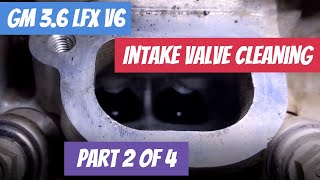
Helpful Videos

We Have This Part in Stock


The information in this article is provided for general reference and educational purposes only. Vehicle specifications, procedures, and part compatibility can vary by production date, trim level, and region. Always consult your vehicle's factory service manual and verify part numbers before purchasing or performing repairs. Safety-critical components such as airbags, seat belts, and braking systems should be installed by a qualified professional.
- Cadillac CTS:
- 🧭 Diagnostic Flowchart
- 🎬 Helpful Videos
- 🛍️ Shop This Part
- What's Unique About the 2010-2014 Cadillac CTS
- Symptoms You May Notice
- Most Likely Causes
- Rare But Worth Checking
- Diagnosis Steps
- Parts You'll Likely Need
- Related Codes That Often Appear With This One
- Technical Service Bulletins (TSBs) & Recalls
- Platform-Specific Known Issues
- Mechanic-Grade Diagnostic Values
- Scan Tool Commands That Help
- Wiring & Ground Locations
- Real Owner Repair Stories
- OEM Part Supersession History
- Model Year Variations Within This Range
- 🎟️ Get 5% Off