

P0277 on 2009-2013 Chevrolet Malibu: Cylinder 6 Injector Circuit Low Causes and Fixes
For a 2009-2013 Malibu with a V6, P0277 almost always points to a wiring issue or a failed fuel injector for cylinder 6. A known issue is the injector wiring harness rubbing through, as cited in GM Technical Service Bulletin #PIP4924C. This TSB specifically notes that the harness can chafe against the intake plenum, valve cover bolts, or the cylinder head. Expect to pay $40-$90 for a new injector if that is the root cause.
- For a V6 Malibu from 2009-2013, P0277 strongly suggests a wiring problem due to a known issue detailed in TSB #PIP4924C.
- Before buying any parts, thoroughly inspect the fuel injector wiring harness for signs of rubbing or damage, especially against the intake, valve cover bolts, and cylinder head.
- Swapping the cylinder 6 injector with another is a simple, no-cost way to determine if the injector itself is the problem.
- Driving with this code can lead to costly catalytic converter damage, so it's best to address it promptly.
What's Unique About the 2009-2013 Chevrolet MALIBU
On this specific generation of Malibu with a V6 engine, the fuel injector wiring harness is a known weak point. General Motors issued a Technical Service Bulletin (TSB #PIP4924C) that directly mentions code P0277 and instructs technicians to inspect the harness for rubbing through on engine components. The TSB identifies common chafe points as the intake plenum, valve cover bolts, fuel lines, and the side of the cylinder head under the plenum. This makes a wiring fault a much higher probability than on other vehicles where the injector itself is usually the primary suspect.
Diagnostic Flowchart
Tap your situation to follow the diagnostic path that matches what you're seeing on this vehicle.
Generation note: This range covers the end of the 7th generation (2008-2012) and the first year of the 8th generation (2013). The V6 engine options where this code would apply were more common in the 7th generation. The TSB covering the wiring issue applies to the entire 2009-2013 range, indicating a similar design or vulnerability across these model years. The 3.6L V6 engines (LLT and LFX) in these vehicles are part of the GM High Feature engine family, which is known for timing chain issues, but this specific code points squarely at the fuel/electrical system.
Symptoms You May Notice
- Check Engine Light is on
- Rough idle or engine stumbling
- Noticeable loss of power and poor acceleration
- Engine misfires, which may feel like a shudder
- Decreased fuel economy
- Strong fuel smell from the exhaust
- Replacing the fuel injector without first thoroughly inspecting the wiring harness. Given the TSB, the wiring is a very likely culprit and checking it first can save you the cost of an unneeded injector.
Most Likely Causes
- Fuel Injector Wiring Harness Damaged 🔴 High Probability → Shop Engine Wiring Harness As documented in GM TSB #PIP4924C, the harness is known to rub against other components, causing chafing, short circuits, or open circuits. Specific points of failure mentioned are against the intake plenum, valve cover bolts, fuel lines, and the side of the cylinder head.
How to confirm: Carefully inspect the entire length of the wiring harness leading to the fuel injectors, paying close attention to any points of contact with the engine block, cylinder heads, or brackets. Look for worn insulation or broken wires. The issue may not be visible with the engine off, as engine rock during operation can cause the contact. It may be necessary to disconnect harness connections to reposition and fully inspect it.
Typical fix: Repair the damaged section of wire and protect it with loom or tape. If the connector is damaged, replace the pigtail connector. GM also advises referring to bulletin PI0631 for other potential under-hood wire chafe locations.
Est. part cost: $10-$30 - Faulty Cylinder 6 Fuel Injector 🟡 Medium Probability → Shop Fuel Injector Injectors can fail over time due to internal coil windings breaking down or becoming clogged, though this is less platform-specific than the wiring issue.
How to confirm: Swap the cylinder 6 fuel injector with another one (e.g., cylinder 4). Clear the codes. If the code changes to P0274 (Cylinder 4 Injector Circuit Low), the injector is faulty. You can also test the injector's internal resistance with a multimeter; it should typically be between 10-16 ohms.
Typical fix: Replace the faulty fuel injector. The ACDelco part number for the 3.6L V6 is 217-3034 (superceded by 12638530).
Est. part cost: $40-$90 - Powertrain Control Module (PCM) Issue ⚪ Low Probability → Shop Engine Control Module (ECM)
How to confirm: This should be the last check after confirming the wiring and injector are good. A professional-level scan tool is needed to test the injector driver circuit within the PCM. The PCM uses specific transistors called 'drivers' to control each injector, and if the driver for cylinder 6 fails, this code can be set.
Typical fix: The PCM may need to be repaired or, more commonly, replaced and programmed to the vehicle.
Est. part cost: $200-$800
Rare But Worth Checking
- Corroded or Loose Connector Pins: Corrosion or a loose pin at either the fuel injector connector or the main PCM connector can cause an intermittent low circuit fault. Always check connectors for tightness and any signs of green or white corrosion. Another TSB for different GM models, #21-NA-149, notes that gently pulling on individual wires at the connector can sometimes reveal a broken terminal pin that isn't obvious visually.
- Blown Fuse: While less common for a single cylinder code, some owners have reported that seemingly unrelated blown fuses in the underhood fuse box (often labeled 'Emissions') can cause various engine performance issues and codes. It's a quick and easy check to perform.
Diagnosis Steps
- Visually inspect the fuel injector wiring harness for cylinder 6. Pay extremely close attention to areas where it might rub against the intake plenum, valve cover bolts, fuel lines, and the side of the head, as noted in TSB #PIP4924C.
- Inspect the electrical connector at the cylinder 6 injector for damage, corrosion, or loose pins. Gently tug on the wires at the back of the connector to check for internal breaks.
- If no visible damage is found, swap the cylinder 6 injector with an injector from another cylinder (e.g., cylinder 4).
- Clear the trouble codes and drive the vehicle to see which code returns. If P0277 returns, the problem is in the wiring or PCM. If a new code like P0274 appears, the injector you moved is faulty.
- If the problem is suspected to be wiring, use a multimeter to check for continuity and for a short to ground on the wire between the PCM and the injector connector. Resistance should be very low (under 1 ohm).
- Use a 'noid light' to test the signal at the injector connector. The light should flash consistently when the engine is cranking or running. If it does not flash, or is very dim, the issue is in the wiring or the PCM driver.
- If the injector and wiring have been proven to be good, the final step is to test the injector driver circuit in the PCM, which may require professional diagnosis.
Parts You'll Likely Need
- Fuel Injector
(OEM #ACDelco 12638530 (replaces 217-3034))— This is the second most likely cause after a wiring issue. If the injector has an internal short, it will cause a 'circuit low' fault.
Trusted brands: ACDelco, Delphi, Bosch
OEM price range: $70-$120
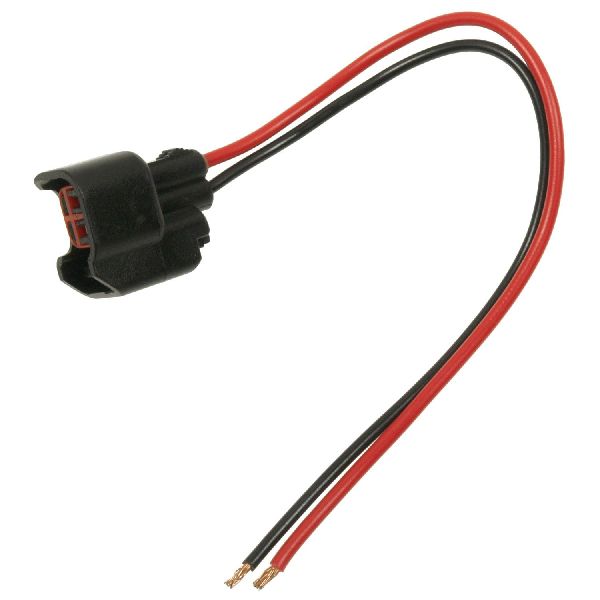
Aftermarket price range: $40-$90 - Fuel Injector Connector Pigtail
(OEM #ACDelco PT2160)— If the wiring is damaged right at the connector, or the connector itself is broken, replacing the pigtail is the standard repair.
Trusted brands: ACDelco, Dorman, Standard Motor Products
OEM price range: $25-$40
Aftermarket price range: $10-$25
Related Codes That Often Appear With This One
- P0306 — P0306 means 'Cylinder 6 Misfire Detected'. Since P0277 indicates a problem with the fuel injector circuit for cylinder 6, that cylinder will not fire correctly, almost always triggering a P0306 code as well.
- P0206 — P0206 is a more general 'Injector Circuit/Open - Cylinder 6' code. It can appear alongside P0277 as they both relate to electrical faults in the same circuit.
Technical Service Bulletins (TSBs) & Recalls
- Bulletin #PIP4924C: Mentions P0277 and advises inspection of the fuel injector wiring harness for rub-through or internal wire damage. It lists specific chafe points and applies to a wide range of GM vehicles with the High Feature V6 engine.
Platform-Specific Known Issues
- A known issue documented in Technical Service Bulletin #PIP4924C involves the fuel injector wiring harness rubbing through on engine components, causing various injector circuit codes, including P0277. The bulletin specifically calls out contact points against the intake plenum, valve cover bolts, fuel lines, and the side of the cylinder head.
Mechanic-Grade Diagnostic Values
- Fuel Injector Coil Resistance — expected: 11 to 16 ohms at approximately 70°F (21°C).. Failure: A reading significantly outside this range, or an open circuit (infinite resistance), indicates a failed injector coil.
- Injector Connector Voltage (Key On, Engine Off) — expected: Battery voltage (approx. 12.6V) on the power supply wire (typically Pink/Black on GM vehicles).. Failure: No voltage indicates a problem with the power supply circuit, potentially a fuse or relay.
- Injector Control Wire Voltage (Engine Cranking/Running) — expected: The voltage should pulse rapidly, being pulled to ground by the PCM from battery voltage. A noid light should flash, or an oscilloscope will show a square wave pattern.. Failure: A constant high voltage or no voltage activity indicates a problem with the PCM driver or the wiring.
- Injector Balance Test Pressure Drop — expected: When using a scan tool to perform a balance test, the fuel pressure drop for each injector should be within 1.5 PSI (or 10-20 kPa) of the average for all cylinders.. Failure: An injector with a significantly smaller or larger pressure drop is either clogged or leaking.
Scan Tool Commands That Help
- GDS2 / Tech 2: Fuel Injector Balance Test — This bidirectional command is used to identify a mechanically faulty (clogged or leaking) injector without removing the intake manifold. The tool commands each injector to fire for a set duration and measures the corresponding pressure drop on the fuel rail. An uneven drop points to the faulty injector.
Wiring & Ground Locations
- ECM Connector X1, Pin 19 — On the Engine Control Module (ECM), which is typically located in the engine bay.. This is the specific pin for the Cylinder 6 Injector Control signal on some 3.6L V6 models. The wire color is often Yellow/Black. This is the starting point for testing the control circuit's continuity back to the injector.
- G105 / G106 — These are primary engine grounds. On a 2011 Malibu 3.6L, G106 is located on the right front of the engine. Other grounds are located on the engine block and cylinder heads.. A poor or corroded engine ground can cause floating voltages and erratic behavior in all engine sensors and actuators, including the fuel injectors, potentially setting false circuit codes.
Real Owner Repair Stories
- chevymalibuforum.com user report (2010 Chevrolet Malibu 3.6L V6) — Check Engine Light with codes P0277 and P0306 (Cylinder 6 Misfire).
❌ Tried (didn't work) Replacing the spark plug for cylinder 6., Swapping the ignition coil from cylinder 6 with another cylinder., Replacing the fuel injector for cylinder 6.
✅ What actually fixed it After replacing the injector did not solve the issue, a closer inspection of the wiring harness revealed a broken wire right at the connector for the #6 fuel injector. Repairing the broken wire and securing the harness resolved the codes.
OEM Part Supersession History
ACDelco 217-3034 (GM 12610626)→N/A - This part is for a different engine.— This is the correct injector for the 3.6L LLT V6 engine used in 2009-2012 Malibu models.
Heads up: This part is NOT interchangeable with the injector for the 2013 LFX engine.ACDelco 12638530 (also 12632255, 12611545)→12669384— This is the correct injector for the 3.6L LFX V6 engine used in the 2013 Malibu.
Heads up: This part is NOT interchangeable with the injector for the 2009-2012 LLT engine. Using the wrong injector will cause fuel trim imbalances and performance issues.
Model Year Variations Within This Range
- 2009-2012: These model years use the 3.6L LLT V6 engine. The correct fuel injector is ACDelco P/N 217-3034 (or GM 12610626).
- 2013: The 2013 model year introduced the updated 3.6L LFX V6 engine. This engine uses a different fuel injector, ACDelco P/N 12638530. The wiring harness and some chafe points may also differ slightly from the earlier LLT engine.
We Have This Part in Stock


The information in this article is provided for general reference and educational purposes only. Vehicle specifications, procedures, and part compatibility can vary by production date, trim level, and region. Always consult your vehicle's factory service manual and verify part numbers before purchasing or performing repairs. Safety-critical components such as airbags, seat belts, and braking systems should be installed by a qualified professional.
- Chevrolet MALIBU:
- 🧭 Diagnostic Flowchart
- 🛍️ Shop This Part
- What's Unique About the 2009-2013 Chevrolet MALIBU
- Symptoms You May Notice
- Most Likely Causes
- Rare But Worth Checking
- Diagnosis Steps
- Parts You'll Likely Need
- Related Codes That Often Appear With This One
- Technical Service Bulletins (TSBs) & Recalls
- Platform-Specific Known Issues
- Mechanic-Grade Diagnostic Values
- Scan Tool Commands That Help
- Wiring & Ground Locations
- Real Owner Repair Stories
- OEM Part Supersession History
- Model Year Variations Within This Range
- 🎟️ Get 5% Off