

P0277 on 2009-2014 Chevrolet Traverse: Cylinder 6 Injector Circuit High Fixes
On a 2009-2014 Traverse, code P0277 is most often caused by a damaged fuel injector wiring harness rubbing against the engine. Before replacing the injector, inspect the harness for chafing as noted in GM Technical Service Bulletin #PIP4924D. A wiring repair is often the fix.
- P0277 on a 2009-2014 Traverse is a specific fault in the cylinder 6 fuel injector circuit.
- The most probable cause is not the injector itself, but a damaged wiring harness, as identified in GM TSB #PIP4924D.
- Always inspect the wiring harness for chafing against the engine before buying any parts.
- If multiple injector codes are present, a wiring harness fault is almost certain.
- Ignoring this code can lead to catalytic converter damage from the constant engine misfire.
What's Unique About the 2009-2014 Chevrolet TRAVERSE
The Chevrolet Traverse and its siblings with the 3.6L V6 engine are known for a specific wiring harness issue. GM issued Technical Service Bulletin #PIP4924D which directly addresses P0277 and other injector codes. The bulletin points to the fuel injector wiring harness rubbing through its insulation at several common points, causing shorts or open circuits. Specific chafe points mentioned by the TSB and confirmed by owner experiences include where the harness contacts the intake plenum, valve cover bolts, fuel lines, or the side of the cylinder head. This makes a wiring inspection the most critical first step, as opposed to immediately suspecting a bad fuel injector.
Diagnostic Flowchart
Tap your situation to follow the diagnostic path that matches what you're seeing on this vehicle.
Symptoms You May Notice
- Check Engine Light is on
- Rough or unstable idle
- Engine misfires, which may feel like a shudder or stumble
- Reduced engine power and poor acceleration
- Decreased fuel economy
- A raw fuel smell from the exhaust
- Engine hesitation or stalling
- Replacing the cylinder 6 spark plug or ignition coil without diagnosing the fuel system. A misfire can be caused by spark, fuel, or compression, and P0277 points specifically to the fuel injector circuit.
- Replacing the fuel injector without first inspecting the wiring harness, which is the most common point of failure for this code on this specific vehicle as per TSB #PIP4924D.
Most Likely Causes
- Damaged Fuel Injector Wiring Harness 🔴 High Probability → Shop Engine Wiring Harness As documented in TSB #PIP4924D, the harness routing can cause it to rub against the intake plenum, valve cover bolts, fuel lines, or the side of the cylinder head, leading to chafed or broken wires. This is a well-documented issue across GM's 3.6L V6 platform.
How to confirm: Carefully and thoroughly inspect the entire fuel injector wiring harness, which may require removing the engine cover and upper intake manifold for full access. Pay close attention to the contact points mentioned in TSB #PIP4924D. Look for bare copper, broken wires, or melted insulation where the loom has worn through.
Typical fix: Repair the damaged section of the wire using solder and heat-shrink tubing or replace the affected connector pigtail. Reroute the harness slightly or add protective conduit (split-loom tubing) to prevent future rubbing.
Est. part cost: $5-$25 - Faulty Cylinder 6 Fuel Injector 🟡 Medium Probability → Shop Fuel Injector Direct injection (DI) injectors like those in the LLT and LFX engines operate under high pressure and can fail electrically over time. While wiring is more common for this code, an internal short or open in the injector coil itself will also trigger P0277.
How to confirm: After confirming the wiring is intact, test the injector. Measure the injector's internal resistance with a multimeter. 🎬 Watch: Professional guide to testing 3.6L injector resistance and circuits. For this engine type, a typical high-impedance injector should read between 11-16 ohms, but verify against a known good injector on the same engine. A reading that is significantly different or shows an open circuit indicates a bad injector. You can also swap the cylinder 6 injector with another cylinder (e.g., cylinder 4) and see if the trouble code follows the injector (e.g., changes to P0271).
Typical fix: Replace the failed fuel injector. It is often recommended to replace all injectors on a high-mileage vehicle, or at least the full bank of three.
Est. part cost: $60-$150 - Loose or Corroded Connector ⚪ Low Probability
How to confirm: Unplug and inspect the electrical connector at the fuel injector and at the ECM. Look for bent pins, corrosion (green or white powder), backed-out terminals, or a loose fit. Wiggle the connector with the engine running to see if it induces a misfire.
Typical fix: Clean the connector terminals with an electrical contact cleaner or replace the connector pigtail if it's damaged or the terminals are loose.
Est. part cost: $10-$30
Rare But Worth Checking
- Faulty Engine Control Module (ECM): → Shop Engine Control Module (ECM) This is the least likely cause. The ECM's internal driver transistor for the cylinder 6 injector can fail, but all other possibilities, especially wiring, must be exhaustively ruled out before condemning the ECM.
Diagnosis Steps
- Read all fault codes using an OBD-II scanner. Note if other injector or misfire codes are present, as this points strongly to a wiring issue.
- Crucial Step: Reference TSB #PIP4924D. Visually inspect the fuel injector wiring harness for any signs of rubbing (chafing), melting, or breaks. This may require removing the plastic engine cover. Pay special attention to areas where the harness touches the intake plenum, valve cover bolts, fuel lines, and cylinder head.
- If damage is found, repair the wiring. Clear the codes and test drive to see if the fault returns. Ensure the repaired section is protected with new conduit or rerouted to prevent repeat failure.
- If the wiring appears perfect, perform a noid light test on the cylinder 6 injector connector to verify the ECM is sending a pulse signal. The light should flash steadily while cranking the engine.
- If the noid light flashes, unplug the injector and measure its resistance with a multimeter. Compare the reading to the manufacturer's specification (typically around 12-16 ohms for high-impedance injectors). A reading of infinity (OL) indicates an open circuit, while a very low reading indicates a short.
- If resistance is out of spec, the injector is bad. 🎬 See how to test GM fuel injectors for flow problems. If it's within spec, consider swapping the injector with another cylinder (e.g., cylinder 4, which is on the same bank and easier to access than cylinder 2) to see if the code follows (e.g., changes to P0271). If the code moves, the injector is confirmed faulty.
- If the noid light does not flash, re-check the wiring for an open circuit or short between the connector and the ECM. Check for voltage on the power supply wire to the injector.
- If the wiring is confirmed to be good and there is no signal from the ECM, the ECM's injector driver may be faulty, and the ECM might need replacement. This is rare and should be the last resort.
Parts You'll Likely Need
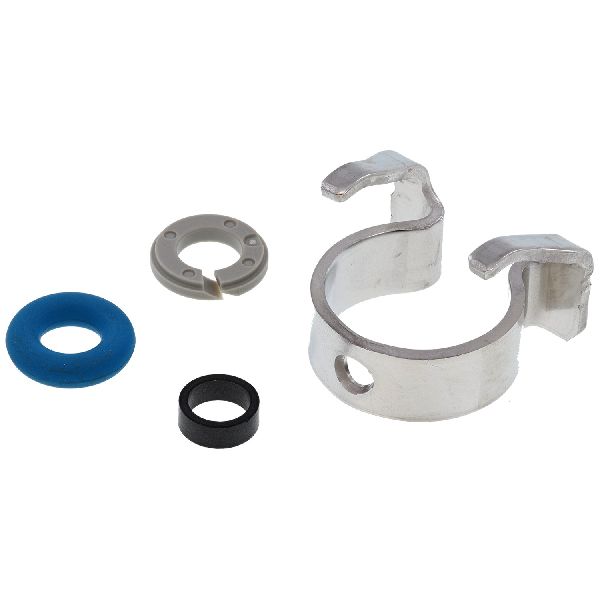
- Fuel Injector
(OEM #12663380)— If the wiring harness is intact, the fuel injector itself is the next most likely component to have failed electrically. This part number is for the LFX engine (2012+). Earlier LLT engines may use a different part number (e.g., 12638530). Always verify with VIN.
Trusted brands: ACDelco, Bosch, Standard Motor Products
OEM price range: $120-$160
Aftermarket price range: $60-$100 - Fuel Injector Connector Pigtail
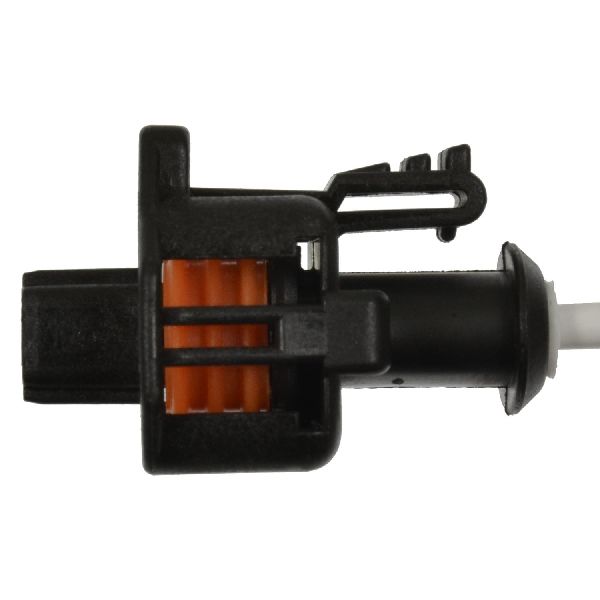
(OEM #ACDelco PT2160 / Dorman 645-215)— If the wiring is damaged right at the connector, or the connector itself is broken or corroded, a new pigtail is needed to make a solid, weather-sealed repair.
Trusted brands: ACDelco, Dorman, Standard Motor Products (S-824)
OEM price range: $20-$40
Aftermarket price range: $10-$25 - Wire Repair Supplies — If the harness is chafed mid-wire, you will need solder, heat-shrink tubing, and split-loom conduit to perform a durable repair and prevent future issues.
OEM price range: $5-$20
Aftermarket price range: $5-$20
Related Codes That Often Appear With This One
- P0306 — This code means 'Cylinder 6 Misfire Detected'. P0277 causes the misfire by disrupting fuel delivery, so these two codes almost always appear together. 🎬 Watch: How to diagnose and repair cylinder 6 misfire issues.
- P0201-P0206, P0261-P0276, etc. — If you see multiple injector circuit codes (e.g., P0274, P0271) along with P0277, it is an extremely strong indicator that the shared wiring harness is damaged at a point affecting several wires, as described in TSB #PIP4924D.
Technical Service Bulletins (TSBs) & Recalls
- PIP4924D: States that for a list of injector codes including P0277, technicians should inspect the fuel injector wiring harness for rub through or internal wire opens at common contact points like the intake plenum, valve cover bolts, and fuel lines. This TSB applies to a wide range of GM vehicles with 3.0L and 3.6L V6 engines.
Platform-Specific Known Issues
- TSB #PIP4924D explicitly calls out that the fuel injector wiring harness is prone to rubbing through against engine components, causing a variety of injector circuit codes, including P0277.
- Forum users on traverseforum.com and acadiaforum.net frequently report finding the injector harness chafed near the back of the engine, sometimes where it passes over a valve cover bolt or near the transmission bell housing.
Mechanic-Grade Diagnostic Values
- Fuel Injector Coil Resistance (Cold) — expected: Approximately 1.5 ohms when tested from the ECM connector. High-impedance injectors used in port injection systems typically measure 11-16 ohms.. Failure: A reading of infinity (OL) indicates an open coil. A reading significantly lower than other injectors suggests a short.
- Injector Pulse Width (at idle) — expected: Should be relatively consistent across all cylinders, typically a few milliseconds (e.g., 1.9 ms).. Failure: One injector having a significantly longer pulse width (e.g., 3.6 ms) indicates the ECM is trying to compensate for a flow issue with that injector.
Scan Tool Commands That Help
- GDS2 (GM Tech Tool): Injector Balance Test — Use this function when a fuel-related misfire is suspected but the electrical circuit tests okay. The test disables injectors one by one and measures the corresponding drop in fuel rail pressure. A cylinder with a significantly different pressure drop compared to the others indicates a flow problem (clogged or leaking injector). GM specifies a variance of more than 20% is an issue. Note: TSB PIP4964F mentions this test may not be available on 2009 models.
Wiring & Ground Locations
- ECM (Engine Control Module) — Located in the engine compartment, on the passenger side, near the firewall and vacuum pump. It is a large metal box with three large multi-pin connectors.. The ECM contains the driver circuit that controls the cylinder 6 fuel injector. All wiring for the injector circuit originates from and returns to the ECM.
- ECM Connector X1, Pin 13 — This is on the main 73-pin connector (X1) at the Engine Control Module.. Pin 13 on the X1 connector is the specific control circuit for the cylinder 6 fuel injector (wire color Yellow/Black). This is a key point for testing the circuit's integrity back to the ECM.
- G110 — On the right (front) cylinder head of the engine. A Reddit user specified it is on the right rear of the engine, mounted to the back of the cylinder head on a bracket.. This is a primary engine ground. A poor connection at G110 can cause a variety of sensor and actuator issues, including erratic behavior of injector circuits due to an unstable ground reference for the ECM.
- G113 — Located on the left side of the engine, at an engine-to-transmission stud.. This is another critical engine-to-chassis ground point. A loose or corroded G113 can create voltage potential differences between the engine block and the rest of the vehicle's electrical system, potentially affecting ECM operation.
OEM Part Supersession History
12638530→12669384— Standard part lifecycle update by GM.
Heads up: This is the injector for the earlier LLT engine. It is not compatible with the 2012+ LFX engine.12634491→12663380— Standard part lifecycle update by GM.
Heads up: This is the injector for the later LFX engine. It is not compatible with the 2009-2011 LLT engine.
Model Year Variations Within This Range
- 2009-2011: These model years use the 3.6L LLT V6 engine. This engine uses fuel injector part number 12638530 (superseded by 12669384) and has a traditional aluminum intake manifold and separate exhaust manifolds.
- 2012-2014: These model years use the updated 3.6L LFX V6 engine. This engine is about 20 lbs lighter, features a composite intake manifold, and has exhaust manifolds integrated directly into the cylinder heads. It uses a different fuel injector, part number 12663380. The ECM also changed from a Bosch unit on the LLT to a Delphi unit on the LFX.
Helpful Videos
We Have This Part in Stock


The information in this article is provided for general reference and educational purposes only. Vehicle specifications, procedures, and part compatibility can vary by production date, trim level, and region. Always consult your vehicle's factory service manual and verify part numbers before purchasing or performing repairs. Safety-critical components such as airbags, seat belts, and braking systems should be installed by a qualified professional.
- Chevrolet TRAVERSE:
- 🧭 Diagnostic Flowchart
- 🎬 Helpful Videos
- 🛍️ Shop This Part
- What's Unique About the 2009-2014 Chevrolet TRAVERSE
- Symptoms You May Notice
- Most Likely Causes
- Rare But Worth Checking
- Diagnosis Steps
- Parts You'll Likely Need
- Related Codes That Often Appear With This One
- Technical Service Bulletins (TSBs) & Recalls
- Platform-Specific Known Issues
- Mechanic-Grade Diagnostic Values
- Scan Tool Commands That Help
- Wiring & Ground Locations
- OEM Part Supersession History
- Model Year Variations Within This Range
- 🎟️ Get 5% Off