

P0277 on 2009-2010 Saturn Outlook: Cylinder 6 Injector Circuit High Causes & Fixes
On a 2009-2010 Saturn Outlook, code P0277 almost always points to a damaged fuel injector wiring harness, as documented in GM Technical Service Bulletin #PIP4924D. A thorough inspection and potential repair of the harness where it may be chafing against components like the high-pressure fuel pipe or cylinder head is the most common and cost-effective fix.
- On a 2009-2010 Saturn Outlook, P0277 is most likely caused by a damaged wiring harness, not a bad injector.
- GM Technical Service Bulletin #PIP4924D is the most important document for this diagnosis.
- A thorough visual inspection of the injector wiring harness for chafing is the first and most critical step.
- Do not drive extensively with this code active to avoid damaging the catalytic converter.
What's Unique About the 2009-2010 Saturn OUTLOOK
The Saturn Outlook shares its 3.6L V6 engine and Lambda platform with the GMC Acadia, Buick Enclave, and Chevrolet Traverse. On this specific engine family, the fuel injector wiring harness is a known weak point. GM issued Technical Service Bulletin #PIP4924D because the harness is prone to rubbing against engine components like the intake plenum, valve cover bolts, or the high-pressure fuel pipe. This chafing wears through wire insulation, creating electrical shorts that trigger codes like P0277. This makes a harness inspection the critical first step, ahead of assuming the injector itself has failed.
Diagnostic Flowchart
Tap your situation to follow the diagnostic path that matches what you're seeing on this vehicle.
Symptoms You May Notice
- Check Engine Light is on
- Rough idle or engine stumbling
- Noticeable loss of power and poor acceleration
- Reduced fuel economy
- Engine hesitation or misfire
- "Service Stabilitrak", "Service Traction Control", and "Reduced Engine Power" messages on the dash.
- Replacing the fuel injector when the actual problem is the wiring harness. This is a common mistake because the code directly names the injector circuit, but the TSB confirms the harness is the more frequent failure point on this GM platform.
Most Likely Causes
- Chafed or Damaged Fuel Injector Wiring Harness 🔴 High Probability → Shop Engine Wiring Harness As documented in GM TSB #PIP4924D, the harness routing on the 3.6L V6 makes it susceptible to rubbing. Specific chafe points include against the intake plenum, valve cover bolts, the high-pressure fuel pipe and its bracket, and the side of the cylinder head under the plenum. Engine vibration over time wears away the insulation, causing the injector control wire to short to a voltage source.
How to confirm: Visually inspect the entire length of the fuel injector wiring harness, especially where it makes contact with other engine parts. Look for worn-through plastic conduit, exposed copper wires, or signs of melting. Pay close attention to the harness connectors at the rear of the intake manifold.
Typical fix: Repair the damaged section of wire using a weatherproof butt connector and heat shrink tubing. Protect the repaired area with high-temperature wire loom or tape. If damage is at the connector, replace the pigtail (e.g., ACDelco PT3765). In severe cases, a new harness section (GM Part #12621096 for the passenger side) may be needed.
Est. part cost: $10-$60 - Faulty Cylinder 6 Fuel Injector 🟡 Medium Probability → Shop Fuel Injector Direct injectors operate under high pressure and can fail electrically over time from heat cycles. An internal short in the injector's solenoid coil will cause a 'Circuit High' fault.
How to confirm: Swap the cylinder 6 fuel injector with one from another cylinder (e.g., cylinder 4 on the same bank). Clear the codes and drive. If the code changes to P0271 (Cylinder 4 Injector Circuit High), the injector is faulty. If P0277 returns, the problem is in the wiring or ECM. You can also measure the injector's resistance; for the LLT engine, it should be around 11.8-12.6 Ohms.
Typical fix: Replace the failed fuel injector. It is often recommended to replace the full set, or at least all three on the same bank, if the vehicle has high mileage to ensure balanced performance.
Est. part cost: $40-$120 - Poor Connection at Injector or ECM ⚪ Low Probability
How to confirm: Inspect the electrical connector at the fuel injector and the corresponding pins at the ECM. Look for corrosion, bent pins, or a loose fit. Water intrusion from clogged sunroof drains has been known to cause electrical issues in the fuse box and other modules on this platform.
Typical fix: Clean the connector pins with electrical contact cleaner or repair/replace the connector if damaged.
Est. part cost: $5-$25
Rare But Worth Checking
- Faulty Powertrain Control Module (PCM): → Shop Engine Control Module (ECM) This is the least likely cause. The internal driver circuit for the cylinder 6 injector can fail, but all other possibilities, especially wiring, must be exhaustively ruled out before condemning the PCM. This is a last-resort diagnosis.
Diagnosis Steps
- Retrieve all stored DTCs with an OBD-II scanner and note the freeze frame data.
- Begin with a thorough visual inspection of the fuel injector wiring harness, focusing on the areas mentioned in TSB #PIP4924D (around the intake, valve covers, high-pressure fuel lines, and cylinder head).
- If no damage is visible, use a multimeter to test the cylinder 6 injector circuit. Check for a short to voltage on the control wire running from the ECM to the injector.
- Use a NOID light at the cylinder 6 injector connector. The light should flash steadily while the engine is cranking or running. If it is off, dim, or stays on solid, it indicates a problem with the wiring or the ECM driver.
- If wiring and signal appear correct, test the injector itself. Measure its internal resistance with a multimeter. For the 3.6L LLT engine, a healthy injector should read between approximately 11.8-12.6 Ohms. A reading significantly outside this range indicates a faulty injector.
- As a final confirmation, swap the cylinder 6 injector with another cylinder's injector (e.g., cylinder 4). If the fault code follows the injector to the new cylinder (e.g., becomes P0271), the injector is confirmed bad. If the P0277 code remains, the fault is in the wiring or ECM.
Parts You'll Likely Need
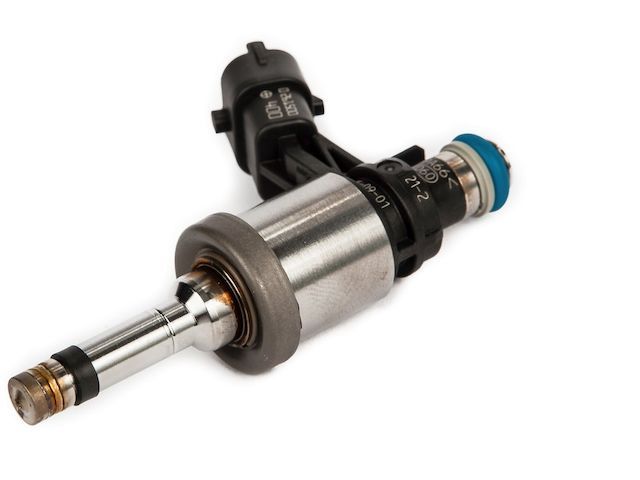
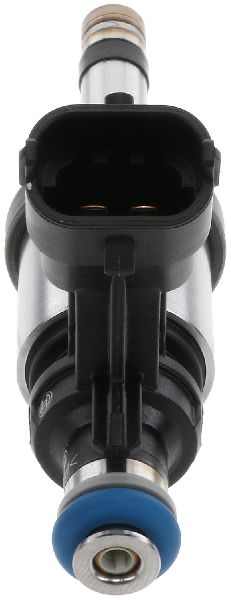
- Fuel Injector
(OEM #12669384)— This is the part to replace if the injector itself has failed internally, confirmed after ruling out wiring issues. This part number supersedes older versions like 12638530.
Trusted brands: ACDelco
OEM price range: $70-$120
Aftermarket price range: $40-$80 - Intake Manifold Gasket Set
(OEM #ACDelco 12673300 (Set), Fel-Pro MS972401)— Accessing the fuel injectors on the 3.6L V6 requires removing the upper intake manifold. The gaskets are considered a one-time-use part and must be replaced to prevent vacuum leaks.
Trusted brands: ACDelco, Fel-Pro, DNJ
OEM price range: $40-$70
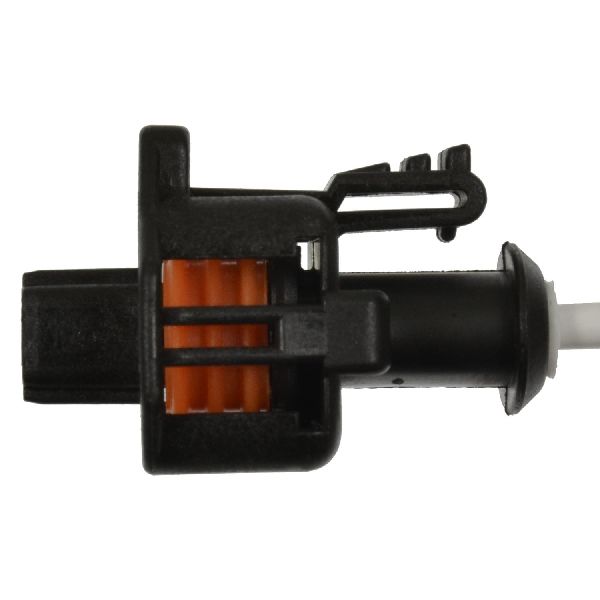
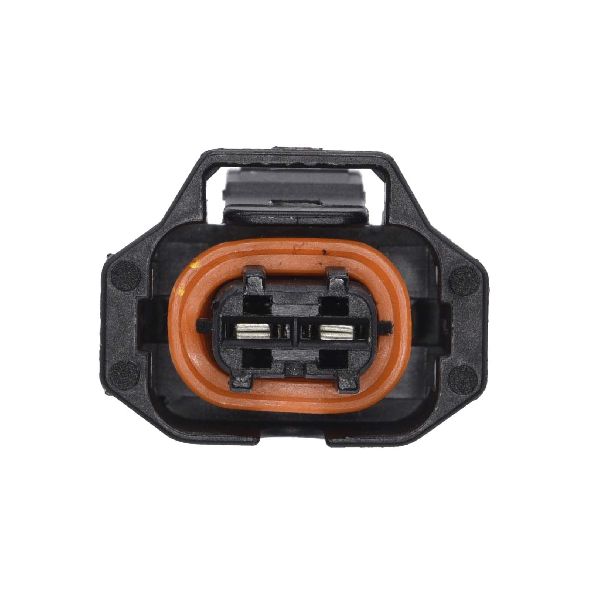
Aftermarket price range: $25-$50 - Fuel Injector Connector Pigtail
(OEM #ACDelco PT3765, Standard Motor Products S-1024)— If the wiring is damaged right at the injector connector, or the connector's locking tab is broken, replacing the pigtail is the correct repair.
Trusted brands: ACDelco, Standard Motor Products, Dorman
OEM price range: $25-$40
Aftermarket price range: $10-$25 - Fuel Injector Seal Kit
(OEM #12611545)— These seals must be replaced anytime a fuel injector is removed and reinstalled to prevent fuel and vacuum leaks.
Trusted brands: ACDelco, Fel-Pro
OEM price range: $15-$30
Aftermarket price range: $10-$20
Related Codes That Often Appear With This One
- P0306 — This code means 'Cylinder 6 Misfire Detected'. It is a direct result of the P0277 fault, as the injector circuit problem prevents proper fueling, causing the cylinder to misfire.
- P0206 — This code for 'Injector Circuit/Open - Cylinder 6' can appear alongside P0277 if the wiring damage is intermittent or causes multiple types of electrical faults.
- P0276 — This code for 'Cylinder 6 Injector Circuit Low' can appear if the damaged wire shorts to ground instead of voltage. The same harness chafing issue can cause either fault.
Technical Service Bulletins (TSBs) & Recalls
- PIP4924D (and its revisions like PIP4924C): Addresses a long list of fuel injector circuit codes (P0201-P0206, P0261-P0277, etc.) and directs technicians to carefully inspect the fuel injector wiring harness for rubbing through or internal wire opens. It specifically calls out contact points against the intake plenum, valve cover bolts, fuel lines, and the side of the cylinder head.
Platform-Specific Known Issues
- The primary vehicle-specific issue is the fuel injector wiring harness chafing, as detailed in TSB #PIP4924D. This problem is widespread across GM vehicles using the 3.6L V6 engine from this era. Common rub points are against the intake plenum, valve cover bolts, the high-pressure fuel pipe, and the side of the cylinder head under the plenum.
- Clogged sunroof drains are a known issue on the Saturn Outlook and its platform mates, which can lead to water leaking inside the cabin and onto electrical components like the fuse block, potentially causing a wide range of difficult-to-diagnose electrical faults.
Mechanic-Grade Diagnostic Values
- Fuel Injector Coil Resistance (3.6L LLT Engine) — expected: 11.8 - 12.6 Ohms. Failure: A reading significantly outside this range, or an open circuit (OL), indicates a failed injector.
- Low-Pressure Fuel System Pressure at Idle — expected: 380-410 kPa (55-60 psi). Failure: Pressure significantly higher or lower than this range points to a fuel pump or regulator issue, not an injector electrical fault.
- Injector Control Circuit Voltage (Key On, Engine Off) — expected: Battery Voltage (approx. 12V). Failure: No voltage or significantly low voltage indicates a wiring problem upstream of the injector connector.
- Injector Balance Test Pressure Drop Variance — expected: Less than 20 kPa (3 psi) difference between any injector and the average.. Failure: A pressure drop difference greater than 20 kPa (3 psi) indicates a faulty (leaking or clogged) injector.
Scan Tool Commands That Help
- GM Tech 2 / GDS2: Fuel Injector Balance Test — This function is used to identify a mechanically faulty (clogged or leaking) injector after electrical circuit integrity has been verified. The tool pulses each injector individually with the engine off and measures the corresponding drop in fuel rail pressure. An uneven drop points to the problematic injector.
- GM Tech 2 / GDS2: Cylinder Power Balance — This test is used with the engine running to identify a weak cylinder. The scan tool disables one injector at a time and monitors the drop in engine RPM. If disabling a cylinder causes little to no change in RPM, that cylinder is not contributing power correctly.
- Kent-Moore Active Fuel Injector Tester (AFIT): → Shop Fuel Injector Injector Flow Test — For some 2009 models, the injector balance test may not be available through the standard scan tool. In these cases, a dedicated AFIT tool is required to perform injector flow and electrical integrity tests.
Wiring & Ground Locations
- J2-52 — At the Engine Control Module (ECM) J2 connector, pin 52.. This is the specific pin for the Cylinder 6 fuel injector control circuit. The wire is typically Light Blue with a White stripe (LT BLU/WHT). Testing for a short-to-voltage can be performed at this pin to isolate the fault between the ECM and the injector.
- G110 — On the right front of the engine, mounted to the cylinder head.. This is a primary engine ground point. A loose or corroded ground here can cause a variety of unpredictable electrical issues and codes, including injector circuit faults.
- G112 — On the right rear of the engine, mounted to the cylinder head.. This is another critical engine ground. Verifying it is clean and tight is a fundamental step in diagnosing any electrical fault on the engine.
- X160 / X161 — Main engine harness connectors.. These are intermediate connectors between the ECM and the fuel injectors. A poor connection, corrosion, or backed-out pin in these connectors can cause an injector circuit fault.
Real Owner Repair Stories
- Synthesized from multiple repair databases and TSB-related reports for the GM Lambda platform. (2009 GMC Acadia 3.6L V6 (platform mate)) — Check Engine Light on with codes P0277 and P0306 (Cylinder 6 Misfire). Engine runs rough, especially at idle, and hesitates on acceleration.
❌ Tried (didn't work) Replaced the Cylinder 6 fuel injector, cleared codes, but P0277 and P0306 returned within a day.
✅ What actually fixed it A thorough inspection of the fuel injector wiring harness, as recommended by TSB PIP4924D, revealed a section of the harness had rubbed through on a sharp edge of the intake plenum near the back of the engine. The exposed control wire for the cylinder 6 injector was shorting to a nearby metal bracket. The fix involved repairing the damaged wire with a splice and heat shrink, then wrapping the harness in protective conduit and securing it with a zip tie away from the sharp edge.
OEM Part Supersession History
12638530, 12632255, 12611545→12669384— Standard part evolution for improved reliability or manufacturing process changes.
Heads up: No known incompatibilities for the specified vehicle. Part number 12669384 is the correct service replacement for the 3.6L LLT engine in the 2009-2010 Outlook.
Model Year Variations Within This Range
- 2009: For the 2009 model year, the 'Injector Balance Test' may not be available in the standard dealer scan tool (Tech 2). A separate, dedicated tool called the Active Fuel Injector Tester (AFIT) may be required to perform a conclusive flow test on the injectors.
- 2009-2010 (LLT Engine): These models use the high-impedance 3.6L LLT direct fuel injector with a resistance of ~11.8-12.6 Ohms. This is critically different from the low-impedance injectors (~1.2-1.8 Ohms) used in the later 2012+ LFX version of this engine. Using the wrong resistance specification will lead to a misdiagnosis.
We Have This Part in Stock


The information in this article is provided for general reference and educational purposes only. Vehicle specifications, procedures, and part compatibility can vary by production date, trim level, and region. Always consult your vehicle's factory service manual and verify part numbers before purchasing or performing repairs. Safety-critical components such as airbags, seat belts, and braking systems should be installed by a qualified professional.
- Saturn OUTLOOK:
- 🧭 Diagnostic Flowchart
- 🛍️ Shop This Part
- What's Unique About the 2009-2010 Saturn OUTLOOK
- Symptoms You May Notice
- Most Likely Causes
- Rare But Worth Checking
- Diagnosis Steps
- Parts You'll Likely Need
- Related Codes That Often Appear With This One
- Technical Service Bulletins (TSBs) & Recalls
- Platform-Specific Known Issues
- Mechanic-Grade Diagnostic Values
- Scan Tool Commands That Help
- Wiring & Ground Locations
- Real Owner Repair Stories
- OEM Part Supersession History
- Model Year Variations Within This Range
- 🎟️ Get 5% Off