

P0277 on 2009-2010 Saturn VUE: Cylinder 6 Injector Circuit High Causes and Fixes
On a 2009-2010 Saturn VUE with a V6 engine, code P0277 is most often caused by a damaged fuel injector wiring harness that is rubbing against engine components. This is a well-documented issue covered by GM TSB #PIP4924D. Inspecting and repairing the harness, particularly where it contacts the intake plenum or fuel lines, is the most likely fix, costing less than $50 in materials if you DIY.
- For a 2009-2010 Saturn VUE with a V6, P0277 is most likely a wiring problem, not a bad part.
- Before buying a new fuel injector, meticulously inspect the fuel injector wiring harness for signs of rubbing or damage, as detailed in GM TSB #PIP4924D.
- Common chafing spots are against the intake manifold, valve cover bolts, and fuel lines.
- If the wiring is good, the next step is to test the fuel injector itself, possibly by swapping it with another cylinder.
- Driving with this code can lead to costly damage to your catalytic converter, so prompt repair is advised.
What's Unique About the 2009-2010 Saturn VUE
For this specific Saturn VUE with a V6 engine (3.0L LF1 or 3.6L LLT), General Motors issued a Technical Service Bulletin (TSB #PIP4924D) that points directly to a common problem. The fuel injector wiring harness is known to rub through its insulation or develop internal breaks from contact with parts like the intake plenum, valve cover bolts, the high-pressure fuel pipe bracket, or the side of the cylinder head. This chafing is the most probable cause for P0277 and other related injector codes on this platform, making a thorough harness inspection the critical first step before replacing any parts. This issue is also common on its platform mates like the Chevy Traverse, GMC Acadia, and Buick Enclave.
Diagnostic Flowchart
Tap your situation to follow the diagnostic path that matches what you're seeing on this vehicle.
Symptoms You May Notice
- Check Engine Light is on
- Rough or shaking idle
- Engine misfiring or stumbling on acceleration
- Reduced engine power and poor acceleration
- Decreased fuel economy
- Engine may be hard to start or stall intermittently
- Replacing the fuel injector without first thoroughly inspecting the wiring harness. The TSB for this vehicle makes it clear that a wiring issue is the most common culprit.
Most Likely Causes
- Damaged Fuel Injector Wiring Harness 🔴 High Probability → Shop Engine Wiring Harness A GM Technical Service Bulletin (#PIP4924D) specifically calls out this issue on the 2009-2010 Saturn VUE and its platform mates with V6 engines. The harness routing makes it susceptible to rubbing against the intake plenum, valve cover bolts, fuel lines, the high-pressure fuel pipe bracket, and the side of the cylinder head under the plenum.
How to confirm: Carefully inspect the entire fuel injector wiring harness, especially where it runs near or touches the engine components listed above. Pay special attention to the harness section near the main connectors (X160/X161) at the rear of the intake manifold. Look for any signs of chafing, melted plastic, or exposed copper wires.
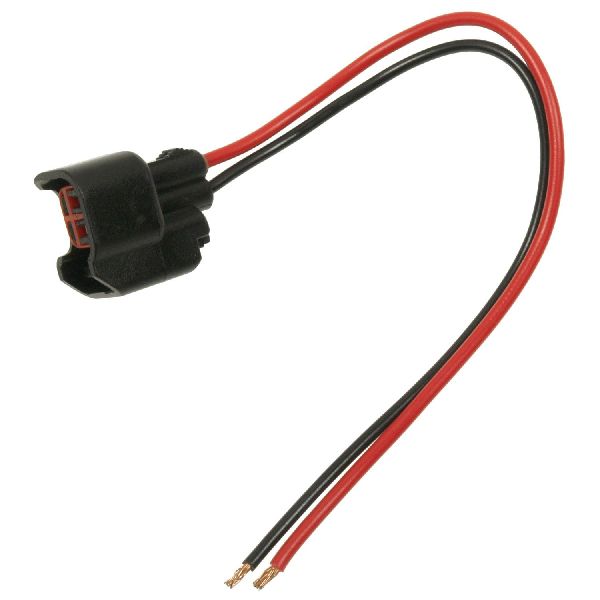
Typical fix: Repair the damaged section of wire using solder and heat-shrink tubing or an approved splice sleeve. Protect the repaired area with high-temperature wire loom or anti-abrasion tape and re-route or secure the harness with zip ties to prevent future contact. If damage is at the connector, replace the pigtail (ACDelco #PT2183).
Est. part cost: $10-$30 - Faulty Cylinder 6 Fuel Injector 🟡 Medium Probability → Shop Fuel Injector The direct injection (DI) fuel injectors on the 3.6L V6 operate under high pressure and can fail electrically over time. An internal short in the injector's coil winding is a common failure mode that causes a 'Circuit High' fault.
How to confirm: If the wiring is intact, test the injector. First, locate cylinder 6, which is on the front bank (near the radiator), on the passenger side. Measure its resistance with a multimeter; a healthy injector for the LLT engine should read between 1.5 and 2.5 ohms (some service literature states 11-14 ohms, so comparison is key). A reading significantly different from the other injectors indicates a fault. The most definitive test is to swap the cylinder 6 injector with one from another cylinder (e.g., cylinder 4). If the code changes to P0271 (Cylinder 4 Injector Circuit High), the injector is bad.
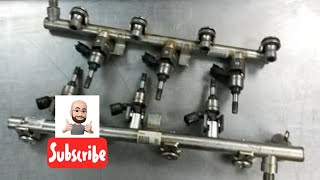
Typical fix: Replace the faulty fuel injector. It is often recommended to replace all three injectors on the same bank (Bank 2) at the same time on higher mileage vehicles to ensure balanced performance. The upper intake manifold must be removed for access, and its gaskets must be replaced. 🎬 See this walkthrough on how to remove the fuel injectors
Est. part cost: $40-$120 - Poor Electrical Connection ⚪ Low Probability
How to confirm: Inspect the electrical connector at the fuel injector and at the PCM. Look for corrosion, moisture, bent/backed-out pins, or a loose fit. Gently pull on the individual wires at the connector to ensure they are secure.
Typical fix: Clean the connector terminals with electrical contact cleaner or replace the connector pigtail (e.g., ACDelco #PT2183) if it is damaged or corroded.
Est. part cost: $10-$25
Rare But Worth Checking
- Faulty Powertrain Control Module (PCM): → Shop Engine Control Module (ECM) This is the least likely cause. The internal driver circuit for the injector can fail, but all other possibilities, especially the wiring harness, must be exhaustively ruled out before condemning the PCM. Unnecessary PCM replacement is common for this issue.
Diagnosis Steps
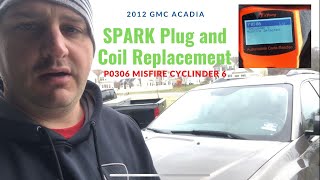
- Read the trouble codes with an OBD-II scanner and note any other codes present, especially misfire (P0306) or injector 🎬 Watch: How to replace spark plugs and coils for P0306 group codes (P2149).
- Perform a detailed visual inspection of the fuel injector wiring harness as described in GM TSB #PIP4924D. Pay close attention to points of contact with the engine, especially the intake plenum, valve cover bolts, and fuel lines.
- If damage is found, repair the wiring, clear the codes, and test drive to see if the code returns.
- If the wiring appears perfect, locate cylinder 6 (front bank, passenger side). Disconnect the injector and check for a pulse signal using a 'noid' light while cranking the engine. A steady light or no light indicates a wiring or PCM problem.
- With the engine off, measure the resistance of the cylinder 6 fuel injector using a multimeter. Compare the reading to another injector on the same bank. A reading that is significantly different (e.g., open or shorted) or out of the 1.5-2.5 ohm specification indicates a bad injector.
- If injector resistance is good, consider swapping the cylinder 6 injector with the cylinder 4 injector (middle, front bank). If the code follows the injector and becomes P0271, the injector is confirmed bad.
- If wiring and the injector test good, check for continuity and for a short-to-voltage on the control wire between the injector connector and the PCM connector to rule out an internal wire break not visible externally.
- If all other tests pass, the issue may be with the PCM's internal injector driver, which typically requires professional diagnosis.
Parts You'll Likely Need
- Fuel Injector Wiring Harness Repair Kit — Due to the high probability of a chafed harness per TSB #PIP4924D, having wire, solder, heat shrink, and loom on hand is wise. Often only a small section needs repair.
Trusted brands: ACDelco, Dorman
OEM price range: $20-$40
Aftermarket price range: $10-$25 - Fuel Injector
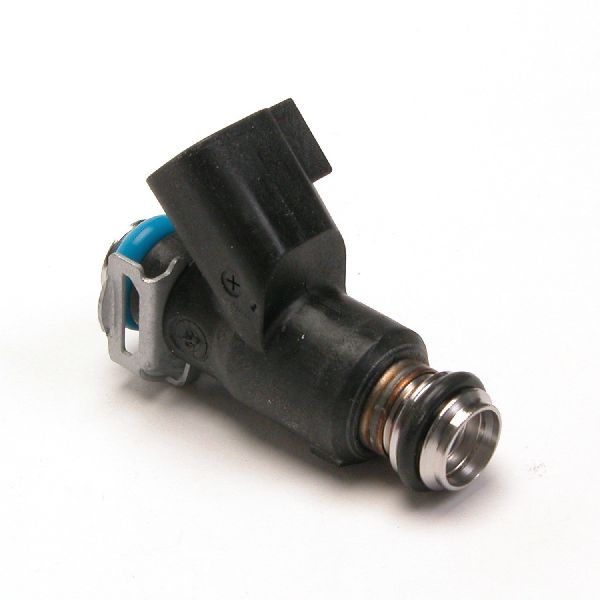
(OEM #12638530 (superseded by 12669384))— If the wiring harness is intact, the injector itself is the next most likely component to have failed. This is the direct injection fuel injector.
Trusted brands: ACDelco, Bosch, Delphi
OEM price range: $80-$150
Aftermarket price range: $40-$90 - Fuel Injector Connector Pigtail
(OEM #ACDelco PT2183)— If the wiring is damaged right at the connector, or the connector itself is broken or corroded, replacing the pigtail is the standard repair.
Trusted brands: ACDelco, Dorman
OEM price range: $20-$35
Aftermarket price range: $10-$20
Related Codes That Often Appear With This One
- P0306 — P0306 means 'Cylinder 6 Misfire Detected'. Since P0277 indicates a problem with the cylinder 6 injector circuit, it will almost always cause a misfire on that same cylinder.
- P0206, P0261, P0262, etc. — The TSB mentions that multiple injector codes (P0201-P0206, P0261-P0277, etc.) can appear together if the wiring harness has chafed through several wires at once.
- P2149 or P2152 — These codes indicate a fault in the injector group for an entire bank. P2149 is for Bank 2 (cylinders 2, 4, 6). If the harness chafing affects a common power or ground wire for the bank, one of these codes may appear alongside the individual cylinder code.
Technical Service Bulletins (TSBs) & Recalls
- PIP4924D: SES light and misfire with injector related codes due to fuel injector wiring harness rubbing through or having internal wire opens. This TSB applies to a wide range of 2009-2012 GM vehicles with the 3.0L and 3.6L V6 engines, including the Saturn VUE.
Platform-Specific Known Issues
- GM Technical Service Bulletin #PIP4924D identifies a known issue where the fuel injector wiring harness can rub through against the intake plenum, valve cover bolts, fuel lines, or cylinder head, causing various injector circuit codes, including P0277.
- On the transverse-mounted 3.6L V6, cylinder 6 is located on the front bank (Bank 2, closer to the radiator) on the passenger side of the engine bay.
Mechanic-Grade Diagnostic Values
- Fuel Injector Coil Resistance (3.6L LLT Engine) — expected: 1.5 - 2.5 Ohms. Failure: A reading of OL (open circuit), 0 ohms (short circuit), or a value significantly different from other injectors.
- Injector Control Circuit Voltage (Key On, Engine Off) — expected: Near battery voltage (approx. 12V) on the control wire.. Failure: A P0277 'Circuit High' fault implies the PCM's driver is unable to pull this voltage down to ground when it commands the injector to fire. The voltage remains high when it should be pulsing low.
Scan Tool Commands That Help
- GM Tech2 or GDS2: Injector Test / Cylinder Power Balance — After a visual inspection of the wiring is complete, this function can be used to command the cylinder 6 injector on and off to listen for an audible click, confirming the PCM driver and wiring are capable of operating the injector. The power balance test can identify the RPM drop contributed by each cylinder, confirming cylinder 6 is not contributing due to the fault.
Wiring & Ground Locations
- Cylinder 6 Injector Control Wire — On the 3.6L V6, this is typically a White/Black wire leading to pin 50 in connector X1 at the Engine Control Module (ECM).. This is the specific wire that must be tested for continuity and for shorts-to-voltage between the ECM and the fuel injector connector to rule out a wiring fault.
- G103 / G105 / G106 — These are primary engine grounds. G103 is at the left side of the engine compartment, G105 is at the left rear of the engine, and G106 is on the engine at the left front top corner.. The ECM and its injector drivers rely on a solid ground reference. A loose or corroded engine ground can cause floating voltages and unpredictable electrical faults, including injector circuit codes.
- Underhood Fuse Block — Located on the left side of the engine compartment.. This block contains the fuses that supply power to the fuel injector banks. While a blown fuse would typically cause a 'Circuit Low' or 'Open' code for a whole bank, intermittent contact or corrosion at the fuse could contribute to voltage irregularities.
Real Owner Repair Stories
- acadiaforum.net user (2010 GMC Acadia (platform mate with 3.6L V6)) — Check engine light with codes P0277 and P0306 (Cylinder 6 misfire), rough idle, and stumbling on acceleration.
❌ Tried (didn't work) Initial thought was a bad fuel injector.
✅ What actually fixed it Following the advice in TSB PIP4924D, the owner removed the intake manifold and inspected the wiring harness. They found a wire with its insulation rubbed completely through where it was making contact with the sharp corner of the cylinder head. The wire was repaired with a solder sleeve and protected with high-temp tape and plastic loom. After reassembly, all codes were gone and the engine ran smoothly.
OEM Part Supersession History
12611545, 12632255, 12638530→12669384— Standard part evolution for improved reliability or manufacturing process changes.
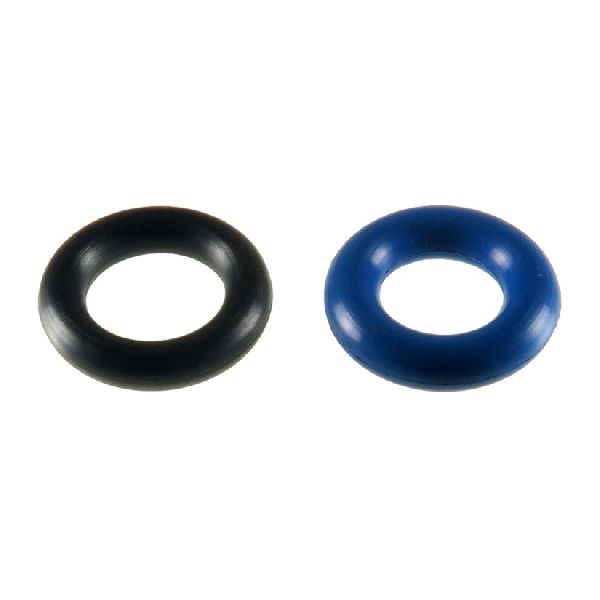
Heads up: When replacing these direct injectors, the Teflon seal at the tip must also be replaced. A special tool (like EN-48266) is required to size the new seal correctly after installation on the injector to prevent damage during installation into the cylinder head.
Helpful Videos
We Have This Part in Stock


The information in this article is provided for general reference and educational purposes only. Vehicle specifications, procedures, and part compatibility can vary by production date, trim level, and region. Always consult your vehicle's factory service manual and verify part numbers before purchasing or performing repairs. Safety-critical components such as airbags, seat belts, and braking systems should be installed by a qualified professional.
- Saturn VUE:
- 🧭 Diagnostic Flowchart
- 🎬 Helpful Videos
- 🛍️ Shop This Part
- What's Unique About the 2009-2010 Saturn VUE
- Symptoms You May Notice
- Most Likely Causes
- Rare But Worth Checking
- Diagnosis Steps
- Parts You'll Likely Need
- Related Codes That Often Appear With This One
- Technical Service Bulletins (TSBs) & Recalls
- Platform-Specific Known Issues
- Mechanic-Grade Diagnostic Values
- Scan Tool Commands That Help
- Wiring & Ground Locations
- Real Owner Repair Stories
- OEM Part Supersession History
- 🎟️ Get 5% Off