

P0278 on 2017-2018 Chevrolet Silverado 2500: Cylinder 6 Imbalance Causes & Fixes
P0278 on a 2017-2018 Silverado 2500 with the 6.6L Duramax engine indicates a performance issue with cylinder #6, most often caused by a faulty fuel injector. However, TSB #17-NA-171 suggests an ECM anomaly could also be the cause, and TSB #PIP5468F points to possible charge air cooler leaks. Proper diagnosis is crucial before replacing expensive parts.
- P0278 on the L5P Duramax most often points to a faulty #6 fuel injector, but it's not the only cause.
- Crucially, TSB #17-NA-171 identifies an ECM/TCM software anomaly that can falsely trigger this code. Always check for available software updates before replacing hardware.
- Wiring and connector issues at the injector are also a known failure point and should be inspected carefully before condemning the injector itself.
- A less common but possible cause noted in TSB #PIP5468F is a leak in the charge air cooler ductwork, which can set a variety of codes including P0278.
- Injector replacement requires programming the new injector's flow rate code into the ECM and replacing single-use high-pressure fuel lines.
What's Unique About the 2017-2018 Chevrolet SILVERADO 2500
For the 2017-2018 Silverado 2500 with the L5P Duramax engine, this code is not always a straightforward injector failure. Chevrolet issued Technical Service Bulletin #17-NA-171 which indicates that an 'anomaly in the Engine Control Module (ECM)' can cause P0278 along with a host of other cylinder contribution codes. Some versions of this TSB clarify that both the ECM and Transmission Control Module (TCM) may need to be reprogrammed. Additionally, TSB #PIP5468F suggests that seemingly unrelated issues like loose charge air cooler ductwork can also trigger this code, making a thorough diagnosis essential.
Diagnostic Flowchart
Tap your situation to follow the diagnostic path that matches what you're seeing on this vehicle.
Symptoms You May Notice
- Check Engine Light is on
- Rough or shaky idle
- Engine misfiring or stumbling, sometimes audible as a 'popping' during acceleration
- Noticeable loss of power and sluggish acceleration
- Increased fuel consumption
- Excessive black or white exhaust smoke
- Vehicle may enter a reduced power or 'limp' mode
- Immediately replacing the fuel injector without first checking for TSBs related to the ECM (#17-NA-171) or charge air cooler leaks (#PIP5468F).
- Replacing the fuel injector when the actual fault is a much cheaper and easier to fix pigtail connector. 🎬 See why you should check the pigtail before replacing injectors.
Most Likely Causes
- Faulty Cylinder 6 Fuel Injector 🔴 High Probability → Shop Fuel Injector Diesel injectors operate under extreme pressure (up to 30,000 PSI in the L5P) and are a common wear item. They can become clogged with contaminants or fail electronically or mechanically over time.
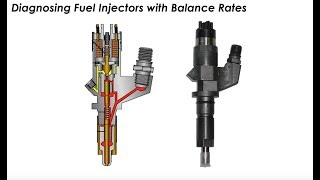
How to confirm: Use a professional scan tool to perform a cylinder balance test, which shows the contribution of each cylinder in real-time. 🎬 Watch: This video explains how to interpret diesel balance rates. A significant deviation on cylinder 6 points to a problem. A mechanic may also swap the #6 injector with another cylinder's injector to see if the fault code follows the part.
Typical fix: Replace the cylinder 6 fuel injector, its single-use high-pressure fuel line, and the copper crush washer. The new injector's flow rate code must then be programmed into the ECM.
Est. part cost: $280-$620 - Engine Control Module (ECM) Anomaly 🟡 Medium Probability → Shop Engine Control Module (ECM) As noted in TSB #17-NA-171, an anomaly within the ECM software can incorrectly set this code. This is a known issue for this specific vehicle range and may require reprogramming both the ECM and TCM.
How to confirm: This is typically a process of elimination. If the injector, wiring, and mechanical aspects of the engine check out, the ECM is the likely culprit. A dealer or qualified shop must check for available software updates using GM's TIS2Web service.
Typical fix: Reprogramming (reflashing) the ECM and TCM with the latest software. The labor time for this is estimated at 0.3-0.7 hours by GM. In rare cases, the ECM may need to be replaced.
Est. part cost: $100-$200 for a reflash, $600-$900 for a replacement module. - Wiring or Connector Issue 🟡 Medium Probability The injector pigtail connectors on L5P engines are a known failure point. They can become contaminated with oil or fail from heat and vibration, creating high resistance and causing misfires. Rodents may also chew on wiring harnesses.
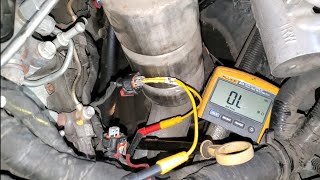
How to confirm: Visually inspect the wiring harness and connector going to the #6 fuel injector for any signs of damage, corrosion, or loose pins. Wiggle the connector while the engine is running to see if it affects the idle. Perform a resistance check on the circuit.
Typical fix: Repair the damaged section of the wiring harness or, more commonly, replace the injector pigtail connector. OEM pigtails are recommended.
Est. part cost: $30-$110 - Loose Charge Air Cooler (CAC) Ductwork ⚪ Low Probability TSB #PIP5468F specifically calls out that loose connections on the charge air cooler pipes can cause a host of DTCs, including P0278. The bulletin notes that a static visual inspection may not be enough, as the leak can occur during engine roll.
How to confirm: Perform a leak test on the charge air cooler system as per service information. Physically check the connections at the turbo outlet, CAC inlet/outlet, and throttle body for security.
Typical fix: Tighten or repair the loose connections on the charge air cooler ductwork. GM allocates 0.8 hours of labor for this repair under the TSB.
Est. part cost: $0-$50
Rare But Worth Checking
- Mechanical Engine Issue: Although less common for a single-cylinder balance code, a loss of compression in cylinder #6 due to a worn cam lobe, broken pushrod, worn piston rings, or a failing valve can also cause a contribution fault. This should be investigated if a new injector does not solve the problem. A compression and leak-down test would be required for diagnosis.
- Contaminated Fuel: Poor quality diesel fuel or contaminants like water or DEF can damage the fine passages within the injector, leading to poor performance. If you recently filled up at a questionable station, this could be a factor.
Diagnosis Steps
- Scan the ECM for all stored trouble codes. Note any other codes that appear alongside P0278, as they can provide clues (e.g., multiple cylinder codes point to ECM).
- Check for relevant Technical Service Bulletins (TSBs), specifically #17-NA-171 (ECM anomaly) and #PIP5468F (charge air cooler leaks).
- Using a professional scan tool, view live data and perform a cylinder balance test to confirm the underperformance of cylinder #6.
- Carefully inspect the wiring harness and electrical connector for the #6 fuel injector. Look for damage, corrosion, or loose pins. Wiggle the connector with the engine idling to see if the misfire changes.
- If TSB #PIP5468F is relevant, perform a pressure test on the charge air cooler system to check for leaks.
- If wiring and CAC system are intact, test the fuel injector. This can be done by swapping it with an injector from another cylinder (e.g., cylinder #4) and seeing if the fault code moves to P0272 (Cylinder 4 Contribution/Balance).
- If the fault follows the injector, replace the injector, the high-pressure fuel line, and the seal. Program the new injector to the ECM.
- If the fault stays on cylinder #6 after the swap, the issue is likely not the injector. A mechanical compression and leak-down test should be performed on cylinder #6 to rule out internal engine problems.
- If compression is good and all other components have been ruled out, the issue points back to the ECM. Consult a dealer about an ECM/TCM reflash per TSB #17-NA-171 before considering ECM replacement.
Parts You'll Likely Need
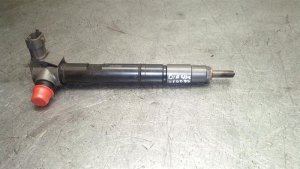
- Cylinder 6 Fuel Injector
(OEM #12698552)— This is the most common component to fail and directly cause a contribution fault for a single cylinder.
Trusted brands: ACDelco (GM Original Equipment), Denso (Original Manufacturer), S&S Diesel Motorsport
OEM price range: $400-$620
Aftermarket price range: $280-$450 - High-Pressure Fuel Line (Cylinder 6)
(OEM #12685924)— This is a single-use part that must be replaced anytime an injector is serviced to prevent high-pressure leaks. Cylinder 6 uses the same line as cylinders 1, 3, and 8.
Trusted brands: ACDelco (GM)
OEM price range: $40-$60
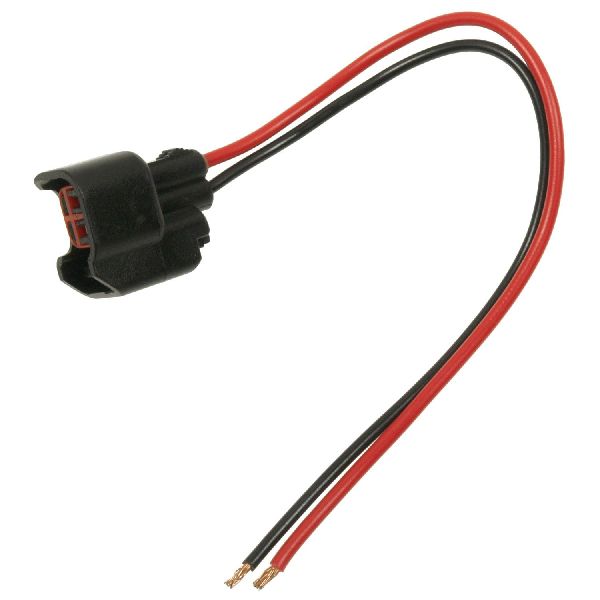
Aftermarket price range: $30-$50 - Injector Pigtail Connector
(OEM #19368140 (ACDelco PT3739))— The factory connector is a known failure point due to heat and vibration, causing high resistance. It's often replaced as a preventative measure or if a wiring fault is found.
Trusted brands: ACDelco, Fleece Performance
OEM price range: $70-$110
Aftermarket price range: $25-$50
Related Codes That Often Appear With This One
- P0263, P0266, P0269, P0272, P0275, P0281, P0284 — These are the contribution/balance fault codes for the other cylinders. Seeing multiple cylinder codes together strongly points towards a common cause like an ECM issue (as per TSB #17-NA-171), a fuel delivery problem, or a major electrical fault.
- P11CC — This is a code for NOx sensor performance. It is listed alongside P0278 in TSB #PIP5468F and #17-NA-171, suggesting a potential link through the ECM or a shared cause like a charge air cooler leak.
- P0306 — This is the generic code for 'Cylinder 6 Misfire'. It often accompanies P0278 as a cylinder balance fault will be detected as a misfire by the ECM.
Technical Service Bulletins (TSBs) & Recalls
- 17-NA-171: Mentions that an anomaly in the ECM and/or TCM can cause P0278 and a wide range of other codes, requiring a software reflash.
- PIP5468F: Lists P0278 in a group of potential codes that can be caused by loose charge air cooler ductwork.
- PIP5468D: An earlier version of PIP5468F with similar information regarding a group of DTCs including P0278.
- PIP5537: While for general misfires (P0300), it warns not to replace injectors for misfires if low compression is found, pointing to possible mechanical issues like broken pushrods.
Platform-Specific Known Issues
- TSB #17-NA-171 notes that an ECM/TCM software anomaly can cause this code, requiring a reflash instead of a part replacement.
- TSB #PIP5468F indicates that charge air cooler (CAC) ductwork leaks, which may only be apparent under load when the engine shifts, can trigger P0278.
- The injector pigtail connectors are a frequent failure point due to engine vibration and heat, often causing misdiagnosis as a failed injector.
Mechanic-Grade Diagnostic Values
- Injector Balance Rates (at idle, operating temp) — expected: +/- 4.0 mm³ in Park/Neutral.. Failure: A consistent reading above +4.0 mm³ on cylinder 6 suggests the ECM is adding fuel to compensate for a weak cylinder (bad injector, low compression).
- Injector Circuit Resistance — expected: Approximately 0.8 Ohms at the injector itself. L5P injectors are solenoid-type, but a simple resistance test is often misleading; checking for a short to ground (>200k Ohms) is more common.. Failure: Resistance readings of 3.8 Ohms or higher in the harness often point to a failing pigtail connector, not the injector. An open circuit reading indicates a broken wire or connector.
- Low-Pressure Fuel System (Lift Pump) — expected: 55-65 PSI. Failure: Pressure below this range indicates a weak lift pump, which can starve the high-pressure pump and cause contribution codes.
- High-Pressure Fuel Rail (Cranking) — expected: Greater than 3,000 PSI. Failure: Failure to build adequate pressure during cranking can indicate a leaking injector or a failing high-pressure fuel pump.
- High-Pressure Fuel Rail (Idle) — expected: Approximately 4,000 - 6,000 PSI.. Failure: Erratic or low pressure at idle can point to a faulty fuel pressure regulator or a significant leak in the system.
Scan Tool Commands That Help
- GM GDS2: Cylinder Power Balance — This is the primary function to view the real-time contribution (balance rate) of each cylinder at idle to confirm that cylinder #6 is the outlier.
- GM GDS2: Injector Kill / Cylinder Deactivation — Used to manually disable cylinder #6 while the engine is running. A minimal drop in engine RPM compared to killing other cylinders confirms #6 is not contributing properly.
- GM GDS2: Injector Flow Rate Programming (IQA/IMA) — This is a mandatory step after replacing a fuel injector. The unique flow rate code from the new injector must be entered into the ECM for it to operate correctly.
- GM GDS2: Induction System Leak Indication — This parameter helps diagnose charge air cooler leaks as mentioned in TSB #PIP5468F. It compares measured MAF sensor readings to the ECM's estimated airflow; a significant deviation can indicate a leak.
Wiring & Ground Locations
- K20 Engine Control Module (ECM) — On the driver's side of the engine block, below the coolant surge tank and upper radiator hose.. The ECM controls the injectors and processes all sensor data. TSB #17-NA-171 points to the ECM itself as a potential cause. All injector wiring terminates here.
- Cylinder 6 Injector Connector — Under the valve cover on the passenger side, at the rearmost cylinder (closest to the firewall). The wiring harness runs along the valve cover.. This connector and its pigtail are a common failure point due to vibration and heat, leading to high resistance that mimics a failed injector.
- G103 / G104 — Main engine grounds located on the rear of the driver's side (G103) and passenger's side (G104) cylinder heads.. A poor engine ground can cause erratic behavior in sensors and actuators, including the fuel injectors, leading to incorrect readings and fault codes.
- Frame/Body Grounds — Key ground points are located on the frame behind the front passenger side wheel well liner.. Corrosion at these main grounds can cause widespread electrical issues, including problems with the ECM and other control modules that could indirectly lead to a P0278 code.
Real Owner Repair Stories
- DuramaxForum.com member (2017 Chevrolet Silverado 2500HD L5P) — Check engine light with codes P0278 (Cylinder 6) and P0281 (Cylinder 7).
❌ Tried (didn't work) Swapping fuel injectors between cylinders; the fault codes did not follow the injectors.
✅ What actually fixed it The dealer diagnosed a faulty Engine Control Module (ECM). Replacing the ECM and performing the necessary programming resolved both fault codes. This aligns with the potential cause identified in TSB #17-NA-171. - Diesel technician video diagnosis (2017+ L5P Duramax) — Injector circuit code (P0204 in the example, but applies to all cylinders including P0278).
❌ Tried (didn't work) Load testing the circuit with a test light, which showed the circuit was good because the test probes were thicker than the injector pins and made a solid connection.
✅ What actually fixed it An Ohm test of the injector circuit while wiggling the connector revealed high and fluctuating resistance. The root cause was lost pin tension in the injector pigtail connector. Replacing the pigtail connector provided a permanent fix.
"I Checked Everything" — The Actual Cause
- A standard smoke test on the charge air cooler (CAC) system may not reveal a leak. Per TSB #PIP5468F, the leak can be intermittent and only occur when the engine torques under load, causing a shift in the ductwork. Technicians report that the factory crimp-style clamps on the hot-side CAC pipe can allow the boot to walk off over time, creating a leak that is not obvious during a static test. A thorough visual inspection of the boot's position against the pipe's rolled lip is critical.
When the Usual Fixes Don't Work
- While a faulty injector is the most cited cause for P0278, multiple owner and technician reports confirm that simply replacing the injector is often not the fix. The two most common 'counter-evidence' scenarios are a faulty injector pigtail connector causing high resistance, or an internal ECM anomaly as described in TSB #17-NA-171. In both cases, a brand new injector will not solve the problem, leading to wasted time and money. A thorough diagnosis of the wiring and checking for applicable TSBs is critical before condemning the injector.
OEM Part Supersession History
12674615, 12678992, 12686812, 12696966→12698552— Standard part evolution for design, material, or manufacturing process improvements.
Heads up: All previous part numbers are superseded by 12698552 for the 2017-2018 L5P engine. Using the latest part number is recommended.
Helpful Videos

Used OEM Parts in Stock
New Aftermarket Parts Available


The information in this article is provided for general reference and educational purposes only. Vehicle specifications, procedures, and part compatibility can vary by production date, trim level, and region. Always consult your vehicle's factory service manual and verify part numbers before purchasing or performing repairs. Safety-critical components such as airbags, seat belts, and braking systems should be installed by a qualified professional.
- Chevrolet SILVERADO 2500:
- 🧭 Diagnostic Flowchart
- 🎬 Helpful Videos
- 🛍️ Shop This Part
- What's Unique About the 2017-2018 Chevrolet SILVERADO 2500
- Symptoms You May Notice
- Most Likely Causes
- Rare But Worth Checking
- Diagnosis Steps
- Parts You'll Likely Need
- Related Codes That Often Appear With This One
- Technical Service Bulletins (TSBs) & Recalls
- Platform-Specific Known Issues
- Mechanic-Grade Diagnostic Values
- Scan Tool Commands That Help
- Wiring & Ground Locations
- Real Owner Repair Stories
- "I Checked Everything" — The Actual Cause
- When the Usual Fixes Don't Work
- OEM Part Supersession History
- 🎟️ Get 5% Off