

OBD-II Code P0290: Cylinder 10 Contribution/Balance Fault
What P0290 means, why it triggers, and how to fix it
- Code P0290 indicates cylinder 10 is underperforming, usually due to a clogged or dead fuel injector restricting fuel delivery.
- Replacing or professionally cleaning the cylinder 10 fuel injector resolves this code in over 80% of cases, costing between $250 and $850.
- You will immediately notice a rough idle, a 5-15% drop in fuel economy, and sluggish acceleration when this code triggers.
- Stop driving within 50 miles; ignoring P0290 dumps unburned fuel into the exhaust, melting the catalytic converter and turning a $300 repair into a $2,500 disaster.
What Does P0290 Mean?
The Powertrain Control Module (PCM) detects cylinder 10 is producing less power than the other cylinders. The computer monitors crankshaft rotational speed and registers a missing 'push' when cylinder 10 fires. This imbalance almost always points to a fuel delivery failure at cylinder 10, though ignition or mechanical faults occasionally cause it.
Technical definition: SAE/OBD-II defines P0290 as "Cylinder 10 Contribution/Balance Fault 🎬 Watch: A complete diagnostic walkthrough for the P0290 code.". The PCM determines crankshaft speed variations fall below the expected power threshold for cylinder 10 during its power stroke.
Can I Drive With P0290?
Yes, But With Caution. You can drive short distances, but immediate attention is required. Ignoring this fault causes a rough ride, poor fuel economy, and engine stalling. Critically, it dumps unburned fuel into the exhaust, destroying the catalytic converter and turning a $300 repair into a $2,500 replacement.
Common Causes
- Clogged or Failed Fuel Injector (Very Common) — Carbon deposits restrict fuel spray, or the internal coil fails electrically, preventing the injector from opening and starving the cylinder of fuel.
- Damaged Injector Wiring or Connector (Common) — Heat and vibration degrade the electrical connector or wiring harness, interrupting the PCM's firing signal to the injector.
- Ignition System Fault (Uncommon) — A weak spark plug or failing ignition coil prevents complete combustion, reducing power output enough to trigger a balance fault rather than a hard misfire code.
- Vacuum Leak (Uncommon) — A cracked intake manifold gasket near cylinder 10 introduces unmetered air, creating a lean condition that reduces the cylinder's power contribution.
- Low Fuel Pressure (Uncommon) — A failing fuel pump starves the entire rail, but symptoms often manifest first at the cylinders furthest from the fuel feed line.
- Internal Engine Damage (Rare) — Burnt valves, a blown head gasket, or worn piston rings cause low compression, physically preventing the cylinder from generating power.
- PCM Failure (Rare) — The engine computer's internal injector driver circuit burns out, stopping the signal entirely.
Symptoms
- Rough Idle and Shaking — The engine shudders or vibrates noticeably when the car is stopped and idling.
- Sluggish Acceleration — The vehicle hesitates and lacks power, especially when under load, towing, or climbing hills.
- Decreased Fuel Economy — Gas mileage drops by 5-15% because the engine runs inefficiently to compensate for the weak cylinder.
- Check Engine Light Illuminated (also visible on scanner) — The malfunction indicator lamp (MIL) activates on your dashboard after the PCM detects the imbalance over multiple drive cycles.
Diagnostic Flowchart
Tap your situation to follow the diagnostic path that matches what you're seeing on this code.
Common Fixes & Costs
- Replace Fuel Injector — Parts: $80-$350, Labor: $150-$500, ~2.5 hr book time (Intermediate)
- Direct On-Car Fuel Injector Cleaning — Parts: $50-$100, Labor: $150-$250, ~1.5 hr book time (Professional)
- Repair Wiring or Connector — Parts: $10-$60, Labor: $100-$300, ~1.5 hr book time (Intermediate)
- Professional Off-Car Ultrasonic Injector Cleaning — Parts: $0, Labor: $150-$300, ~2.5 hr book time (Professional)
- Re-flash or Replace PCM — Parts: $500-$1500, Labor: $150-$300, ~1.5 hr book time (Professional)
Used vs. New Parts: Buying Guide
When a used part is worth it: For budget repairs on vehicles over 150,000 miles, a used injector from a reputable salvage yard is viable if a new part is prohibitively expensive.
Donor-vehicle mileage cap: roughly under 80000 miles for the part to have meaningful remaining life.
Donor quality checklist:
- Verify the donor vehicle was not scrapped for engine failure.
- Inspect for physical damage, corrosion, or broken electrical connectors.
- Match the part number exactly; injectors are precisely calibrated.
Decision logic:
- If Vehicle is < 80K miles OR the part is < $150 new → Buy new. The savings from a used part are not worth the risk of premature failure and repeated labor costs.
- If The part is a direct injector (GDI) → Buy new. GDI injectors are highly sensitive and complex; used ones carry extreme risk.
Warranty tradeoff: Salvage yards offer 30-90 day warranties covering only the part. New aftermarket injectors include 1-year to lifetime warranties.
Worst-case if a used part fails: $500. If a used injector fails, you pay labor twice plus the cost of another replacement part.
What Happens If You Wait — Timeline
- 0-1 month: Check Engine Light illuminates. Intermittent roughness at idle occurs. No significant performance loss is noticed during normal driving. (MPG impact: 3-5%% · Added cost: $50)
- 1-3 months: Rough idle becomes consistent. Noticeable hesitation occurs during acceleration. The vehicle feels sluggish climbing hills. (MPG impact: 5-15%% · Added cost: $150)
- 3-6 months: Unburned fuel overheats the catalytic converter (>1600°F), melting its internal ceramic substrate. The engine stalls at stops. (MPG impact: 15-25%% · Added cost: $1200-$2800)
- 6+ months: Catastrophic failure. Excess fuel washes lubricating oil off the cylinder wall, scoring the piston rings and requiring an engine rebuild. (MPG impact: >25%% · Added cost: $4000-$10000)
Cost of Not Fixing It
- 0-1 month: Noticeable drop in fuel economy (5-15%), rough idle, and poor acceleration. (Added cost: $50)
- 1-6 months: Unburned fuel enters the exhaust and superheats the catalytic converter, melting its internal ceramic structure. (Added cost: $1200-$2800)
- 6+ months: Excess fuel strips oil from the cylinder wall (cylinder washdown), leading to severe piston ring and cylinder wall scoring. (Added cost: $4000-$10000)
Diagnosis Steps
- Verify the Code and Freeze Frame Data
Use an OBD-II scanner to confirm P0290. Check for accompanying codes like P0310 (Misfire) or P0288 (Circuit Low). Record the freeze-frame data to see engine RPM and load when the fault occurred.
Tools: OBD-II Scanner (Beginner) - Listen for Injector Pulse
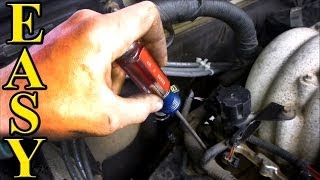
With the engine running, place a mechanic's stethoscope or a long screwdriver against the cylinder 10 fuel injector. You must hear a distinct, rhythmic clicking. Silence means the injector is dead or receiving no signal.
Tools: Mechanic's Stethoscope or Long Screwdriver (Beginner) - Inspect Wiring and Connector
Visually inspect the electrical connector at the cylinder 10 injector. Look for melted plastic, frayed wires, or green corrosion on the pins. Ensure it clicks firmly into place.
Tools: Flashlight (Beginner) - Test Circuit with a Noid Light
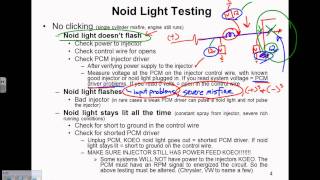
Disconnect the injector wiring and plug in a noid light. Start the engine. A rhythmic flashing confirms the PCM and wiring are sending the correct signal. No flash dictates a wiring or PCM repair.
Tools: Noid Light Kit (Intermediate) - Swap Injector Locations
Swap the cylinder 10 injector with cylinder 9. Clear the codes and drive. If the code changes to P0287 (Cylinder 9), the injector is definitively faulty and requires replacement.
Tools: Basic Hand Tools (sockets, wrenches) (Intermediate) - Test Injector Resistance
Use a multimeter set to Ohms to measure across the injector's terminals. Most high-impedance injectors read 11-18 Ohms. A reading of 'OL' (open) or near zero (short) means the injector is electrically destroyed.
Tools: Multimeter (Advanced) - Perform a Compression Test
If fuel and spark test perfectly, thread a compression tester into cylinder 10. A reading 15% lower than adjacent cylinders confirms internal mechanical failure, such as a burnt valve.
Tools: Compression Tester (Advanced)
When This Code Triggers (Freeze-Frame Conditions)
- Engine Coolant Temp: 170-230°F (Fully warmed up)
- RPM: 1300-1900 (Light cruise or steady throttle)
- Engine Load: 15-35% (Maintaining speed on a flat road)
Related Codes
- P0310 — Cylinder 10 Misfire Detected. P0290 indicates a reduction in performance, while P0310 indicates a complete misfire. They often appear together when an injector fails entirely.
- P0300 — Random/Multiple Cylinder Misfire. If the root cause of P0290 (like low fuel pressure) affects other cylinders, P0300 appears alongside it.
- P0288 — Cylinder 10 Injector Circuit Low. Points specifically to a short to ground in the injector's control circuit. If present, the root cause is electrical, not a clogged injector.
- P0289 — Cylinder 10 Injector Circuit High. Points to an open circuit (unplugged injector) or a short to power. Fix the electrical fault before replacing the injector.
Climate & Environmental Factors
- Cold Weather: Cold temperatures reduce fuel atomization efficiency. A partially clogged injector performs noticeably worse in the cold, leading to rough starts and triggering the contribution fault.
- High Humidity / Water Intrusion: Direct water intrusion from engine washing or deep puddles corrodes fuel injector connectors. Ford issued TSB 07-21-2014 specifically to address water shorting out injector connectors on V10 engines.
- Fuel Quality: Using low-tier gasoline without adequate detergents accelerates carbon deposit formation, clogging injectors and triggering P0290.
How to Talk to a Mechanic About This Code
Say this: "I have a P0290 code for a cylinder 10 contribution fault. Please start by checking the fuel injector, its wiring, and the ignition components for that cylinder. I'd also like you to rule out a mechanical issue with a compression test before recommending parts replacement."
This directs the technician to perform a logical, step-by-step diagnosis and prevents them from replacing expensive parts without verification.
Avoid saying:
- 'Just fix whatever's wrong'
- 'My check engine light is on, can you look at it?'
- 'Whatever you recommend'
Questions to ask before authorizing the repair:
- Did you confirm the injector was faulty by swapping it with another cylinder?
- Did you use a noid light to verify the wiring is sending a pulse to the injector?
- What was the compression reading on cylinder 10 compared to its neighbors?
- What is your warranty on this specific repair, including parts and labor?
Where to Take It: Dealer vs Independent vs Chain
- Dealer:
A strong choice for high-end vehicles prone to this code, or for any vehicle still under warranty.
Best for: Vehicles under warranty, Complex German models (BMW, Audi) requiring injector coding, Issues covered by a TSB or extended warranty
Downsides: Significantly higher labor rates and parts costs, May recommend replacing a full set of injectors when only one is bad (Typical cost: +50% vs. baseline) - Independent Shop:
Best overall fit. An experienced independent technician diagnoses P0290 effectively using standard procedures.
Best for: Out-of-warranty vehicles where cost is a factor, Common domestic V10 engines (Ford, Dodge)
Downsides: Quality varies widely; vet shops carefully through ASE certifications, May lack specialized coding tools for brand-new European engines (Typical cost: +0% vs. baseline) - Chain Shop:
AVOID for diagnosis. The risk of misdiagnosis and being sold unnecessary parts is high.
Best for: Simple maintenance like oil changes or tires
Downsides: Technician skill is highly variable, High pressure to upsell unnecessary full fuel system flushes, Lack in-depth diagnostic experience for contribution faults (Typical cost: -10% vs. baseline)
When to Walk Away From the Repair
If the estimated repair cost exceeds 50% of the car's private-party value, reconsider the repair.
- Car worth $5000, fix is $2500: Walk away. The repair cost is 50% of the car's value, and other age-related failures are likely.
- Car worth $15000, fix is $800: Fix it. The repair is well below the threshold and restores the vehicle's primary function.
What Scan Tool You Need for This Code
Minimum: A scanner that reads engine codes, shows freeze-frame data, and displays live data streams for fuel trims and injector pulse width.
A $20 code reader won't show live data needed to see if the computer is compensating for a weak cylinder.
Budget: BlueDriver Pro (~$100) — Pairs with your phone to read codes, view freeze-frame data, and graph live data streams for fuel trims.
Mid-range: Foxwell NT510 Elite (~$180) — Offers make-specific diagnostics and performs injector coding, which is required after replacing an injector on many modern engines.
Professional: Autel MaxiCOM MK808 (~$500) — Offers full bidirectional control, allowing you to command the injector to fire or perform a cylinder power balance test to isolate the fault.
Rent vs buy: Buying a budget scanner like the BlueDriver is a worthwhile investment, as diagnosing P0290 requires clearing codes multiple times during testing.
How to Clear the Code After You Fix It
- Use an OBD-II scan tool to clear codes
- Ensure fuel tank is between 1/4 and 3/4 full
- Perform a complete drive cycle to set readiness monitors
Drive cycle (~30 minutes): Start from a cold soak. Idle for 3 minutes with the A/C on. Drive at a steady 55 mph for 10 minutes. Perform several slow decelerations without braking. Drive in stop-and-go traffic for 10 minutes.
Readiness monitors affected: Catalyst monitor, Oxygen (O2) sensor monitor, Misfire monitor
Before emissions retest: drive at least 100 miles to fully set monitors.
Watch out for:
- Disconnecting the battery clears codes but resets all readiness monitors to 'Not Ready', causing an automatic emissions failure.
- The code returns immediately if the underlying mechanical or electrical fault remains unfixed.
Will This Fail Emissions / State Inspection?
Yes — this code typically fails an OBD-II emissions inspection.
- California: An illuminated Check Engine Light is an automatic failure. All required OBD readiness monitors must be set to 'Ready'.
- New York: The NYS DMV inspection includes an OBD-II scan. A P0290 code causes an automatic failure.
- Texas: In counties requiring emissions testing, an illuminated Check Engine Light or unset readiness monitors result in automatic failure.
Most Commonly Affected Vehicles
- BMW X5, X6, 7 Series, 5 Series (2008-2016) — Extremely common on models with the N63 twin-turbo V8 engine due to extreme heat in the engine valley destroying injectors.
- Audi A8, Q7, S6, S8 (2007-2016) — Common on V10 FSI engines. Severe carbon buildup on intake valves mimics injector issues and causes contribution faults.
- Ford F-250, F-350, Excursion, E-Series Vans (1999-2019) — Primarily seen in the Triton 6.8L V10 engine. Susceptible to water intrusion in the injector harness.
- Dodge Ram 2500/3500, Viper (1994-2006) — Occurs on the 8.0L and 8.3L V10 gasoline engines, often due to aging wiring harnesses or clogged injectors.
- Volkswagen Touareg, Phaeton (2005-2012) — Appears in V10 TDI models. Replacing an injector requires a specific coding procedure using a diagnostic scan tool.
Manufacturer-Specific Notes
- BMW: On N63 engines, the DME (PCM) is highly sensitive to battery voltage. A weak battery causes erroneous cylinder contribution codes. BMW also issued extended warranties (SIB 01 05 18) for fuel injectors to 10 years/120,000 miles due to high failure rates.
- Audi/Volkswagen: On FSI direct injection engines, severe carbon buildup on the back of the intake valves restricts airflow, mimicking a bad fuel injector and triggering P0290.
- General (Diesel): For common rail diesels like the VW V10 TDI, replacing a fuel injector requires an 'injector coding' procedure. Skipping this step causes the P0290 code to persist even with a new part.
Real Owner Stories
2006 Ford F-250 6.8L V10 at 145K miles
Check engine light illuminated with a rough idle and hesitation when towing.
What they tried:
- Used a bottle of fuel injector cleaner in the gas tank, with no change.
- Swapped the ignition coil with cylinder 9; the P0290 code did not move.
Outcome: A shop performed a direct on-car injector flush, running concentrated cleaner through the fuel rail. This resolved the issue. The injector was mechanically sound but clogged with varnish. Total cost was $250.
Lesson: An injector can be electrically 'good' but too clogged to function. Tank additives are rarely strong enough to clear a code-triggering blockage.
2011 BMW X5 (N63 Engine) at 95K miles
Intermittent rough idle on cold starts set P0290 and P0310 codes.
What they tried:
- Replaced the spark plug and ignition coil on cylinder 10. The code returned.
Outcome: The owner discovered BMW technical service bulletin SIB 01 05 18 extending the fuel injector warranty to 10 years/120,000 miles. The dealer replaced and coded the faulty injector for free.
Lesson: Always search for active recalls or extended warranty programs (TSBs/SIBs) before paying for expensive repairs on known problem vehicles.
2004 Dodge Ram 2500 8.0L V10 at 180K miles
P0290 code appeared after the truck sat for several months. The engine ran rough and smelled of unburned fuel.
What they tried:
- Replaced the fuel injector for cylinder 10, but the code returned immediately.
- Used a noid light on the injector connector and saw no flashing light.
Outcome: The owner traced the wiring harness and found rodents chewed through the signal wire. Repairing the wire with a butt connector and heat shrink fixed the problem.
Lesson: A brand new part fails if the signal cannot reach it. Always test the circuit with a noid light before condemning a component.
How to Prevent This Code From Triggering
- Use Top-Tier rated gasoline (Every fill-up) — Top-Tier fuels contain higher detergent concentrations that prevent carbon and varnish deposits on fuel injector tips.
- Add a PEA-based fuel system cleaner to the tank (Every 5,000 miles) — Polyetheramine (PEA) dissolves existing carbon deposits, keeping injectors clean during short-trip or stop-and-go driving.
- Change the fuel filter (Every 30,000 miles) — A clean filter ensures injectors receive clean fuel, acting as the last line of defense against tank contaminants.
Frequently Asked Questions
What's the difference between a 'contribution' fault and a 'misfire'?
A misfire means the cylinder failed to fire completely. A contribution fault means the cylinder is firing, but producing less power than expected. The PCM detects this imbalance by measuring crankshaft acceleration.
Can a bad spark plug cause P0290?
Yes. While P0290 is usually a fuel issue, a weak spark causes incomplete combustion. This reduces power output enough to trigger a contribution fault instead of a hard misfire.
Will a fuel injector cleaner additive in my gas tank fix this?
Tank additives help with minor buildup, but P0290 usually indicates a severe clog. A professional pressurized flush or ultrasonic cleaning is required to clear it.
Why does this code only apply to engines with 10 or more cylinders?
The OBD-II system assigns specific codes to specific cylinders. P0290 is exclusively designated for cylinder number 10, meaning it only appears on V10, W12, or V12 engines.
Key Takeaways
- Code P0290 indicates cylinder 10 is underperforming, usually due to a clogged or dead fuel injector restricting fuel delivery.
- Replacing or professionally cleaning the cylinder 10 fuel injector resolves this code in over 80% of cases, costing between $250 and $850.
- You will immediately notice a rough idle, a 5-15% drop in fuel economy, and sluggish acceleration when this code triggers.
- Stop driving within 50 miles; ignoring P0290 dumps unburned fuel into the exhaust, melting the catalytic converter and turning a $300 repair into a $2,500 disaster.
Helpful Videos

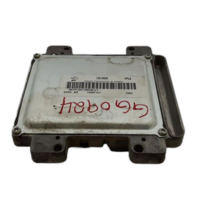
Shop the Parts Behind P0290
Below are the parts most often responsible for code P0290, ranked by how frequently each one is the actual culprit (per the diagnosis above). Tap any to see what we have for your vehicle.


The information in this article is provided for general reference and educational purposes only. Vehicle specifications, procedures, and part compatibility can vary by production date, trim level, and region. Always consult your vehicle's factory service manual and verify part numbers before purchasing or performing repairs. Safety-critical components such as airbags, seat belts, and braking systems should be installed by a qualified professional.
- 🧭 Diagnostic Flowchart
- 🎬 Helpful Videos
- 🛍️ Shop This Part
- What Does P0290 Mean?
- Can I Drive With P0290?
- Common Causes
- Symptoms
- Common Fixes & Costs
- Used vs. New Parts: Buying Guide
- What Happens If You Wait — Timeline
- Cost of Not Fixing It
- Diagnosis Steps
- When This Code Triggers (Freeze-Frame Conditions)
- Related Codes
- Climate & Environmental Factors
- How to Talk to a Mechanic About This Code
- Where to Take It: Dealer vs Independent vs Chain
- When to Walk Away From the Repair
- What Scan Tool You Need for This Code
- How to Clear the Code After You Fix It
- Will This Fail Emissions / State Inspection?
- Most Commonly Affected Vehicles
- Manufacturer-Specific Notes
- Real Owner Stories
- 2006 Ford F-250 6.8L V10 at 145K miles
- 2011 BMW X5 (N63 Engine) at 95K miles
- 2004 Dodge Ram 2500 8.0L V10 at 180K miles
- How to Prevent This Code From Triggering
- Frequently Asked Questions
- What's the difference between a 'contribution' fault and a 'misfire'?
- Can a bad spark plug cause P0290?
- Will a fuel injector cleaner additive in my gas tank fix this?
- Why does this code only apply to engines with 10 or more cylinders?
- Key Takeaways
- 🎟️ Get 5% Off