

OBD-II Code P0297: Vehicle Overspeed Condition
What P0297 means, why it triggers, and how to fix it
- Exceeding the factory speed limiter (often 95-100 mph) or spinning the tires on ice causes 80% of P0297 codes, requiring zero replacement parts to fix.
- Read the OBD-II freeze frame data before buying parts; if the recorded speed is over 90 mph, the code is a driver-induced event, not a mechanical failure.
- If the freeze frame shows a normal speed (e.g., 45 mph), graph the live data for all 4 wheel speed sensors to instantly identify the single erratic sensor causing the false code.
- Expect the vehicle to force a reduced-power 'limp mode' and disable the ABS system until the code is cleared, creating a significant safety hazard at highway speeds.
What Does P0297 Mean?
P0297 means the Powertrain Control Module (PCM) recorded the vehicle exceeding its factory-programmed maximum speed limit (often around 100 mph). The computer monitors speed via wheel and transmission sensors, triggering this code to protect the engine and transmission from extreme stress.
Technical definition: The PCM received a signal from the vehicle speed sensor (VSS) or wheel speed sensors indicating the vehicle surpassed a calibrated speed limit for a specific duration. The PCM then activates a fail-safe strategy—such as cutting fuel to injectors or limiting throttle—to force the vehicle to slow down.
🎬 Watch: A quick overview of the P0297 overspeed condition.Can I Drive With P0297?
Yes, But With Caution. You can drive, but the vehicle often enters a reduced-power 'limp mode' to protect the drivetrain, creating a safety hazard in traffic. Faulty speed sensors also cause erratic shifting and disable the ABS and traction control systems. Repeatedly setting this code alerts the manufacturer to abuse and voids related drivetrain warranties.
Common Causes
- Vehicle Speed Exceeded Programmed Limit (Very Common) — The vehicle was driven faster than the factory-set speed limiter allows. This happens during aggressive acceleration or by gaining momentum while coasting down a long, steep hill.
- Excessive Wheel Spin (Common) — When drive wheels spin rapidly on ice, snow, or mud, the computer misinterprets the high wheel speed as the entire vehicle overspeeding, triggering a false code.
- Faulty Wheel Speed Sensor(s) (Less Common) — Individual sensors at each wheel report speed to the PCM. A failing sensor sends erratic or artificially high signals, tricking the computer into thinking the car is speeding.
- Faulty Vehicle Speed Sensor (VSS) (Less Common) — The main sensor on the transmission measures overall drivetrain speed. Internal failure causes it to send incorrect, high-speed readings to the computer at normal driving speeds.
- Wiring or Connector Issues (Rare) — Damaged, corroded, or loose wiring connected to any speed sensor causes a short or an erratic signal. A wire chafing against the chassis leads directly to a false overspeed reading.
- Damaged or Dirty Tone Ring (Rare) — Speed sensors read a toothed reluctor ring. If this ring cracks or accumulates metallic debris, it produces a high-frequency signal, leading to a false overspeed reading.
- Aftermarket ECU/PCM Tuning (Rare) — Modifying the PCM to remove the speed limiter still triggers P0297 if the ECU has a separate, hard-coded failsafe limit or if the tune calibration is flawed.
- Incorrect Tire Size (Rare) — Installing tires significantly smaller than the original equipment causes them to rotate faster at a given speed, tricking the PCM into an overspeed condition near highway speeds.
- Faulty Instrument Cluster (Rare) — In some modern vehicles, the instrument cluster processes speed data. A malfunctioning cluster feeds erroneous speed data to the PCM via the CAN bus.
- Faulty Powertrain Control Module (PCM) (Very Rare) — The vehicle's main computer suffers a software glitch or internal hardware failure, causing it to misinterpret perfectly good speed sensor data.
Symptoms
- Check Engine Light On — The dashboard check engine light illuminates immediately after the overspeed event.
- Reduced Engine Power (Limp Mode) — The vehicle intentionally limits throttle response and engine speed to protect the drivetrain, making acceleration sluggish.
- ABS or Traction Control Warning Lights — Because wheel speed sensors control ABS and traction systems, a sensor fault triggers these warning lights alongside P0297.
- Erratic or Inaccurate Speedometer — The speedometer needle jumps erratically, shows the wrong speed, or drops to zero while driving.
- Harsh or Improper Transmission Shifting — The transmission control module uses speed data to shift. Bad data causes rough, delayed, or incorrect gear changes.
- Cruise Control Disengages — The cruise control system disables itself because it cannot rely on the erratic speed data.
- Speed Warning Indicator on Dash — The instrument cluster displays a specific 'Vehicle Overspeed' text warning.
Diagnostic Flowchart
Tap your situation to follow the diagnostic path that matches what you're seeing on this code.
Common Fixes & Costs
- Change Driving Habits — Parts: $0, Labor: $0 (DIY)
- Replace Wheel Speed Sensor
— Parts: $50-$150, Labor: $90-$150, ~1.2 hr book time
(DIY)
: OEM ML3Z-15K857-A, RL3Z-15K857-K (Alt: Dorman 970-012, Motorcraft DY-1235)
: OEM 85564677, 84356644 (Alt: Duralast SU1089, Delphi SS20187)
: OEM 59810-C1000, 59830-C1000 (Alt: Standard Motor Products, Walker Products) - Replace Vehicle Speed Sensor (VSS)
— Parts: $30-$100, Labor: $100-$200, ~1.5 hr book time
(Intermediate)
: OEM HL3Z-7H103-D (Alt: Standard Motor Products, Motorcraft)
: OEM Varies by transmission model (Alt: AC Delco, Dorman) - Repair Wiring or Connectors — Parts: $5-$20, Labor: $100-$250, ~1.5 hr book time (Intermediate)
- Reprogram or Replace PCM — Parts: $600-$1200, Labor: $150-$300, ~2.0 hr book time (Professional)
DIY vs Professional
- Change Driving Habits — Beginner:
- Replace Wheel Speed Sensor — Beginner:
- Replace Vehicle Speed Sensor (VSS) — Beginner:
- Repair Wiring or Connectors — Beginner:
- Reprogram or Replace PCM — Beginner:
Used vs. New Parts: Buying Guide
When a used part is worth it: Buying a used speed sensor rarely makes sense. The savings are minimal compared to the high risk of premature failure from an already-worn part.
Donor-vehicle mileage cap: roughly under 60000 miles for the part to have meaningful remaining life.
Donor quality checklist:
- Verify the exact OEM part number matches perfectly.
- Demand a 30-90 day warranty to protect against dead-on-arrival parts.
- Reject parts from rust-belt vehicles, as corrosion kills these sensors.
Decision logic:
- If A new aftermarket sensor costs under $100. → Buy new. The 1-year warranty and peace of mind outweigh the $30 savings of a used part.
- If The vehicle has 150,000+ miles and requires a $300+ OEM sensor. → A tested, used OEM sensor from a low-mileage donor is a valid cost-saving option.
- If The sensor is integrated directly into the wheel hub assembly. → Buy a brand new assembly. The labor to replace a hub is too high to risk doing it twice.
Warranty tradeoff: Used sensors offer 30-90 days. New aftermarket sensors offer 1-year to lifetime warranties. New OEM parts carry 1-2 year warranties.
Worst-case if a used part fails: $150-$300 if a used sensor fails, requiring you to pay labor twice plus the cost of a new part.
What Happens If You Wait — Timeline
- 0-1 month: Check Engine Light is on. ABS and Traction Control disable as a failsafe. Braking functions normally, but without anti-lock assistance. (MPG impact: 0-2%% · Added cost: $0)
- 1-4 months: Transmission shifts harshly because the TCM receives bad speed data. The torque converter fails to lock up, raising cruising RPMs. (MPG impact: 3-8%% · Added cost: $50-$150 in wasted fuel.)
- 4-8 months: Sustained harsh shifting causes accelerated wear on internal transmission clutch packs and bands. Fluid degrades rapidly from excess heat. (MPG impact: 5-12%% · Added cost: $200-$400 in wasted fuel and transmission wear.)
- 8+ months: Significant internal transmission damage occurs. Slipping clutches lead to a complete loss of gears, requiring a rebuild. (MPG impact: 10-20%+% · Added cost: $2,500-$5,000+ for transmission rebuild.)
Cost of Not Fixing It
- Immediate: The Anti-lock Braking System (ABS) and Traction Control disable entirely, drastically increasing the risk of losing control during emergency braking or on wet roads. (Added cost: $0)
- 0-3 months: A bad Vehicle Speed Sensor causes harsh shifting, poor fuel economy, and incorrect speedometer readings, stressing transmission components. (Added cost: $50-$200 in wasted fuel.)
- 6+ months: Sustained harsh shifting and improper torque converter lockup destroys internal transmission clutches and bands, requiring a full rebuild. (Added cost: $2,500-$5,000+)
Diagnosis Steps
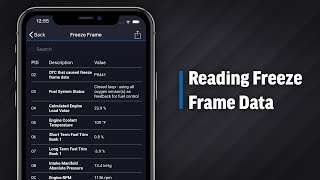
- Check the Freeze Frame Data
Use an OBD-II scanner to read freeze frame data. Look at the 'Vehicle Speed' parameter. If it shows 95+ mph, the vehicle was actually speeding. If it shows a normal speed (e.g., 45 mph), a sensor is lying.
Tools: OBD-II Scanner (Beginner) - Interview the Driver
Ask the driver if they were driving at high speeds, coasting down a steep hill, or spinning the tires on ice or mud. Driver behavior causes the vast majority of P0297 codes.
Tools: None (Beginner) - Clear the Code and Test Drive
If the cause was driver-related, clear the code and test drive normally. If the code does not return, the issue is resolved. If it returns at normal speeds, a component has failed.
Tools: OBD-II Scanner (Beginner) - Check for Technical Service Bulletins (TSBs)
Search manufacturer TSBs for your specific year and model. Automakers frequently release PCM software updates to fix overly sensitive P0297 fault logic.
Tools: Internet Access, Service Manual (Beginner) - Monitor Live Sensor Data
Use a scanner to graph live data for the Vehicle Speed Sensor (VSS) and all four wheel speed sensors. Drive safely with a helper. All readings must match within 1-2 mph. The sensor that spikes, drops out, or reads erratically is the culprit.
Tools: Advanced OBD-II Scanner (Intermediate) - Visually Inspect Sensors, Wiring, and Tone Rings
Inspect the wiring harness for the identified faulty sensor. Look for chafed wires, melted insulation, or green corrosion inside the connector. Check the tone ring for cracks or heavy rust buildup.
Tools: Flashlight, Jack and Jack Stands (Intermediate) - Test Sensor Resistance (Passive, 2-Wire Sensors)
For older 2-wire magnetic sensors, disconnect the plug and measure internal resistance with a multimeter. Compare to factory specs (typically 800-2,500 Ohms). An open circuit (OL) means the sensor is dead.
Tools: Multimeter, Service Manual (Advanced) - Test Sensor Voltage (Active, 3-Wire Sensors)
For modern 3-wire Hall-effect sensors, back-probe the connector with the key on. Verify 5V/12V power and ground. Slowly spin the wheel; the signal wire voltage must toggle between high (5V) and low (0V).
Tools: Multimeter, Back-probe Kit (Advanced) - Test Sensor with an Oscilloscope
For definitive proof on active sensors, back-probe the signal wire with an oscilloscope. Spin the wheel to verify a clean, consistent square wave. A distorted or missing wave confirms a bad sensor or tone ring.
Tools: Oscilloscope, Service Manual (Professional)
When This Code Triggers (Freeze-Frame Conditions)
- Vehicle Speed: 100+ mph (At or above the manufacturer's programmed speed limiter.)
- Engine RPM: 2000-4000 RPM (Typically in a high gear at highway speeds or coasting downhill.)
- Engine Load: 15-50% (Low to moderate load, occurring during downhill coasting with minimal throttle input.)
- Engine Coolant Temp: 185-210°F (Vehicle is at full operating temperature.)
Related Codes
- P0503 — P0503 (VSS 'A' Intermittent/Erratic/High) directly causes a false P0297. P0503 flags the faulty circuit, while P0297 is the PCM reacting to the bad data. Fix P0503 first.
- P0500 — P0500 indicates a dead VSS circuit (no signal, 0 MPH). P0297 indicates a signal that is valid but impossibly high.
- P0720 — P0720 flags a malfunction in the Output Speed Sensor (OSS) circuit, causing severe shifting problems. If you have harsh shifting, the P0720 fault is the root cause.
- C0035 (and other C-codes) — Chassis ('C') codes relate to the ABS system. A faulty wheel speed sensor sets a C-code first. A C-code combined with P0297 pinpoints exactly which wheel sensor is broken.
Climate & Environmental Factors
- Cold Weather (Ice/Snow): Spinning drive wheels on ice rapidly exceeds the programmed speed limit, causing the PCM to log an overspeed event even if the car is barely moving.
- Road Salt / High Humidity: Salt spray coats the undercarriage, corroding connectors and fraying wiring. This creates electrical shorts that send erratic, high-speed signals to the PCM.
How to Talk to a Mechanic About This Code
Say this: "I have a P0297 code. Please check the freeze-frame data first to confirm the recorded speed. If it shows a normal driving speed, graph the live data from all wheel speed sensors and the VSS to isolate the erratic sensor before replacing parts."
This proves you know the code is often caused by driver behavior. It forces the shop to use live data analysis rather than blindly replacing sensors.
Avoid saying:
- 'My check engine light is on, can you look at it?'
- 'Just fix whatever's wrong.'
- 'My car says it was overspeeding, just replace the speed sensor.'
Questions to ask before authorizing the repair:
- Can you show me the freeze-frame data that was stored with the code?
- Did you graph all the speed sensors on a live data stream? Which one was erratic?
- Have you inspected the wiring and connector for that sensor for corrosion?
- What is the warranty on this repair, including parts and labor?
Where to Take It: Dealer vs Independent vs Chain
- Dealer:
Best for: Vehicles still under powertrain warranty., Known manufacturer-specific issues, like a GM EBCM module fault or a Ford PCM recall., Complex electrical issues requiring manufacturer-specific software.
Downsides: Labor rates are 50-100% higher than independent shops., Dealers default to replacing large, expensive assemblies rather than repairing wiring. (Typical cost: +50% vs. baseline) - Independent Shop:
Best fit for most situations. A competent independent shop easily diagnoses and repairs bad sensors or wiring at a lower cost than the dealer.
Best for: Out-of-warranty vehicles., Standard diagnosis of a bad wheel speed sensor via live data., Vehicles with clear symptoms pointing to a sensor or wiring issue.
Downsides: Diagnostic capabilities vary; ensure the shop has modern scan tools. (Typical cost: +0% vs. baseline) - Chain Shop:
Avoid for initial diagnosis. Chain shops frequently misdiagnose P0297 by replacing sensors without ruling out driver-induced events first.
Best for: Simple, pre-diagnosed repairs, such as replacing a specific wheel speed sensor you already identified.
Downsides: Technicians lack training for in-depth electrical diagnosis., High pressure to upsell unnecessary services. (Typical cost: -10% vs. baseline)
When to Walk Away From the Repair
If the estimated repair cost exceeds 40% of the car's private-party value, sell or trade it in.
- Car worth $4000, fix is $300: Fix it. A standard wheel speed sensor replacement is a minor cost relative to the car's value.
- Car worth $12000, fix is $1800: Fix it. Even a complex repair like a new PCM is well below the 40% threshold.
- Car worth $2500, fix is $1500: Walk away. If the diagnosis points to a rare PCM failure or complex wiring harness issue on a low-value car, the repair is not worth it.
What Scan Tool You Need for This Code
Minimum: A scanner that reads Freeze Frame data and graphs multiple streams of Live Data simultaneously.
A $20 code reader cannot show freeze frame data (to verify actual speed) or live sensor data (to identify the lying sensor). You will be guessing.
Budget: BlueDriver Pro or FOXWELL NT301 (~$70-100) — Reads codes, views freeze frame data, and graphs live data from all speed sensors to identify the outlier. Perfect for DIY diagnosis.
Mid-range: Innova 5610 or Foxwell NT510 Elite (~$150-350) — Provides faster live data graphing to spot intermittent sensor dropouts during a test drive, plus manufacturer-specific codes.
Professional: Autel MaxiCOM MK808Z or XTOOL D7W (~$400-600) — Offers full bidirectional control to command the ABS module and check for PCM software updates, providing dealership-level capability.
Rent vs buy: If this is a one-time fix, rent a scanner for free from AutoZone or O'Reilly Auto Parts. Buy only if you plan to do regular diagnostics.
How to Clear the Code After You Fix It
- Use an OBD-II scan tool to clear the P0297 code.
- Ensure the fuel tank is between 1/4 and 3/4 full.
- Perform a complete drive cycle to allow readiness monitors to run.
Drive cycle (~30 minutes): Cold start after sitting 8+ hours. Idle for 3 minutes. Drive at a steady 55 mph for 15 minutes. Perform 15 minutes of stop-and-go city driving. Allow the vehicle to cool down.
Readiness monitors affected: Comprehensive Component Monitor, Misfire Monitor
Before emissions retest: drive at least 100 miles to fully set monitors.
Watch out for:
- Disconnecting the battery clears the code but resets all readiness monitors to 'Not Ready', guaranteeing an emissions test failure.
- Failing to fix the underlying sensor fault causes the code to return immediately during the drive cycle.
Will This Fail Emissions / State Inspection?
Yes — this code typically fails an OBD-II emissions inspection.
- California: An illuminated Check Engine Light is an automatic Smog Check failure. You must complete a full drive cycle after repair to set readiness monitors before retesting.
- New York: Vehicles fail the mandatory OBD-II inspection if the Check Engine Light is on for any reason.
- Texas: In emissions-testing counties (Harris, Dallas, Tarrant), an active Check Engine Light results in an immediate inspection failure.
Most Commonly Affected Vehicles
- Ford E-Series, F-Series, Mustang (2010-Present) — Common on fleet trucks (E-450, F-450) with strict speed governors, and Mustangs due to high-speed driving or aftermarket tunes.
- Chevrolet / GMC Silverado, Sierra (2007-2015) — A failing Electronic Brake Control Module (EBCM) sends faulty speed data, triggering P0297 alongside ABS and StabiliTrak warnings. The module, not the sensor, is usually at fault.
- Hyundai Sonata, Elantra (2011-2019) — Diagnosis usually points to standard causes like a faulty wheel speed sensor or wiring harness damage near the wheel well.
- BMW 3-Series, 5-Series (2006-Present) — BMWs use sensitive active wheel speed sensors. A faulty sensor is the primary cause, though actual overspeed events are common due to vehicle performance.
- Volkswagen Jetta, Golf (2008-Present) — VW uses active sensors requiring oscilloscope diagnosis. The cause is typically a failed wheel speed sensor or a damaged wiring pigtail.
- Toyota Camry, RAV4 (2005-Present) — Uncommon outside of actual overspeed events. When a part fails, it is almost always a wheel speed sensor; PCM failure is virtually nonexistent.
Manufacturer-Specific Notes
- Ford: On 2014-2017 F-150s, a faulty Output Shaft Speed (OSS) sensor causes a sudden, dangerous downshift to 1st gear at highway speeds. Ford issued recall 24S37 for this specific issue.
- General Motors: On early-2010s GM trucks, the Electronic Brake Control Module (EBCM) frequently fails, sending erroneous speed signals to the PCM and triggering P0297 even when all sensors are perfect.
- BMW / Volkswagen: European makes use 'active' 3-wire wheel speed sensors. You cannot test them for resistance with a basic multimeter; diagnosis requires an oscilloscope to verify the square wave signal.
- Honda / Toyota: PCM failure is exceedingly rare. Diagnostic focus must remain entirely on speed sensors, wiring, and tone rings.
Real Owner Stories
2007 Ford E-350 (189k miles) - The 'Downhill Coaster'
Owner discovered a pending P0297 code after a road trip. No symptoms were noticed, but the owner recalled coasting down steep mountain grades.
What they tried:
- Noted the vehicle's governor cuts engine power around 93 mph on flat ground.
- Hypothesized that downhill momentum exceeded this limit, triggering the code.
Outcome: The code recorded an actual overspeed event caused by gravity. Clearing the code and avoiding excessive downhill speeds permanently resolved the issue.
Lesson: Always check freeze frame data. High recorded speeds prove the cause is driver action or environmental conditions, not a faulty part.
2007 Ford F-150 (204k miles) - The Misdiagnosis Maze
Vehicle randomly entered limp mode with an erratic speedometer, triggering P0297 and P0721. The issue occurred exclusively when it rained.
What they tried:
- Replaced the Output Shaft Sensor (OSS).
- Replaced the Turbine Shaft Sensor (TSS).
- Replaced the Vehicle Speed Sensor (VSS).
- Installed a new Powertrain Control Module (PCM).
Outcome: Despite replacing every sensor and the computer, the problem returned. The correlation with rain proved the root cause was a corroded wiring harness shorting out when wet.
Lesson: Symptoms tied to rain or car washes guarantee a wiring or connector problem. Inspect harnesses for corrosion before spending hundreds on sensors.
BMW M3 - The 'Having Fun' Fault
Every time the owner intentionally spun the rear tires, the dashboard lit up with ABS and DSC warning lights.
What they tried:
- Repaired the ABS pump.
- Replaced both rear wheel speed sensors.
Outcome: The problem continued. The fault only occurred during extreme wheel spin, indicating a dirty tone ring was unable to provide a clean signal under stress.
Lesson: Excessive wheel spin triggers speed codes even if the vehicle isn't speeding. If faults appear only during aggressive maneuvers, inspect the tone rings.
How to Prevent This Code From Triggering
- Mindful Driving Habits (Daily) — Avoiding aggressive acceleration on slippery surfaces and high-speed downhill coasting directly prevents the code from triggering.
- Apply Dielectric Grease to Connectors (During any brake or axle work) — Dielectric grease creates a waterproof seal, preventing moisture intrusion and corrosion—the primary cause of sensor electrical failure.
- Regular Undercarriage Washing (Monthly, especially in winter) — Washing away road salt prevents the corrosive buildup that destroys sensor wiring and connectors over time.
- Keep PCM Software Updated (Check during routine service) — Manufacturers release software updates to adjust overly sensitive P0297 logic, preventing false positives.
Frequently Asked Questions
What is the most common misdiagnosis for a P0297 code?
The most common mistake is replacing a speed sensor without checking freeze frame data first. Mechanics often replace parts when the code was actually caused by the driver speeding or spinning the tires.
Can P0297 clear itself?
Yes. If triggered by a one-time event like spinning tires on ice, the check engine light turns off after several drive cycles with no repeated faults. The code remains stored in the history.
Can I get P0297 from going down a steep hill?
Yes. Gravity can push a coasting vehicle past its programmed speed limiter, triggering the code even if your foot is off the gas pedal.
Can incorrect tire size cause a P0297 code?
Yes. Tires significantly smaller than the factory size spin faster at highway speeds, tricking the wheel speed sensors into reporting an overspeed condition.
What's the difference between the VSS and a wheel speed sensor?
The VSS is a single sensor on the transmission measuring overall drivetrain speed. Wheel speed sensors sit at each wheel to monitor individual traction for the ABS system.
Could a P0297 code void my warranty?
Yes. Repeated P0297 codes prove the vehicle is being operated beyond safe limits, giving the manufacturer grounds to deny a transmission or engine warranty claim.
Why did my car lose power when this code appeared?
The computer activates 'limp mode' to protect the engine and transmission from catastrophic damage. It intentionally cuts power to force you to slow down.
Key Takeaways
- Exceeding the factory speed limiter (often 95-100 mph) or spinning the tires on ice causes 80% of P0297 codes, requiring zero replacement parts to fix.
- Read the OBD-II freeze frame data before buying parts; if the recorded speed is over 90 mph, the code is a driver-induced event, not a mechanical failure.
- If the freeze frame shows a normal speed (e.g., 45 mph), graph the live data for all 4 wheel speed sensors to instantly identify the single erratic sensor causing the false code.
- Expect the vehicle to force a reduced-power 'limp mode' and disable the ABS system until the code is cleared, creating a significant safety hazard at highway speeds.
Helpful Videos
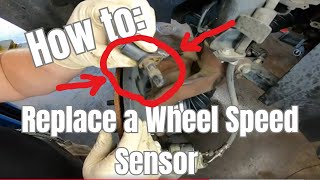
Shop the Parts Behind P0297
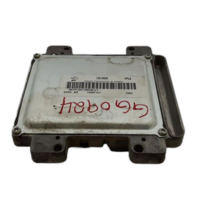
Below are the parts most often responsible for code P0297, ranked by how frequently each one is the actual culprit (per the diagnosis above). Tap any to see what we have for your vehicle.



The information in this article is provided for general reference and educational purposes only. Vehicle specifications, procedures, and part compatibility can vary by production date, trim level, and region. Always consult your vehicle's factory service manual and verify part numbers before purchasing or performing repairs. Safety-critical components such as airbags, seat belts, and braking systems should be installed by a qualified professional.
- 🧭 Diagnostic Flowchart
- 🎬 Helpful Videos
- 🛍️ Shop This Part
- What Does P0297 Mean?
- Can I Drive With P0297?
- Common Causes
- Symptoms
- Common Fixes & Costs
- DIY vs Professional
- Used vs. New Parts: Buying Guide
- What Happens If You Wait — Timeline
- Cost of Not Fixing It
- Diagnosis Steps
- When This Code Triggers (Freeze-Frame Conditions)
- Related Codes
- Climate & Environmental Factors
- How to Talk to a Mechanic About This Code
- Where to Take It: Dealer vs Independent vs Chain
- When to Walk Away From the Repair
- What Scan Tool You Need for This Code
- How to Clear the Code After You Fix It
- Will This Fail Emissions / State Inspection?
- Most Commonly Affected Vehicles
- Manufacturer-Specific Notes
- Real Owner Stories
- 2007 Ford E-350 (189k miles) - The 'Downhill Coaster'
- 2007 Ford F-150 (204k miles) - The Misdiagnosis Maze
- BMW M3 - The 'Having Fun' Fault
- How to Prevent This Code From Triggering
- Frequently Asked Questions
- What is the most common misdiagnosis for a P0297 code?
- Can P0297 clear itself?
- Can I get P0297 from going down a steep hill?
- Can incorrect tire size cause a P0297 code?
- What's the difference between the VSS and a wheel speed sensor?
- Could a P0297 code void my warranty?
- Why did my car lose power when this code appeared?
- Key Takeaways
- 🎟️ Get 5% Off