

P0298 on 2008-2012 Ford Escape 3.0L V6: Engine Oil Over-Temperature Causes and Fixes
This code means the engine oil is dangerously hot. It's most often caused by low engine oil or a failing engine cooling system (low coolant, bad thermostat). Stop driving immediately to prevent severe engine damage.
- P0298 is a critical code indicating your engine oil is too hot. Stop driving immediately to prevent engine failure.
- The most common causes are simple: low engine oil or a problem with the engine's cooling system (like low coolant or a bad thermostat).
- This Ford Escape 3.0L V6 does not have a dedicated oil temperature sensor; it calculates the temperature based on data from the Cylinder Head Temperature (CHT) sensor.
- If your oil and coolant levels are correct and the engine isn't actually overheating, the most likely culprit is a faulty CHT sensor giving a false reading.
What's Unique About the 2008-2012 Ford Escape
The 3.0L Duratec V6 engine in this generation of Ford Escape does not use a dedicated Engine Oil Temperature (EOT) sensor. Instead, the PCM uses an algorithm to calculate a theoretical oil temperature. It primarily relies on data from the Cylinder Head Temperature (CHT) sensor and potentially other inputs like engine load and run time. Therefore, this code can be triggered by a genuine overheating engine or, more commonly, by a faulty CHT sensor sending incorrect data. Crucially, the CHT sensor is located in a difficult-to-access position on the rear cylinder head under the lower intake manifold, making its replacement a labor-intensive job.
Symptoms You May Notice
- Check Engine Light is on
- Engine temperature gauge reading high or in the red zone
- Reduced engine power or performance (limp mode)
- An oil temperature or engine overheat warning light on the dashboard
- Burning oil smell
- Audible engine noises like knocking or ticking
- "Wrench" light on the dashboard, indicating a powertrain fault
- Replacing the oil pressure switch. While related to the oil system, the oil pressure switch primarily reports pressure, not temperature. The P0298 code is specifically a temperature calculation issue, more closely related to the CHT sensor on this engine.
Most Likely Causes
- Low Engine Oil Level 🔴 High Probability Caused by oil consumption over time or leaks that have gone unnoticed.
How to confirm: Park the vehicle on a level surface and wait for the engine to cool. Check the engine oil dipstick. The level should be between the 'MIN' and 'MAX' marks.
Typical fix: Top off the oil to the correct level with the manufacturer-specified viscosity (typically 5W-20). Investigate and repair any oil leaks.
Est. part cost: $10-$20 for a quart of oil. - Engine Cooling System Malfunction 🔴 High Probability Components like thermostats, water pumps, and radiators can fail with age, leading to general engine overheating which in turn heats the oil.
How to confirm: Check the coolant level in the reservoir. Look for visible coolant leaks. Observe if the cooling fans turn on when the engine is hot. A high reading on the engine temperature gauge confirms an overheating condition.
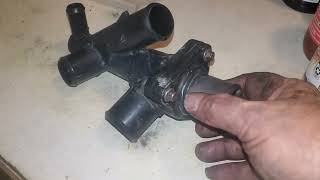
Typical fix: Repair depends on the specific failure. This could involve topping off coolant, or replacing a stuck thermostat, 🎬 Watch: This video shows how to replace the thermostat yourself. a failing water pump, or a clogged radiator.
Est. part cost: $20-$50 (thermostat), $50-$150 (water pump), $150-$300 (radiator). - Faulty Cylinder Head Temperature (CHT) Sensor 🟡 Medium Probability Since the PCM relies on the CHT sensor for its oil temperature calculation, a faulty sensor can send erroneously high temperature readings, triggering P0298 even if the engine is not actually overheating. This is a very common failure point. The sensor is located under the intake manifold, making it a 3-4 hour labor job to replace.
How to confirm: Use an OBD-II scanner to monitor the CHT sensor reading. Compare the reading from a cold start (it should be close to ambient air temperature) to the reading when the engine is warm. If the reading is erratic or implausibly high (e.g., maxed out immediately after starting), the sensor is faulty. This is often paired with code P1299.
Typical fix: Replace the Cylinder Head Temperature sensor. Due to its location, this requires removing the upper and lower intake manifolds. It is also wise to replace the intake manifold gaskets at the same time. The pigtail connector should also be inspected and replaced if corroded.
Est. part cost: $25-$75
Rare But Worth Checking
- Clogged or Failing Engine Oil Cooler: → Shop Engine Oil Cooler The oil cooler uses engine coolant to regulate oil temperature. If it becomes internally clogged or restricted, it cannot cool the oil effectively, leading to an over-temperature condition even if the main cooling system seems to be working.
- Internal Engine Problem: In rare cases, excessive internal friction from a failing bearing or other component can generate enough heat to cause the oil temperature to rise, setting this code as a symptom of a much larger mechanical failure.
Diagnosis Steps
- Do Not Drive. If the engine is hot, turn it off and let it cool completely to prevent injury and engine damage.
- Check Engine Oil Level and Condition: Pull the dipstick. If the oil is low, top it off. If the oil looks milky or smells burnt, it may indicate a head gasket failure or severe overheating.
- Check Coolant Level and Condition: Check the coolant reservoir. If it's low, top it off with the correct type of coolant. Look for signs of leaks around hoses, the radiator, and the water pump.
- Scan for Codes: Use an OBD-II scanner to confirm P0298 and check for any other related codes, such as P1299 or P0217. The presence of P1299 strongly suggests a CHT sensor circuit issue.
- Analyze Live Data: Use the scanner to view live data. Monitor the Cylinder Head Temperature (CHT) reading. From a cold start, it should match the ambient air temperature. If it immediately reads very high (e.g., 250°F+), the sensor or its circuit is faulty.
- Verify Overheating: If the live data shows a high temperature, carefully confirm if the engine is actually overheating. Is the engine bay excessively hot? Are the cooling fans running? Is the upper radiator hose hot?
- Diagnose Cooling System: If the engine is confirmed to be overheating, diagnose the cooling system. Check for a stuck thermostat, a non-functional water pump, or blocked radiator fins.
- Inspect CHT Sensor and Wiring: If the engine is NOT overheating but the scanner shows high temperatures, the CHT sensor is the primary suspect. Acknowledge that accessing the sensor requires removing the intake manifold. Inspect its wiring and connector for damage, corrosion, or looseness. If the wiring is good, the sensor itself has likely failed.
Parts You'll Likely Need
- Cylinder Head Temperature (CHT) Sensor
(OEM #9L8Z-6G004-A / Motorcraft DY1144)— This sensor provides the primary data for the PCM's oil temperature calculation. A failure can cause a false P0298 code, and it is a very common point of failure.
Trusted brands: Motorcraft, Standard Motor Products (SMP), NTK
OEM price range: $40-$80
Aftermarket price range: $25-$50 - Engine Thermostat
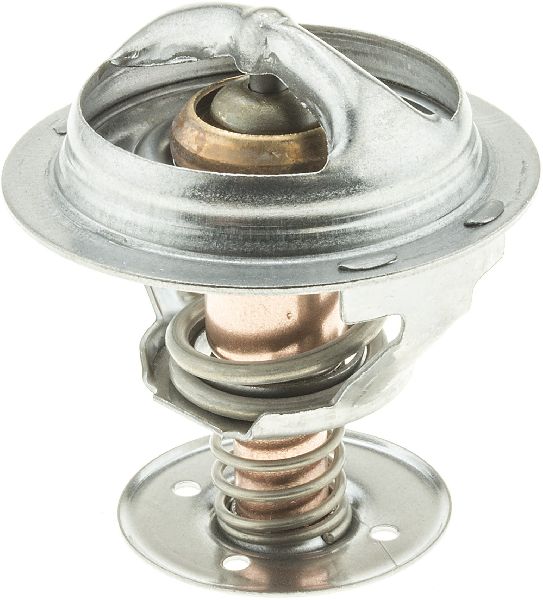
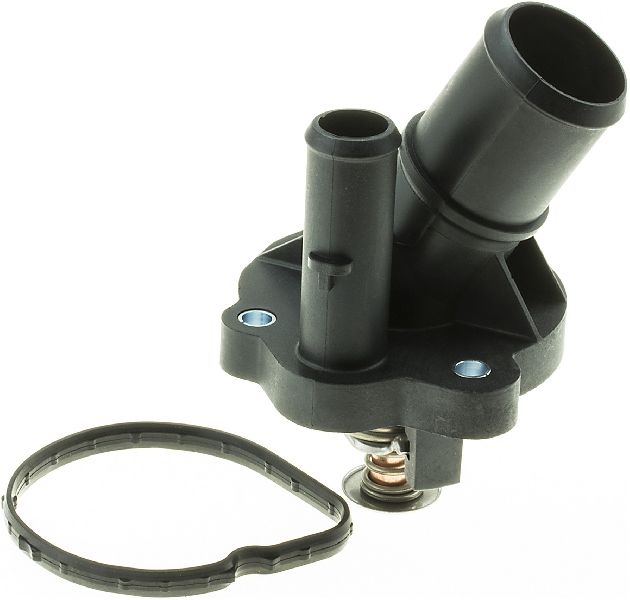
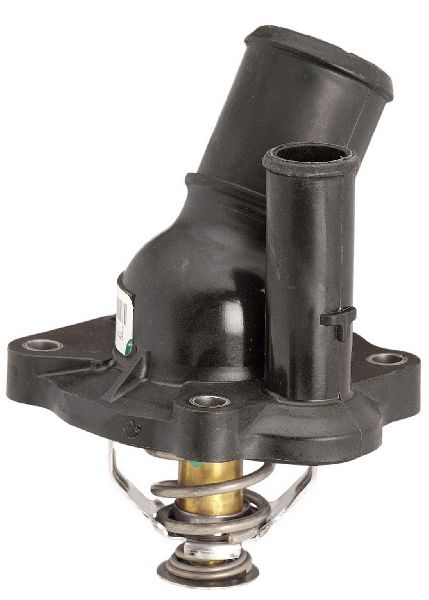
(OEM #8L8Z-8575-D / Motorcraft RT1234)— A common failure point in the cooling system. If it sticks closed, the engine will quickly overheat, triggering a genuine P0298.
Trusted brands: Motorcraft, Stant, Gates
OEM price range: $30-$60
Aftermarket price range: $15-$40
Related Codes That Often Appear With This One
- P1299 — This is a Ford-specific code for 'Cylinder Head Over Temperature Protection Active'. Since the P0298 calculation relies on the CHT sensor, it's extremely common to see both codes together when the CHT sensor fails and sends a false high-temperature signal to the PCM.
- P0217 — This is a generic code for 'Engine Over-Temperature Condition'. It often appears alongside P0298, indicating a general overheating event affecting both the coolant and oil.
- P0117 — This code means 'Engine Coolant Temperature Sensor Circuit Low Input'. On engines with both a CHT and ECT, a fault in one can sometimes cause the PCM to set codes related to other temperature inputs.
Platform-Specific Known Issues
- The most common trigger for a P0298 code on the 3.0L V6 Escape is not actual oil overheating, but a failure of the Cylinder Head Temperature (CHT) sensor. Because the PCM uses this sensor's data to infer oil temperature, a faulty sensor sending an erroneously high reading will cause the PCM to trigger limp mode and set codes P0298 and P1299. The repair is complicated by the sensor's location, buried under the intake manifold, turning a cheap part into a several-hour labor job.
Mechanic-Grade Diagnostic Values
- Cylinder Head Temperature (CHT) Sensor Voltage (PID value on scan tool) — expected: Approximately 3.0V-3.5V on a cold engine (e.g., 70°F/21°C), dropping to ~0.60V - 0.82V at normal operating temperature (210-220°F/99-104°C).. Failure: A voltage reading above 4.6V with the key on, engine off indicates an open circuit or disconnected sensor. A reading near 0V indicates a short circuit. An immediate jump to a very low voltage (e.g., <0.5V) on a cold engine points to a faulty, internally shorted sensor.
- CHT Sensor Circuit Test (at harness connector, sensor unplugged) — expected: With the ignition on, one pin should have ~5V reference (VREF) from the PCM, and the other should be the signal return (ground reference).. Failure: No voltage on the reference wire indicates a wiring problem back to the PCM or a faulty PCM. A high resistance to ground on the signal return wire indicates a grounding issue.
Scan Tool Commands That Help
- Ford IDS / FORScan / Professional Scan Tool: Monitor CHT PID (Parameter ID) — This is the primary diagnostic step to determine if the PCM is receiving a plausible temperature reading. On a cold engine, the CHT value should closely match the Intake Air Temperature (IAT) and Ambient Air Temperature (AAT) PIDs. If CHT is drastically different, it confirms a fault in the sensor or its circuit.
Wiring & Ground Locations
- CHT Sensor Connector — On the rear cylinder head, under the lower intake manifold. It is a 2-wire connector.. This connector and its pigtail are subject to high heat and can become brittle or corroded, causing the same symptoms as a failed sensor. It should always be inspected when replacing the sensor.
- G101 — For the 3.0L engine, this ground point is located near the battery in the engine compartment.. This is a major engine ground. A poor connection here can introduce electrical noise and unstable sensor readings for various components, including the PCM's reference for the CHT sensor.
- G110 — For the 3.0L engine, this ground is located on the left front of the engine compartment.. Another primary chassis/engine ground point. Verifying it is clean and tight is a crucial step in diagnosing any erratic electronic behavior, including false sensor readings.
- PCM Harness Connector — The Powertrain Control Module is located in the engine bay, typically on the firewall. The CHT sensor wires (Signal and Signal Return) terminate here.. In rare cases of a persistent issue with a known-good sensor and wiring, a continuity and pin-fit test at the PCM connector is necessary to rule out a break in the harness or a problem at the PCM itself.
Real Owner Repair Stories
- Common story across multiple forums (e.g., Escape-City.com, Ford-Trucks.com) (2009-2012 Ford Escape 3.0L V6) — Sudden loss of power while driving, engine temperature gauge shoots to 'H' (Hot), 'wrench' light and Check Engine Light appear. Engine goes into 'limp mode'.
❌ Tried (didn't work) Checking coolant level (was full), Checking oil level (was full), Letting the car cool down (symptoms returned immediately on restart, even with a cold engine)
✅ What actually fixed it Replacing the Cylinder Head Temperature (CHT) sensor. The simultaneous appearance of codes P0298 and P1299 was the key indicator. The repair was noted as being labor-intensive due to the sensor's location under the intake manifold. - VentureRider forum user report (2010 Ford Escape) — Battery light on intermittently, charging voltage fluctuating wildly up to 16.7V. At the same time, electric power steering would cut out, and the fuel gauge, tachometer, and radio would die intermittently.
❌ Tried (didn't work) Replacing the battery (which had failed a load test but wasn't the root cause of the over-voltage).
✅ What actually fixed it The root cause was a failing alternator with an internal voltage regulator fault. The extreme over-voltage condition was causing multiple electronic modules to malfunction. While not the primary cause of P0298 in most cases, this scenario shows how a systemic electrical fault can trigger seemingly unrelated codes as modules receive bad data or shut down.
OEM Part Supersession History
9L8Z-6G004-A→9L8Z-6G004-F— Part revision by the manufacturer, likely for improved durability or reliability.
Heads up: 9L8Z-6G004-F is listed as a direct replacement for 9L8Z-6G004-A and 9L8Z-6G004-D.9L8Z-6G004-B→9L8Z-6G004-E— Part revision by the manufacturer.CHT Sensor Pigtail Connector→Motorcraft WPT-1120 (also listed as WPT-338)— Service part for replacing damaged factory connectors.
Heads up: This is a 2-wire connector pigtail used for splicing into the harness.
Model Year Variations Within This Range
- 2008: The 2008 model year was a 'bridge' year. While it has the second-generation body style, it carried over the powertrain from the first generation, including a 200 hp 3.0L V6 and a 4-speed automatic transmission.
- 2009-2012: Starting in 2009, the 3.0L V6 was significantly updated, increasing output to 240 hp. It was paired with a new, more efficient 6-speed automatic transmission (6F35). While the P0298 diagnostic logic remains the same (based on the CHT sensor), technicians should be aware of the different engine performance characteristics and transmission type.
Diagnostic Flowchart
Other Known Issues on This Vehicle
Issues unrelated to this code that are worth knowing about as an owner of this generation:
- 6F35 Transmission Failure 🔴 High — Widespread issue. Can manifest as harsh shifting, shuddering, slipping, or complete failure, often before 100,000 miles. Class action lawsuits have been filed regarding these transmissions.
- Rear Shock Tower Rust 🔴 High — Very common in regions using road salt. The upper rear shock mount area on the unibody rusts through, causing the shock to detach. This is a major safety and structural failure. Repair panels are available.
- Electronic Throttle Body (ETB) Failure 🟠 Medium — A well-documented problem where the ETB fails, forcing the vehicle into a low-power 'limp home' mode, often accompanied by a wrench light. Ford issued a customer satisfaction program (13N03) to extend the warranty on this part, but it has since expired. (Ref: Customer Satisfaction Program 13N03 (Expired))
- Cracked Fuel Delivery Module Flange 🔴 High — Affects 2010-2012 models with the 3.0L engine. The flange on the fuel delivery module can crack, causing a fuel leak and significant fire risk. (Ref: NHTSA Recall 16V-777)
- Leaking Axle Shaft Seal 🟡 Low — A common issue is a leak from the driver's side (left) transaxle axle shaft seal, leading to transmission fluid loss.
Used vs. New Parts: Buying Guide for This Vehicle
When a used part is the smart pick: For this specific repair, sourcing used parts is NOT recommended for the sensor itself. However, if other components like the intake manifold were damaged during the repair, a used manifold from a reputable salvage yard is a viable cost-saving option.
Donor-vehicle mileage cap: roughly under 120000 miles for the part to have meaningful remaining life.
What to inspect on the donor part:
- For a used intake manifold, inspect for cracks, especially around bolt holes.
- Ensure all threaded inserts are intact and not stripped.
- Check that mating surfaces are not warped or deeply scored.
OEM-only on this vehicle (don't cheap out):
- While not strictly 'OEM-only', using a name-brand part for the CHT sensor is critical. The labor cost to replace it is very high, making it foolish to gamble on a cheap, unbranded, or used sensor that might fail prematurely.
Aftermarket brands forum-validated for this vehicle:
- CHT Sensor: Motorcraft (OEM), Standard Motor Products (SMP), NTK.
- CHT Pigtail Connector: Motorcraft, Dorman, Standard Motor Products.
Brands owners have reported issues with on this vehicle:
- Generic, no-name electronic sensors sold on marketplace websites with no warranty or brand reputation. The risk of premature failure far outweighs the small cost savings.
Real Owner Stories
Aggregated from forums and TSBs cited above. Mileages and costs reflect what owners reported in those sources.
2008-2012 Ford Escape 3.0L V6
Symptoms: The check engine light came on with codes P0298 and P1299 appearing at the same time.
What fixed it: The issue was traced back to a bad Cylinder Head Temperature (CHT) sensor, and replacing the sensor resolved the codes.
Source hint: escape-city.com thread titled 'P0298 and P1299 codes'
2008-2012 Ford Escape 3.0L V6
Symptoms: The vehicle suddenly entered limp mode and the dashboard temperature gauge showed a very high reading.
What fixed it: The consensus from other owners was that a CHT sensor replacement was the correct fix for these symptoms.
Source hint: ford-trucks.com forum thread titled 'P0298 - Engine Oil Over Temperature'
Related OBD-II Codes
Frequently Asked Questions
My 2010 Escape is showing code P0298, but my scanner also pulled P1299. Are these related?
I need to replace the CHT sensor on my Escape, but I can't find it. Where is it located?
My Escape suddenly lost power, the wrench light came on, and the temperature gauge shot up. Is this related to P0298?
I have a 2009 Mercury Mariner with the 3.0L V6 and a P0298 code. Does the same information about the CHT sensor apply?
If I'm replacing the CHT sensor on my 3.0L Escape, is there anything else I should do at the same time?
Could a real cooling system problem, like a bad water pump, cause the P0298 code?
Helpful Videos
We Have This Part in Stock


The information in this article is provided for general reference and educational purposes only. Vehicle specifications, procedures, and part compatibility can vary by production date, trim level, and region. Always consult your vehicle's factory service manual and verify part numbers before purchasing or performing repairs. Safety-critical components such as airbags, seat belts, and braking systems should be installed by a qualified professional.
- Ford Escape:
- 🧭 Diagnostic Flowchart
- 🎬 Helpful Videos
- 🛍️ Shop This Part
- What's Unique About the 2008-2012 Ford Escape
- Symptoms You May Notice
- Most Likely Causes
- Rare But Worth Checking
- Diagnosis Steps
- Parts You'll Likely Need
- Related Codes That Often Appear With This One
- Platform-Specific Known Issues
- Mechanic-Grade Diagnostic Values
- Scan Tool Commands That Help
- Wiring & Ground Locations
- Real Owner Repair Stories
- OEM Part Supersession History
- Model Year Variations Within This Range
- Other Known Issues on This Vehicle
- Used vs. New Parts: Buying Guide for This Vehicle
- Real Owner Stories
- 2008-2012 Ford Escape 3.0L V6
- 2008-2012 Ford Escape 3.0L V6
- Related OBD-II Codes
- Frequently Asked Questions
- 🎟️ Get 5% Off