

P0298 on 2019-2021 Hyundai Elantra 2.0L: Engine Oil Over Temperature Causes and Fixes
For the 2019-2020 Elantra with the 2.0L Nu engine, P0298 is almost always caused by a low engine oil level due to a known manufacturing defect. Check your oil immediately and investigate Hyundai Safety Recall 203 (NHTSA 21V-301), which may entitle you to a free engine inspection and replacement. This is a critical warning that should be addressed without delay.
- P0298 on a 2019-2020 Elantra 2.0L is a critical code almost certainly caused by severe oil loss due to a manufacturing defect covered by Hyundai Recall 203 / NHTSA 21V-301.
- Do not drive the vehicle. Immediately check the oil level and top it off to prevent engine seizure.
- Contact a Hyundai dealer with your VIN to confirm recall eligibility and schedule a free inspection and repair, which may include a full engine replacement.
- This issue also affects other Hyundai/Kia models with the same engine, including the Kona, Veloster, Forte, and Soul.
What's Unique About the 2019-2021 Hyundai Elantra
On this specific Elantra, the P0298 code is strongly linked to a major safety recall (Hyundai Recall 203 / NHTSA 21V-301). This recall addresses defective piston rings that were improperly heat-treated during manufacturing, causing them to be excessively hard. These faulty rings can chip and scuff the cylinder walls, leading to excessive oil consumption. When the oil level drops too low, the remaining oil is overworked and overheats from the stress, directly triggering the P0298 code. Therefore, this code is less likely to be a simple sensor failure and more likely a symptom of a serious internal mechanical issue covered by a recall.
Generation note: The 2019-2021 year range covers two Elantra generations. The 2019-2020 models are part of the sixth generation (AD), and the 2021 model is the first year of the seventh generation (CN7). The 2.0L Nu MPI engine and the associated piston ring recall (21V-301) specifically apply to the 2019-2020 sixth-generation models. While a 2021 Elantra could theoretically log a P0298 for other reasons, the primary issue discussed here is specific to the 2019-2020 models.
Symptoms You May Notice
- Check Engine Light is on
- Oil temperature warning light or message on the dashboard
- Reduced engine power or 'limp mode'
- Engine knocking or ticking noises, especially when the oil level is low
- Smell of burning oil
- Low oil pressure warning light may illuminate
- Engine may stall or shut down automatically
- Replacing the Engine Oil Temperature (EOT) sensor without first checking the oil level. On this vehicle, the problem is almost always a real overheating condition caused by low oil, not a sensor error.
- Attributing the oil loss to 'normal' consumption. While manufacturers have a spec for acceptable oil use (e.g., 1 quart per 1,000 miles), the level of consumption on these specific engines is often far higher and is due to a known defect.
Most Likely Causes
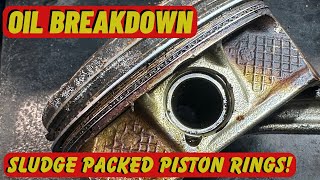
- Low Engine Oil Level due to Defective Piston Rings (Recall 203) 🔴 High Probability NHTSA recall 21V-301 confirms that improperly heat-treated piston oil rings were used in these engines, leading to scuffed cylinder bores and high oil consumption. 🎬 See: Real-world example of this engine burning oil This is not theoretical; it is a well-documented manufacturing defect.
How to confirm: Check the engine oil level with the dipstick. If it is low, this is the likely cause. Contact a Hyundai dealer with your Vehicle Identification Number (VIN) to see if your vehicle is covered under Recall 203. Some owners report dealers requiring an official oil consumption test, where they seal the oil cap and drain plug and have you return after 1,000 miles to measure the loss.
Typical fix: The official Hyundai remedy involves a dealer inspection using a special tool and software (Piston Noise Sensing System - PNSS) to listen for abnormal engine vibrations. If the test fails ('NO PASS'), or if there is visible cylinder damage, the engine assembly is replaced free of charge. If the test passes, the dealer will install the updated PNSS software to provide early warning of future issues.
Est. part cost: $0 (if covered by recall)
Rare But Worth Checking
- Faulty Engine Oil Temperature (EOT) Sensor or Wiring: While possible, this is much less likely than the recall-related issue. A faulty sensor might incorrectly report an over-temperature condition. Diagnosis would involve using a scan tool to compare the EOT reading to the engine coolant temperature on a cold engine. If the readings are vastly different, the sensor or its circuit is likely faulty. The OEM part number for the sensor is typically 39220-3C100.
- General Cooling System Failure: If the radiator, thermostat, or cooling fans fail, the entire engine can overheat, which will in turn overheat the oil. In this case, you would likely see the coolant temperature gauge in the red and may have other codes like P0217 (Engine Coolant Over Temperature).
Diagnosis Steps
- STOP THE ENGINE IMMEDIATELY. Do not continue to run or drive the vehicle.
- Allow the engine to cool down for at least 20-30 minutes.
- Check the engine oil level using the dipstick. If the oil level is at or below the 'L' (Low) mark, this is the immediate problem.
- If the oil is low, top it off to the 'F' (Full) mark to prevent further damage. Note how much oil was needed. The distance between 'L' and 'F' on the dipstick is approximately one quart.
- Contact a Hyundai dealership with your VIN. Ask them to check for open recalls, specifically Safety Recall 203 (NHTSA 21V-301).
- If the recall is open for your vehicle, schedule an appointment for the free inspection and remedy. Be prepared for the possibility of an oil consumption test.
- If the recall is not applicable or has already been performed, and the oil level was correct, then proceed with standard diagnosis for an overheating engine (checking coolant level, fan operation, and EOT sensor data via a scan tool).
Parts You'll Likely Need
- Engine Assembly — This is the official remedy from Hyundai if the dealer's inspection confirms internal damage from the defective piston rings. Both new and remanufactured long blocks are used for the replacement.
Trusted brands: Hyundai Genuine OE
OEM price range: $0 (under recall)
Aftermarket price range: N/A - Engine Oil — The engine will be critically low on oil. Topping it off is a mandatory first step to prevent immediate damage while arranging for professional service. Owners must be diligent about checking oil levels every few hundred miles.
Trusted brands: Pennzoil, Mobil 1, Castrol
OEM price range: $8-$12 per quart
Aftermarket price range: $6-$10 per quart
Related Codes That Often Appear With This One
- P0300-P0304 — Random or specific cylinder misfires can occur due to poor lubrication and engine stress from the overheating condition.
- P0011, P0014 — Camshaft position timing codes can be triggered by low oil pressure, which is a direct result of low, overheated oil.
- P1326 — This code is specific to the Knock Sensor Detection System (KSDS) and will put the vehicle in limp mode if it detects vibrations indicative of bearing wear, which is a direct consequence of the oil consumption issue. 🎬 Watch: How to diagnose the P1326 limp mode code
Technical Service Bulletins (TSBs) & Recalls
- 21-01-054H-1 - NU 2.0L ATKINSON ENGINE INSPECTION (RECALL 203) 🎬 Watch: Official dealer inspection process for Recall 203
- 22-01-042H - This TSB supersedes the previous one to include information on both 'Reman' and 'New' long block availability for the engine replacement.
Platform-Specific Known Issues
- This vehicle is subject to Hyundai Safety Recall 203 / NHTSA Campaign 21V-301 for defective piston rings causing excessive oil consumption, which directly leads to the P0298 code.
Mechanic-Grade Diagnostic Values
- Engine Oil Temperature (EOT) Sensor Resistance — expected: Resistance decreases as temperature increases. Based on similar Hyundai sensors: ~4,000-5,500 Ω at 5°C (41°F), ~975-1050 Ω at 45°C (113°F), ~400-500 Ω at 70°C (158°F).. Failure: An open circuit (infinite resistance) or short circuit (near-zero resistance) indicates a failed sensor. A reading that does not change with temperature is also a failure.
- EOT Sensor Connector Voltage (Key On, Engine Off) — expected: One pin should have a 5V reference from the PCM, the other should be ground.. Failure: Absence of the 5V reference or a faulty ground points to a wiring or PCM issue, not the sensor itself.
Hidden / Shadow Codes Worth Checking
- P1327 / P132700: Piston Noise Detection. This code is specifically enabled by the Piston Noise Sensing System (PNSS) software update that is part of Recall 203. It actively listens for vibrations indicative of cylinder scuffing or other internal damage. (see via This code is stored in the ECM and is readable by professional scan tools and Hyundai's GDS/KDS system. If this code is present, the MIL will typically blink continuously, and the vehicle will be forced into limp mode. Per TSBs, the presence of this code after the PNSS update mandates an engine replacement.)
Scan Tool Commands That Help
- Hyundai GDS/KDS: Engine Vibration Inspection Test — This is the dealer-specific function for Recall 203. It uses a special microphone tool (G1XTD-CP200-QQH) connected to the tablet to listen to the engine and determine if abnormal piston/cylinder noise is present, which would warrant an engine replacement.
- Hyundai GDS/KDS: ECU Upgrade — This function is used to install the Piston Noise Sensing System (PNSS) software as part of Recall 203. This is performed on all affected vehicles, regardless of whether the engine passes or fails the initial vibration inspection.
Wiring & Ground Locations
- EOT Sensor — The Engine Oil Temperature (EOT) sensor is typically located on the engine block, often near the oil filter housing or screwed into the oil pan.. If the oil level is correct but P0298 is present, the sensor or its wiring is the next logical suspect. A visual inspection for a damaged connector or oil-soaked wiring is a key step.
- Engine Ground Straps (91865-F3040 / 91861-F2020) — Main ground straps connecting the engine/transmission assembly to the vehicle chassis. One part number is for US-built cars (91865-F3040) and the other for Korea-built (91861-F2020).. A poor ground connection can cause erratic behavior from any sensor on the engine, including the EOT sensor. Checking that these straps are clean, tight, and free of corrosion is a fundamental step in diagnosing any electrical issue.
- Engine Compartment Fuse Box — Located on the left-side of the engine bay.. This panel contains relays and fuses for primary engine functions. While no single fuse is labeled 'EOT', a fault in a related circuit could potentially affect sensor readings.
Real Owner Repair Stories
- Composite story from NHTSA Recall 203 documentation and related TSBs. (2019-2020 Hyundai Elantra 2.0L Nu MPI) — Check engine light with code P0298, excessive oil consumption (requiring adding oil between changes), audible engine ticking or knocking noise.
❌ Tried (didn't work) Repeatedly topping off engine oil., Replacing the Engine Oil Temperature (EOT) sensor., Performing standard oil changes without addressing the root consumption issue.
✅ What actually fixed it The owner took the vehicle to a Hyundai dealership for Safety Recall 203. The dealer performed the 'Engine Vibration Inspection Test' using the PNSS tool. The test failed, indicating internal engine damage. Per the recall procedure, the dealer replaced the entire engine assembly with a new/remanufactured unit at no cost to the owner. The fix also included installing the updated PNSS software to monitor the replacement engine.
"I Checked Everything" — The Actual Cause
- The diagnostic equivalent for this code is 'The oil level is full, but P0298 is still present.' In this scenario, the cause is almost certainly a faulty Engine Oil Temperature (EOT) sensor or a problem in its electrical circuit (wiring/connector/PCM). The diagnostic logic shifts from a mechanical problem (low oil) to an electrical one. A technician would use a scan tool to compare the EOT reading to the Engine Coolant Temperature (ECT) on a cold engine; a significant difference would confirm the EOT circuit fault.
OEM Part Supersession History
Engine Assembly (Original Defective)→Engine Assembly (New or Remanufactured)— The original engines were built with improperly heat-treated piston rings. The recall remedy involves replacing the entire engine assembly.
Heads up: TSB 21-01-054H-1 was updated to note the availability of both 'New' and 'Reman' (remanufactured) long block assemblies for the recall replacement, indicating a fluid supply chain for the fix.39220-3C100→39220-3C100— No supersession found. This part number appears to be stable for the Engine Oil Temperature sensor.
Model Year Variations Within This Range
- 2019-2020: The primary cause of P0298 (defective piston rings) is specific to the 2019-2020 Elantra (AD generation) equipped with the 2.0L Nu MPI engine, as defined in Recall 203. The 2021 Elantra (CN7 generation), despite having a 2.0L engine, is a different design and not part of this specific, widespread recall. A P0298 on a 2021 model would require standard diagnostics (checking oil level, sensor, cooling system) without the high probability of the recall being the cause.
Diagnostic Flowchart
Other Known Issues on This Vehicle
Issues unrelated to this code that are worth knowing about as an owner of this generation:
- Failing Door Lock Actuators 🟠 Medium — Common across multiple Elantra generations. Owners report doors failing to lock/unlock with the fob or switch, or making grinding/buzzing noises. (Ref: A TSB (21-BD-006H) was issued for some models, extending the warranty on the door latch assembly.)
- Knock Sensor Detection System (KSDS) Logic 🟠 Medium — Not a failure, but a software update (Campaign 966/982) that makes the ECU highly sensitive to engine vibrations to prevent catastrophic failure. Can sometimes be triggered by non-critical events, putting the car into limp mode. (Ref: Hyundai Service Campaign 966/982)
- Theft vulnerability due to lack of engine immobilizer 🔴 High — Extremely widespread issue affecting many 2011-2022 Hyundai/Kia models with key-based ignitions, leading to a class-action lawsuit and a subsequent software update campaign. (Ref: NHTSA Campaign 23V131000 (Hyundai Anti-Theft Software Update))
Used vs. New Parts: Buying Guide for This Vehicle
When a used part is the smart pick: A used part only makes sense for the Engine Oil Temperature (EOT) sensor, as it is a low-cost, simple electronic component. Buying a used engine from a junkyard is EXTREMELY RISKY and highly discouraged.
Donor-vehicle mileage cap: roughly under 100000 miles for the part to have meaningful remaining life.
What to inspect on the donor part:
- For a used EOT sensor, ensure the connector pins are not corroded or bent.
- For a used engine, the ONLY acceptable scenario is if the seller provides verifiable dealer documentation proving it is a post-recall replacement engine. Do not take a seller's word for it.
- Never purchase a used 2.0L Nu MPI engine from a 2019-2020 Elantra/Kona/Veloster without proof of recall replacement.
OEM-only on this vehicle (don't cheap out):
- Engine Assembly. Due to the inherent manufacturing defect, only a new or remanufactured engine provided by Hyundai as part of the recall can be trusted.
Aftermarket brands forum-validated for this vehicle:
- For the EOT sensor, brands like NTK or Denso are generally reliable if they offer a compatible part, though the Genuine Hyundai part is readily available.
Brands owners have reported issues with on this vehicle:
- Unknown or 'white-box' brand sensors should be avoided as their accuracy and longevity can be questionable.
Real Owner Stories
Aggregated from forums and TSBs cited above. Mileages and costs reflect what owners reported in those sources.
2020 Hyundai Elantra 2.0L Nu MPI — ~111846 miles
Symptoms: The vehicle was burning oil excessively at 180,000 kms.
What fixed it: The owner sought information regarding the Nu engine recall for oil consumption issues.
Source hint: https://www.reddit.com/r/Elantra/comments/1b41p2w/elantra_2020_burning_oil_mileage_180k_kms/
2020 Hyundai Elantra 2.0L Nu MPI
Symptoms: Engine is burning oil.
What fixed it: Owner inquiring about the recall process for the 2020 model year oil consumption defect.
Source hint: https://www.reddit.com/r/Hyundai/comments/1d7v93c/2020_elantra_burning_oil/
2019 Hyundai Elantra 2.0L Nu MPI
Symptoms: Owner had questions regarding the specific requirements and coverage of Recall 203 for the 2019 model year.
What fixed it: Dealer inspection and potential engine replacement under Safety Recall 203.
Source hint: https://www.reddit.com/r/Hyundai/comments/s5c30i/i_have_a_question_about_recall_203_for_the_2019/
Related OBD-II Codes
Frequently Asked Questions
Is my 2019-2021 Elantra with the 2.0L Nu MPI engine covered under a recall for the P0298 code?
What does the dealer do during the Recall 203 inspection for TSB 21-01-054H-1?
My dealer wants to perform an oil consumption test before replacing the engine; is this normal?
Can I use a used engine from a junkyard to fix my P0298 issue?
What is the 'Limp Mode' associated with the P0298 code on my Elantra?
Does TSB 22-01-042H apply if my engine needs to be replaced?
Helpful Videos


We Have This Part in Stock


The information in this article is provided for general reference and educational purposes only. Vehicle specifications, procedures, and part compatibility can vary by production date, trim level, and region. Always consult your vehicle's factory service manual and verify part numbers before purchasing or performing repairs. Safety-critical components such as airbags, seat belts, and braking systems should be installed by a qualified professional.
- Hyundai Elantra:
- 🧭 Diagnostic Flowchart
- 🎬 Helpful Videos
- 🛍️ Shop This Part
- What's Unique About the 2019-2021 Hyundai Elantra
- Symptoms You May Notice
- Most Likely Causes
- Rare But Worth Checking
- Diagnosis Steps
- Parts You'll Likely Need
- Related Codes That Often Appear With This One
- Technical Service Bulletins (TSBs) & Recalls
- Platform-Specific Known Issues
- Mechanic-Grade Diagnostic Values
- Hidden / Shadow Codes Worth Checking
- Scan Tool Commands That Help
- Wiring & Ground Locations
- Real Owner Repair Stories
- "I Checked Everything" — The Actual Cause
- OEM Part Supersession History
- Model Year Variations Within This Range
- Other Known Issues on This Vehicle
- Used vs. New Parts: Buying Guide for This Vehicle
- Real Owner Stories
- 2020 Hyundai Elantra 2.0L Nu MPI — ~111846 miles
- 2020 Hyundai Elantra 2.0L Nu MPI
- 2019 Hyundai Elantra 2.0L Nu MPI
- Related OBD-II Codes
- Frequently Asked Questions
- 🎟️ Get 5% Off