

P0299 on 2020-2023 Audi RS Q8: Turbo Underboost Causes and Fixes
On the Audi RS Q8, code P0299 is most often caused by a failing switchable water pump that leaks coolant into the vacuum lines controlling the turbo wastegates. This disrupts boost control. Other causes include boost leaks from hoses or a faulty diverter valve.
- P0299 on a 2020-2023 Audi RS Q8 indicates a serious power loss due to the turbochargers not producing enough boost.
- The most probable and unique cause for this vehicle is a faulty water pump leaking coolant into the vacuum lines that control the turbos.
- Before suspecting expensive turbocharger failure, a thorough diagnosis of the vacuum system, for coolant, and the charge-air system, for leaks, is essential.
- Do not ignore this code. Driving with a significant power loss is unsafe, and if the cause is a coolant leak, you risk severe engine damage from overheating.
What's Unique About the 2020-2023 Audi RS Q8

The Audi RS Q8's 4.0L V8 engine (EA825) uses a sophisticated 'hot-vee' design where the twin turbochargers sit inside the 'V' of the engine. These turbos use vacuum-controlled wastegates to regulate boost. Uniquely, a widely documented issue on this platform is the failure of the switchable water pump, which can leak coolant directly into this vacuum system. This is detailed in Audi TSB 2074303/6, which explains that the pump is activated by a vacuum signal from the N649 changeover valve; when the pump's internal seal fails, coolant is ingested into these very vacuum lines. This means a cooling system fault is a primary cause for a turbocharger fault code, a diagnostic curveball not seen on many other vehicles.
Diagnostic Flowchart

Tap your situation to follow the diagnostic path that matches what you're seeing on this vehicle.
Symptoms You May Notice

- Significant loss of engine power and sluggish acceleration, especially when trying to go uphill.
- Check Engine Light or 'Exhaust emissions warning lamp' is illuminated.
- 'Drive system: warning! Limited performance' message on the instrument cluster, often appearing during hard acceleration.
- Hissing or whooshing sounds from the engine bay during acceleration, indicating a boost leak.
- Increased fuel consumption.
- In some cases, an engine overheating warning may appear if the water pump failure is severe.
- Replacing the turbochargers immediately. The P0299 code is often a symptom of a failure in a supporting system. As one Porsche Cayenne owner with the same engine experienced, a dealer quoted $37,000 for turbo replacement when the actual fault was the water pump leaking into the vacuum system. Always diagnose the water pump/vacuum system, boost leaks, and diverter valves first.
Most Likely Causes
- Failing Switchable Water Pump Leaking Coolant into Vacuum System 🔴 High Probability → Shop Engine Water Pump A known design flaw documented in Audi TSB 2074303/6 affects the EA825 engine. The water pump's diaphragm can fail, introducing coolant into the vacuum lines. This vacuum system, controlled by the N649 valve, is shared with the turbocharger wastegate actuators (V465, V546), preventing them from closing properly to build boost.
How to confirm: A technician should inspect the vacuum hoses connected to the water pump and its control valve (N649) for any traces of moisture or pink/purple coolant. The presence of coolant confirms this failure. This is often the first step dealers take for a P0299 code on this engine.
Typical fix: Replace the switchable mechanical water pump, the control valve (N649), and any contaminated vacuum lines, reservoirs, and solenoids. Some TSBs also call for replacing the vacuum pump as a precaution against ingested coolant. It is also recommended to replace the thermostat at the same time.
Est. part cost: $400-$700 - Boost Leak in the Intake/Charge System 🟡 Medium Probability The complex plumbing of a twin-turbo engine with high boost pressure creates many potential leak points. Hoses can crack, clamps can loosen, and O-rings on intercooler connections can become dislodged or crimped over time.
How to confirm: Perform a pressurized boost leak test on the entire charge air system, from the turbos to the throttle body, listening for escaping air. 🎬 See this simple trick to check for boost leaks for free. A smoke test is also useful and can help pinpoint leaks from cracked pipes or bad seals.
Typical fix: Replace the failed hose, clamp, gasket, or intercooler. A crimped O-ring would be replaced.
Est. part cost: $50-$500 - Faulty Turbocharger Diverter Valve 🟡 Medium Probability → Shop Turbocharger Diverter valves (which recirculate excess boost pressure when the throttle closes) are a common failure item on turbocharged VAG vehicles. The internal diaphragm can tear or the piston can stick, causing a constant leak of boost pressure.
How to confirm: The valve can be removed and visually inspected for tears in the diaphragm. A technician can also apply vacuum to test its operation. Sometimes the part simply falls apart upon removal, confirming failure.
Typical fix: Replace the faulty diverter valve. Upgraded aftermarket units (e.g., from Go Fast Bits) are available.
Est. part cost: $80-$200 - Stuck or Failing Wastegate Actuator ⚪ Low Probability → Shop Turbocharger While less common than vacuum system contamination, the electropneumatic wastegate actuators themselves can fail from heat and wear, or the wastegate linkage can bind or develop excessive play due to carbon buildup or wear in the turbo housing. Coolant contamination from a leaking water pump can also damage the actuators.
How to confirm: A diagnostic tool can be used to command the wastegates to actuate while visually inspecting for smooth and full range of motion. A borescope may be needed to inspect the linkage for excessive wear where it connects to the wastegate flap inside the turbo.
Typical fix: If the actuator has failed, it must be replaced and calibrated. If the wastegate itself is seized or the linkage is excessively worn, the entire turbocharger assembly often needs to be replaced.
Est. part cost: $300-$1200
Rare But Worth Checking
- Clogged Turbocharger Oil Strainer: → Shop Engine Oil Pump This was a catastrophic and very common issue on the previous generation 4.0T engine (EA824), leading to turbo failure from oil starvation and a formal recall. While the EA825 engine in the RS Q8 has a revised oiling design, oil supply issues are still a remote possibility and can lead to turbo damage and underboost.
- Faulty Boost Pressure Sensor (MAP Sensor): It is possible for the sensor that measures boost pressure to fail and send incorrect low readings to the ECM, triggering P0299 even if the turbo is functioning correctly.
- Clogged Catalytic Converter: → Shop Catalytic Converter A clogged or failing catalytic converter can create excessive exhaust backpressure, preventing the turbocharger's turbine from spinning at the required speed to generate boost.
Diagnosis Steps
- Read all fault codes from the ECM using an OBD-II scanner like VCDS or ODIS. Note any codes related to the cooling system, wastegate solenoids, or other sensors.
- Visually inspect the engine bay for obvious issues like disconnected hoses or loose clamps.
- Specifically inspect the vacuum lines connected to the switchable water pump and the N649 changeover valve for any signs of moisture or pink/purple coolant residue, per TSB 2074303/6. This is the most critical first check on this platform.
- If coolant contamination is found, the water pump, N649 valve, and all affected vacuum components (lines, reservoir, solenoids, and potentially the vacuum pump) must be replaced.
- If no coolant is found, perform a pressurized leak test on the charge air system (intercoolers, piping) to check for boost leaks.
- Remove and inspect the turbocharger diverter valves for damage to their internal diaphragms or sticking pistons.
- Using a capable scan tool, monitor requested vs. actual boost pressure while driving to confirm the underboost condition.
- Command the wastegate actuators (V465, V546) to move using a scan tool (ODIS/VCDS) and visually check for proper, smooth movement of the linkage.
Parts You'll Likely Need
- Switchable Mechanical Water Pump
(OEM #0P2121012B)— This is the most likely culprit on the 4.0T EA825 engine when P0299 appears, due to a known issue of it leaking coolant into the turbo's vacuum control lines.
Trusted brands: OEM Audi
OEM price range: $400-$600
Aftermarket price range: $250-$450 - Turbocharger Diverter Valve
(OEM #0P2145710)— A torn diaphragm or stuck piston in this valve is a common failure point on VAG vehicles, causing a direct leak of boost pressure.
Trusted brands: Bosch, Pierburg, GFB (Go Fast Bits)
OEM price range: $120-$180
Aftermarket price range: $70-$150 - Charge Pipe / Intercooler Hose — A split or cracked hose, or a hose with a loose clamp, is a straightforward cause of a boost leak that triggers P0299.
Trusted brands: OEM Audi
OEM price range: $100-$300
Aftermarket price range: $70-$200
Related Codes That Often Appear With This One
- P00B7 — This code relates to insufficient engine cooling. It can appear alongside P0299 if the root cause is the failing water pump affecting both the cooling system and the turbo's vacuum control.
- P2279 — This code indicates an intake air system leak. It can appear with P0299 if there is a physical leak in a hose or intercooler, or if a faulty PCV system is creating an unmetered air leak.
- P0243-P0250 — These codes point to issues with the wastegate solenoid circuit. They can be triggered if coolant from the water pump has contaminated the vacuum lines and damaged the electronic solenoids (V465, V546) that control the wastegates.
Technical Service Bulletins (TSBs) & Recalls
- TSB_2079209_1: Provides information when the exhaust emissions warning lamp is on; P0299 - 4.0ltr V8 TFSI.
- TSB_2079209_2: Provides information when the exhuast emissions warning lamp is on P0299.
- TSB 2074303/6: Links P0299 (Turbo/Super Charger Underboost) to engine overheating symptoms and a faulty switchable water pump leaking coolant into the turbo's vacuum control system.
Platform-Specific Known Issues
- TSB 2074303/6: This Technical Service Bulletin directly addresses the scenario where the switchable water pump fails and introduces coolant into the vacuum system, causing P0299.
- TSB 2065040/3: This bulletin instructs technicians that when replacing the mechanical coolant pump for any reason, they must inspect the vacuum control line for coolant residue and replace the N649 switch valve if any is found.
Mechanic-Grade Diagnostic Values
- Boost Pressure Deviation Threshold — expected: Actual boost pressure should be within ~2-4 PSI of requested boost pressure.. Failure: A deviation of more than 2-4 PSI below the requested value for over 5-6 seconds can trigger fault code P0299.
- N649 Solenoid Vacuum Check — expected: With the engine cold, vacuum should be present at the output port of the N649 solenoid when tested with a gauge (e.g., VAS6213).. Failure: No vacuum at the output port indicates a faulty N649 solenoid or a leak in the vacuum supply lines.
- Wastegate Actuator Manual Test — expected: A pneumatic actuator should begin to move with applied pressure (e.g., 10-15 PSI) and hold that pressure without leaking down quickly.. Failure: The actuator does not move, does not hold pressure, or requires excessive pressure to move, indicating a diaphragm leak or mechanical failure.
Scan Tool Commands That Help
- ODIS (Factory Tool) / VCDS (Ross-Tech): Guided Fault Finding (GFF) — This is the standard dealer procedure within ODIS to systematically diagnose fault codes like P0299 by following a test plan created by the manufacturer.
- ODIS / VCDS: Basic Settings / Adaptation: 'First Adaptation of charge pressure actuator' or similar. — This function is used after replacing a turbocharger or wastegate actuator to calibrate the new component's range of motion. The tool commands the actuator to its fully open and closed positions so the ECM can learn the corresponding sensor values.
- ODIS / VCDS: Advanced Measuring Values / Live Data — Used to monitor 'Charge air pressure control valve uncond voltage sensor' and 'Requested vs. Actual Boost' in real-time to confirm the underboost condition and check sensor readings during diagnosis.
Wiring & Ground Locations
- 12V Battery — Under the carpet on the right-hand side of the vehicle (passenger side in LHD markets).. A stable voltage supply is critical for all electronic sensors and actuators. Jump start and charging posts are located in the engine bay for easier access.
- Main Engine/Chassis Ground — Typically found by tracing the main negative cable from the battery to a bolt on the chassis frame rail, often under the battery tray. Additional ground straps connect the engine block to the chassis, sometimes near the alternator.. A poor ground connection can cause erratic behavior from sensors (like the MAP sensor) and actuators (like the wastegate solenoids), leading to incorrect readings and fault codes.
Real Owner Repair Stories
- AudiWorld Forum user (2019 Audi Q8, 56k miles) — P0299, car lacked power going uphill.
✅ What actually fixed it The shop diagnosed a failed water pump diaphragm causing low vacuum. A responding user confirmed this is common and the correct fix is replacing the water pump, contaminated vacuum lines, and the wastegate solenoid. They also recommended replacing the thermostat and a water shutoff valve proactively. - Reddit user r/Audi (2021 Audi Q7, 51k miles) — P0299 Turbo Underboost DTC.
❌ Tried (didn't work) An independent shop replaced a 'boost valve' which did not solve the problem.
✅ What actually fixed it The Audi dealer diagnosed that the water pump had leaked coolant into the vacuum system. The final repair required replacing the water pump, all affected vacuum lines, and the vacuum reservoir. - YouTube video (S8 with same EA825 engine) (Audi S8 (EA825 4.0T)) — P0299 underboost code, erratic boost (5 PSI then suddenly 20 PSI), followed by engine overheating.
✅ What actually fixed it The owner found antifreeze in the vacuum system. The root cause was the leaking mechanical water pump contaminating the vacuum lines, the N649 solenoid, and the wastegate actuator controllers. The final fix is to replace all contaminated components. A temporary fix to restore boost was to disconnect and plug the vacuum source line to the N649 valve.
"I Checked Everything" — The Actual Cause
- On the EA825 engine, the most common 'hidden' cause of P0299 is not a boost leak that a smoke test would find. Instead, it's an internal coolant leak from the switchable water pump into the separate vacuum system. This vacuum system controls the turbo wastegates. A technician can perform a perfect smoke test on the charge air intake system and find no leaks, because the leak is coolant contaminating the vacuum lines, preventing the wastegates from closing properly to build boost.
When the Usual Fixes Don't Work
- In some documented cases, replacing the water pump, vacuum lines, and vacuum reservoir has NOT resolved the P0299 code. In one instance, a 2021 A8 with the 4.0T engine had the water pump replaced, but the underboost code returned on the first test drive under hard acceleration. This suggests that either the diagnosis was incorrect from the start (e.g., the issue was a simple boost leak or bad diverter valve), or the repair was incomplete. Coolant migrating through the vacuum system can damage the electropneumatic wastegate actuators (V465, V546) themselves, and if these are not also replaced, the underboost condition will persist even with a new water pump and clean lines.
OEM Part Supersession History
Unknown, likely 4-bolt pulley design→Unknown PN, but identified as a '6-bolt design on the pulley'— The revised water pump is intended to fix the internal seal failure that allows coolant to leak into the vacuum system.
Heads up: The new 6-bolt water pump requires a matching 6-bolt pulley; the old pulley will not fit. Ensure both parts are ordered together.
Model Year Variations Within This Range
- 2020+: The original water pump design is prone to failure. An updated water pump with a 6-bolt pulley design was released as a more robust replacement. However, vehicles as new as the 2022 model year have still experienced the failure under warranty, indicating the original faulty part was used for several production years.
Helpful Videos

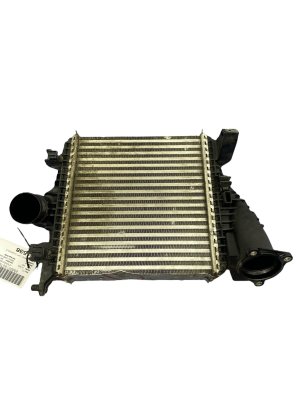
Used OEM Parts in Stock
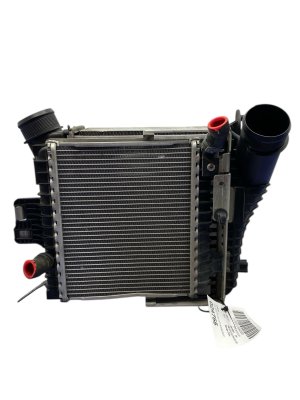
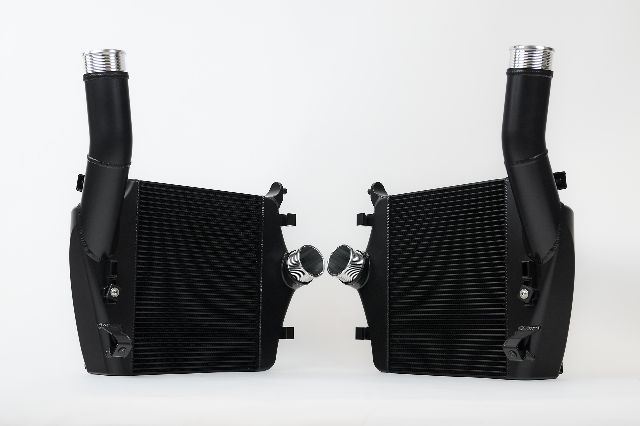
New Aftermarket Parts Available

The information in this article is provided for general reference and educational purposes only. Vehicle specifications, procedures, and part compatibility can vary by production date, trim level, and region. Always consult your vehicle's factory service manual and verify part numbers before purchasing or performing repairs. Safety-critical components such as airbags, seat belts, and braking systems should be installed by a qualified professional.
- Audi RS Q8:
- 🧭 Diagnostic Flowchart
- 🎬 Helpful Videos
- 🛍️ Shop This Part
- What's Unique About the 2020-2023 Audi RS Q8
- Symptoms You May Notice
- Most Likely Causes
- Rare But Worth Checking
- Diagnosis Steps
- Parts You'll Likely Need
- Related Codes That Often Appear With This One
- Technical Service Bulletins (TSBs) & Recalls
- Platform-Specific Known Issues
- Mechanic-Grade Diagnostic Values
- Scan Tool Commands That Help
- Wiring & Ground Locations
- Real Owner Repair Stories
- "I Checked Everything" — The Actual Cause
- When the Usual Fixes Don't Work
- OEM Part Supersession History
- Model Year Variations Within This Range
- 🎟️ Get 5% Off