

P0299 on 2020-2025 Buick Encore GX: Turbo Underboost Causes and Fixes
On a 2020-2025 Encore GX, P0299 is most often caused by specific known issues. These include a restricted vacuum line to the wastegate, outdated engine software, or a worn turbo wastegate linkage. Check for GM Technical Service Bulletins (TSBs) before starting repairs, as they provide specific diagnostic procedures.
- P0299 on a 2020-2025 Encore GX is often due to specific, documented issues rather than random failure.
- Always check for TSBs before beginning repairs; the fix could be a simple vacuum line cleaning or a software update.
- A rattling noise on cold starts is a strong indicator of a worn turbo wastegate linkage, likely requiring turbo replacement.
- GM has a special coverage program (N232407740) that may cover turbo replacement on affected 2020 1.2L models for free.
- In very cold climates, the cause may be ice in the charge air cooler, which requires a specific diagnostic approach.
What's Unique About the 2020-2025 Buick ENCORE GX

The 2020-2025 Encore GX and its platform-mate, the Chevrolet Trailblazer, are subject to several specific factory communications regarding P0299. Unlike generic underboost issues, this platform has documented problems with adhesive blocking vacuum lines (TSB #PIP5978), required software updates to correct boost logic (TSB #PIP5903), and premature wear on the turbo wastegate linkage causing a rattle (TSB #PIP5829A). There is also a known issue with charge air cooler (CAC) icing in extreme cold, which can trigger this code and may also cause oil leaks from increased crankcase pressure.
Diagnostic Flowchart

Tap your situation to follow the diagnostic path that matches what you're seeing on this vehicle.
Symptoms You May Notice

- Check Engine Light (Malfunction Indicator Lamp) is on
- "Engine Power is Reduced" message on the driver information center
- Significant loss of engine power and acceleration
- Vehicle enters "limp mode," limiting speed and RPMs
- Hesitation when trying to accelerate
- Rattling noise from the engine bay on a cold start
- Whistling or hissing sounds from the engine bay, indicating a boost leak
- Oil leaks from engine seals (can be a side effect of CAC icing per TSB 21-NA-293)
- Replacing the turbocharger without first checking for vacuum line restrictions, software updates, or specifically testing for wastegate linkage wear as per TSB #PIP5829A.
- Replacing the MAP sensor when the issue is a mechanical air leak, a restriction, or a faulty actuator.
- Replacing various sensors and parts chasing the code when it is caused by a known TSB issue like CAC icing or a needed software update.
Most Likely Causes

- Restricted Wastegate Solenoid Vacuum Line 🔴 High Probability A specific GM TSB (#PIP5978) notes that adhesive bonding material from the manufacturing process can restrict the vacuum supply line between the vacuum pump and the wastegate solenoid, preventing proper turbo control.
How to confirm: Visually inspect the vacuum line as described in TSB #PIP5978. Test the vacuum at the solenoid supply hose to see if it meets the specification of -50 kPa (-0.5 bar, 15 in Hg) at idle.
Typical fix: Clear the restriction from the vacuum line or replace the affected hose.
Est. part cost: $15-$50 - Outdated Engine Control Module (ECM) Software 🔴 High Probability → Shop Engine Control Module (ECM) GM issued TSB #PIP5903 indicating that updated ECM calibrations are available to address false P0299 codes. The original software may be too sensitive. Another update is noted in TSB #21-NA-293 for the CAC icing issue.
How to confirm: A GM dealership or qualified shop with access to GM's service system must check the vehicle's VIN for available software updates.
Typical fix: Update the ECM with the latest software calibration. Note that the fix for CAC icing includes a calibration that alters transmission shift patterns in cold weather to reduce the use of overdrive.
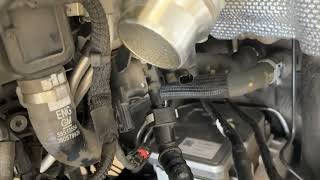
Est. part cost: $0-$200 (dealer labor) - Worn Turbocharger Wastegate Linkage 🟡 Medium Probability → Shop Turbocharger TSB #PIP5829A points to premature wear on the turbocharger's wastegate linkage. The wear creates excessive play, preventing the wastegate from closing fully and causing a constant boost leak. A technician on YouTube also confirmed this is a common failure point requiring turbo replacement. 🎬 Watch: 1.2L turbocharger diagnostic testing and full replacement steps.
How to confirm: Listen for a rattle on cold starts. Per TSB #PIP5829A, a technician can confirm by starting the vehicle on a hoist and touching the wastegate actuator rod with a long screwdriver. If the rattle is dampened or stops, the linkage is worn.
Typical fix: The official repair is to replace the entire turbocharger assembly, as the linkage is integrated.
Est. part cost: $800-$1500 - Charge Air Cooler (CAC) Icing 🟡 Medium Probability → Shop Intercooler TSB #21-NA-293 describes how, in extremely cold weather (-18°C / 0°F or below), ice can form inside the charge air cooler, blocking airflow and causing P0299. This TSB applies to both the Encore GX and Trailblazer.
How to confirm: This issue is diagnosed by its direct correlation with extreme cold weather events. The vehicle may need to thaw in a warm shop to confirm the diagnosis and melt the internal ice blockage.
Typical fix: The GM procedure involves reprogramming the ECM with a new calibration that changes cold-weather transmission behavior and may also involve installing a grille winter cover.
Est. part cost: $50-$400 - Leaking or Disconnected Air Intake Hoses ⚪ Low Probability → Shop Engine Air Intake Resonator
How to confirm: Perform a visual inspection of all hoses from the air filter to the turbo and from the turbo to the throttle body. A smoke test is the most effective way to find leaks that are not visually apparent. A loose hose at the turbo inlet has been reported as a fix.
Typical fix: Tighten loose clamps or replace cracked/damaged hoses.
Est. part cost: $20-$100
Rare But Worth Checking
- Failed Turbocharger: → Shop Turbocharger While less common than the specific issues in the TSBs, a complete turbo failure (e.g., seized bearings, damaged turbine wheels) can cause P0299. GM has a special coverage program (N232407740) for failing turbos on some 2020 1.2L models, extending the warranty to 15 years/150,000 miles.
- Faulty Boost Pressure Sensor (MAP Sensor): A sensor that incorrectly reads low boost pressure can trigger the code. This is less common than mechanical or software issues and should be tested after verifying the physical integrity of the boost system.
- Failed Turbocharger Wastegate Solenoid: → Shop Turbocharger The solenoid that controls the vacuum sent to the wastegate actuator can fail. This can be tested using a hand-held vacuum pump to see if it holds vacuum and actuates correctly per service manual procedures.
Diagnosis Steps
- Check for any applicable Technical Service Bulletins (TSBs) or Special Coverage programs for your vehicle's VIN. Specifically ask a dealer about #PIP5978, #PIP5903, #21-NA-293, #PIP5829A, and N232407740.
- If in a cold climate, consider the possibility of charge air cooler icing as per TSB #21-NA-293.
- Listen for a rattle on cold start. If heard, use a long screwdriver to gently touch the wastegate actuator rod during the start to see if the noise is dampened. If it is, this confirms linkage wear per TSB #PIP5829A.
- Inspect the vacuum supply line from the vacuum pump to the wastegate solenoid for restrictions or blockages, as noted in TSB #PIP5978.
- Scan the ECM to see if a software update is available to correct the P0299 logic (TSB #PIP5903) or address CAC icing (TSB #21-NA-293).
- If the above steps do not identify the cause, perform a full intake system smoke test to check for air leaks between the turbo and the engine.
- Test the function of the wastegate actuator and solenoid using a vacuum pump to ensure they are operating and holding vacuum correctly.
- If all else fails, inspect the turbocharger itself for excessive shaft play or damage to the turbine wheels.
Parts You'll Likely Need
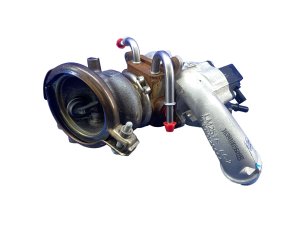
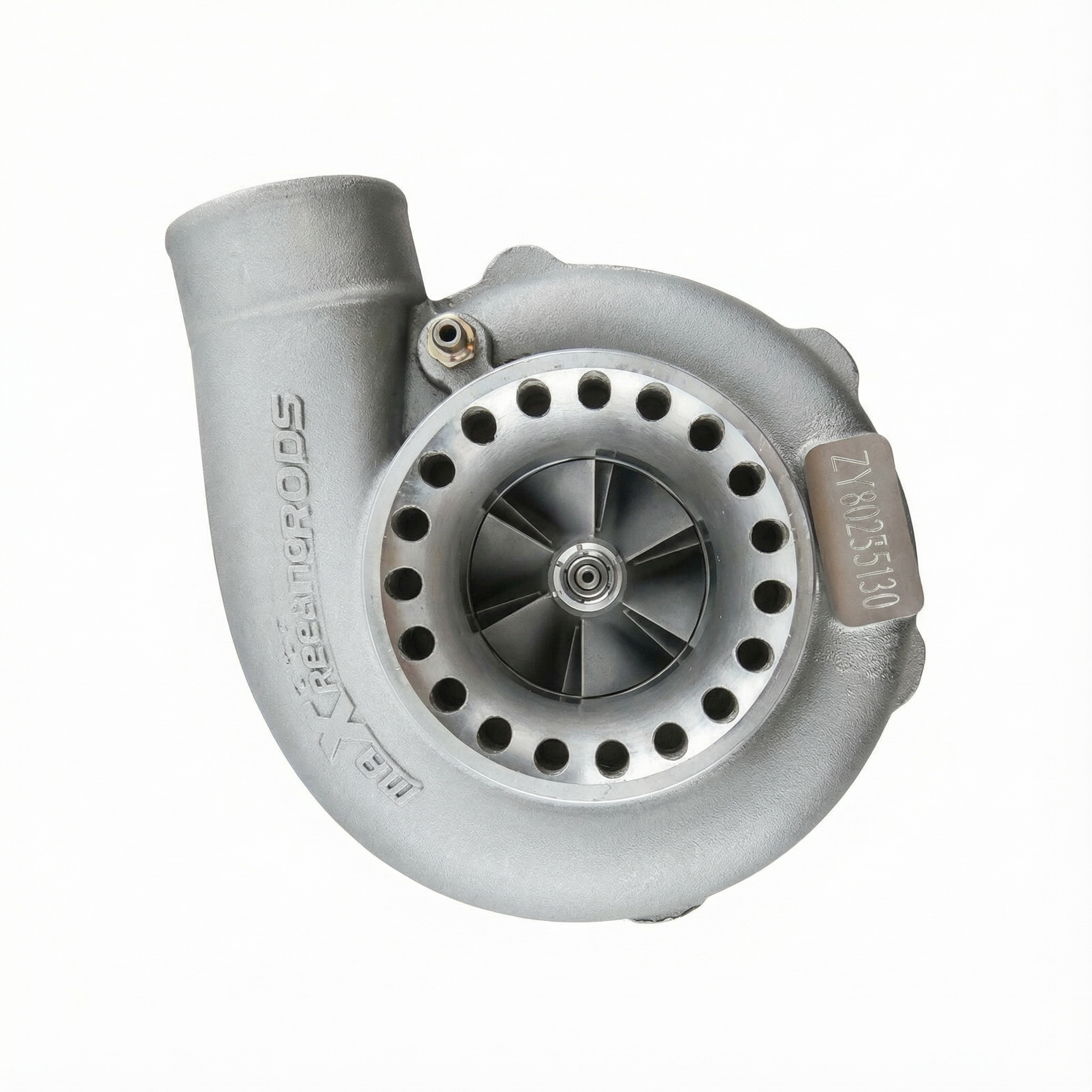
- Turbocharger Assembly
(OEM #25204082)— Required if the integrated wastegate linkage is worn (TSB #PIP5829A). This part number fits the 1.2L engine and replaces several previous numbers. A core charge often applies.
Trusted brands: ACDelco (OEM)
OEM price range: $450-$700 (plus ~$200 core charge)
Aftermarket price range: $350-$600 - Vacuum Hose
(OEM #55513554)— May need replacement if it is restricted with adhesive or is cracked, causing the underboost condition per TSB #PIP5978. This is listed as a PCV vacuum hose.
Trusted brands: ACDelco (OEM)
OEM price range: $15-$40
Aftermarket price range: $10-$25 - Turbocharger Wastegate Solenoid
(OEM #55512160)— Can fail, preventing proper control of the wastegate and leading to underboost. Less common than the TSB-related issues but a possible cause.
Trusted brands: ACDelco, Dorman
OEM price range: $50-$90
Aftermarket price range: $30-$60
Related Codes That Often Appear With This One
- P0234 — Turbocharger Overboost Condition. This can be seen with P0299 in cases of CAC icing (TSB #21-NA-293) or erratic wastegate control.
- P00C7 — Charge Air Cooler Coolant Temperature Sensor Circuit High. Also related to the CAC icing issue mentioned in TSB #21-NA-293.
- P0420 — Catalyst System Efficiency Below Threshold. A failing turbo can leak oil into the exhaust, contaminating and destroying the catalytic converter over time.
Technical Service Bulletins (TSBs) & Recalls
- PIE0831A: GM gathering data from technicians regarding MIL on with DTC P0299.
- PIP5978: Adhesive restricting wastegate solenoid vacuum line.
- PIP5903: ECM software update available for false P0299 codes.
- 21-NA-293: Charge Air Cooler (CAC) icing in extreme cold weather.
- PIP5829A: Worn turbocharger wastegate linkage causing rattle and underboost.
- N232407740: Special Coverage for turbocharger failure on certain 2020 1.2L models.
Platform-Specific Known Issues
- TSB #PIP5978: Adhesive from the manufacturing process can clog the vacuum line to the wastegate solenoid, causing P0299.
- TSB #PIP5903: The ECM may require a software update to correct overly sensitive logic for setting a P0299 code.
- TSB #PIP5829A: Premature wear on the turbocharger's wastegate linkage can cause a rattle on cold starts and lead to an underboost condition.
- TSB #21-NA-293: In extreme cold, ice can form in the charge air cooler (CAC), blocking airflow and triggering P0299.
Mechanic-Grade Diagnostic Values
- Vacuum at Turbocharger Wastegate Solenoid Vacuum Supply Hose — expected: -50 kPa (-0.5 bar, 15 in Hg) at idle. Failure: If the desired vacuum cannot be achieved or does not hold steady, inspect the vacuum pump and hoses.
- Vacuum at Turbocharger Wastegate Solenoid Valve Actuator Supply Port (at idle) — expected: Less than -17 kPa (-0.17 bar, 5 in Hg). Failure: If the reading is -17 kPa or greater, the wastegate solenoid valve may be faulty.
- Vacuum at Turbocharger Wastegate Solenoid Valve Actuator Supply Port (WOT for 2s) — expected: Greater than -50 kPa (-0.5 bar, 15 in Hg). Failure: If the reading is less than -50 kPa, the wastegate solenoid valve may be faulty.
- Difference between Desired and Actual Boost Pressure during GDS2 Test — expected: Less than 14 kPa (2.0 PSI). Failure: A difference of more than 14 kPa (2.0 PSI) between the actual and desired boost pressure indicates a malfunctioning turbocharger.
Scan Tool Commands That Help
- GDS2 (GM Dealer Tool): Turbocharger Boost Control Test — To graphically compare desired vs. actual boost pressure under load (WOT 1-2 shift) to confirm an underboost condition and check for a malfunctioning turbocharger per TSB PIP5495K.
- GDS2 (GM Dealer Tool): Solenoid Drive Tests — To electronically command the wastegate solenoid and bypass solenoid to activate ('click'). Note that this only confirms electrical function, not mechanical movement.
- GDS2 (GM Dealer Tool): Intake System Learned Values Reset — This procedure should be performed after replacing the turbocharger to ensure the ECM adapts to the new component correctly.
Real Owner Repair Stories
- Reddit user on r/Diesel (2017 Chevrolet Trailblazer (platform-mate)) — P0299, hissing/rattling noise, limp mode, fluctuating RPM, and jerking.
❌ Tried (didn't work) Initial inspection did not immediately reveal the cause.
✅ What actually fixed it The air intake hose going into the turbo was found to be misplaced or loose. Tightening the hose clamp resolved the P0299 code and symptoms. - Reko Auto Parts blog (Technician Case Study) (2018 Buick Regal (similar GM turbo system)) — Intermittent P0299, poor acceleration, significant gap between desired (137.02 kPa) and actual (35 kPa) boost pressure.
❌ Tried (didn't work) Smoke test (no leaks found), Swapping the boost pressure sensor, Activating the bypass solenoid with a scan tool (it 'clicked', suggesting it was working)
✅ What actually fixed it The turbocharger bypass solenoid was mechanically sticking and would not always reset/retract properly, even though it passed the electronic 'click' test. Replacing the bypass solenoid resolved the underboost issue.
"I Checked Everything" — The Actual Cause
- In one documented case on a similar GM turbo vehicle, the car passed a smoke test with no leaks found. The P0299 was ultimately caused by a faulty turbocharger bypass solenoid that was mechanically sticking, which prevented it from closing properly during acceleration. This caused boost to be recirculated instead of sent to the engine. This type of mechanical failure is not detectable by a smoke test.
Model Year Variations Within This Range
- 2020-2025: The two available engines, the 1.2L (LIH) and 1.3L (L3T), are from the same family but have a critical internal difference. The 1.2L LIH uses a wet timing belt for the camshafts and oil pump, while the 1.3L L3T uses a timing chain for both. This can affect long-term maintenance and potential failure points, though it does not directly alter the P0299 diagnosis.
Helpful Videos
We Have This Part in Stock



The information in this article is provided for general reference and educational purposes only. Vehicle specifications, procedures, and part compatibility can vary by production date, trim level, and region. Always consult your vehicle's factory service manual and verify part numbers before purchasing or performing repairs. Safety-critical components such as airbags, seat belts, and braking systems should be installed by a qualified professional.
- Buick ENCORE GX:
- 🧭 Diagnostic Flowchart
- 🎬 Helpful Videos
- 🛍️ Shop This Part
- What's Unique About the 2020-2025 Buick ENCORE GX
- Symptoms You May Notice
- Most Likely Causes
- Rare But Worth Checking
- Diagnosis Steps
- Parts You'll Likely Need
- Related Codes That Often Appear With This One
- Technical Service Bulletins (TSBs) & Recalls
- Platform-Specific Known Issues
- Mechanic-Grade Diagnostic Values
- Scan Tool Commands That Help
- Real Owner Repair Stories
- "I Checked Everything" — The Actual Cause
- Model Year Variations Within This Range
- 🎟️ Get 5% Off