

P0299 on 2016-2024 Chevrolet Malibu 1.5L Turbo: Underboost Causes and Fixes
On a 2016-2024 Malibu with the 1.5L turbo, P0299 is almost always caused by the charge air cooler pipe disconnecting from the throttle body. This often produces a loud 'whoosh' sound. The fix is often as simple as re-securing it with an updated retainer clip kit (GM Part #12684263), which costs around $20-$40 and is a very easy DIY job. In cold climates, a frozen intercooler or wastegate solenoid are also extremely common causes.
- Before buying any parts, visually inspect the large black air tube connection at the engine's throttle body. It is very likely loose or completely disconnected.
- The permanent fix for a disconnected charge pipe is an inexpensive, updated retainer clip from GM (Part #12684263).
- If the problem only happens in very cold winter weather, the cause is likely ice in the intake system, which is a known issue with a specific TSB fix.
- Do not assume the turbocharger has failed. On this engine, a bad turbo is a very uncommon cause for code P0299.
What's Unique About the 2016-2024 Chevrolet Malibu
The ninth-generation Malibu with the 1.5L LFV engine is notorious for setting a P0299 code due to a specific, common design flaw: the charge air cooler (CAC) outlet pipe frequently pops off the throttle body. This issue is so widespread that General Motors has released multiple Technical Service Bulletins (TSBs), including 22-NA-224 and PIP5651G, and an updated part to create a more secure connection. In cold climates, this engine is also highly prone to ice buildup in the intake system, which can cause the same code, a condition detailed in TSB 18-NA-069.
Symptoms You May Notice
- Check Engine Light is on
- Significant loss of engine power
- Vehicle enters 'limp mode' or 'Reduced Engine Power' mode
- Sluggish or slow acceleration
- Loud 'whoosh' or 'pop' sound from the engine bay, followed by power loss
- Hissing sound from the engine bay under acceleration
- Whistling or chirping noise at idle (often indicates a related PCV issue)
- Replacing the turbocharger. The turbo itself is rarely the cause of P0299 on this vehicle. The issue is almost always a simple boost leak from the charge pipe, a frozen component, or a failed PCV system.
Most Likely Causes
- Charge Air Cooler (CAC) Pipe Disconnected from Throttle Body 🔴 High Probability → Shop Intercooler The original retainer clip design is a known weak point. Engine movement and boost pressure can cause the pipe to pop off the throttle body, creating a massive boost leak. This is addressed in TSB 22-NA-224 / PIP5651G.
How to confirm: Visually inspect the large black plastic tube where it connects to the metal throttle body on the engine. It will be obviously disconnected or very loose. This is often preceded by a sudden loud 'whoosh' sound during acceleration.
Typical fix: Reconnect the pipe and secure it. It is highly recommended to replace the original clip with the updated GM retainer clip kit (Part #12684263) to prevent it from happening again.
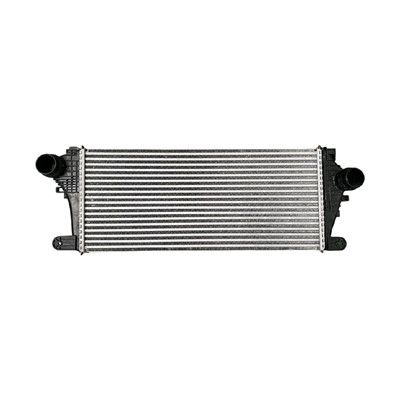
Est. part cost: $20-$40 - Iced/Frozen Charge Air Cooler (Intercooler) or Wastegate Solenoid 🟡 Medium Probability → Shop Intercooler In ambient temperatures of 0°F (-18°C) or below, moisture from the PCV system can freeze inside the intercooler (blocking airflow) or the wastegate regulator solenoid valve (sticking the wastegate). This is a well-documented issue.
How to confirm: This issue typically only occurs in very cold weather and may resolve on its own when the vehicle thaws. TSB 18-NA-069 states that draining more than 100mL (3.4 oz) of water from the intercooler after thawing confirms the diagnosis. For the solenoid, TSB PIP5812C provides diagnostic steps, including blowing low-pressure air through the ports to check for blockage.
Typical fix: GM issued TSB 18-NA-069, which advises thawing the system, performing an oil change, and installing a winter grille cover (Part #84541819 for 2016-18 models). An ECM software update is also available to change transmission shift patterns in cold weather to help prevent ice buildup. For a frozen solenoid, TSB PIP5812C applies, which often requires replacing the solenoid (Part #12684144).
Est. part cost: $50-$100 for grille cover - Failed PCV Check Valve in Intake Manifold 🟡 Medium Probability → Shop Engine Intake Manifold The small, non-serviceable check valve inside the plastic intake manifold can fail, break, or get ingested by the engine. This creates an internal boost leak that is not detectable with a typical smoke test, as it routes pressurized air from the manifold back to the turbo inlet.
How to confirm: A high-pitched chirp or whistle at idle that goes away when you pull the oil dipstick is a strong indicator. This confirms a crankcase vacuum issue related to the PCV system. The ultimate confirmation is replacing the intake manifold.
Typical fix: The intake manifold must be replaced, as the check valve is integrated into it. The typical OEM part number is 12677329.
Est. part cost: $150-$300 - Failed Turbocharger Wastegate Actuator ⚪ Low Probability → Shop Turbocharger The actuator rod can break or the diaphragm can fail. GM TSB PIP5539 notes the actuator rod can be replaced without replacing the entire turbo.
How to confirm: With the engine off, check if the actuator arm moves freely. Use a vacuum pump to test if the actuator holds vacuum and moves the wastegate lever. A scan tool can also command the actuator to check for response.
Typical fix: Replace the wastegate actuator. On some turbo models, the actuator is sold separately, while on others it may be integrated with the turbocharger.
Est. part cost: $100-$250
Rare But Worth Checking
- Cracked Piston(s): This was a known issue on early 2016-2017 models (see TSB PIP5421G), specifically vehicles built before VIN 1G1ZE5ST6HF214702. It causes low compression, leading to underboost and other codes like P0300. This is a catastrophic engine failure requiring major repair or engine replacement.
- Leaking or Cracked Charge Air Cooler (Intercooler): → Shop Intercooler While less common than the pipe popping off, the intercooler itself can be damaged by road debris or develop cracks at the end tanks, leading to a boost leak that should be found with a smoke test.
- Faulty Boost Pressure (MAP) Sensor: The sensor that measures boost can fail and send incorrect readings to the ECM, but this is much less common than mechanical boost leaks.
Diagnosis Steps
- Read all stored fault codes with an OBD-II scanner. Note any other codes that are present with P0299, as they provide crucial clues (e.g., P1101, P0101).
- Perform a thorough visual inspection of the engine bay, focusing on the charge air cooler piping. Check the connection at the throttle body first, as this is the most likely point of failure. Look for a disconnected or loose black plastic tube.
- If the charge pipe is disconnected, reconnect it. It is strongly recommended to install the updated GM retainer clip kit (Part #12684263) for a permanent fix.
- If the code appeared during extremely cold weather (below 0°F / -18°C), move the vehicle to a warm garage for several hours to allow any ice in the intercooler or wastegate solenoid to thaw. Check for water draining from the intercooler. If more than 3.4oz (100mL) drains, this confirms icing per TSB 18-NA-069.
- If no obvious leaks are found, perform a smoke test on the entire intake and charge air system to check for cracks in hoses or the intercooler itself.
- If the smoke test reveals no leaks, check for a failed internal PCV check valve. Listen for a whistle or chirp at idle and see if it stops when the oil dipstick is removed. This indicates high crankcase pressure forcing air past seals, a symptom of a failed PCV system.
- If no leaks are found, inspect the turbocharger wastegate actuator for free movement. Check that the arm is not broken or disconnected. Test its operation with a hand-held vacuum pump.
- As a final step, use a scan tool to monitor live data from the boost pressure (MAP) sensor to ensure it is reading correctly and responding to changes in engine load.
Parts You'll Likely Need
- Charge Air Cooler Pipe Retainer Clip Kit
(OEM #12684263)— This is the updated OEM part designed to fix the most common cause of P0299: the charge pipe disconnecting from the throttle body.
Trusted brands: ACDelco
OEM price range: $20-$40
Aftermarket price range: $15-$30 - Intake Manifold
(OEM #12677329)— Required if the internal PCV check valve has failed, which is a common cause of an internal boost leak that won't show on a smoke test.
Trusted brands: ACDelco
OEM price range: $200-$300
Aftermarket price range: $150-$250 - Winter Grille Cover
(OEM #84541819 (2016-2018))— Recommended by GM in TSB 18-NA-069 to prevent intercooler icing in cold climates.
Trusted brands: ACDelco
OEM price range: $50-$100
Related Codes That Often Appear With This One
- P0101 — Mass Air Flow (MAF) Sensor Performance. A large air leak after the MAF sensor (like the charge pipe blowing off) causes the measured airflow to be inconsistent with what the engine is actually consuming.
- P1101 — Intake Air Flow System Performance. This is a GM-specific code that often sets with P0101 for the same reason: a major discrepancy in expected airflow, often linked to PCV issues or charge pipe leaks.
- P0172 — System Too Rich. When the charge pipe disconnects, the ECM sees airflow from the MAF sensor but that air never reaches the engine. The ECM injects fuel for air that isn't there, creating a rich condition.
- P0236 — Turbocharger Boost Sensor 'A' Circuit Performance. This code often appears alongside P0299 during cold-weather icing events, as detailed in TSB 18-NA-069.
Technical Service Bulletins (TSBs) & Recalls
- 18-NA-069 / 22-NA-224: Addresses poor engine performance and P0299 in extreme cold due to charge air cooler icing, recommending an ECM update and winter grille cover. Bulletin #22-NA-224 specifically provides a repair procedure for Reduced Engine Power and MIL illumination when P0299 is set.
- PIP5651G / PIP5710A: Highlights the charge air cooler pipe disconnecting from the throttle body as a cause for P0299 and other related codes like P0172, P0101, P0506, and P1101.
- PIP5812C: Communicates that P0299 can set due to oil or moisture condensate freezing in the Turbocharger Wastegate Regulator Solenoid Valve (TCV) during cold weather driving.
- PIP5421G: Notes potential for piston damage on early 2016-2017 1.5L LFV engines.
Platform-Specific Known Issues
- The charge air cooler outlet pipe disconnecting from the throttle body is the single most common issue causing P0299 on this platform, as documented in Bulletin #PIP5710A.
- The engine is susceptible to charge air cooler icing in temperatures below 0°F (-18°C), addressed by TSB 18-NA-069.
- Early (2016-2017) LFV engines had a higher incidence of cracked pistons, a severe issue that can also trigger an underboost code.
Mechanic-Grade Diagnostic Values
- MAP Sensor Signal Wire Voltage (Key On, Engine Off) — expected: ~4.5 - 4.7 Volts DC (at sea level). Failure: Voltage significantly different from Barometric Pressure sensor equivalent, or not changing with vacuum applied.
- MAP Sensor Signal Wire Voltage (Engine Idling) — expected: 2.0 to 2.5 Volts DC. Failure: Voltage out of this range at idle can indicate a sensor or vacuum issue.
- MAP Sensor 5V Reference Wire — expected: ~5.0 Volts DC. Failure: Voltage significantly lower than 5.0V or 0V indicates a wiring or ECM issue.
- Wastegate Actuator Vacuum Test — expected: Actuator must hold vacuum and move the wastegate rod smoothly. TSB specifies testing to 15 in Hg (-50 kPa).. Failure: Failure to hold vacuum or jerky rod movement indicates a failed actuator diaphragm.
- Wastegate Regulator Solenoid Air Flow Test — expected: With 15-20 PSI of shop air applied to port 2, a small amount of air should be observed at port 3. No air should come back out of port 2.. Failure: If air deadheads at port 2, or if no air exits port 3, the solenoid is stuck and needs replacement.
Scan Tool Commands That Help
- GDS2 (GM Dealer Scan Tool): Turbocharger Wastegate Learn — This function is required after replacing the turbocharger or the wastegate actuator to calibrate the new component's position and travel limits to the ECM.
- GDS2 (GM Dealer Scan Tool): Intake Air Flow System Performance Test — Used to actively test the response of the MAF, MAP, and throttle systems to diagnose codes like P1101 that often accompany P0299.
- GDS2 (GM Dealer Scan Tool): Fuel Injector Balance Test — While not a direct cause, a severely leaking injector could contribute to performance issues and rich codes (P0172) that sometimes appear with P0299.
Wiring & Ground Locations
- G103 — At the left rear of the engine compartment on the cowl, above the brake booster.. This is a major ground point for the Engine Control Module (ECM) and Body Control Module (BCM). A poor connection here can cause erratic sensor readings and false codes.
- G105 / G106 — Primary engine block and transmission grounds. One is often found on the back of the cylinder head, secured by a 10mm bolt.. These are the primary grounds for the ECM and its sensors, including the MAP sensor. A loose or corroded ground here can directly cause incorrect sensor readings related to boost pressure.
- MAP Sensor Connector (X220) — The electrical connector on the MAP sensor, typically mounted on the intake manifold.. This is the direct connection point for testing MAP sensor voltage (5V reference, ground, and signal). Damage or corrosion here will cause MAP-related codes.
Real Owner Repair Stories
- Reddit user on r/cruze (Chevy Cruze (with similar 1.4L Turbo engine and PCV design)) — P0299 underboost code, oil leaking from throttle body and charge pipe.
❌ Tried (didn't work) Replaced the intake manifold with a Dorman aftermarket part.
✅ What actually fixed it The user reported the P0299 code and oil leak returned even after replacing the intake manifold. The final fix was not posted in the thread, but other users suggested the aftermarket manifold could be faulty or the issue was a failed turbocharger wastegate, which is another common cause when the PCV system is ruled out. - YouTube Channel 'Anderson's Garage' (2018 Chevrolet Malibu) — P0299 Engine Underboost code, drivability issues.
❌ Tried (didn't work) The technician tested the original wastegate solenoid and found it failed a TSB-specified airflow test.
✅ What actually fixed it Replacing the turbocharger wastegate regulator solenoid valve with a new OEM part resolved the issue. The old part was internally blocked, preventing it from controlling the wastegate correctly. - NHTSA ODI #11718860 — An owner reported that their car was not performing well and a diagnostic generated code P0299 along with several other codes. The owner noted they had been dealing with the same issue for over 6 months even after taking it to a Chevrolet dealership.
"I Checked Everything" — The Actual Cause
- A very common scenario for the 1.5L LFV engine is a clean smoke test, yet the P0299 code persists. The cause is often the failed internal PCV check valve inside the intake manifold. A smoke test pressurizes the intake system from the outside and will not reveal this internal leak, where boost pressure is bled from the intake manifold directly back into the turbocharger inlet pipe through the PCV system. The key symptom is often a whistling or chirping noise at idle that disappears when the oil dipstick is pulled.
OEM Part Supersession History
12677329→12691016— This part number is for the high-pressure fuel pump, not the intake manifold. The search results incorrectly associated this part number. The correct part number for the intake manifold is typically 12677329, which has not been officially superseded but may have running production changes.
Heads up: Part numbers 12677329 and 12691016 are for a high-pressure fuel pump and are not related to the intake manifold fix for P0299. Using these parts will not solve the PCV-related underboost issue.
Model Year Variations Within This Range
- 2016-2018 vs 2019-2024: For the 2019 model year refresh, the 1.5L LFV engine was paired with a Continuously Variable Transmission (CVT) instead of the previous 6-speed automatic. The horsepower rating also saw a minor change, from 163 hp in 2016-2018 models to 160 hp in 2019-2024 models, though torque remained the same. These changes do not significantly affect the causes or diagnosis of code P0299.
- 2018: A recall (NHTSA Campaign 19V642000) was issued for 2018 Malibus due to an ECM software error that could disable the fuel injectors, causing a stall or no-start. While not a direct cause of P0299, it's a known issue for this model year that can cause a 'Reduced Engine Power' message.
Diagnostic Flowchart
Other Known Issues on This Vehicle
Issues unrelated to this code that are worth knowing about as an owner of this generation:
- Cracked Pistons (Low-Speed Pre-Ignition) 🔴 High — Very common on early 2016-2017 models with the 1.5L LFV engine, specifically those built before VIN 1G1ZE5ST6HF214702. (Ref: TSB PIP5421G (later replaced by 19-NA-122) and Customer Satisfaction Program N182195660 were issued to address this. The fix involves replacing all four pistons with an updated design.)
- 'Shift to Park' Message / Inability to Shut Off 🟠 Medium — Extremely common on 2016-2019 models. The vehicle fails to detect it is in Park, displaying a message and preventing the vehicle from turning off completely, leading to a drained battery. (Ref: TSB 19-NA-206 and 23-NA-119 detail the issue, which is caused by a faulty park switch in the shifter assembly. The fix involves installing an updated microswitch and an inline jumper harness (P/N 84733196).)
- Brake Vacuum Pump Failure 🔴 High — Common across multiple model years with the 1.5L engine. The pump, driven by the camshaft, can fail internally, causing a hard brake pedal and loss of brake assist. In severe cases, broken pieces can damage the camshaft. (Ref: Subject of a class-action lawsuit. TSB PIP5598A discusses related issues where a failed pump can cause a no-start condition.)
- Clogged PCV Orifice in Valve Cover 🟠 Medium → Shop PCV Valve — A very common failure item on the 1.5L LFV engine. The non-serviceable orifice in the camshaft/valve cover clogs, leading to excessive crankcase pressure, oil leaks from seals, and codes like P1101 and P0171. (Ref: TSB 20-NA-047 addresses this specific problem. The only fix is to replace the entire valve cover assembly.)
Used vs. New Parts: Buying Guide for This Vehicle
When a used part is the smart pick: A used charge air cooler (intercooler) or charge pipes from a low-mileage, accident-free donor vehicle can be a cost-effective option, provided they are thoroughly inspected for cracks, damage, or internal oil residue. A complete used turbocharger assembly can also be considered if a major turbo failure is confirmed, but it carries risk.
Donor-vehicle mileage cap: roughly under 50000 miles for the part to have meaningful remaining life.
What to inspect on the donor part:
- For charge pipes/intercooler: Check for any cracks, especially at plastic end tanks and mounting points. Ensure all O-rings and seals are present and in good condition.
- For a turbocharger: Check for excessive shaft play (in-and-out and side-to-side movement of the turbine wheel). Spin the wheel by hand; it should spin freely with no grinding or scraping noises. Inspect the wastegate arm for free movement.
- Avoid parts from vehicles with signs of a major engine failure (e.g., metal in oil) or heavy front-end collision damage.
OEM-only on this vehicle (don't cheap out):
- Intake Manifold: Due to the integrated and high-failure-rate PCV check valve, using a new OEM (ACDelco) part is strongly recommended to ensure you get the latest design and avoid a repeat failure, which has been reported with some aftermarket units.
- Sensors (MAP, MAF): Given their criticality and relatively low cost, new OEM or high-quality OEM-supplier (e.g., Bosch, Denso) sensors are the safest bet to avoid inaccurate readings.
- Charge Air Cooler Pipe Retainer Clip (12684263): This is an updated part designed to fix a specific flaw. Always buy this new from GM/ACDelco to ensure you have the corrected design.
Aftermarket brands forum-validated for this vehicle:
- While OEM is preferred for the intake manifold, some owners have used Dorman as a replacement, though with mixed results reported on forums.
Brands owners have reported issues with on this vehicle:
- Unnamed, no-brand 'white box' sensors and electronic components from online marketplaces should be avoided as their quality and calibration are often poor and can cause persistent diagnostic issues.
Real Owner Stories
Aggregated from forums and TSBs cited above. Mileages and costs reflect what owners reported in those sources.
2018 GMC Terrain 1.5L Turbo
Symptoms: Owner experienced a P0299 code and sought advice regarding potential causes in a cold climate.
What fixed it: The issue was identified as either a frozen intercooler due to cold weather or a wastegate lever issue on the turbocharger.
Source hint: Reddit - r/gmc - P0299 on 2018 GMC Terrain
2017 Chevrolet Cruze 1.4L Turbo
Symptoms: Recurring P0299 and P1101 codes; a mechanic previously replaced a cracked PCV hose but the codes returned.
What fixed it: The intercooler was iced up; it was suggested to run the vehicle in 'L' gear in freezing temperatures to keep RPMs high enough to prevent buildup.
Source hint: Reddit - r/cruze - 2017 Chevy Cruze 1.4L P0299 & P1101
Related OBD-II Codes
Frequently Asked Questions
I heard a loud 'whoosh' and lost power in my 2018 Malibu. Is there a specific TSB for this?
My Malibu is losing boost during a cold snap (below 0°F). Does GM have a fix for intercooler icing?
My engine is making a high-pitched whistling sound at idle that stops when I pull the dipstick. What is wrong?
Can I replace just the wastegate actuator on my 1.5L Turbo, or do I need a whole new turbocharger?
Is the P0299 code related to the cracked piston issues on early 2016-2017 Malibu LFV engines?
How much water needs to be in my intercooler to confirm the icing issue mentioned in TSB 18-NA-069?
Helpful Videos
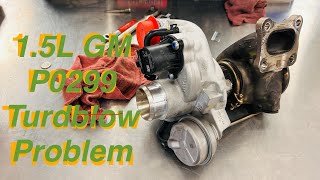
Used OEM Parts in Stock
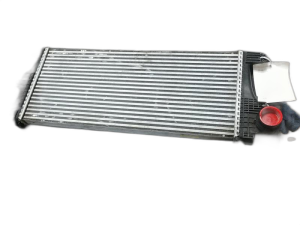
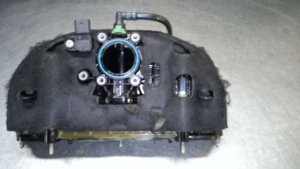
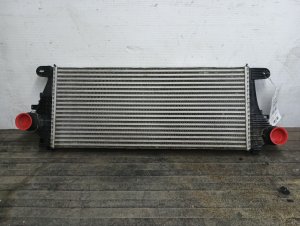
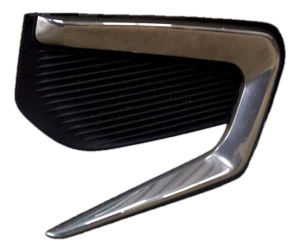
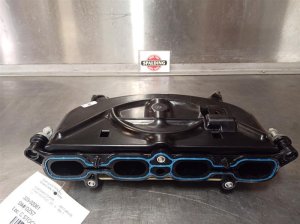
New Aftermarket Parts Available
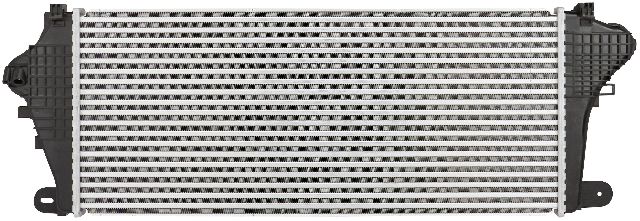

The information in this article is provided for general reference and educational purposes only. Vehicle specifications, procedures, and part compatibility can vary by production date, trim level, and region. Always consult your vehicle's factory service manual and verify part numbers before purchasing or performing repairs. Safety-critical components such as airbags, seat belts, and braking systems should be installed by a qualified professional.
- Chevrolet Malibu:
- 🧭 Diagnostic Flowchart
- 🎬 Helpful Videos
- 🛍️ Shop This Part
- What's Unique About the 2016-2024 Chevrolet Malibu
- Symptoms You May Notice
- Most Likely Causes
- Rare But Worth Checking
- Diagnosis Steps
- Parts You'll Likely Need
- Related Codes That Often Appear With This One
- Technical Service Bulletins (TSBs) & Recalls
- Platform-Specific Known Issues
- Mechanic-Grade Diagnostic Values
- Scan Tool Commands That Help
- Wiring & Ground Locations
- Real Owner Repair Stories
- "I Checked Everything" — The Actual Cause
- OEM Part Supersession History
- Model Year Variations Within This Range
- Other Known Issues on This Vehicle
- Used vs. New Parts: Buying Guide for This Vehicle
- Real Owner Stories
- 2018 GMC Terrain 1.5L Turbo
- 2017 Chevrolet Cruze 1.4L Turbo
- Related OBD-II Codes
- Frequently Asked Questions
- 🎟️ Get 5% Off