

P0299 on 2019-2023 Chevy Silverado 1500: Turbo Underboost Causes & Fixes
On the 2019-2023 Silverado with the 2.7L L3B engine, code P0299 is frequently caused by outdated software or icing in the charge air cooler (CAC), especially in cold weather. Before suspecting major hardware failure, it is critical to check with a dealer for required ECM updates as specified in several GM technical service bulletins (TSBs) and inspect the CAC system.
- For a P0299 code on a 2019-2023 Silverado 2.7L, your first step should be to check for available ECM software updates from a GM dealer.
- In cold weather, the cause is very likely ice in the charge air cooler, a known issue with a specific TSB fix.
- Do not replace the turbocharger without first ruling out software issues, boost leaks (via a smoke test), and the CAC icing problem.
- This code is often accompanied by P2227 and P0300, pointing towards the known TSB-documented issues.
What's Unique About the 2019-2023 Chevrolet SILVERADO 1500

For the 2019-2023 Silverado 1500 with the 2.7L L3B engine, this code is uniquely tied to platform-specific issues that are not just about hardware failure. General Motors has issued multiple Technical Service Bulletins (TSBs) indicating that the root cause is often related to a software calibration that needs updating. Another significant issue, especially in colder climates, is the formation of ice in the charge air cooler (CAC) from ambient and PCV system moisture, which restricts airflow and triggers the underboost code. These known issues mean diagnosis should start with checking for software updates and considering environmental factors, rather than immediately suspecting a failed turbo.
Diagnostic Flowchart

Tap your situation to follow the diagnostic path that matches what you're seeing on this vehicle.
Symptoms You May Notice

- Check Engine Light illuminated
- "Reduced Engine Power" message on the driver information center
- Noticeable loss of power and sluggish acceleration
- Difficulty maintaining highway speeds
- Unusual whistling, hissing, or rushing air noises from the engine bay
- Hesitation or jerky acceleration
- Poor fuel economy
- Replacing the turbocharger assembly before checking for software updates, CAC icing, or performing a thorough boost leak test. Many turbos are replaced unnecessarily when the actual fault is a simple leak, a software glitch, or moisture freezing in the intercooler.
Most Likely Causes

- Outdated Engine Control Module (ECM) Calibration 🔴 High Probability → Shop Engine Control Module (ECM) GM has released multiple TSBs (#23-NA-045, #PIP5905, #23-NA-002) specifically to address P0299 with software updates. The factory calibration may be too sensitive, unable to adapt to certain conditions, or have flaws in controlling fuel injectors.
How to confirm: A Chevrolet dealer or qualified shop with access to GM's service information system can check the vehicle's VIN to see if the calibration updates have been performed. This is the first step in diagnosis.
Typical fix: Reprogramming the ECM with the latest manufacturer-supplied software. This is a non-mechanical fix that can often be done in under an hour.
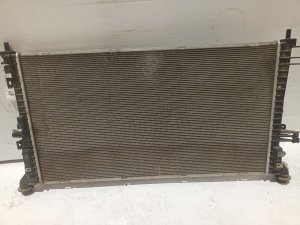
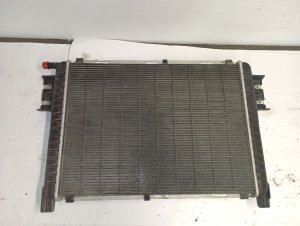
Est. part cost: $0-$200 (dealer labor for programming, may be covered under warranty) - Charge Air Cooler (CAC) Icing 🔴 High Probability → Shop Intercooler As documented in TSB #23-NA-002, ambient and PCV system moisture can freeze inside the charge air cooler in cold weather, creating a physical blockage that restricts airflow. This is a well-known issue for the L3B engine in cold climates.
How to confirm: This typically occurs in cold climates (near or below freezing). A technician can inspect the CAC for ice or water accumulation by removing the Throttle Inlet Absolute Pressure (TIAP) sensor. The freeze-frame data from the scan tool may show a low ambient temperature when the code was set.
Typical fix: TSB #23-NA-002 outlines a multi-step procedure: 1. Drain moisture from the CAC using a fluid extractor. 2. Update the ECM calibration. 3. Install a new radiator air front lower baffle to help prevent future icing.
Est. part cost: $50-$200 (for baffle and labor) - Intake Air (Boost) Leak 🟡 Medium Probability Pressurized air hoses, clamps, and connections in the turbo system can develop cracks, become loose, or get damaged over time, allowing boost pressure to escape. This is a common issue on all turbocharged vehicles.
How to confirm: Visually inspect all ducting from the turbo to the throttle body for loose clamps, torn boots, or cracks. A smoke test, which forces low-pressure smoke into the intake system, is the most effective way to pinpoint leaks that aren't obvious. A rushing air sound during acceleration is a strong indicator.
Typical fix: Tightening loose clamps or replacing the damaged hose, seal, or intercooler.
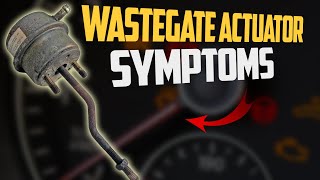
Est. part cost: $20-$450 (depending on the specific hose or part) - Faulty Turbocharger Wastegate or Actuator ⚪ Low Probability → Shop Turbocharger The electronically controlled wastegate regulates boost pressure. If the actuator fails or the valve sticks open, it cannot build the required pressure. GM issued engineering bulletin PIE0503B to investigate this issue early in the engine's life. GM has also issued bulletin 23-NA-058 for premature wastegate linkage wear causing a rattle and potential P0299.
How to confirm: Inspect the wastegate actuator arm for free movement and ensure it is not bent or disconnected. A scan tool can command the wastegate position to check for response; the reported position should match the desired position. TSB 23-NA-058 provides a specific test for linkage wear: listen for a rattle on cold start that is dampened by touching the actuator rod with a screwdriver.
Typical fix: Replacement of the wastegate actuator or, in some cases, the entire turbocharger assembly if the wastegate is integral and not sold separately.
Est. part cost: $150-$500 (actuator only) or $800-$2000+ (full turbo assembly) 🎬 Watch: How to identify and replace a failing wastegate actuator
Rare But Worth Checking
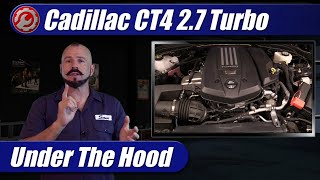
- Stuck Turbocharger Bypass Valve: → Shop Turbocharger A stuck-open bypass valve (diverter valve) will bleed off boost pressure when it shouldn't, leading to an underboost condition. This has been noted as a potential cause in GM preliminary information (PIP5843B) for the related Cadillac CT4 with the same engine. 🎬 See a detailed breakdown of the 2.7L turbo engine design A similar issue is common on Ford EcoBoost engines.
- Restricted Exhaust: A clogged catalytic converter or damaged exhaust pipe can prevent the turbo from spooling up effectively. This is less common on newer vehicles but can happen.
- Faulty Boost Pressure Sensor (MAP/TIAP): The sensor that measures boost pressure (often called the TIAP sensor on this engine) can fail and send incorrect readings to the ECM, causing the code to set even if the turbo is functioning correctly.
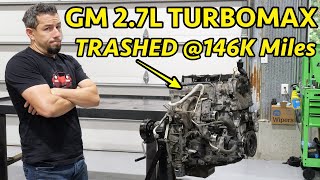
- Turbocharger Failure: → Shop Turbocharger While often the first thing people suspect, complete turbo failure (e.g., seized bearings, damaged turbine wheels) is a less common cause than leaks, software issues, or CAC icing on this platform. A teardown of a 146k-mile L3B engine showed significant shaft play, indicating eventual failure is possible. 🎬 Watch: Full teardown of a high-mileage 2.7L TurboMax engine
Diagnosis Steps
- Connect an OBD-II scanner and confirm P0299 is the primary code. Note any other codes, such as P2227, P0300, or P0101, and review the freeze-frame data, paying close attention to the ambient temperature when the code was set.
- Crucial First Step: Check with a GM dealer or use a professional service information system to see if TSBs #23-NA-045, #PIP5905, or #23-NA-002 apply to your vehicle's VIN and if the required software updates have been performed.
- If the vehicle is in a cold climate or the freeze-frame data shows low ambient temperatures, investigate for Charge Air Cooler (CAC) icing per TSB #23-NA-002. This involves removing the TIAP sensor and using a fluid extractor to check for and remove water.
- Perform a thorough visual inspection of the entire intake tract, from the air filter to the throttle body. Look for loose clamps, disconnected hoses, cracks in plastic or rubber components, and signs of oil residue which can indicate a leak.
- If no visual leaks are found, perform a smoke test on the intake and charge air system to identify any pressure leaks that are not visible. This is the most reliable way to find small leaks.
- Inspect the turbocharger wastegate actuator and linkage. Ensure it moves freely and is not stuck, bent, or disconnected. Use a scan tool to command the wastegate and verify its position sensor reports correctly. Check for linkage wear per TSB 23-NA-058.
- Using a scan tool with live data, monitor commanded boost vs. actual boost pressure while driving. A large, consistent discrepancy confirms an underboost condition.
- Check the turbocharger bypass valve (diverter valve) to ensure it is not stuck open.
- If all other possibilities are exhausted, inspect the turbocharger itself for excessive shaft play, damaged fins, or signs of oil leaks.
Parts You'll Likely Need
- Radiator Air Front Lower Baffle Kit
(OEM #85598683)— This is the specific part installed as part of the TSB #23-NA-002 fix for CAC icing. It helps redirect airflow to prevent moisture buildup.
Trusted brands: ACDelco (GM Genuine)
OEM price range: $40-$70
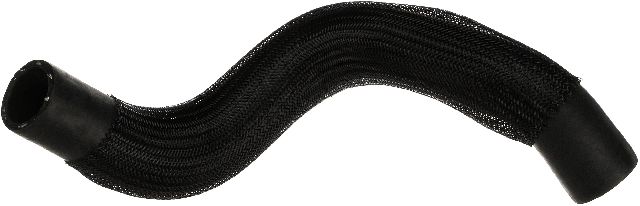
Aftermarket price range: N/A - Charge Air Cooler Hose/Boot — These rubber or silicone components are common failure points for boost leaks due to heat and pressure stress.
Trusted brands: ACDelco, Gates
Related Codes That Often Appear With This One
- P2227 — Barometric Pressure Sensor Performance. This code often appears with P0299, especially in cases of CAC icing, as explicitly noted in TSB #23-NA-002.
- P0300 — Random/Multiple Misfire Detected. This can also be triggered by CAC icing, as the restricted airflow disrupts the proper air/fuel mixture.
- P0101 — Mass Air Flow (MAF) Sensor Performance. An intake leak can cause both P0101 and P0299 to set simultaneously.
Technical Service Bulletins (TSBs) & Recalls
- 23-NA-045: Service Calibration for Engine RPO L3B P0299.
- 23-NA-002: Charge Air Cooler (CAC) Icing, Check Engine Lamp Illuminated, Possible P0299, P2227, and/or P0300 DTCs Set.
- PIE0503B: Engineering information regarding reduced engine power and DTC P0299.
- PIP5905: Information on Malfunction Indicator Lamp (MIL) with DTC P0299 and updated Engine Control Module Calibrations.
- PIE0503: Initial engineering request for information on reduced engine power and DTC P0299.
Platform-Specific Known Issues
- Bulletin #23-NA-045 and #PIP5905: GM identifies that an outdated Engine Control Module calibration can cause a P0299 code. The official fix is a software update available at dealerships.
- Bulletin #23-NA-002: This TSB details the procedure for addressing P0299 caused by Charge Air Cooler (CAC) icing in cold weather. The fix involves draining moisture, reprogramming the ECM, and installing a new baffle (Part No. 85598683).
- Owner Experiences: Forum users on gm-trucks.com and Reddit frequently report that the P0299 code appears in winter. Many confirm that the dealer performing TSB #23-NA-002 (CAC icing fix) and updating the software resolves the issue without needing to replace the turbo.
Mechanic-Grade Diagnostic Values
- Vacuum supply to the Turbocharger Wastegate Actuator Vacuum Control Solenoid Valve — expected: -50 kPa (-0.5 bar, 15 in Hg) at idle with engine at operating temperature.. Failure: If the desired vacuum cannot be achieved or does not hold steady, it indicates a potential failure in the vacuum pump assembly or related hoses.
Scan Tool Commands That Help
- GDS2 (GM Global Diagnostic System 2): Turbocharger Wastegate Learn — This procedure is required whenever the turbocharger or wastegate actuator is replaced or serviced. The ECM uses this to learn the position of the wastegate valve.
- GDS2 (GM Global Diagnostic System 2): Intake System Learned Values Reset — Required after servicing or replacing the turbocharger, actuator, or any related intake air duct components to reset adaptations.
- GDS2 (GM Global Diagnostic System 2): Freeze Frame / Failure Records — Crucial for initial diagnosis. Reviewing the freeze frame data for P0299 can show ambient temperature and other key parameters at the moment the fault was set, which is critical for diagnosing issues like CAC icing.
Real Owner Repair Stories
- Ford F150 Forum user (2015 Ford F-150 2.7L EcoBoost (Analogous engine with similar turbo system)) — P0299 underboost code, particularly when towing. Truck enters limp mode.
❌ Tried (didn't work) Replacing the intercooler bypass valve, replacing the throttle body.
✅ What actually fixed it The issue was intermittent and one user noted that after replacing the throttle body, the issue was resolved for a camping season before returning. Another user suggested a faulty custom tune was the cause, which was fixed by the tuner. A third user pointed to a failing boost pressure sensor as a likely culprit. - Reddit user on r/f150 (2016 Ford F-150 2.7L EcoBoost (Analogous engine)) — P0299, wrench light on dash, limp mode when rolling into throttle on highway.
❌ Tried (didn't work) Replacing the EBOV (Electronic Blow-Off Valve).
✅ What actually fixed it The issue was ultimately resolved by replacing the MAP (Manifold Absolute Pressure) sensor. The limp mode occurred one more time shortly after replacement but did not return on subsequent long drives.
"I Checked Everything" — The Actual Cause
- In cases where a smoke test reveals no leaks, a faulty sensor, such as the MAP/boost pressure sensor, can be the cause. The sensor may be sending inaccurate data to the ECM, triggering the P0299 code even though the mechanical turbo system is holding pressure correctly. This often manifests during specific conditions like steady highway driving.
- A stuck-open turbocharger bypass valve (diverter valve) will not be found by a standard intake smoke test, as it is designed to vent air. If the valve is mechanically or electronically stuck open, it will bleed off boost pressure during acceleration, causing P0299, even with a leak-free system.
OEM Part Supersession History
PIP5829A→23-NA-058— The bulletin was updated to provide a more specific diagnostic procedure for identifying wastegate linkage wear (the cold start rattle test) and clarifying the fix.PIE0737B→23-NA-045— The initial Engineering Information bulletin (PIE0737) was for data collection. It was eventually closed and superseded by TSB 23-NA-045, which contains the final corrective action: a new ECM service calibration.
Model Year Variations Within This Range
- 2019-2021 vs. 2022-2023+: For the 2022 model year, the 2.7L L3B engine was significantly upgraded and marketed as the 'Turbo High-Output' or 'TurboMax'. Torque increased from 348 lb-ft to approximately 430 lb-ft. These improvements came from a more rigid cylinder block, a 30% stiffer forged steel crankshaft, and updated calibrations. These internal differences mean the causes or susceptibility to P0299 could differ between the pre- and post-2022 engines.
Helpful Videos
Used OEM Parts in Stock
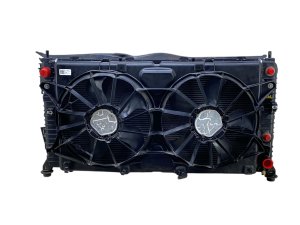
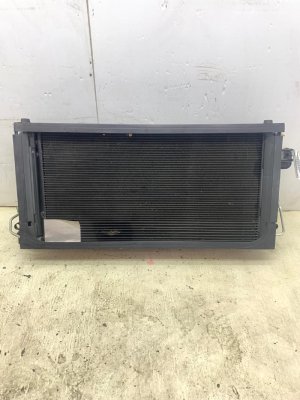
New Aftermarket Parts Available


The information in this article is provided for general reference and educational purposes only. Vehicle specifications, procedures, and part compatibility can vary by production date, trim level, and region. Always consult your vehicle's factory service manual and verify part numbers before purchasing or performing repairs. Safety-critical components such as airbags, seat belts, and braking systems should be installed by a qualified professional.
- Chevrolet SILVERADO 1500:
- 🧭 Diagnostic Flowchart
- 🎬 Helpful Videos
- 🛍️ Shop This Part
- What's Unique About the 2019-2023 Chevrolet SILVERADO 1500
- Symptoms You May Notice
- Most Likely Causes
- Rare But Worth Checking
- Diagnosis Steps
- Parts You'll Likely Need
- Related Codes That Often Appear With This One
- Technical Service Bulletins (TSBs) & Recalls
- Platform-Specific Known Issues
- Mechanic-Grade Diagnostic Values
- Scan Tool Commands That Help
- Real Owner Repair Stories
- "I Checked Everything" — The Actual Cause
- OEM Part Supersession History
- Model Year Variations Within This Range
- 🎟️ Get 5% Off